

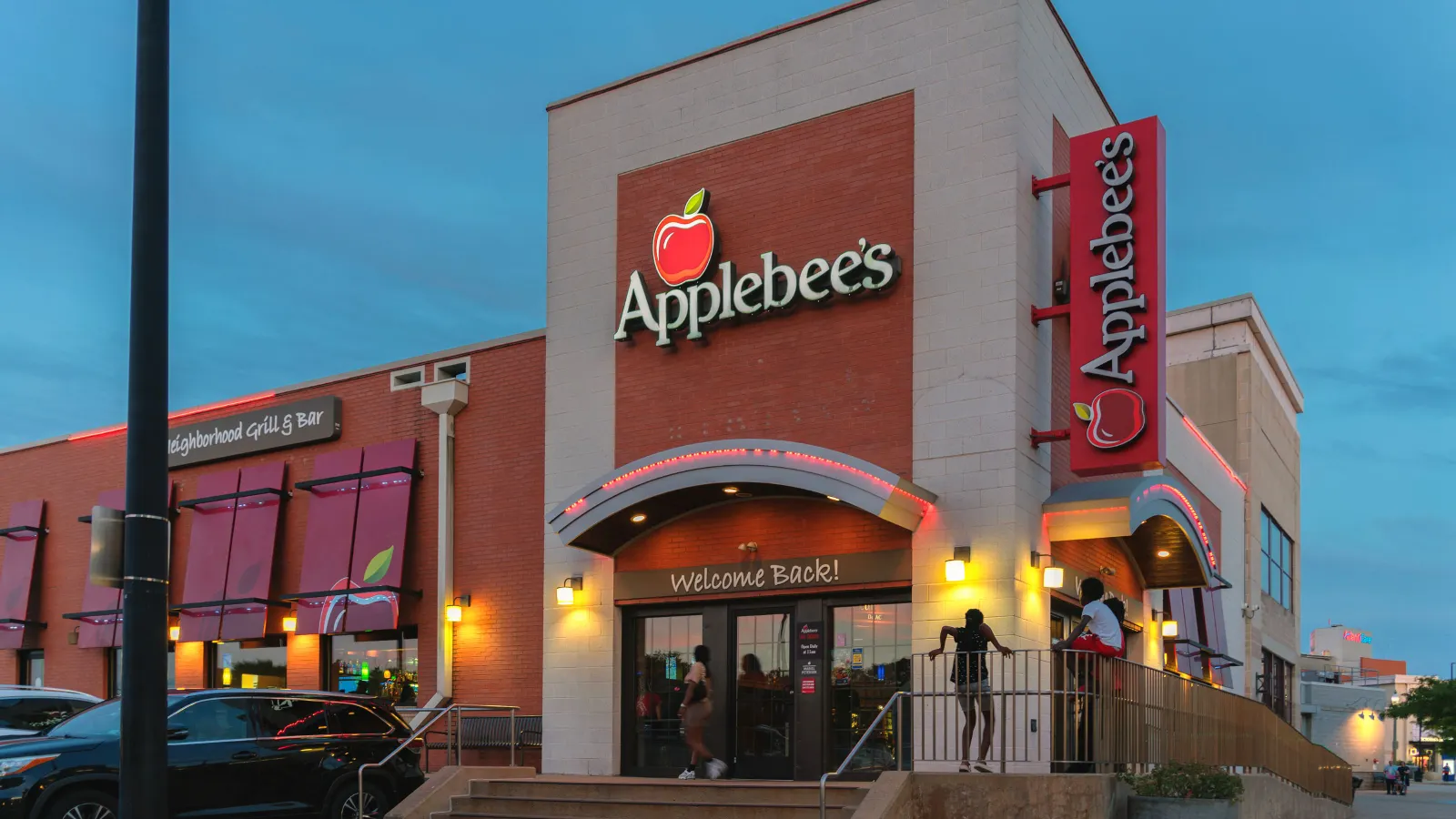
In an era defined by economic caution and a hyper-competitive dining landscape, Applebee’s is navigating a delicate balancing act. As consumers tighten their belts, the casual dining giant is doubling down on a “barbell strategy”—pairing aggressive, accessible value propositions with culturally resonant, high-indulgence marketing campaigns. Under the guidance of CMO Michelle Chin, who joined the brand in September 2025, the 46-year-old chain is attempting to modernize its identity, shifting from a traditional physical "neighborhood" to a digital-first community hub.
Main Facts: The Current State of the Brand
Applebee’s current strategic roadmap is centered on maintaining traffic in a QSR and casual dining sector where value is the primary currency. During the second quarter of 2026, the chain reported a 1.8% decline in domestic same-restaurant sales, a figure that highlights the ongoing pressure facing the industry. However, the company views this as a period of tactical transition rather than a decline in brand equity.
The chain’s core value drivers remain its long-standing "2 for $25" promotion—which accounts for over a quarter of its total business—and limited-time offers (LTOs) like the recently returned $12.99 Sizzlin’ Skillets. These are complemented by seasonal "Spooky Sips" and previous successes like the “All You Can Eat” summer promotion. By anchoring these offerings in affordability while utilizing high-profile partnerships, such as the recent collaboration with NFL legend Marshawn Lynch for the “O-M-Cheese-adilla Burger,” Applebee’s is attempting to capture the attention of a younger demographic without alienating its core base.
Chronology: A Year of Transformation
Since Michelle Chin assumed the role of CMO in September 2025, the brand has undergone a strategic audit of its marketing and creative operations.
- September 2025: Michelle Chin, formerly of Starbucks, is appointed as Chief Marketing Officer. Her initial mandate focuses on assessing the brand’s heritage and determining how to evolve its identity for the next 46 years.
- Q2 2026: Applebee’s reports a 1.8% dip in same-restaurant sales but notes that marketing campaigns, specifically the “All You Can Eat” and “Poolio with Don Julio” initiatives, successfully drove social buzz and traffic among younger cohorts.
- Summer 2026: The chain sustains momentum through experiential marketing, including the third iteration of its “Date Night Pass,” designed to provide an affordable, value-add alternative to traditional loyalty programs.
- Autumn 2026: Applebee’s appoints BBDO Chicago as its creative agency of record, signaling a shift toward more integrated, omnichannel storytelling.
- October 2026: The brand leans into the NFL season with the O-M-Cheese-adilla campaign, leveraging Marshawn Lynch’s authentic affinity for the brand to drive digital engagement.
Supporting Data: Value as a Competitive Edge
The restaurant industry is currently caught in a "value war," with chains racing to out-discount one another. Applebee’s differentiation, according to leadership, lies in the "togetherness" factor. While competitors focus heavily on single-diner deals, Applebee’s continues to bet on the communal aspect of dining.
The "2 for $25" deal serves as the anchor of this philosophy. By facilitating a shared experience rather than a solitary transaction, the brand justifies its price point in a way that resonates with price-sensitive consumers who still crave social interaction. Furthermore, the success of the "Date Night Pass"—an experiential loyalty tool rather than a points-based system—suggests that consumers are prioritizing "moments" over transactional rewards. During 2026, the pass saw continued success, reinforcing the idea that when consumers feel economically constrained, they look to brands that facilitate affordable luxury and connection.
Official Responses: The CMO’s Vision
In an interview with Marketing Dive, CMO Michelle Chin reflected on her first year, emphasizing the need to redefine what "neighborhood" means in the 21st century.
"I spent the last year traveling around the country, working with our franchisees, meeting our guests firsthand," Chin stated. "It’s about going back and celebrating the things that made us special, modernizing it for today. We recognize that the neighborhood is changing. Neighborhoods are no longer just geographically defined; they are now digitally available with people of like minds and interests coming together."
Regarding the partnership with BBDO Chicago, Chin noted that the traditional marketing funnel is effectively obsolete. "We recognize that the traditional marketing funnel no longer exists, and it’s really this big messy middle," she explained. "People are going to interact with the brand however they come across it, so we need to be consistent, meaningful, and have high impact."
Chin also addressed the brand’s approach to creators and social media, noting that Applebee’s authenticity is its greatest asset. By allowing creators to define how they use the restaurant—whether for lunch, late-night appetizers, or a social "bestie" hangout—the brand is able to showcase its versatility across diverse demographics.
Implications: Navigating the "Messy Middle"
The broader implications for Applebee’s and the casual dining sector are significant. The shift away from siloed marketing channels toward an integrated, "full ecosystem" approach suggests that Applebee’s is preparing for a future where brand loyalty is earned through digital touchpoints as much as in-restaurant experiences.
The Barbell Strategy
The "barbell strategy"—the combination of accessible, low-cost value meals and "culturally resonant" higher-priced indulgent items—is becoming a standard survival mechanism for mid-tier restaurant chains. By keeping the floor price low, they capture the volume needed to maintain operational efficiency; by providing "indulgent" items, they capture the higher-margin traffic that keeps the brand relevant on social media platforms like TikTok and Instagram.
Modernizing the "Neighborhood"
The challenge for a legacy brand like Applebee’s is to avoid becoming a "dinosaur" while maintaining the nostalgia that built its foundation. The move toward digital neighborhoods is a calculated risk. If Applebee’s can successfully position itself as a place where digital communities meet in real life, it may be able to bridge the gap between the baby boomer demographic that grew up with the brand and the Gen Z and Millennial audiences that prioritize "vibe" and "experience."
The Future of Loyalty
The move away from traditional, point-heavy loyalty programs toward experiential offerings like the Date Night Pass represents a wider shift in the restaurant sector. Brands are realizing that in a crowded market, giving customers a "reason to celebrate" is a stronger retention tool than a discount on a future order. As the industry looks toward 2027, the success of Applebee’s will likely depend on its ability to maintain this balance—proving that it can be both a neighborhood staple and a modern, digitally savvy cultural player.
As the industry faces continued economic headwinds, the path forward for Applebee’s is clear: leverage the heritage of the "neighborhood," embrace the unpredictability of the "messy middle" of modern consumer behavior, and ensure that every value-driven campaign remains rooted in the genuine human connection that the brand has promised for nearly half a century.
