

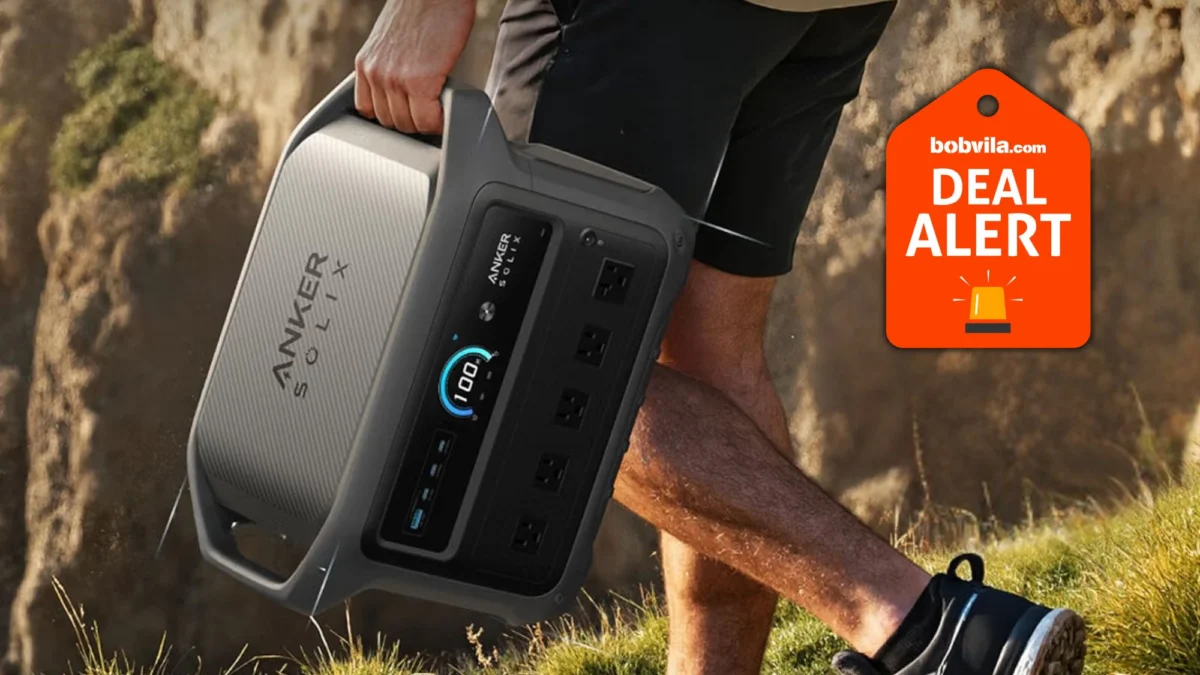
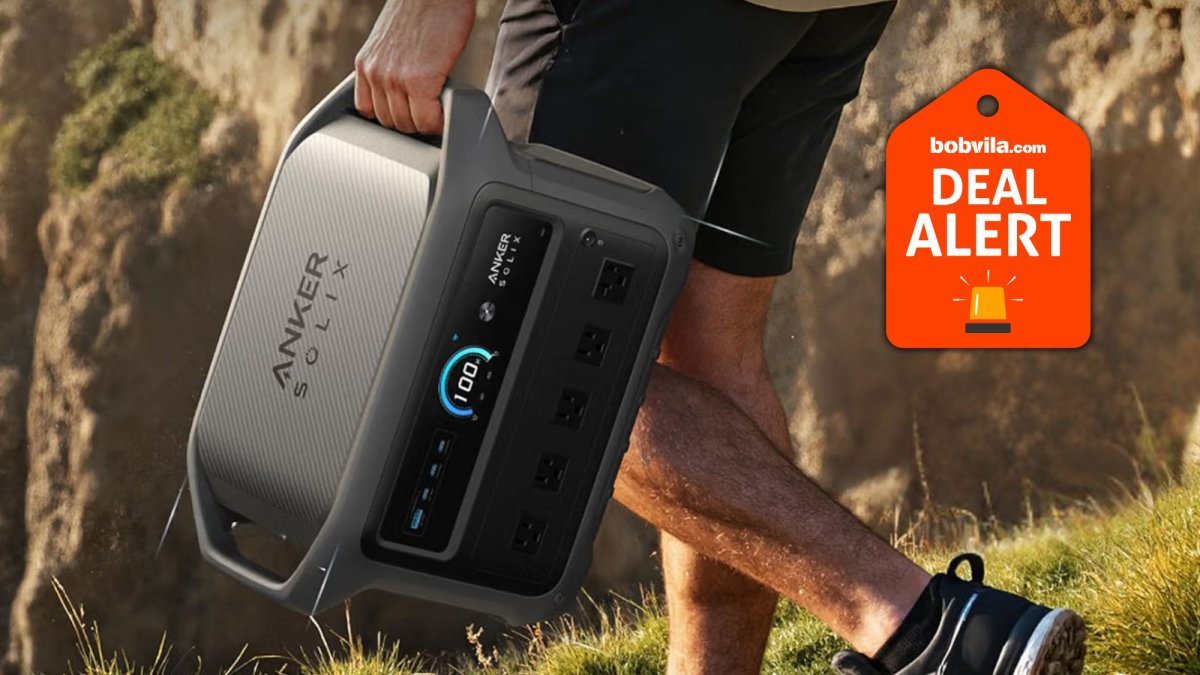
As the autumn season settles in and the threat of winter storms, high winds, and seasonal power outages looms, homeowners are increasingly turning to reliable, portable backup power solutions. Amazon has launched a massive early-season sale on portable power stations, offering significant discounts—some reaching up to 44% off—on industry-leading brands like Anker, Jackery, and DJI.
Whether you are preparing for a long-duration blackout or looking to enhance your off-grid camping setup, this sale presents a timely opportunity to invest in energy security.
Main Facts: What You Need to Know
The current Amazon promotion spans a wide variety of power hardware, from compact, pocket-sized charging banks to massive, high-capacity solar-ready power stations capable of running full-sized refrigerators and household appliances.
Key highlights of the sale include:
- The DJI Power 1000 V2: Currently marked down to $399.98 (down from $699). This unit features a 1,024Wh capacity and a 2,600W continuous output, making it one of the most powerful options for its price point.
- The Anker Prime 200W Charging Station: Priced at just $69.99 (down from $79.99), offering an affordable solution for charging mobile devices and small electronics.
- The Anker SOLIX C2000 Gen 2: A powerhouse for household essentials, boasting 2,048Wh of storage and 2,400W of output.
These discounts are part of a broader strategy by major retailers to move inventory ahead of the traditional Black Friday rush, allowing consumers to prepare their homes before the peak of winter weather arrives.
Chronology: The Evolution of Portable Power
The surge in popularity of portable power stations—often called "solar generators"—is a relatively recent phenomenon that mirrors shifts in both climate volatility and battery technology.
- 2020–2022: The Pandemic and Remote Work Era: During this period, the demand for portable power shifted from niche camping gear to essential home office equipment. Remote workers sought to ensure their laptops and routers stayed powered during minor grid instability.
- 2023: The Rise of LiFePO4 Chemistry: The industry saw a major shift toward Lithium Iron Phosphate (LiFePO4) batteries. Unlike older lithium-ion chemistries, LiFePO4 batteries offered significantly longer lifespans (often 3,000+ charge cycles) and improved thermal stability, making them safer for indoor use.
- 2024–2025: Integration and Smart Management: Power stations evolved to include app-based monitoring, faster charging (some units capable of reaching 80% charge in under an hour), and seamless integration with home solar arrays.
- September 2026: As we enter the final quarter of 2026, the current sale reflects a market saturated with high-performance units. Manufacturers are now competing on "value-per-watt," leading to these aggressive price cuts for the consumer.
Supporting Data: Understanding Capacity and Output
When shopping for a power station, the terminology can be confusing. To make an informed decision, it is vital to distinguish between two key metrics: Watt-Hours (Wh) and Output Watts (W).
Watt-Hours (Capacity)
This is the "size of the gas tank." It tells you how much energy the battery can store. For instance, the DJI Power 1000 V2 has a capacity of 1,024Wh. If you were running a 100W appliance, you could theoretically run it for roughly 10 hours (accounting for a 10-15% efficiency loss during inversion).
Output Watts (Power)
This is the "size of the engine." It dictates what you can plug in at once. A unit with 300W of output (like the Jackery Explorer 300) can run a laptop and a few LED lights, but it would likely trip its circuit if you tried to plug in a space heater or a coffee maker. For household appliances, you generally want an output of at least 2,000W.
| Feature | Low-Capacity (Portable) | Mid-Capacity (General Use) | High-Capacity (Home Backup) |
|---|---|---|---|
| Typical Wh | 200–500Wh | 1,000–1,500Wh | 2,000Wh+ |
| Best Use | Camping, Phones, Drones | Powering Fridge, TV, Lights | Full House/Appliance Backup |
| Recharge Time | Fast (1–2 hours) | Moderate (2–4 hours) | Longer (Requires Solar) |
Implications: Why You Need a Backup Strategy
The rise of "extreme weather events" is no longer a fringe concern; it is a reality for millions of Americans. Recent data from the U.S. Energy Information Administration suggests that the frequency of weather-related power outages has trended upward over the last decade.
Safety First
While these devices are significantly safer than traditional gas-powered generators—which emit carbon monoxide and require outdoor-only use—they are not without requirements.
- Ventilation: Even though power stations are battery-powered, they should still be kept in a well-ventilated area to prevent heat buildup during high-load discharge or rapid charging.
- Electrical Code: If you plan to power your home’s circuits (like a refrigerator or a furnace) via a power station, you must use a proper transfer switch installed by a licensed electrician. Do not attempt to "backfeed" electricity into your home through a wall outlet, as this can be lethal to utility workers and fire-hazardous to your home.
Economic Impact
Investing in a power station is also an exercise in financial mitigation. The cost of replacing spoiled food in a refrigerator after a 48-hour outage can easily exceed $300 to $500. By investing $399 in a unit like the DJI Power 1000 V2, you are essentially purchasing an insurance policy that pays for itself in a single major event.
Expert Advice: How to Choose Your Unit
Before clicking "Buy Now" on Amazon, consider your specific "must-haves":
- Identify Your Essential Load: Calculate the wattage of your "must-have" items. A standard refrigerator typically pulls 600W to 1,200W upon startup. Ensure your chosen station has a "surge" rating that can handle this.
- Solar Compatibility: If you are preparing for a long-term outage (multiple days), ensure the unit can be charged via solar panels. Most modern stations, including the Jackery and Anker models, are compatible with universal solar input cables.
- Expandability: Look for "expansion battery" ports. Some units allow you to daisy-chain additional battery modules to double or triple your runtime without needing to buy a second, entirely separate power station.
Conclusion
Amazon’s early Black Friday sale is a clear indicator that the portable power market has reached a point of maturity and accessibility. Whether you are a weekend warrior looking to keep your camera gear charged in the backcountry or a homeowner trying to keep the freezer running during an ice storm, the current discounts make this the ideal time to bolster your emergency preparedness kit.
As always, when dealing with high-capacity electrical equipment, read the manufacturer’s manual thoroughly and test your equipment before an emergency actually hits. A power station is only as useful as your ability to operate it when the lights go out.
For more information on testing and reviews, visit our comprehensive guide to the best portable power stations.
