

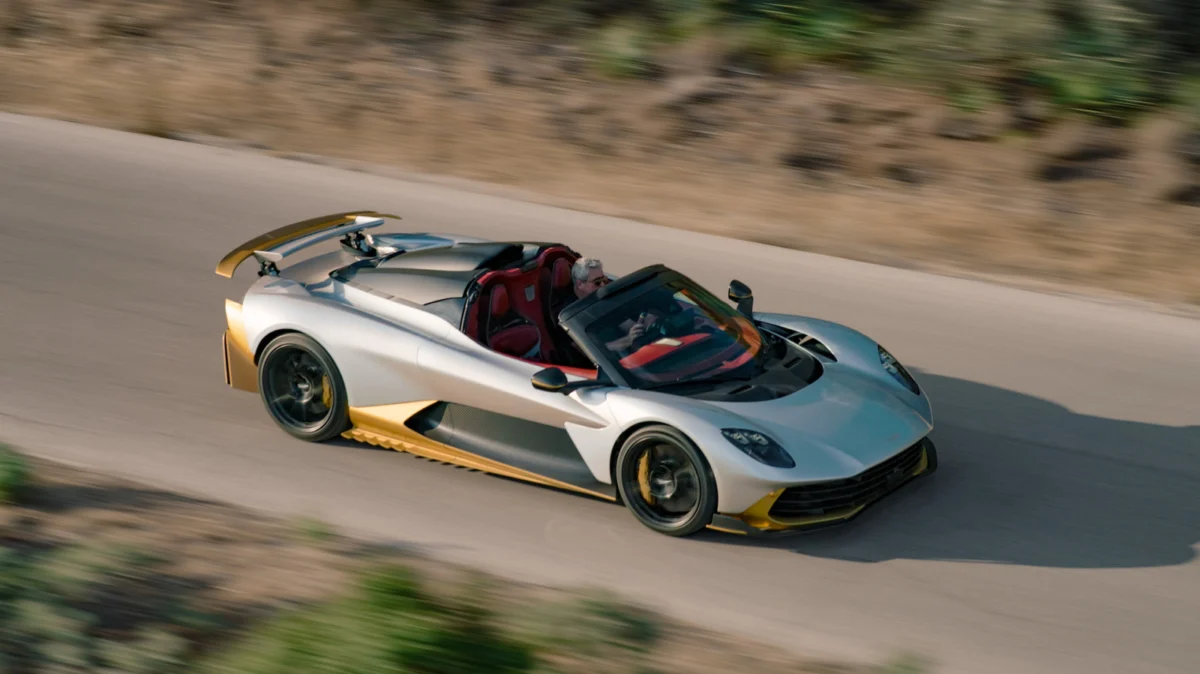
For the world’s elite automotive enthusiasts, the boundary between performance and sensory experience is blurring. Aston Martin, a brand synonymous with the intersection of grand touring elegance and Formula 1-derived technical prowess, has officially pulled the covers off its latest masterpiece: the Valhalla Spider. Debuting ahead of the 2026 Concours at Wynn Las Vegas, the Spider is not merely a convertible variant of the marque’s existing hypercar; it is an engineering feat designed to bring 1,064 horsepower directly into the cockpit, allowing drivers to experience the raw intensity of a 217-mph top speed without the mediation of a fixed roof.
Main Facts: A Symphony of Hybrid Power
The Valhalla Spider remains mechanically faithful to its coupe sibling, retaining the aggressive, track-focused DNA that has defined the project since its inception. At its heart lies a twin-turbocharged 4.0-liter flat-plane crank V8 engine, seamlessly integrated with a sophisticated plug-in hybrid (PHEV) system. This powertrain combination generates a staggering 1,064 horsepower and 811 pound-feet of torque.
The vehicle utilizes a complex all-wheel-drive configuration, featuring two front axle-mounted electric motors and a third motor integrated directly into the 8-speed dual-clutch transmission. Notably, there is no physical mechanical connection between the front and rear axles; torque distribution is handled entirely through electronic precision, a system that underscores the brand’s transition toward electrification.
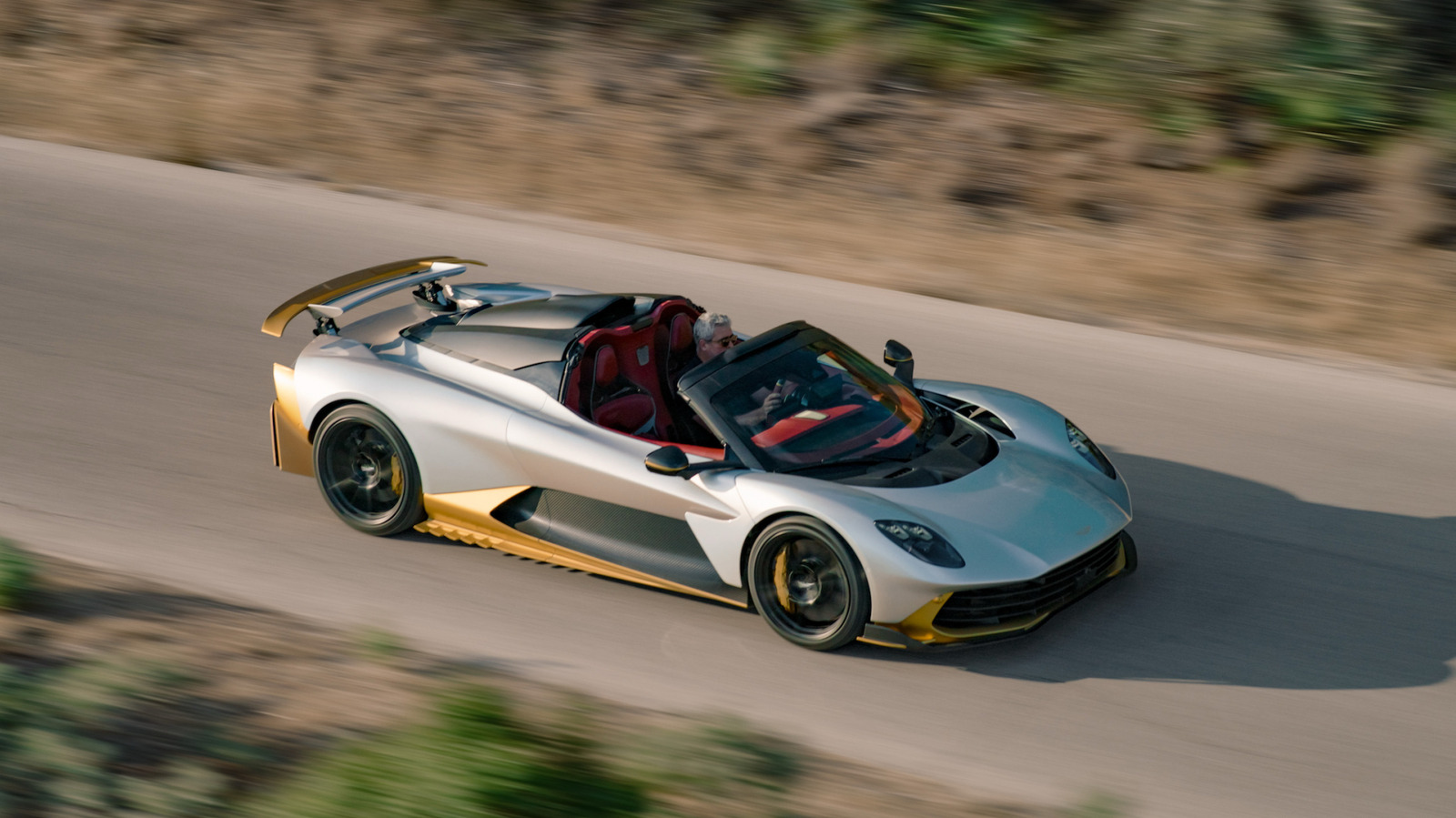
For the driver, the experience of the Valhalla Spider is defined by its modularity. The car comes equipped with a black fabric roof in most international markets, while U.S.-bound models will feature a standard carbon fiber hard top, ensuring that the supercar remains a viable daily proposition regardless of the weather. However, the true nature of the machine is unlocked when the roof is retracted, allowing the driver to push the vehicle to its 217-mph limit.
A Chronology of the Valhalla Project
The journey of the Valhalla from a concept car to a production-ready convertible has been marked by a relentless pursuit of performance optimization.
- 2021–2022: The Conceptual Foundation: Aston Martin first teased the Valhalla as a mid-engined hypercar designed to bridge the gap between their F1 racing program and road-going production vehicles. The initial focus was on the bespoke carbon fiber tub, developed by Aston Martin Performance Technologies (AMPT).
- 2024: The Coupe Debut: The Valhalla Coupe made its formal public entry with a price tag hovering around $1 million. It solidified the car’s reputation as a tech-heavy, aerodynamically obsessed machine, setting the stage for the convertible variant.
- 2025: Engineering the Spider: Throughout the last year, engineers worked to maintain the structural rigidity of the carbon fiber monocoque while removing the structural roof. The primary challenge was maintaining the car’s active aerodynamics and high-speed stability under variable airflow conditions.
- 2026: The Public Reveal: The official debut at the Concours at Wynn Las Vegas marks the beginning of the vehicle’s commercial lifecycle, signaling to the world that Aston Martin is ready to compete at the absolute zenith of the hyper-convertible market.
Supporting Data: Engineering for the Elements
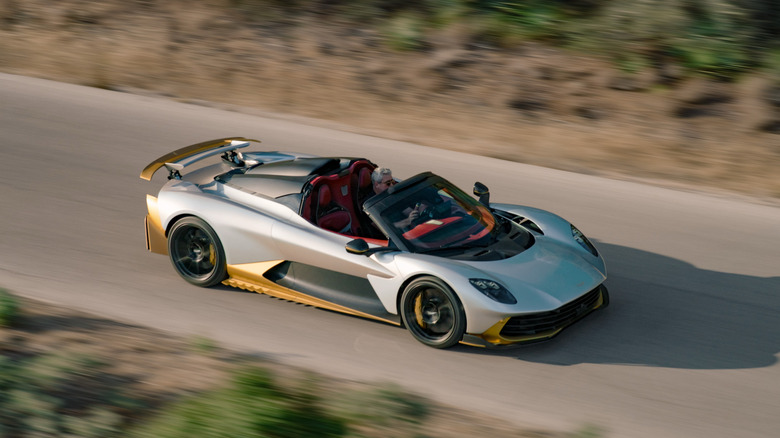
The transition to a topless architecture necessitated significant revisions to the vehicle’s aerodynamic profile. Because air behaves differently around an open cabin, the Valhalla Spider incorporates a taller intake snorkel to ensure optimal cooling for the V8 engine, regardless of whether the roof is deployed.
One of the most impressive technical adaptations is the inclusion of a clip-in wind deflector that stores neatly in the vehicle’s sills, designed to minimize cabin turbulence at high speeds. Furthermore, the electronic stability program (ESP) and active aerodynamic surfaces have been completely recalibrated. When the top is down, the car’s software adjusts downforce levels to compensate for the altered drag coefficient, ensuring that the 217-mph top speed remains a stable, manageable feat of physics.
A curious, yet necessary, limitation exists for those opting for the standard fabric top: the top speed is electronically governed at 124 mph. To access the full potential of the hybrid powertrain, the driver must either remove the fabric roof or utilize the carbon fiber hard top. This distinction highlights the focus on safety and structural integrity—the carbon hard top provides the necessary rigidity and drag reduction required for ultra-high-speed transit.
Official Responses and Design Philosophy
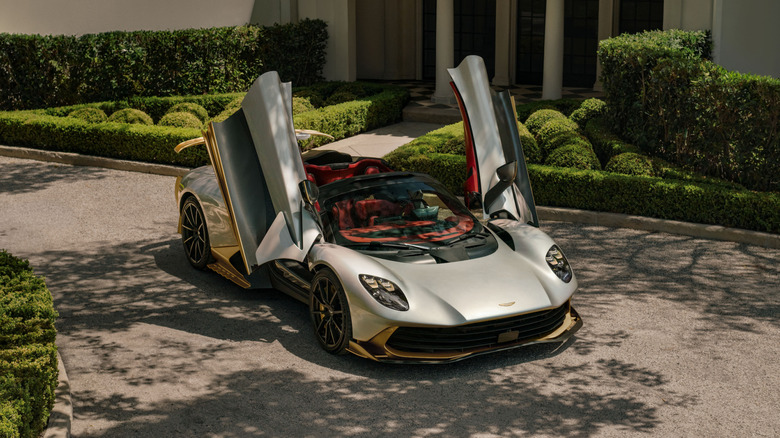
Aston Martin has emphasized that the transition to a convertible did not require the sacrifice of the car’s iconic aesthetic features. Most notably, the signature dihedral doors remain. In fact, the engineering team seized the opportunity to refine the door kinematics.
"The Valhalla Spider retains its signature carbon fiber dihedral doors, preserving the sense of theater," a spokesperson noted during the press briefing. "We have introduced refined kinematics for smoother operation and a transition to a frameless design. Furthermore, a small increase in the curvature of the door glass top edge significantly improves entry and exit, even when the roof is fitted."
To complement this improved accessibility, Aston Martin has introduced a new "Touring Seat" as standard. These seats were specifically engineered to provide easier ingress and egress, though the company maintains that the original, more aggressive carbon fiber racing seats from the coupe are available at no additional cost for those who prioritize track-day support over daily comfort.
Implications: The Future of the Hyper-Convertible
The arrival of the Valhalla Spider carries several implications for the luxury automotive market. First, it cements the role of Aston Martin Performance Technologies as a critical asset. By leveraging the same engineering team that supports their Formula 1 efforts, Aston Martin is effectively transferring race-winning technology into a luxury product. This is not just a car; it is a mobile testbed for high-performance hybrid systems.
Second, the pricing strategy suggests a shift in the market. While the 2024 Coupe was priced at $1 million, the Spider is expected to command a significantly higher premium. Given the inflationary pressures on the automotive supply chain and the inherent engineering complexity of a 217-mph convertible, the Valhalla Spider will likely be one of the most expensive and exclusive cars in the brand’s portfolio.
Finally, the Valhalla Spider speaks to the evolving desires of the "ultra-high-net-worth" demographic. The modern billionaire buyer is no longer satisfied with performance alone; they demand the sensory experience of a classic roadster paired with the cutting-edge capability of a modern hypercar. By allowing the driver to feel the wind while managing over 1,000 horsepower, Aston Martin has successfully bridged the gap between the visceral excitement of the past and the sophisticated, electrified performance of the future.
As the Concours at Wynn Las Vegas approaches, the global automotive community is watching closely. The Valhalla Spider is more than a new model; it is a statement of intent. It proves that even in an era of electrification and stringent safety regulations, there is still a place for unadulterated, open-top speed—provided, of course, that the buyer has the pedigree and the bank account to match.
