

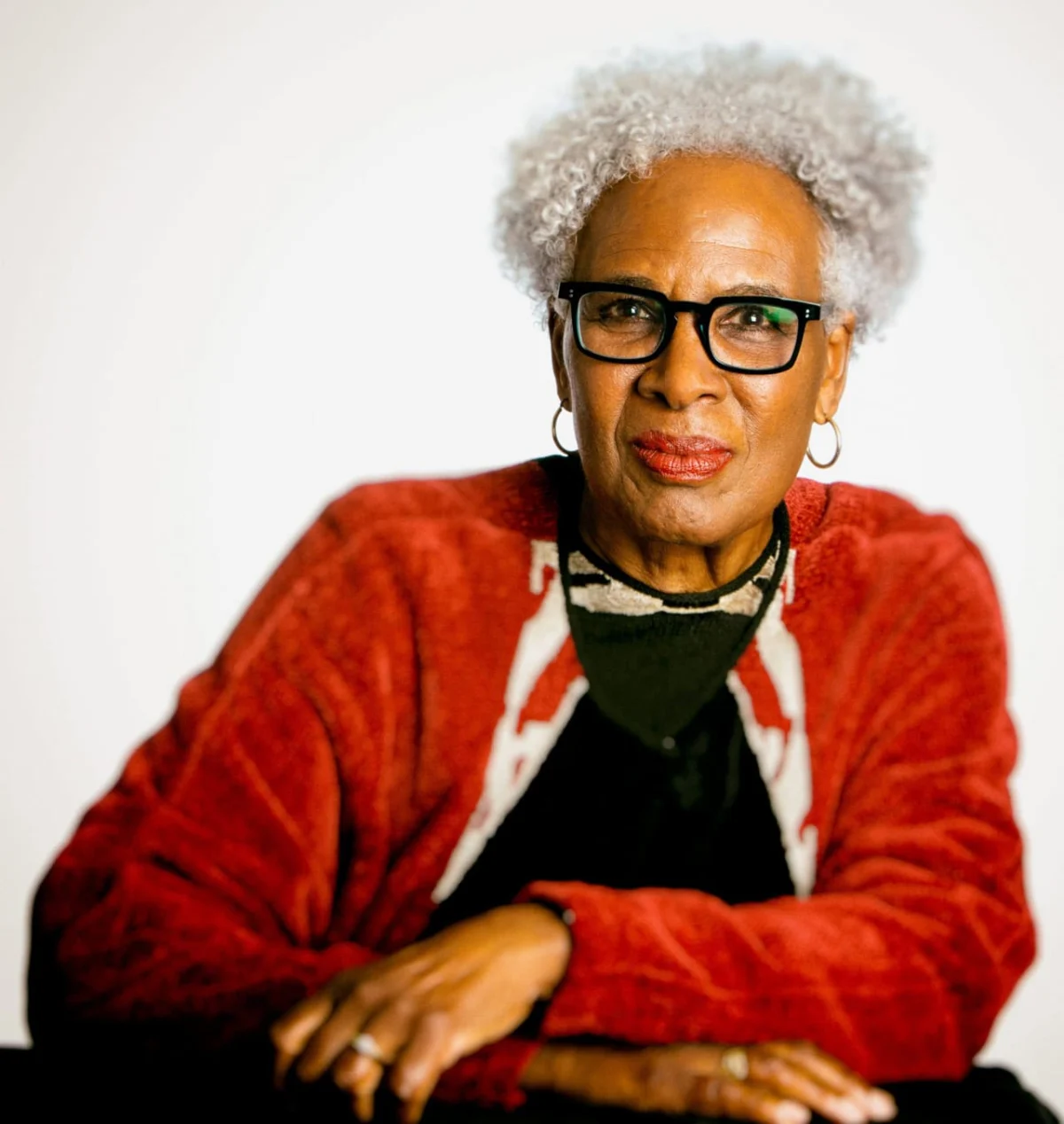
In the vibrant cultural tapestry of Newark, New Jersey, few figures occupy a space as intellectually complex as Nell Irvin Painter. Renowned globally as a preeminent historian of the American South and the author of seminal works such as The History of White People and Sojourner Truth: A Life, A Symbol, Painter has spent the latter half of her career undergoing a profound metamorphosis. She has transitioned from the rigorous, text-heavy world of academic historiography to the visually evocative realm of fine art.
The Newark Museum of Art (NMOA) recently highlighted this evolution through their "Studio Snapshot" series—a digital initiative designed to pull back the curtain on the creative processes of contemporary Newark-based artists. Through this window into her studio, the public is invited to witness how a life dedicated to documenting the past has become a canvas for reinterpreting it.
The Intersection of Scholarship and Studio Practice
For decades, Nell Painter operated at the highest echelons of academia, serving as the Edwards Professor of American History, Emerita, at Princeton University. Her scholarly output fundamentally altered how we discuss race, labor, and gender in American history. However, as Painter has often noted in interviews, there is a distinct boundary to what written language can convey.
In her studio, that boundary dissolves. Her work often utilizes mixed media, paper, and digital collage to dismantle the very archives she spent a lifetime curating. By physically cutting into historical imagery and layering it with contemporary digital compositions, Painter creates a dialogue between the rigid record-keeping of the past and the fluid, subjective experience of the present. Her 2019 piece, The History of White People—a large-scale collage on foam core—serves as a quintessential example of this practice. It transforms the title of her most famous book into a tactile, visual critique, forcing the viewer to confront the construction of racial identity not as an abstract theory, but as an assembled, artificial construct.
A Chronology of a Creative Pivot
The trajectory of Painter’s career provides a fascinating study in intellectual curiosity. To understand her current artistic output, one must map the timeline of her academic and creative journey:
- 1970s–1990s: The Formative Years of Historical Research. During this period, Painter solidified her reputation as a groundbreaking historian, publishing foundational texts like Exodusters: Black Migration to Kansas After Reconstruction. Her work focused on uncovering the lives of marginalized populations who were historically erased from the official narrative.
- 2005–2010: The Academic Synthesis. As she authored The History of White People (2010), a project that required the synthesis of vast amounts of visual and textual data, the limitations of traditional prose began to manifest. She began seeking more visceral ways to represent the "whiteness" she was theorizing.
- 2011–2015: Formal Art Training. Upon retiring from Princeton, Painter enrolled at the Mason Gross School of the Arts at Rutgers University, earning an MFA in Painting. This was not a hobbyist’s pursuit, but a rigorous disciplinary shift.
- 2016–Present: The Studio Era. Since the mid-2010s, Painter has become a fixture in the Newark arts community. Her work has moved away from the illustrative and toward the conceptual, utilizing collage, performance, and video to explore how history functions as a living, breathing entity that can be manipulated and re-envisioned.
Supporting Data: The Newark Art Ecosystem
The "Studio Snapshot" series is not merely a vanity project for the Newark Museum of Art; it is a critical documentation of the city’s burgeoning role as an artistic hub. Newark, long overshadowed by the art markets of New York City, has fostered a unique environment where academic rigor and grassroots creativity intersect.
According to municipal cultural reports, the Newark arts sector has seen a 15% increase in gallery representation and studio space utilization since 2018. The city’s proximity to major metropolitan centers, combined with a lower cost of living for creative professionals, has created a "pressure cooker" effect for intellectual art. Artists like Painter, who bring decades of prior professional experience into the studio, are central to this growth.
When analyzing the impact of such artists on the local economy and cultural capital, we find that their presence attracts educational partnerships, fosters intergenerational mentorships, and elevates the city’s profile in the international art market. For the NMOA, showcasing an artist of Painter’s caliber serves as an anchor for the museum’s mission: to connect the local community with global historical themes through a localized, contemporary lens.
Official Perspectives: The Value of the "Snapshot"
The Newark Museum of Art’s decision to document Painter’s studio practice highlights a shift in how museums view the "artist-as-historian."
"Nell Painter represents the bridge between the archives and the aesthetic," says a spokesperson for the museum. "By featuring her in Studio Snapshot, we are acknowledging that history is not a static object housed in a library. It is something that contemporary creators are constantly re-evaluating. Her work is a testament to the idea that to understand our future, we must be willing to take apart the documents of our past and see what happens when the pieces are rearranged."
From the perspective of the artistic community, Painter’s work is seen as a necessary evolution of social practice. Her peers often cite her ability to maintain scholarly precision while embracing the "messiness" of visual art as a major influence. In the context of current discourse regarding the accessibility of historical truth, the NMOA’s digital documentation provides a vital service: it humanizes the intellectual labor behind art.
Implications: The Future of Historical Representation
The implications of Painter’s work, and the museum’s effort to chronicle it, are profound. We are living in an era where the interpretation of history is under constant scrutiny. By utilizing collage—a medium inherently defined by its fragmentation and reassembly—Painter offers a visual metaphor for the historiographical process.

1. The Deconstruction of Authority
By using her own books as raw material for art, Painter effectively signals that the "authoritative" historian is a role she has outgrown. She encourages viewers to become their own historians, piecing together the truth from the fragments provided to them.
2. The Role of the Museum in the Digital Age
The "Studio Snapshot" format is an acknowledgment that the museum experience is no longer confined to the gallery wall. By providing high-resolution imagery and video snippets of the creative process, the NMOA is meeting the audience where they are—online. This democratization of the studio visit is crucial for the future of art education.
3. Newark as an Intellectual Crucible
Painter’s choice to establish her studio in Newark is a signal to the broader art world. It suggests that the city is not just a bedroom community for commuters, but a place where high-level intellectual and creative work occurs. The synthesis of her history background and the city’s gritty, resilient aesthetic creates a specific, potent style of art that is uniquely "Newark."
Conclusion: A Living History
Nell Irvin Painter’s transition from the lecture hall to the studio is not an abandonment of history; it is an expansion of it. As evidenced by her work at the Newark Museum of Art, she remains deeply engaged with the themes of race, identity, and power that have defined her life’s work.
The "Studio Snapshot" series serves as a crucial reminder that art is a process, not just a product. For scholars and art enthusiasts alike, Painter’s career offers a compelling lesson: the past is never really finished. It is waiting for us to pick up the scissors, look at the evidence with fresh eyes, and begin the work of creating something new. Through her lens, history becomes a medium—a material to be shaped, layered, and ultimately, understood in a completely new light.
