


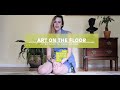
In an era where digital engagement has become a cornerstone of cultural institutions, the Newark Museum of Art (NMOA) has emerged as a leader in bridging the gap between historical collections and contemporary domestic creativity. Through its ongoing initiative, "Art on the Floor," the museum has successfully transitioned the traditional gallery experience into a series of interactive, hands-on tutorials. Led by Museum Educator Kirsten Mayer, this digital programming series provides a masterclass in accessible art education, proving that the most profound artistic inspiration often begins within the four walls of one’s own home.
The Genesis of "Art on the Floor"
The "Art on the Floor" project, which gained significant momentum in late 2021, was born out of a dual necessity: to maintain the museum’s mission of public enrichment during a period of global social distancing and to provide meaningful, low-barrier entry points to art history. The program focuses on "demystifying" the creative process. Rather than presenting art as a distant, untouchable artifact, the series invites participants to look at the NMOA’s vast collection—ranging from the Arts of Global Africa to complex geometric patterns—and find personal resonance through creation.
The project is a testament to the museum’s commitment to inclusive pedagogy. By utilizing common household materials, the NMOA removes the financial and logistical barriers that often deter aspiring artists from engaging with high-level artistic concepts.
Chronology of Engagement: From Concept to Creation
The series follows a deliberate pedagogical structure, characterized by a step-by-step methodology that accommodates various skill levels and learning styles.

The Foundation: The Arts of Global Africa
The initial phase of the program emphasized the power of printmaking. In a featured tutorial, Mayer demonstrates how to synthesize the intricate visual language found within the Arts of Global Africa collection into a personal printing project. This video session serves as an exploration of pattern, rhythm, and symbolism, encouraging viewers to view their own surroundings as a canvas for cultural expression.
The Intermediate Stage: Stained Glass Simulations
As the series progressed, the curriculum shifted toward light and transparency. The stained-glass window project remains one of the most popular installments. By utilizing accessible materials—often items found in a craft drawer or kitchen—Mayer guides participants through the structural mechanics of glass art. This session highlights the museum’s ability to teach complex historical techniques (such as lead-caming and color theory) through simplified, modern-day craft substitutes.
The Advanced Application: Binary Jewelry
Perhaps the most innovative aspect of the "Art on the Floor" series is its foray into the intersection of technology and artistry. The binary jewelry project represents a sophisticated leap in the program’s scope. By interpreting the language of computers through the tactile medium of beadwork and assembly, the museum successfully frames digital literacy as an artistic endeavor. This segment bridges the gap between STEM and the humanities, demonstrating that "art" is not confined to paint and canvas, but extends to logic and structure.
Supporting Data: The Digital Shift in Cultural Institutions
The success of NMOA’s digital initiatives is supported by a broader industry trend toward "digital-first" accessibility. According to recent reports on museum attendance and engagement, institutions that provide high-quality, supplemental video content experience a 30% increase in long-term digital retention.

The NMOA’s digital dashboard reflects this reality. By integrating accessibility features—such as high-contrast viewing modes, dyslexia-friendly font options, and adjustable text spacing—the museum ensures that its educational content is not just available, but equitable. These technical choices are not merely administrative; they are a fundamental component of the museum’s mandate to serve a diverse public. Data suggests that when accessibility barriers are lowered, engagement duration increases by an average of 15 minutes per session, as users are less frustrated by interface limitations and more focused on the educational content provided.
Official Perspectives: The Philosophy of the Educator
Kirsten Mayer’s approach as a Museum Educator is rooted in the "constructivist" theory of learning—the idea that knowledge is built through the act of doing. In official museum communications, the emphasis is consistently placed on the process rather than the product.
"Art is not an end result," one project summary notes. "It is a conversation between the viewer, the creator, and the history that informs the work." By framing the museum’s collection as a repository of ideas rather than a collection of static objects, Mayer’s videos encourage a mindset of inquiry. The museum’s decision to feature these videos prominently on their digital platforms reflects an institutional shift from a "curatorial" model (where the museum tells the public what to value) to a "participatory" model (where the museum provides the tools for the public to find their own value).
Implications for the Future of Museum Education
The implications of the "Art on the Floor" series extend far beyond the Newark community. As cultural institutions worldwide grapple with the long-term impact of the digital age, the NMOA model provides a viable template for the future.
1. The Democratization of Art
By removing the "ivory tower" perception of museums, NMOA is fostering a generation of creators who feel comfortable interacting with historical narratives. When a child learns how to make "binary jewelry" based on a museum video, the museum becomes a part of their household identity.
2. The Multi-Sensory Classroom
The incorporation of accessibility features—such as the pause-animation function and high-contrast visuals—signals a move toward universal design. Museums are no longer just physical buildings; they are dynamic information hubs that must cater to neurodivergent learners, the visually impaired, and the elderly. The NMOA’s commitment to these features sets a benchmark for other regional museums.
3. Sustainability and Reach
Digital content allows the museum to transcend geographic limitations. A student in a rural setting can now access the same educational quality as someone living blocks away from the Newark facility. This scalability is crucial for the future funding and survival of mid-sized museums that must compete for attention in a globalized information economy.
Conclusion: A Living Legacy
The "Art on the Floor" series is more than a collection of how-to videos; it is a manifestation of the Newark Museum of Art’s enduring commitment to accessibility and public service. By leveraging technology to strip away the intimidating layers of "high art," the museum has successfully invited the public to participate in the ongoing story of human creativity.

As we look toward the future, the integration of these digital tools—coupled with the human touch of educators like Kirsten Mayer—will continue to define what it means to be a modern museum. Whether through the lens of a historical printing press or the logic of a binary string, the NMOA proves that the most important space in the museum is not the gallery wall, but the floor where the art is made.
The museum’s dedication to maintaining a digital presence that is as inclusive as its physical one ensures that art remains a vital, breathing entity in the lives of all who choose to engage with it. In the final analysis, the "Art on the Floor" project serves as a reminder that inspiration is never far away; it is merely a matter of knowing where to look and having the tools to begin.
