

By Emma Cieslik
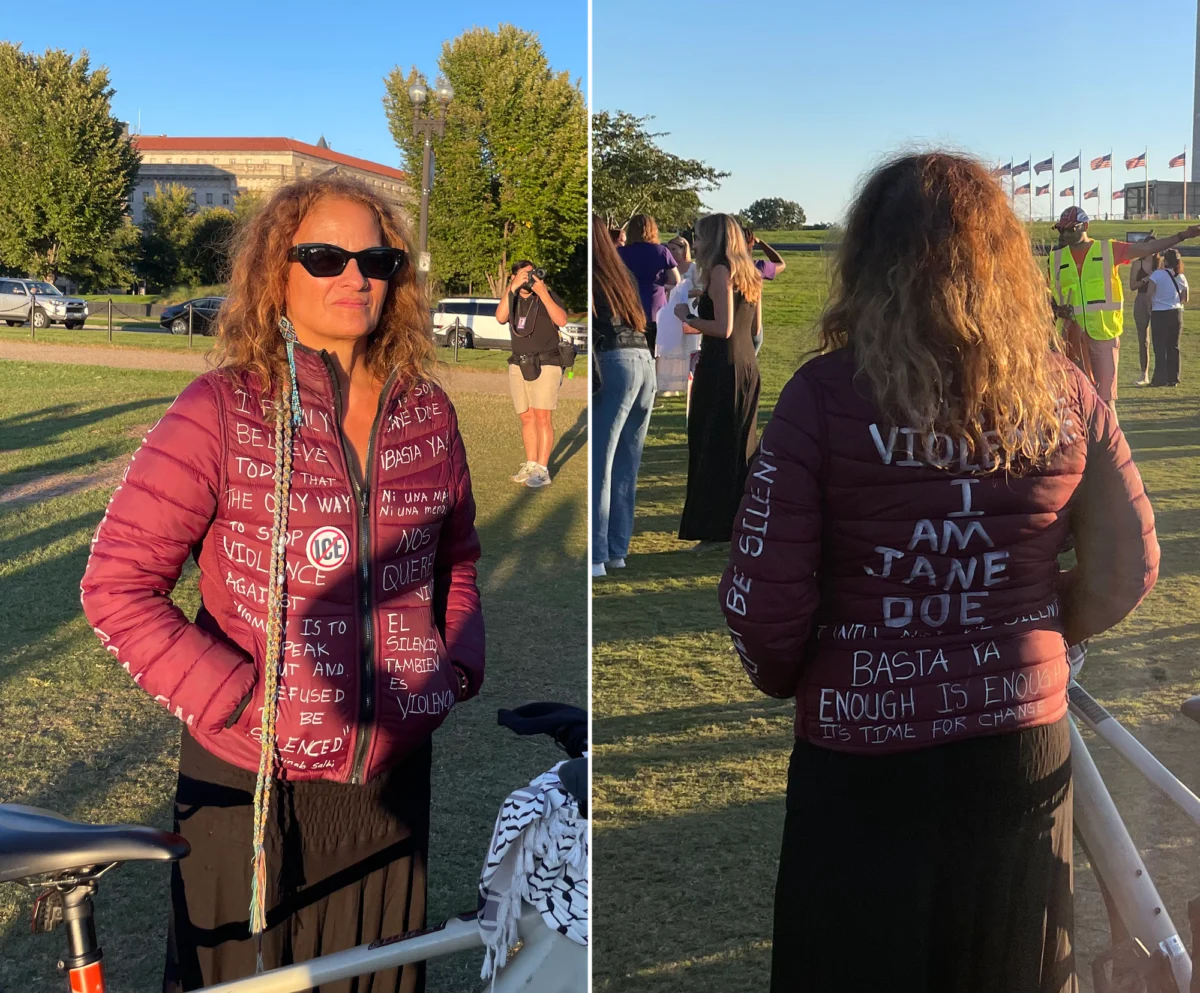
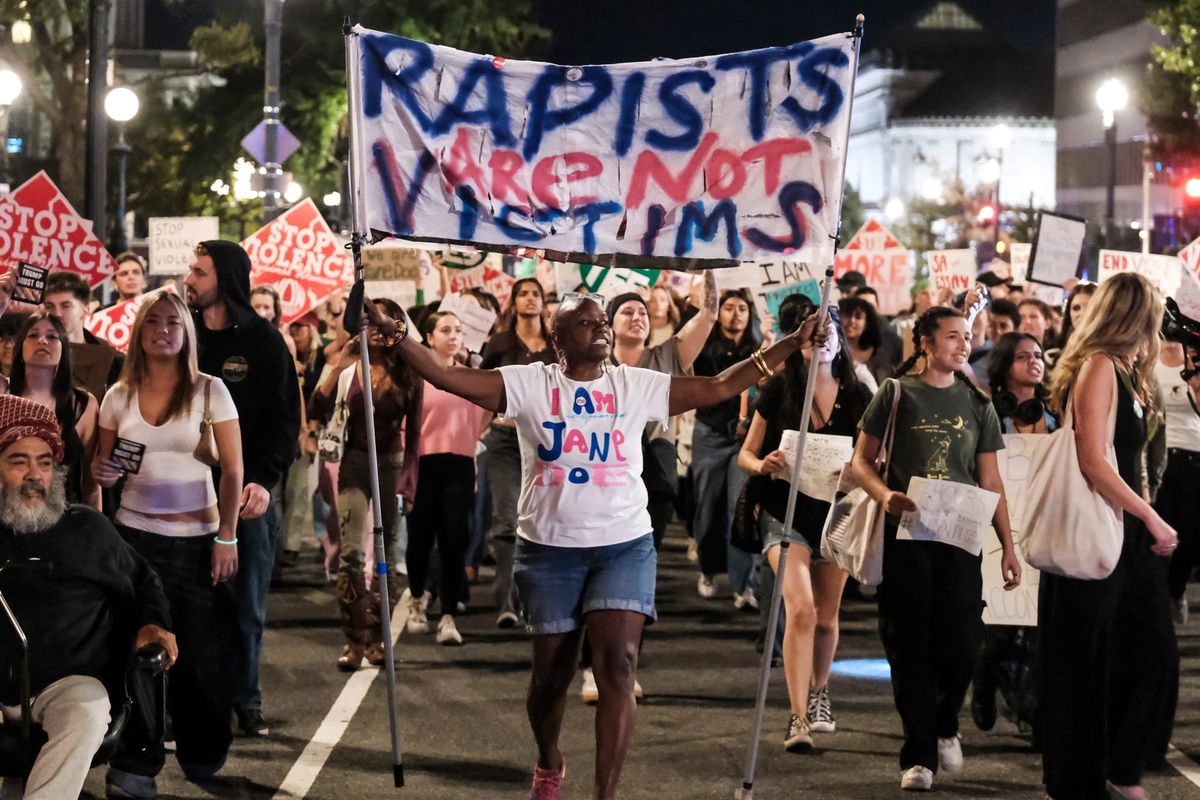
The American landscape of advocacy shifted dramatically on October 8, 2026, as a wave of coordinated demonstrations swept across the United States. Under the banner of “I Am Jane Doe,” thousands of artists, activists, and survivors converged in a collective, visceral demand for institutional accountability regarding sexual violence. From the ivy-covered halls of elite universities to the seat of federal power in Washington, DC, the message was uniform and uncompromising: the era of systemic impunity must end.
The epicenter of the DC demonstrations, which drew approximately 250 protesters to the shadow of the Washington Monument, was not merely a local rally but a strategic symbolic act. Organizers purposefully situated the event between the Washington Monument and the White House—two of the nation’s most potent emblems of authority—to underscore a central theme of the movement: that accountability for sexual violence must extend from the fraternity house to the highest office in the land.
The Catalyst: The “Cornell 7” and the Failure of Institutional Justice
The current nationwide outcry was sparked by the harrowing case of a Cornell University student, referred to in legal filings as “Jane Doe.” Two years ago, the student reported that she had been gang-raped by seven male students, an act that was allegedly filmed and boasted about within a private fraternity Snapchat group.
The university’s handling of the incident ignited a firestorm of controversy. According to public reports, while two of the seven accused men were ultimately expelled, the remaining five faced only minor disciplinary measures—most notably, being required to write reflective essays. For many observers, this outcome served as a grotesque illustration of the “boys will be boys” culture that continues to permeate higher education.
The failure of the university to provide what many students and activists deem a proportionate response to violent sexual assault prompted Jane Doe to file a new, more comprehensive lawsuit this year. Her legal battle has since transcended the boundaries of a single campus, becoming a rallying cry for a generation of survivors who argue that institutions prioritize the reputations of perpetrators over the safety and dignity of victims.

Chronology of a Movement
The momentum leading up to the October 8 Day of Action was built over several tense weeks.
- September 2026: Legal filings in the Cornell case move back into the spotlight, sparking intense social media discourse and student-led organizing efforts.
- October 5, 2026: Hundreds of students at Cornell University stage a walkout and campus rally. The demonstration serves as a direct challenge to the university administration, demanding greater transparency and a total overhaul of the school’s Title IX and disciplinary processes.
- October 8, 2026: The Women’s March coordinates the “I Am Jane Doe” National Day of Action. Over a dozen cities host simultaneous demonstrations, creating a synchronized national presence.
- October 8, 2026 (Mid-Day): The Washington, DC, rally commences on the National Mall. Speakers include high-profile survivors and legal advocates who draw direct connections between the Cornell case and broader national patterns of sexual violence.
- October 8, 2026 (Afternoon): Protesters march toward the White House, culminating in a series of musical performances and speeches focused on voter mobilization and legislative change.
Voices of the Resistance
The National Mall event featured a lineup of speakers who framed the current movement as a "moment of reckoning." Among them was Dani Bensky, a prominent advocate for survivors of Jeffrey Epstein, who delivered a searing address. "We are in a moment of reckoning," Bensky declared, urging the crowd to channel their collective pain into political pressure.
The event also featured Alva Johnson, a former 2016 campaign staffer who made headlines for her public sexual assault allegations against Donald Trump. Her presence, alongside that of Claire Barnett, a JD candidate and president of Advocates Against Sexual Violence at Georgetown Law, signaled a strategic alignment between campus activism and national political critique.
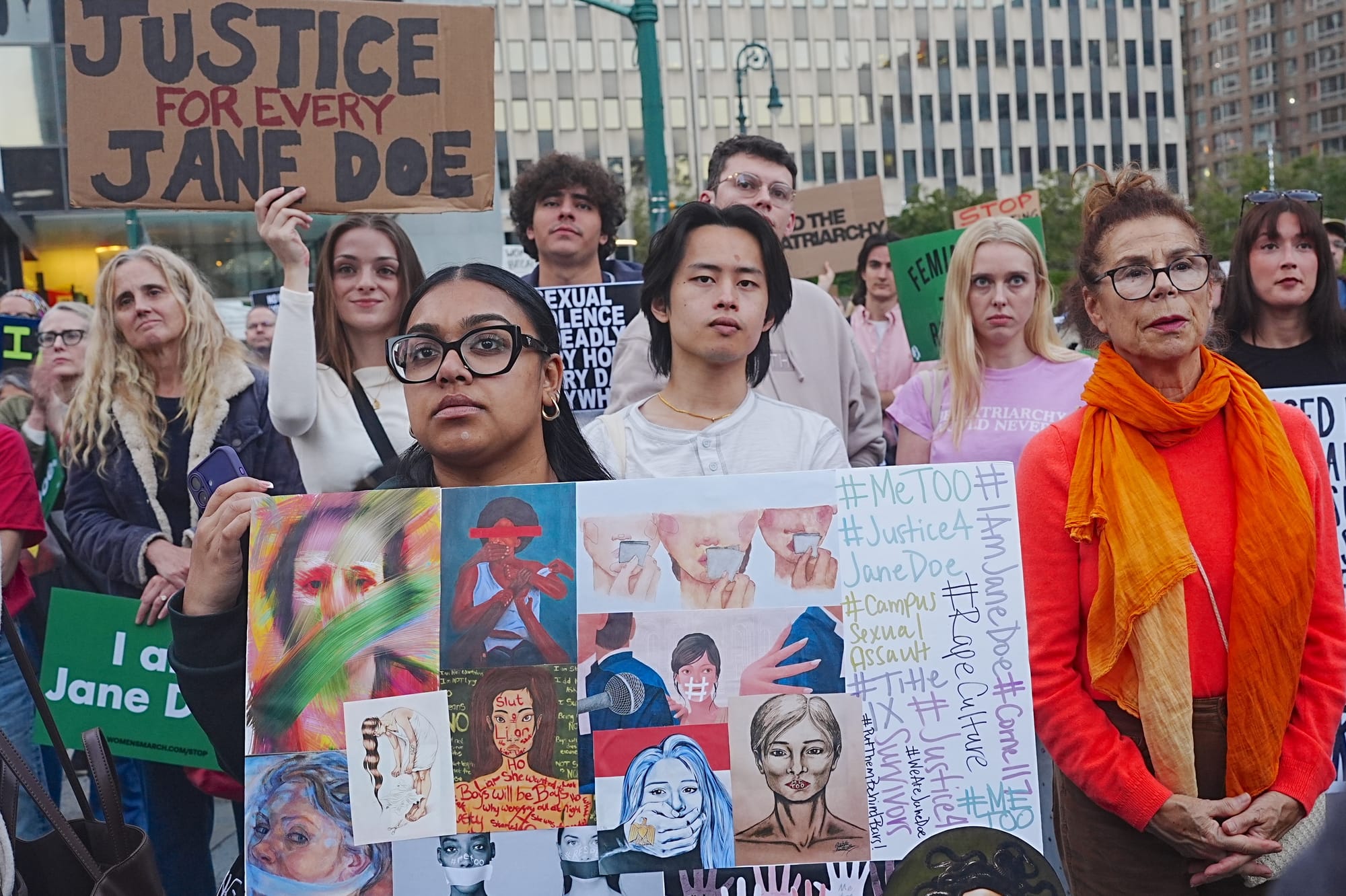
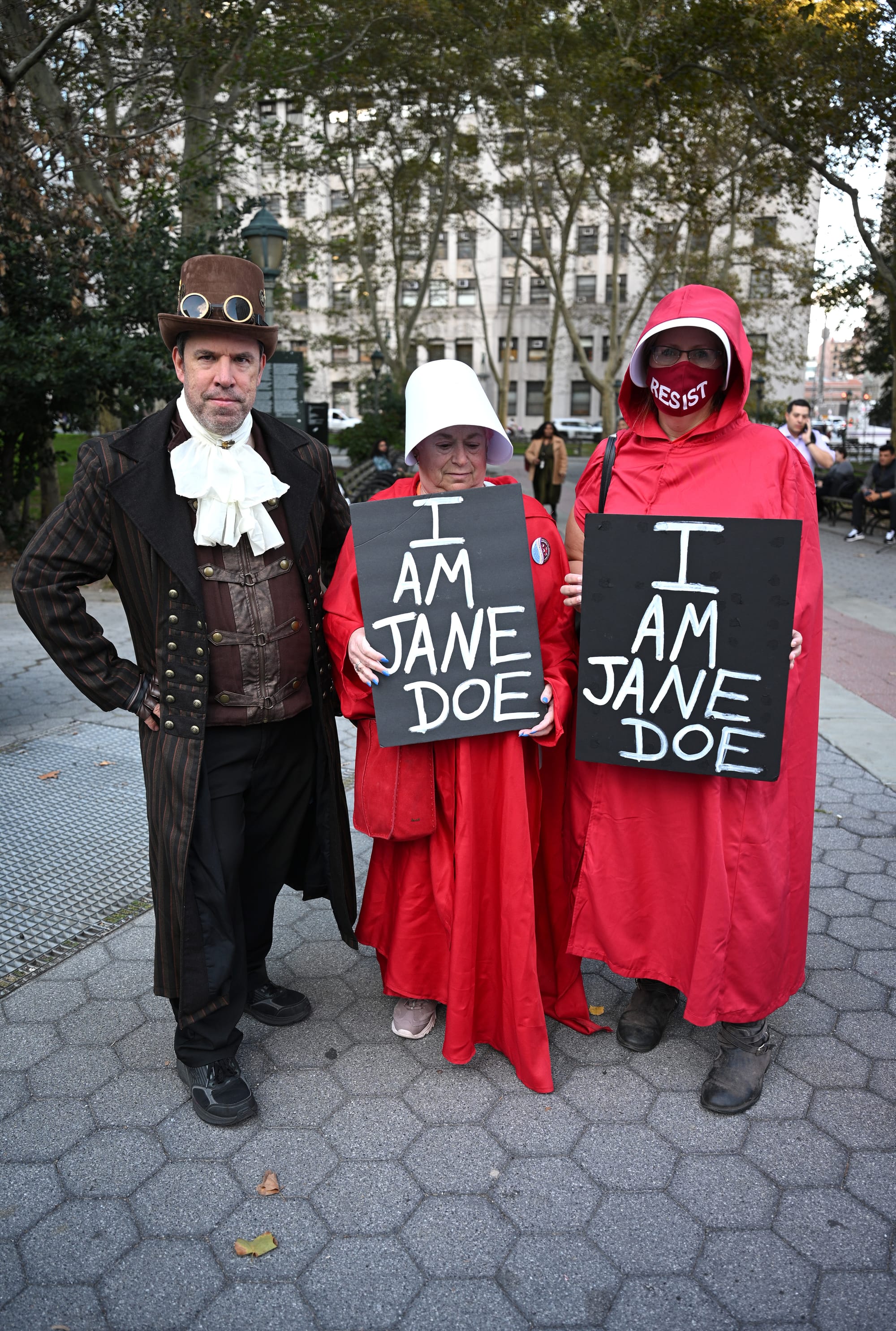
Nadine Seiler, a curator and activist renowned for her work preserving the Black Lives Matter memorial fence in DC, stood at the heart of the protest. Her hand-painted sign—featuring the words “I Am Jane Doe” on one side and “rapists are not victims” on the other—was a direct retort to the narrative emerging from the supporters of the “Cornell 7.” These supporters have argued that the public identification of the accused men on social media constitutes an unfair disruption of their lives.
“I am a victim of sexual assault, and so are many people,” Seiler told Hyperallergic. “Our experiences are important and life-changing. The argument that ‘boys will be boys’ is old, tired, and dangerous. We are here to say that these men are not the victims here; the survivors are.”
The Symbolic Geography of Dissent
When asked about the choice of location for the Washington, DC event, organizer Riley Reed highlighted the intentionality behind the geography. By positioning the rally within sight of the White House, the organizers intended to make a blunt statement regarding the leadership of the country.
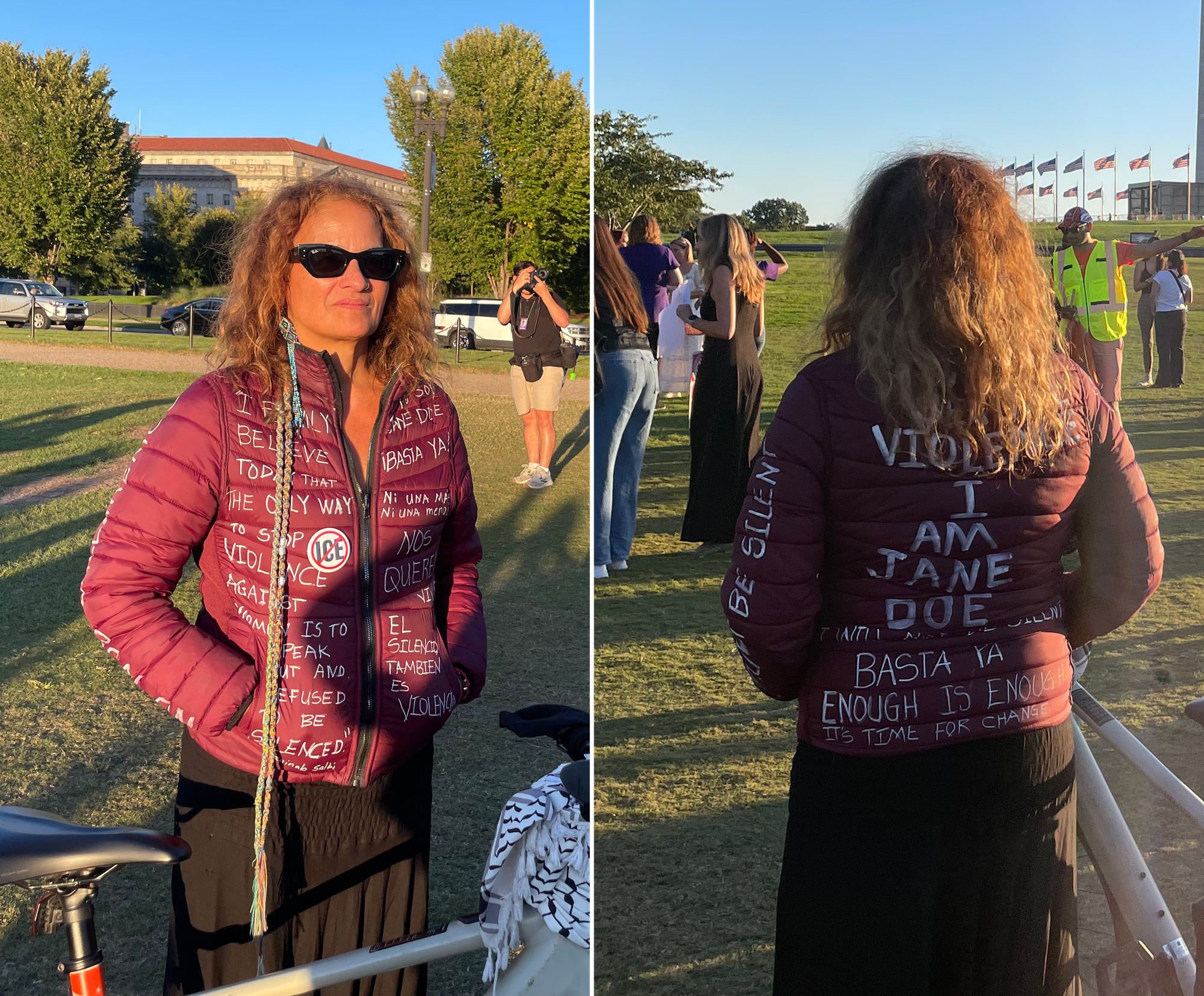
“It’s a big statement that we will not accept sexual abusers in the White House, and we have one currently in the White House,” Reed stated. By connecting the specific grievances of a campus sexual assault case to the multiple allegations against President Trump, the protesters sought to illustrate that the culture of impunity is not an isolated phenomenon found only in Greek life, but a pervasive issue embedded in American power structures.
The rally served as a reminder that these symbols of power—the White House and the Washington Monument—are not neutral, but are instead arenas where the public can contest the moral failings of their leaders.
Implications for Institutional and Political Change
The "I Am Jane Doe" demonstrations suggest that the discourse around sexual violence is entering a new, more militant phase. The movement is moving beyond simple awareness-raising and toward concrete, legislative, and institutional demands.
Impact on Higher Education
The Cornell protests have already begun to pressure other Ivy League and major universities to revisit their own sexual assault adjudication policies. The trend of students bypassing internal, often opaque, university investigations in favor of public protests and civil litigation suggests a loss of faith in internal administrative processes. Universities now face the prospect of sustained campus unrest if they continue to rely on lenient disciplinary measures like “writing essays” for cases involving physical assault.
Political Mobilization
The call to “vote the rape regime out of office” indicates that the movement is explicitly tying survivor advocacy to the upcoming election cycles. By bringing together survivors like Alva Johnson and campus advocates like Claire Barnett, the movement is attempting to build a coalition that spans age, status, and professional background. The organizers argue that the ballot box is the final frontier for accountability, and they are leveraging the national platform to push for legislative reform at both the state and federal levels.
A Shift in Collective Consciousness
Perhaps most significant is the shift in how the term “Jane Doe” is being utilized. Traditionally, the pseudonym is used to protect the identity of a victim. In this movement, the name has become a badge of shared experience. By claiming “I Am Jane Doe,” participants are stripping away the shame often associated with the designation and replacing it with collective strength.
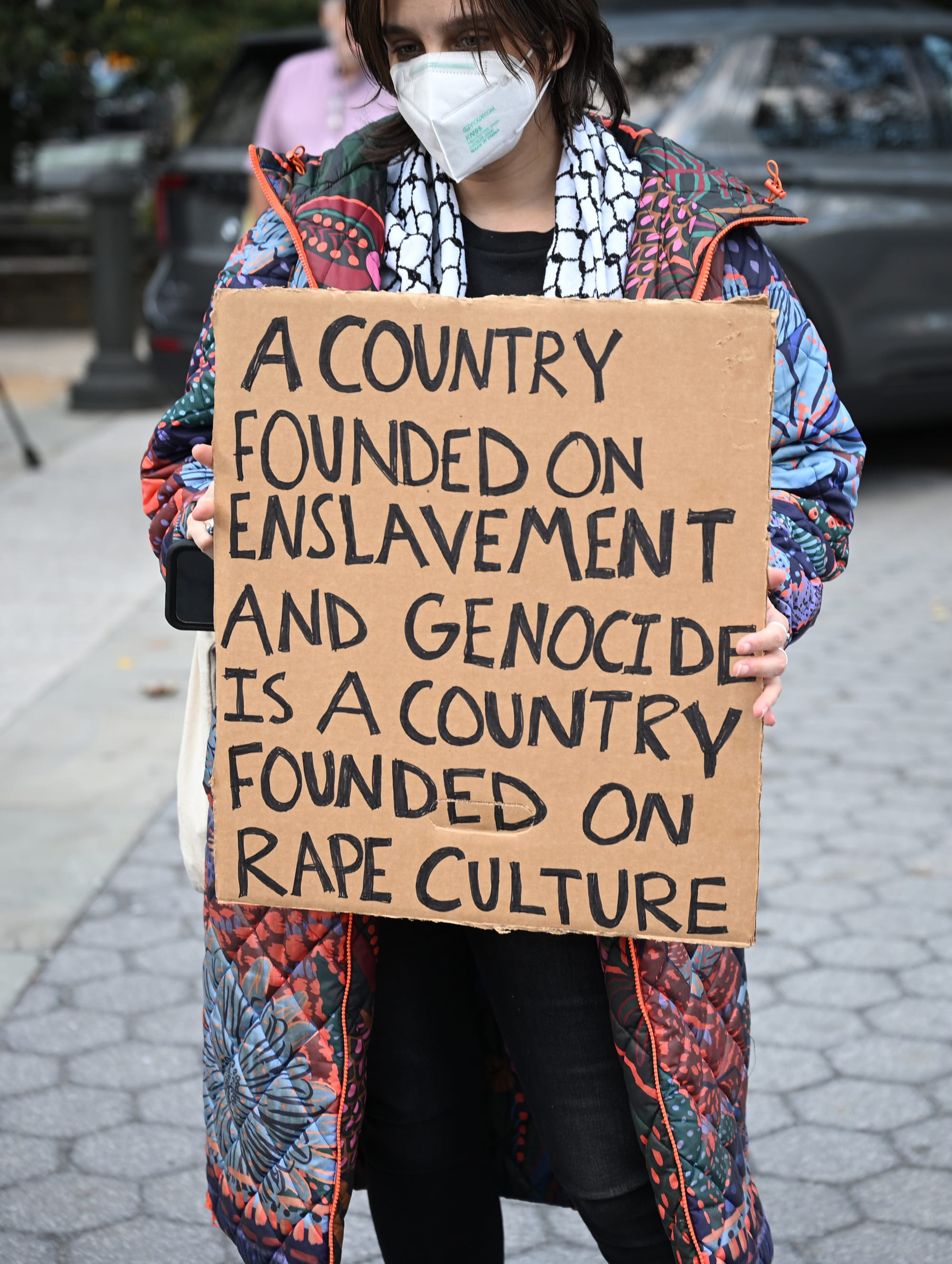
As the protesters dispersed and marched away from the White House, the final words spoken by Alva Johnson echoed across the Mall: “I am not afraid. They feed off fear, so we starve them with courage.”
The events of October 8 mark a turning point. Whether the movement will be able to sustain this energy and translate it into permanent policy change remains to be seen. However, the message from the streets of Washington and the halls of Cornell is clear: the silence surrounding sexual violence has been broken, and the demand for accountability is no longer a request—it is a requirement.
