

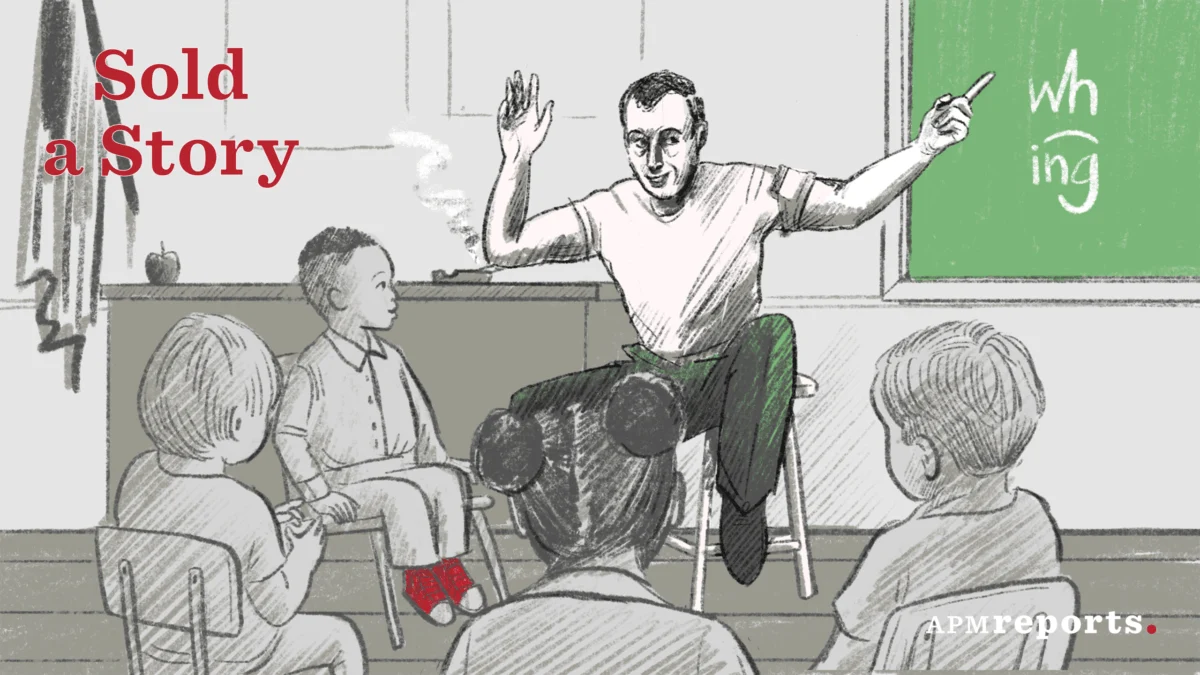
The persistent gap between educational research and classroom reality remains one of the most significant challenges in the American K-12 landscape. While Sold a Story, the landmark investigative podcast from APM Reports, initially captivated the nation by exposing the systemic failures in how children are taught to read, its latest installment—Season 2, Episode 2, "The Remedy Is Always Teaching"—shifts the focus from specific curricula to the very philosophy of instruction itself.
At the heart of this episode is the work of Zig Engelmann, a figure whose experimental approach in an Illinois preschool decades ago continues to challenge modern pedagogical norms. By prioritizing instructional precision over intuition, Engelmann and his team crafted a mantra that remains as provocative today as it was then: "If the student hasn’t learned, the teacher hasn’t taught."
The Genesis of a Methodology: The Illinois Experiment
To understand the current crisis in American education, one must look at the historical pivot points where instructional design diverged. In the mid-20th century, the prevailing wisdom in early childhood education often leaned toward discovery-based learning—a philosophy suggesting that children learn best when allowed to explore their environment with minimal teacher intervention.
Zig Engelmann, however, took a radically different path. Working out of an experimental preschool in Illinois, Engelmann sought to quantify the success of teaching. He posited that learning was not a passive byproduct of exposure, but an active result of carefully structured, repeatable instructional sequences.
The Core Discoveries
During his tenure in Illinois, Engelmann and his colleagues documented several key breakthroughs:
- Instructional Efficiency: Lessons were stripped of ambiguity. Every interaction was designed to reduce cognitive load and maximize student engagement.
- Continuous Feedback Loops: The team discovered that if a student struggled, the failure was not inherent to the student’s aptitude but to the instructional method employed.
- The "Scripted" Approach: By providing teachers with precise language and sequences, the team minimized the variance in teaching quality, ensuring that students in different classrooms received equitable instruction.
This was not merely a teaching style; it was an engineering approach to the human mind. The "remedy," as the episode title suggests, is not more resources, more technology, or smaller class sizes—it is, fundamentally, better teaching.
Chronology of a Pedagogical Shift
The evolution of these ideas did not happen in a vacuum. It was a decades-long struggle against the "progressive" education movement that dominated schools of education throughout the late 20th century.
- The 1960s – The Experimental Phase: Engelmann’s team at the University of Illinois began formalizing Direct Instruction (DI). They utilized rigorous data collection to determine which specific prompts led to the highest rate of student mastery.
- The 1970s – The Scaling Challenge: As the methodology moved from the lab preschool into public schools, it faced immediate institutional resistance. Educators accustomed to autonomy often bristled at the idea of "scripted" lessons.
- The 1990s – The Data Gap: As standardized testing became the primary metric for school success, the divergence between "research-based" practices and "classroom-ready" curricula widened.
- 2022-2026 – The Sold a Story Era: The release of APM Reports’ Sold a Story brought these tensions into the mainstream. It exposed how multi-billion dollar publishing industries had successfully marketed "balanced literacy" approaches that lacked the scientific rigor Engelmann had championed decades prior.
Supporting Data: Why Pedagogy Matters
The implications of Engelmann’s mantra are supported by a growing body of cognitive science. Research into "Explicit Instruction" consistently shows that students, particularly those from disadvantaged backgrounds or those struggling with foundational concepts, thrive when teachers provide clear, direct guidance.
The Efficacy Gap
Data from longitudinal studies of Direct Instruction programs have shown significant improvements in:

- Decoding and Fluency: Students taught via explicit sequences show higher proficiency in reading by the third grade.
- Retention Rates: Structured repetition, a hallmark of the Illinois method, has been shown to move information from short-term to long-term memory more effectively than discovery-based methods.
- Equity: Perhaps most importantly, structured instruction serves as an equalizer. When the quality of the teaching is baked into the curriculum, it protects students from the "luck of the draw" when it comes to having an exceptionally talented teacher.
Official Responses and the Institutional Divide
The reception of these findings among policymakers and district administrators has been bifurcated. On one side, there is a vocal contingent of state departments of education—most notably in states like Mississippi and Tennessee—that have pivoted toward "Science of Reading" legislation, which mandates the very type of explicit instruction Engelmann pioneered.
However, the response from schools of education has been more guarded. Many academic institutions argue that "scripted" teaching deprofessionalizes the teacher, turning them into mere conduits for a curriculum rather than intellectual leaders in the classroom. This ideological impasse—the tension between teacher autonomy and instructional effectiveness—remains the primary barrier to systemic reform.
Implications for the Future of Schooling
If the remedy is indeed teaching, then the professional development sector must undergo a fundamental transformation. Currently, teacher training often focuses on pedagogical theory and classroom management rather than the granular mechanics of how a child processes information.
1. Reforming Teacher Preparation
To implement the "remedy," universities must prioritize "clinical" training, where prospective teachers spend as much time practicing the delivery of lessons as they do studying theory. The Illinois model proves that teaching is a craft that can be perfected through repetition and critique.
2. The Role of the Curriculum
School districts are beginning to realize that the curriculum is not just a collection of materials, but the actual delivery system for knowledge. As districts move away from "curriculum-lite" approaches, they are increasingly adopting materials that are aligned with the science of learning.
3. Redefining Accountability
If we accept the mantra that "if the student hasn’t learned, the teacher hasn’t taught," the nature of school accountability must change. Instead of punitive measures for teachers, we must provide them with the tools and the instructional support necessary to succeed. Accountability, in this light, becomes a shared responsibility between the system (which provides the tools) and the practitioner (who delivers the instruction).
Conclusion: A Call to Clarity
The insights presented in Sold a Story are more than just a critique of the past; they are a blueprint for the future. By stripping away the layers of educational jargon that have shielded ineffective practices for years, the work of Engelmann and the team at APM Reports forces us to confront a hard truth: education is not an art form that relies on the intuition of the teacher, but a science that relies on the precision of the method.
As we look toward the remainder of the decade, the education sector faces a choice. We can continue to cling to theories that prioritize "discovery" at the expense of student mastery, or we can embrace the discipline of explicit instruction. The "remedy" is available, the research is clear, and the outcomes for millions of students hang in the balance. The time for pedagogical experimentation based on convenience is over; the time for instruction based on evidence has arrived.
For parents, teachers, and policymakers, the message is clear: if we want to see the literacy and achievement gaps close, we must stop asking if the students are capable of learning and start asking if the teaching is worthy of the student.
