

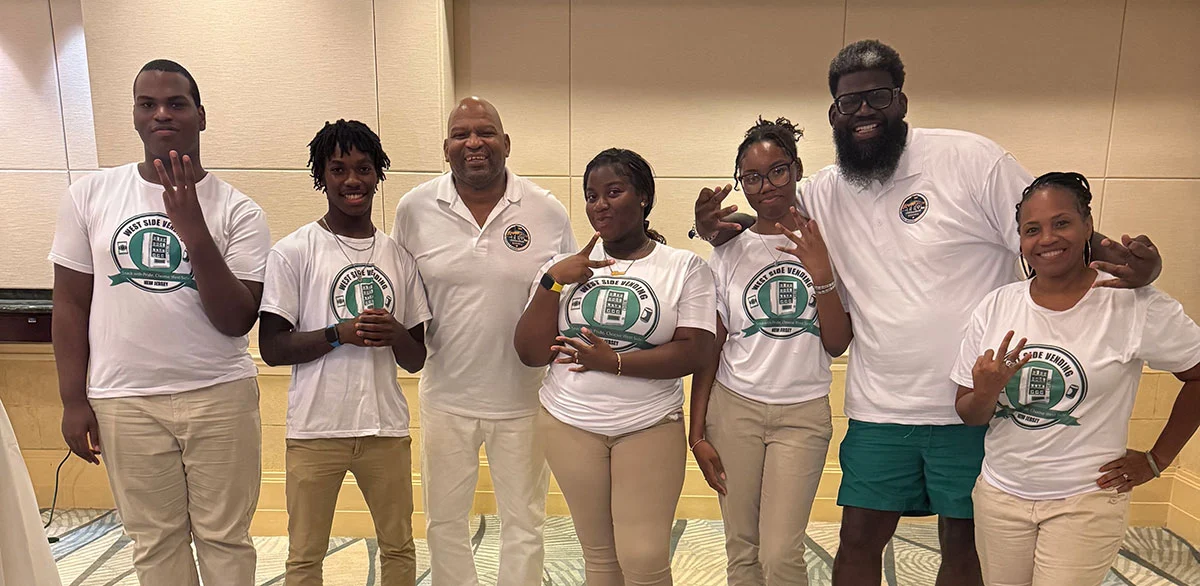
NEWARK, N.J. – In the competitive landscape of American high school business education, Newark Public Schools has once again asserted its dominance. Last month, a quartet of seniors from West Side High School vaulted their school to the top of the podium at the Young Entrepreneurz Solutions (YES) National Business Plan Challenge, proving that the city’s next generation of business leaders is not just waiting for the future—they are actively engineering it.
The winning team, representing their student-led enterprise "West Side Vending," included seniors Hassan Reed, Kazmir Cray, Nia Jack, and Brailynn George. Their triumph on the national stage marks the second consecutive year that West Side High School has claimed the top prize in this prestigious competition, cementing the school’s reputation as a premier incubator for young talent.
The Core Concept: West Side Vending
At the heart of the team’s success was their multifaceted business plan for West Side Vending. Rather than a traditional retail operation, the students designed a scalable, service-oriented model focused on vending-machine leasing.
The enterprise serves a dual purpose: it provides a vital service to the school community by ensuring consistent access to snacks and supplies, and it serves as a live, high-stakes laboratory for the students. Through the operation, Reed, Cray, Jack, and George have navigated the complexities of supply chain logistics, inventory management, vendor negotiations, and financial forecasting.
By managing the machines within the school, these students have successfully bridged the gap between abstract textbook theories and the harsh, rewarding reality of entrepreneurship. They have transformed a classroom project into a functioning entity that generates revenue and demands accountability—a transition that caught the eye of the national judges.
Chronology of the Challenge
The YES National Business Plan Challenge is a rigorous gauntlet designed to test the mettle of budding entrepreneurs. This year’s event unfolded over two high-pressure days, September 25 and 26, bringing together top student teams from across the United States.
Day One: The Pitch
On September 25, the West Side team stepped onto the national stage to present their business plan. The presentation was not merely a summary of their ideas; it was a comprehensive pitch that included detailed market analysis, projected profit-and-loss statements, and a robust growth strategy. The judges—comprised of industry professionals and veteran entrepreneurs—pushed the students with pointed questions regarding their operational scalability and competitive advantage. The Newark team, prepared by months of intensive coursework within the school’s Business and Finance Academy, navigated the inquiry session with the poise of seasoned executives.
Day Two: The Verdict
After a night of deliberation, the judges reconvened on September 26 to announce the results. The atmosphere was charged with anticipation, but when the name "West Side Vending" was announced as the first-place winner, it confirmed the strength of the Newark delegation. The win was a validation of the technical skills the students had honed, but more importantly, it was a testament to their ability to articulate a vision and defend it under pressure.
The YES Ecosystem: Foundations of Economic Development
The YES competition was founded by Ernest Ruffin Jr., a former Rutgers University adjunct professor and a seasoned entrepreneur who recognized a critical gap in secondary education. Ruffin’s vision was to create a pipeline that introduces students in grades 6 through 12 to the foundational pillars of entrepreneurship and economic development.
The program is designed to move beyond basic financial literacy. It focuses on the "how-to" of business: identifying market needs, conducting feasibility studies, mastering the nuances of marketing, and understanding the legal frameworks of starting a business. By hosting the national challenge, Ruffin provides a platform where these classroom-acquired skills are stress-tested against peers from different geographic, social, and economic backgrounds. For West Side High School, which hosts the district’s specialized Business and Finance Academy, the YES program serves as the ultimate capstone experience.
Official Responses: Cultivating a Culture of Excellence
The victory has drawn widespread praise from district leadership, who view the win as a clear indicator of the school district’s strategic focus on career-ready education.
Superintendent Roger León highlighted the synergy between academic instruction and real-world application. "Our students are learning how to turn ideas into opportunities through planning, teamwork, and the confidence to present their work on a national stage," León stated. "West Side Vending demonstrates the power of connecting classroom instruction with practical experience. We are proud of these students and the educators who are preparing them to become business leaders."
Board of Education President Hasani K. Council echoed this sentiment, emphasizing the transformative impact of the program on the students’ self-perception. "These experiences help students see themselves as creators, problem-solvers, and leaders," Council said. "We congratulate the West Side Vending team for representing Newark and putting their business knowledge into action."
Principal Akbar Cook, a driving force behind the school’s entrepreneurial culture, spoke to the long-term implications of the students’ work. "Our students have taken ownership of West Side Vending, and this competition gave them an opportunity to share their work with a national audience," Cook said. "The experience of building a business and presenting it to others helps them develop skills they can carry into college, careers, and ventures of their own."
Building a Legacy: From "Rider Heat" to Vending
The success of the West Side Vending team is not an isolated incident; it is part of a deliberate, burgeoning culture of excellence at West Side High. In 2023, the school achieved its first major milestone in the YES competition when seniors Hapsatou Fatty, Alyssa Lopez, and Shamar Richards took first place for their enterprise, "Rider Heat Hot Sauce."
The Rider Heat project was a sophisticated study in product development. The team partnered with the Newark Beth Israel Farmers Market to source ingredients, develop a unique branding strategy, and navigate the regulatory requirements of food production and retail sales. The success of Rider Heat set a high bar, one that the West Side Vending team not only met but successfully navigated to defend the school’s title. This "tradition of winning" has had a ripple effect throughout the student body, creating a pipeline where younger students look up to their peers as mentors and see the path to national success as a realistic goal rather than an impossible dream.
Implications for the Future of Newark Education
The triumph of West Side High School carries significant implications for urban education policy. By prioritizing business and finance as core components of the curriculum, Newark Public Schools is addressing the critical need for economic empowerment in its community.
Bridging the Skills Gap
The modern economy demands more than just technical proficiency; it requires adaptability, critical thinking, and the ability to navigate uncertainty. The YES competition forces students to encounter these realities head-on. Whether they choose to pursue traditional corporate careers or launch their own startups, the students involved in the Business and Finance Academy are graduating with a unique advantage: they understand the "language" of business.
Economic Development and Community Investment
When students create businesses like West Side Vending or Rider Heat, they are engaging in local economic development. They are identifying gaps in their local market and providing solutions. This, in turn, fosters a sense of agency—the belief that they have the power to change their economic environment. As these students transition into higher education and the professional workforce, they bring with them a mindset that views challenges as opportunities for innovation.
The Role of Mentorship
The success of these teams also highlights the indispensable role of educators and industry partners. The partnership with local institutions, such as the Newark Beth Israel Farmers Market, and the guidance of mentors like Ernest Ruffin Jr., creates a supportive ecosystem. It suggests that when schools provide the right resources and external networks, students from all backgrounds can compete—and win—on any stage.
Conclusion: Preparing the Next Generation
As the West Side Vending team returns to their studies, their victory serves as a powerful symbol of what is possible when ambition is met with opportunity. They have proven that Newark’s youth are not just passive recipients of education, but active architects of their own success.
The national attention garnered by this victory is well-deserved, but for those in the halls of West Side High School, the work continues. With a new cohort of students entering the Business and Finance Academy each year, the school is poised to continue its streak of excellence, ensuring that Newark remains a fertile ground for the entrepreneurs, innovators, and business leaders of tomorrow.
The lessons learned by Hassan Reed, Kazmir Cray, Nia Jack, and Brailynn George will extend far beyond the trophy case. They have mastered the art of the pitch, the discipline of the plan, and the resilience of the entrepreneur—tools that will undoubtedly serve them for a lifetime.
