

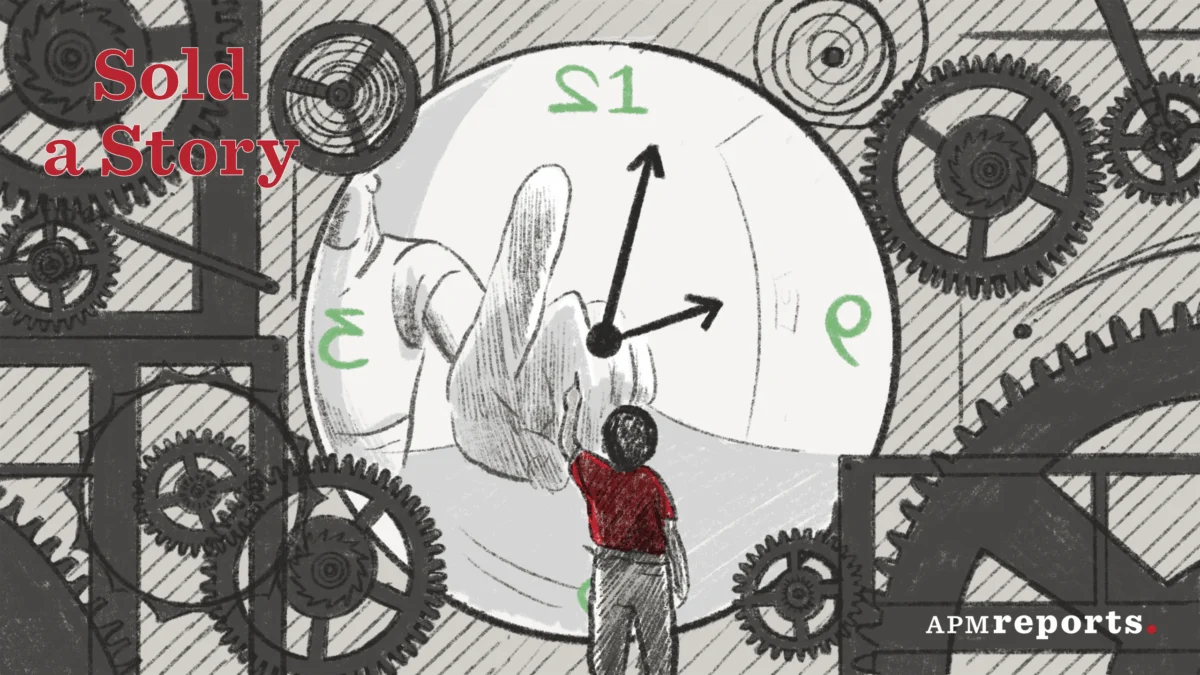
The landscape of American education is undergoing a seismic shift. For years, the prevailing consensus on pedagogy—the very science of how we impart knowledge—has been challenged not just by activists or politicians, but by a growing body of empirical research that suggests many of our foundational classroom practices are fundamentally flawed.
Following the explosive success of the first season of the investigative podcast Sold a Story, which meticulously dismantled the "three-cueing" reading method and sparked a national movement toward the "science of reading," producers at APM Reports have returned with a second season. If Season 1 was an indictment of how we taught children to read, Season 2, beginning with its inaugural episode, "It’s Not Just Reading," suggests that the problems run much deeper. The issue is not just about phonics versus balanced literacy; it is about the very architecture of teaching itself.
The Outsider: Zig Engelmann and the Algebra of Early Childhood
To understand the current tension in American classrooms, we must look back to the 1960s. The debut of Season 2 centers on an unlikely figure: Zig Engelmann, an education outsider whose radical ideas were dismissed by the academic establishment of his time.
Engelmann was not a tenured professor or a curriculum consultant. He was a man with a question: What are young children actually capable of learning? In a bold experiment that sounds like modern-day hyper-parenting, Engelmann began teaching his own four-year-old twins the fundamentals of algebra.
His success was undeniable, yet his reception in the educational community was icy. At the time, developmental psychology—heavily influenced by the work of Jean Piaget—suggested that children progressed through rigid stages of cognitive development. In this view, abstract concepts like algebra were strictly off-limits to toddlers. Engelmann’s work challenged the core dogma of the day, suggesting that the limitations we placed on children were not biological, but pedagogical. If you could teach a child the structure of logic, they could grasp complex systems long before the school system deemed them "ready."
However, academia is a fortress of tradition. Engelmann struggled for years to gain a foothold, finding himself an outcast in a system that valued established theories over direct, measurable results. It was only when a lone professor took a risk, allowing Engelmann to test his methodologies within a real-world classroom, that the efficacy of his approach began to shift from the fringe to the evidence-based record.
A Chronology of Disconnect
The history of American education can be viewed as a series of pendulum swings between "child-centered" discovery learning and "teacher-led" direct instruction.
- The 1960s: Zig Engelmann pioneers Direct Instruction (DI), emphasizing scripted, structured lessons that prioritize clear objectives and immediate feedback. He is largely ignored or actively derided by the education establishment.
- The 1970s and 80s: The rise of "Whole Language" and constructivist approaches. The focus shifts toward the belief that children learn best by immersing themselves in rich, literary environments, rather than through rote phonics or rigid skill-building.
- The 1990s and 2000s: The "Reading Wars" intensify. Despite mounting evidence that explicit instruction is more effective for the majority of learners, "balanced literacy" becomes the dominant pedagogical model in public schools.
- 2022: Sold a Story premieres, exposing the widespread adoption of ineffective reading curricula. The resulting public outcry forces state legislatures across the country to mandate a return to the science of reading.
- 2026: Sold a Story Season 2 launches, positing that the failure of reading instruction was merely a symptom of a systemic disregard for cognitive science across all subject areas.
The Cognitive Science Gap: Why Research Doesn’t Reach the Classroom
The most harrowing revelation in the Sold a Story series is not that we make mistakes, but that we ignore the research that could fix them. There is a persistent "research-to-practice" gap in education that is arguably larger than in any other public sector, including medicine or engineering.
Cognitive science has provided us with robust insights into how the human brain processes, stores, and retrieves information. We know, for instance, about "cognitive load theory," which suggests that novice learners are easily overwhelmed by unstructured, discovery-based lessons. We know that "spaced repetition" and "active recall" are significantly more effective than rereading or highlighting.
Yet, these findings often hit a wall when they reach the classroom. The reasons are multifaceted:
- Ideological Inertia: Schools of education often prioritize theories of "social construction" over the mechanical realities of how information is processed by the brain.
- Commercialized Curricula: Publishing houses have a financial interest in selling "new and improved" methods that promise transformative results without the rigor of scientific validation.
- Teacher Preparation: Most K-12 teachers are not trained in cognitive science. They are trained in pedagogical philosophies that emphasize student autonomy, which, while well-intentioned, often leaves struggling students behind.
Official Responses and the Defensive Posture
The release of Sold a Story has prompted defensive reactions from various stakeholders. Many reading specialists, who spent decades promoting the methodologies now being debunked, feel their expertise is being attacked.

School districts, meanwhile, are in a difficult position. Having spent millions of dollars on curriculum packages that are now being labeled as "junk science," they are facing pressure from parents to justify their investments. Some districts have pivoted quickly, issuing statements in support of "evidence-based practices." Others have adopted a wait-and-see approach, fearing that the "science of reading" movement is merely another transient trend that will be replaced by something else in five years.
However, the tide is turning. As state after state mandates the removal of three-cueing and non-evidence-based curricula, the "science of reading" is becoming the law of the land. The question now posed by Season 2 is: Will this trend stop at reading, or will it trigger a broader audit of how we teach math, science, and history?
The Implications for the Future of Public Education
If we accept the premise of Sold a Story—that we have been systematically failing students by ignoring the science of how they learn—the implications for public education are profound.
1. A Shift Toward Direct Instruction
We are likely to see a resurgence of structured, explicit instruction. This does not mean a return to the "sit and get" classrooms of the past, but rather a more intentional approach where teachers are equipped with the tools to provide clear, scaffolded lessons that respect the limits of human working memory.
2. The Professionalization of Teaching
If teaching is to be treated as a science, then teacher preparation must change. We need to move away from the "art of teaching" rhetoric and toward a model that treats educators like professionals in the medical field, who must keep up with peer-reviewed research and evidence-based protocols.
3. Accountability for Publishers
The educational publishing industry is currently under the microscope. In the coming years, we can expect greater calls for independent, third-party vetting of curriculum materials. The days of districts buying programs based on slick marketing decks are numbered.
4. Centering the Student, Not the Philosophy
Perhaps the most important implication is the shift in focus from what adults believe is "fun" or "progressive" to what actually results in student learning. As Zig Engelmann proved decades ago, when we remove the arbitrary barriers of low expectations and outdated psychological theories, children are capable of remarkable things.
Conclusion: The Long Road Ahead
The Sold a Story podcast is more than just a piece of investigative journalism; it is a catalyst for a necessary reckoning. By revisiting the story of Zig Engelmann, the producers are reminding us that the answers we seek have often been right in front of us, buried under layers of academic jargon and administrative stubbornness.
The movement to fix how we teach in America is still in its infancy. Changing a system as massive and decentralized as the U.S. school system will take decades, not years. It will require not just new textbooks or new training modules, but a fundamental change in the culture of our schools. It requires us to move past the binary of "traditional vs. progressive" and toward a model that is simply "effective."
As we look to the future, the lessons of Season 2 are clear: Teaching is a science, and every student—regardless of their background or zip code—deserves to be taught by someone who knows that science. The era of the "sold story" is ending; the era of the evidence-based classroom must begin.
