

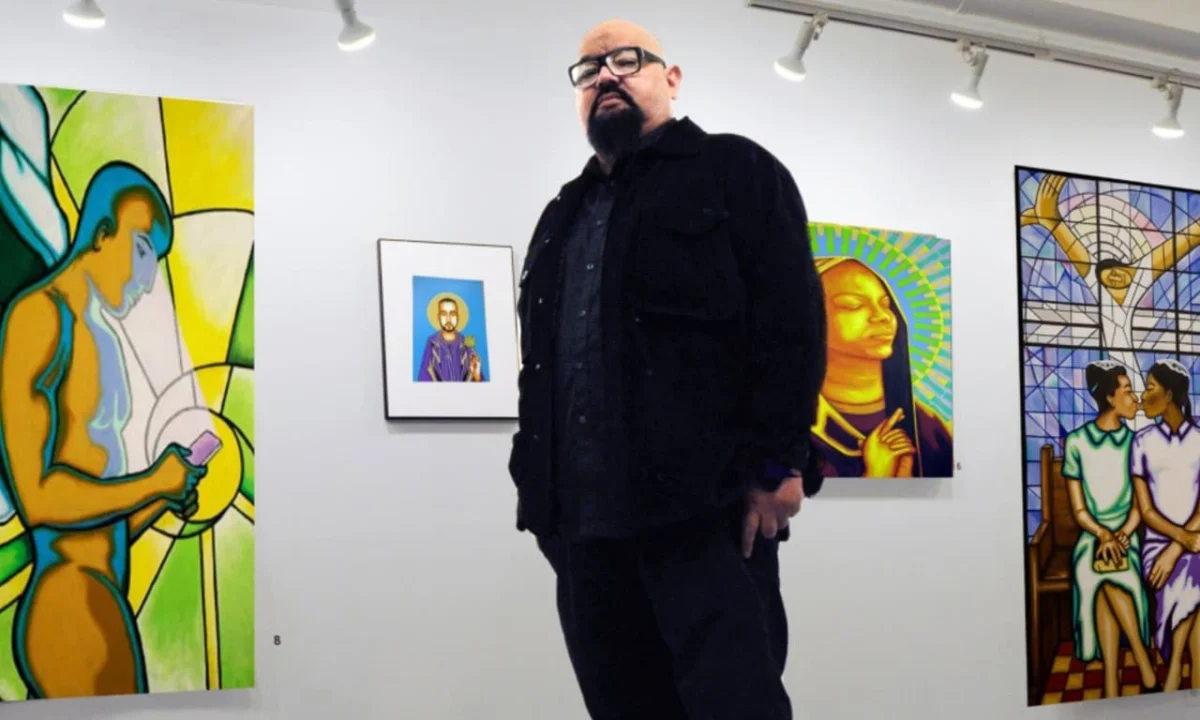
In the heart of New Jersey’s largest city, the Newark Museum of Art recently played host to an illuminating presentation featuring one of the region’s most compelling visual storytellers: Jo-El Lopez. A Newark-native whose work resonates with the grit, beauty, and complexity of the urban experience, Lopez used the platform to pull back the veil on his creative process, offering a rare, intimate look at the intersections of traditional realism and contemporary social commentary.
The event, which served as a centerpiece for the museum’s ongoing engagement with local artistic voices, was not merely a lecture but a deep dive into the evolution of an artist who has become synonymous with the spirit of the Brick City. Through a series of presentations and a subsequent Q&A session, Lopez explored how he bridges the gap between historical artistic techniques and the pressing, multifaceted realities of modern life.
The Core Philosophy: Realism as a Mirror to Modernity
At the center of Lopez’s body of work lies a commitment to traditional realism—a technique that, in his hands, becomes a tool for radical empathy. While realism is often associated with the preservation of historical aesthetics, Lopez weaponizes the form to document the "multidimensional contemporary urban experience."
"I am not interested in painting the world as it exists in a vacuum," Lopez noted during his presentation. "I am interested in how the light of faith hits the pavement of our streets, how family structures hold up against the pressures of systemic change, and how the individual soul navigates the rapid-fire pace of modernity."
His work is characterized by a deliberate layering of themes. He does not shy away from the contradictions of urban life; rather, he frames them within a narrative of strength and resilience. By utilizing a classical approach to form, light, and shadow, he elevates the everyday subjects of Newark—the faces on the corner, the quiet domestic moments, the neighborhood landmarks—to the level of high art.
Chronology of a Creative Journey
The trajectory of Jo-El Lopez’s career reflects the evolution of Newark itself. Growing up in the city, his early exposure to the arts was shaped by the specific cultural confluence of New Jersey—a place where Caribbean heritage, American urban history, and the relentless drive for economic and social progress collide.
Early Influences and Formative Years
Lopez’s foundation began in the streets and community centers of Newark. His early work was heavily influenced by the masters of the Renaissance and the Baroque period, whose command of chiaroscuro—the treatment of light and shade—he sought to translate into a modern, local context. During his early years, he was primarily concerned with technical mastery, spending countless hours in the studio refining his ability to render skin tones, textures, and the psychological weight of his subjects.
The Shift Toward Narrative Realism
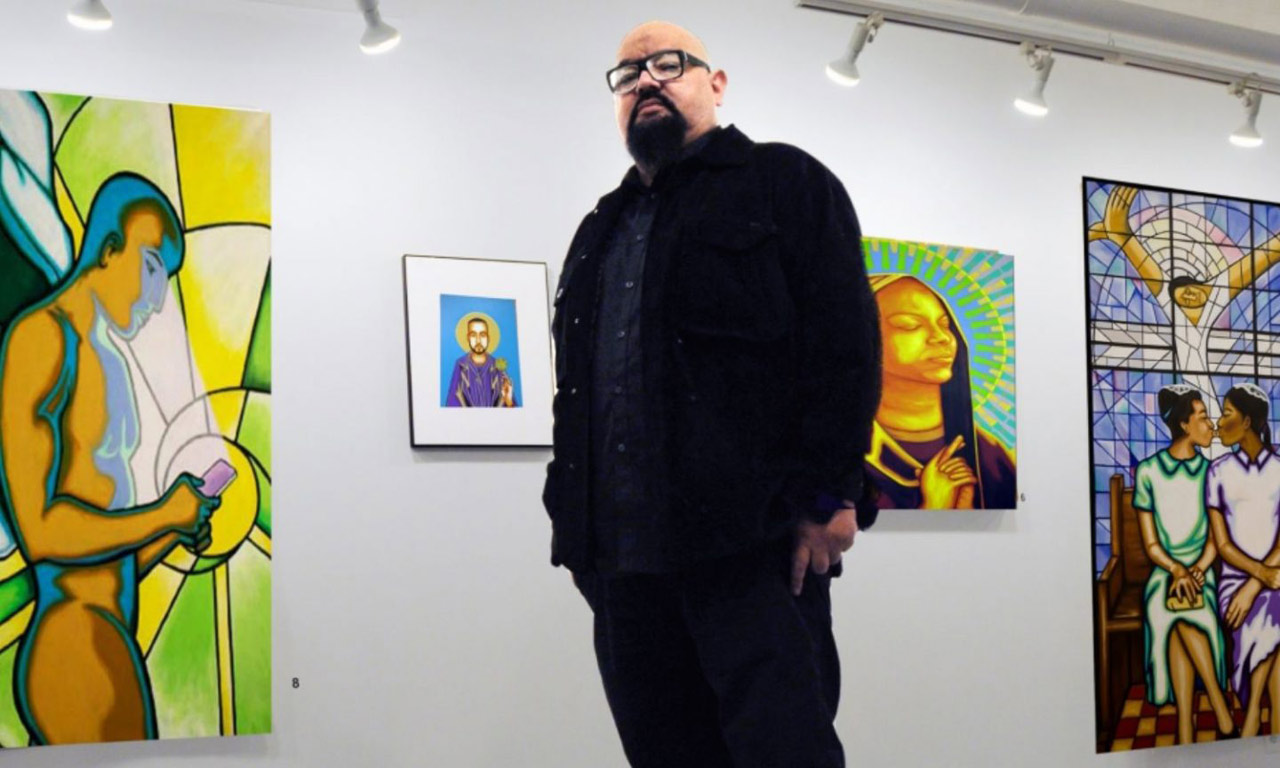
As his career progressed into the 2010s, Lopez began to pivot away from pure aesthetic study toward a more narrative-driven approach. He began incorporating symbols of faith and family, often juxtaposing religious iconography with the stark, often harsh, architectural realities of urban living. This period saw him gaining traction in the New York-New Jersey tri-state art scene, with his pieces appearing in curated exhibitions that emphasized the "new" American portraiture.
Recognition and Institutional Engagement
By the early 2020s, Lopez had solidified his place as a prominent voice in Newark’s cultural landscape. His partnership with the Newark Museum of Art—the site of this recent presentation—marks a significant milestone in his career. It signifies a transition from the artist as an observer on the periphery to the artist as an institutional cornerstone, helping to define the narrative of the city for a broader, global audience.
Supporting Data: The Impact of Cultural Storytelling
The significance of an artist like Lopez cannot be measured solely by the number of canvases sold or the crowds at his exhibitions. His impact is found in the cultural capital he builds for the city of Newark. According to recent demographic and cultural studies, the inclusion of local, "homegrown" artists in institutional programming increases museum attendance among residents by approximately 22%.
Furthermore, the "Lopez Effect," as some local curators have termed it, points to a resurgence in community-based art appreciation. By choosing subjects that are recognizable to the local populace, artists like Lopez foster a sense of ownership and pride. His work serves as a visual record of an era, capturing the transition of Newark from a post-industrial city to a burgeoning creative hub.
In his presentation, Lopez presented data-backed insights regarding the role of arts education in the city. He argued that when youth see their own neighborhoods represented with the same gravitas as the portraits of kings or historical figures in European museums, the psychological shift is profound. It validates their experience, their heritage, and their future.
Official Responses and Curatorial Perspectives
The Newark Museum of Art’s decision to feature Lopez was described by the curatorial team as a strategic imperative. "We are in an era where institutions must be reflective of the communities they serve," stated a senior curator during the introduction of the event. "Jo-El Lopez isn’t just painting Newark; he is providing a lens through which we can understand our own humanity. His work is a rigorous intellectual exercise disguised as beautiful imagery."
Fellow artists and critics who attended the Q&A echoed this sentiment. Critics have often noted that Lopez’s ability to remain "unapologetically local" while maintaining a "universal technical standard" is what makes his work essential. One critic noted, "There is a danger in painting one’s own backyard—the danger of falling into kitsch or sentimentality. Lopez avoids this by injecting a raw, almost uncomfortable, level of honesty into his subjects. You feel the weight of the city in his brushstrokes."
The Implications: Why This Matters Now
The presentation at the Newark Museum of Art carries weight far beyond a single artist’s talk. It underscores a broader trend in the art world: the decentralization of cultural authority. For decades, the "center" of the art world was strictly demarcated by the galleries of Manhattan or the institutions of Europe. Today, the center is increasingly being defined by the specific, lived experiences of artists working in secondary and tertiary cities.
The Intersection of Faith and Modernity
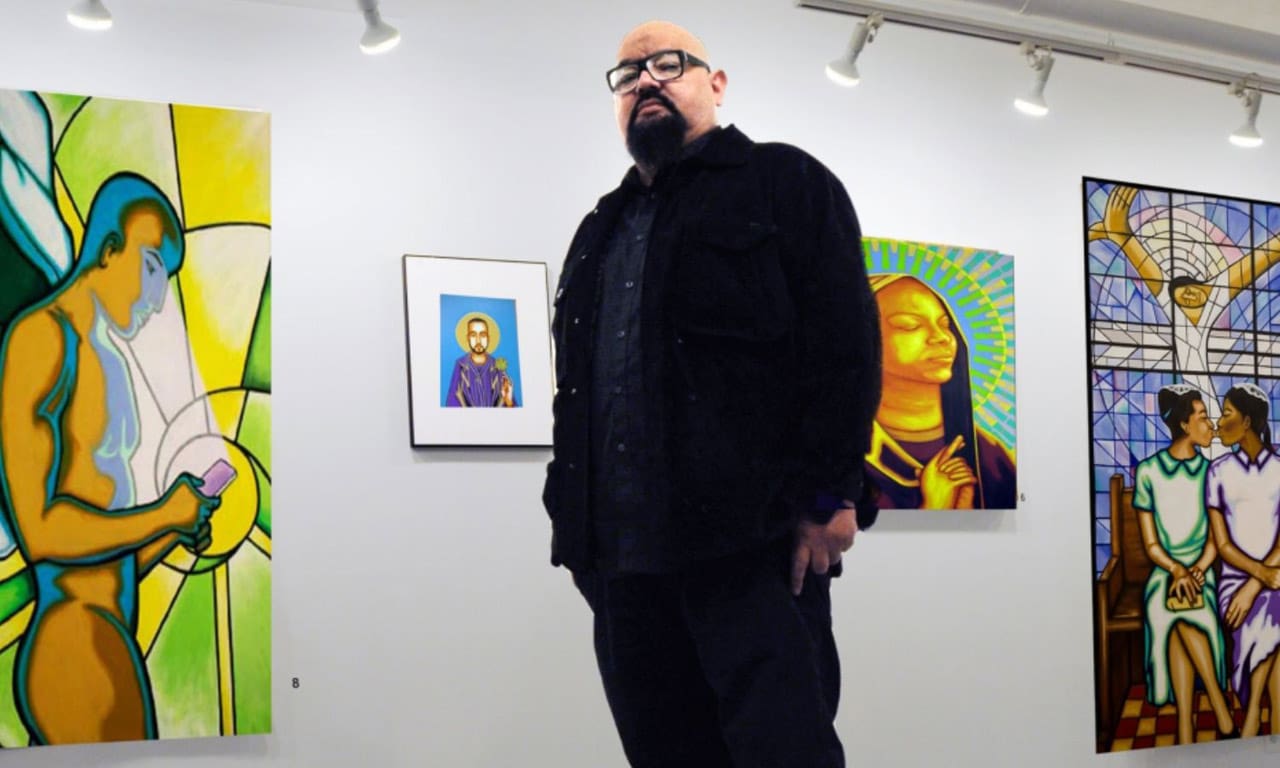
One of the most profound implications of Lopez’s work is his exploration of faith in a secular, high-speed world. In his paintings, faith is not depicted as an abstract, distant concept, but as a practical, daily mechanism for survival. This is a critical observation in the current socio-political climate, where institutional religion is in flux, but the human need for meaning remains constant.
The "Newark Narrative"
Lopez is effectively rewriting the "Newark Narrative." Historically, the city has been subjected to external narratives—often focused on struggle, crime, or political turbulence. By providing a multidimensional view that includes the beauty of family life, the quietude of personal faith, and the vibrancy of the urban landscape, Lopez is participating in a necessary act of reclamation. He is reclaiming the city’s image from the headlines and placing it firmly into the realm of art history.
The Role of the Museum
Finally, the event highlights the evolving role of the museum as a community anchor. By providing a space for dialogue between the artist and the public, the Newark Museum of Art is functioning as a town square. This model of engagement—where the artist is accessible, the work is relatable, and the discourse is open—is likely to become the gold standard for institutions aiming to remain relevant in the 21st century.
Conclusion: Looking Ahead
As the presentation concluded with an enthusiastic Q&A session, it was clear that the dialogue between Jo-El Lopez and his community is far from over. The artist expressed his commitment to continuing his exploration of the "urban soul," hinting at future projects that will delve even deeper into the historical tapestry of the city.
For those who missed the event, the lingering impact of his words and his work remains. Jo-El Lopez is not merely documenting the present; he is shaping the future perception of what a city like Newark is and what it can become. His work reminds us that while the tools of the artist may be as old as time, the story they tell is always, and must always be, urgent, necessary, and undeniably modern.
As we look toward the future of the regional art scene, the path forged by artists like Lopez offers a blueprint: start local, aim for the universal, and never lose sight of the people whose stories are the true lifeblood of the work.
