

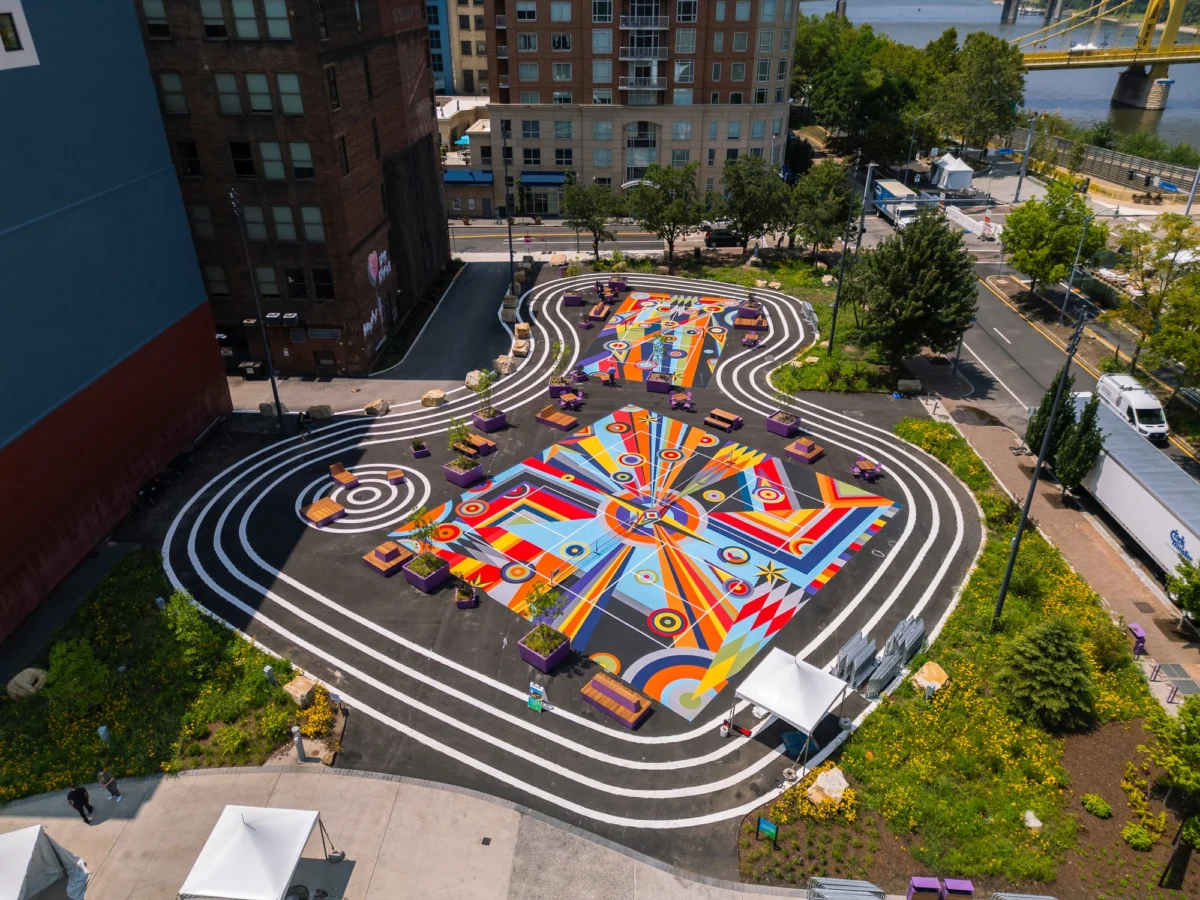
In the heart of downtown Pittsburgh, a quiet revolution in public space design has taken hold. Within the sprawling, $31 million Arts Landing community hub, three pickleball courts have been transformed from standard athletic infrastructure into a sprawling, kaleidoscopic art installation. Titled "Geometry of Play," the project—conceived and executed by artist Sharmistha Ray—serves as a bridge between the physical rigor of one of America’s fastest-growing sports and the intellectual depth of contemporary public art.
The installation, which officially opened to the public on July 16, represents a bold departure from the drab, monochromatic aesthetics that typically define municipal recreational facilities. By layering saturated, shifting geometric patterns across the playing surfaces, Ray has effectively turned every serve, volley, and dink into a performative act of visual art.
The Core Concept: A Convergence of History and Motion
At its foundation, "Geometry of Play" is a study in movement and cultural synthesis. Ray’s design language draws heavily from Pachisi, the ancient Indian board game that served as the progenitor to the American staple Parcheesi. By transposing the structural logic of a board game onto the expansive canvas of three pickleball courts, Ray invites players to exist within a living, breathing graphic design.
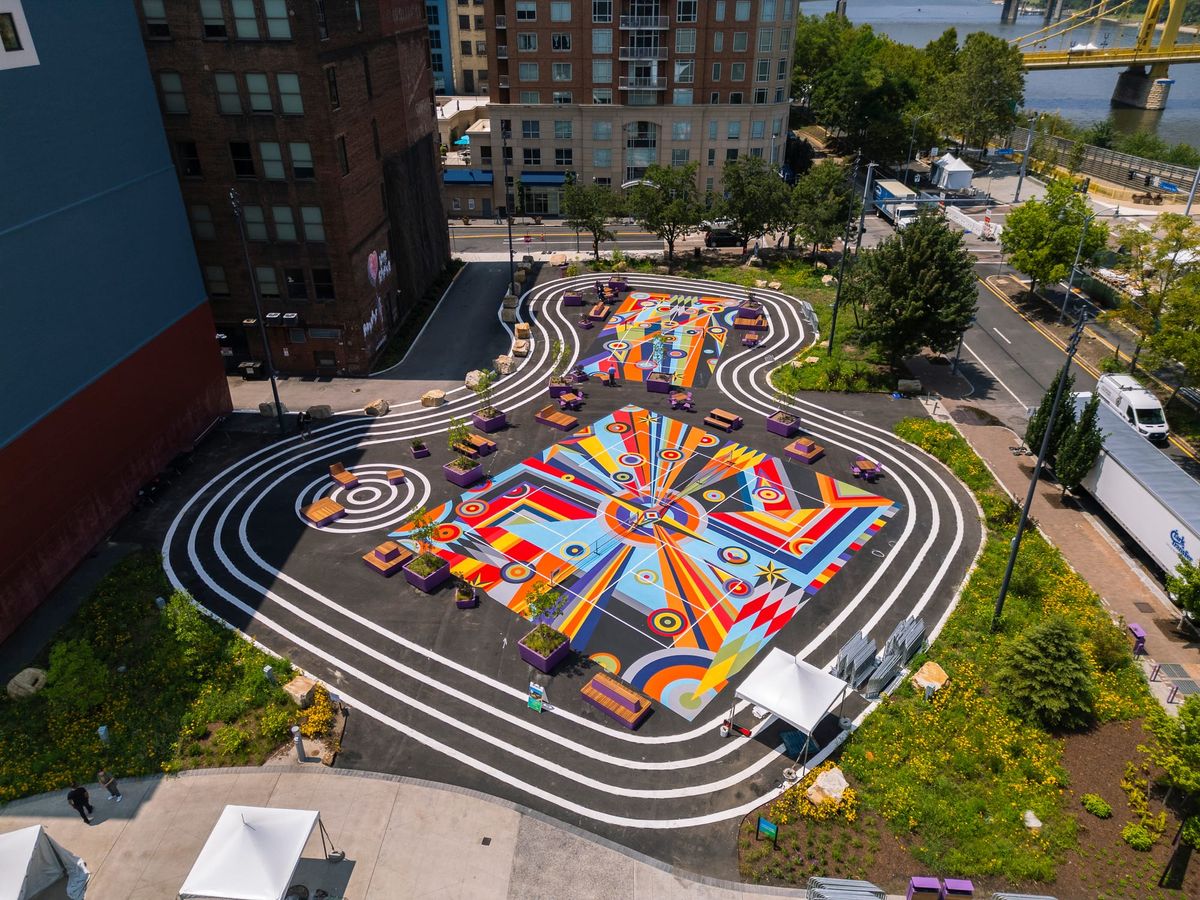
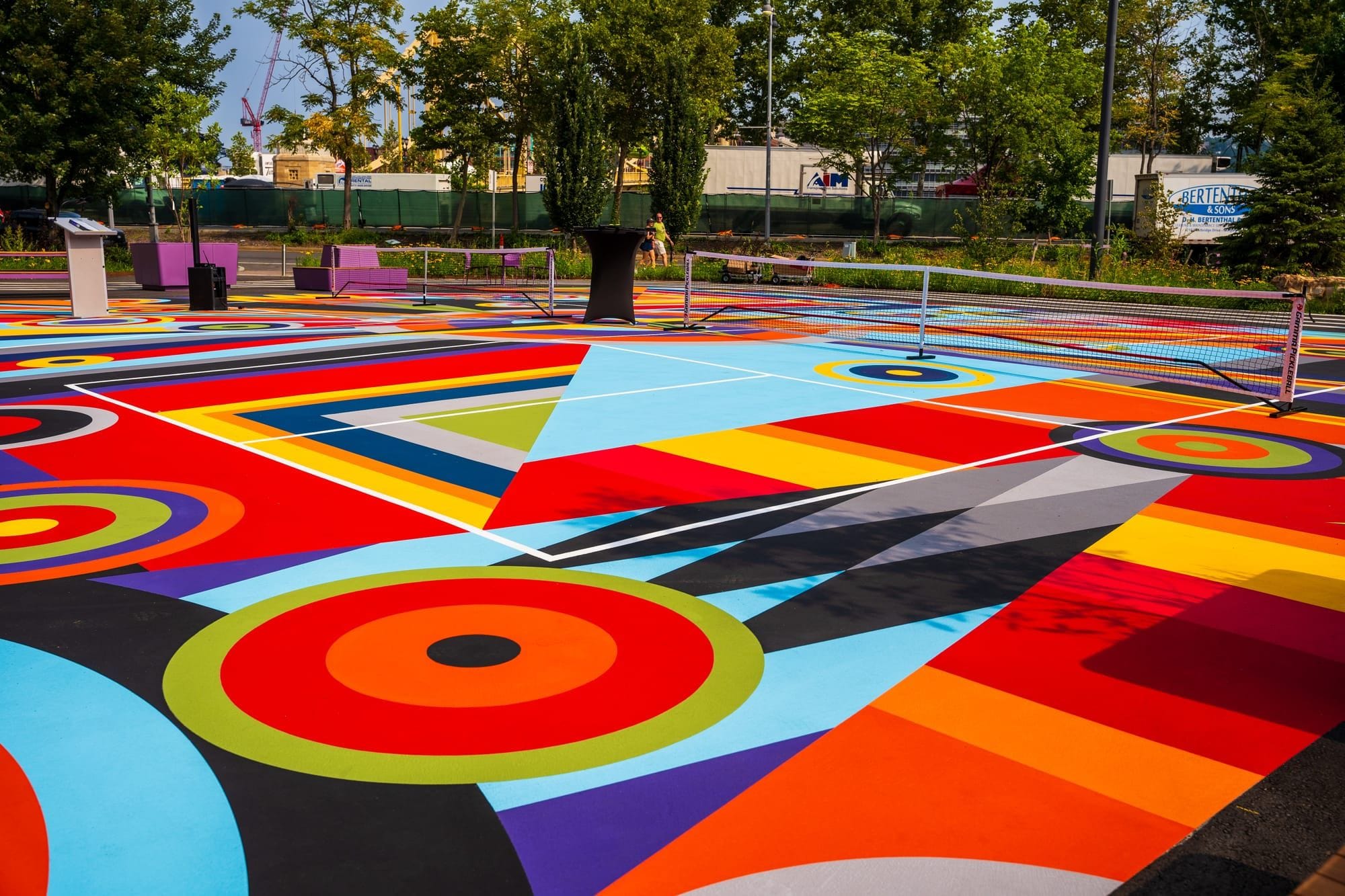
The visual experience is intentionally dynamic. As players move across the courts, the perspective shifts; the patterns seem to morph, bend, and expand based on the athlete’s position. On two of the courts, a massive, singular concentric circle anchors the design, with vibrant rays of color radiating outward, mimicking the trajectory of kinetic energy. The third court features a kaleidoscopic prism that slices through the surface, an array of contrasting hues that challenges the traditional linear markings of a standard court.
"Pickleball is special in that it provides a low barrier to entry in terms of ability and cost," Ray noted in an interview with Hyperallergic. "It feels like a social sport, and I appreciate that about it." For Ray, the democratic nature of the sport was the primary catalyst for the project. By infusing the space with high-art sensibilities, they aim to elevate the mundane experience of a public park into something that feels curated, intentional, and profoundly communal.
A Chronological Evolution of the Project
The realization of "Geometry of Play" was a deliberate, multi-phased process that underscores the Pittsburgh Cultural Trust’s commitment to integrating world-class art into the city’s urban renewal efforts.

- Initial Conceptualization (Late 2025): The Pittsburgh Cultural Trust, seeking to activate the new Arts Landing space, approached Ray with the challenge of blending functional sport with public art. The commission was envisioned as part of a larger, multi-disciplinary landscape that would eventually include works by luminaries like Thaddeus Mosley and John Peña.
- The Prototyping Phase (Early 2026): Moving beyond their usual mediums—which include glass, painting, and digital media—Ray faced the unique technical hurdles of working with specialized sports paint. Unlike canvas or mosaic, the court surface required a rigorous adherence to safety standards and durability. Ray worked extensively to color-match their vision with the limited palette available in high-performance acrylic coatings.
- The "Player" Experience (Spring 2026): To ensure the art did not impede the game, Ray took to the court. An avid fan of racket sports like tennis and badminton, Ray played pickleball for the first time during the design phase. This "embodied research" allowed the artist to understand the sightlines, the pace of the game, and how the eye tracks a ball against a complex, multi-colored background.
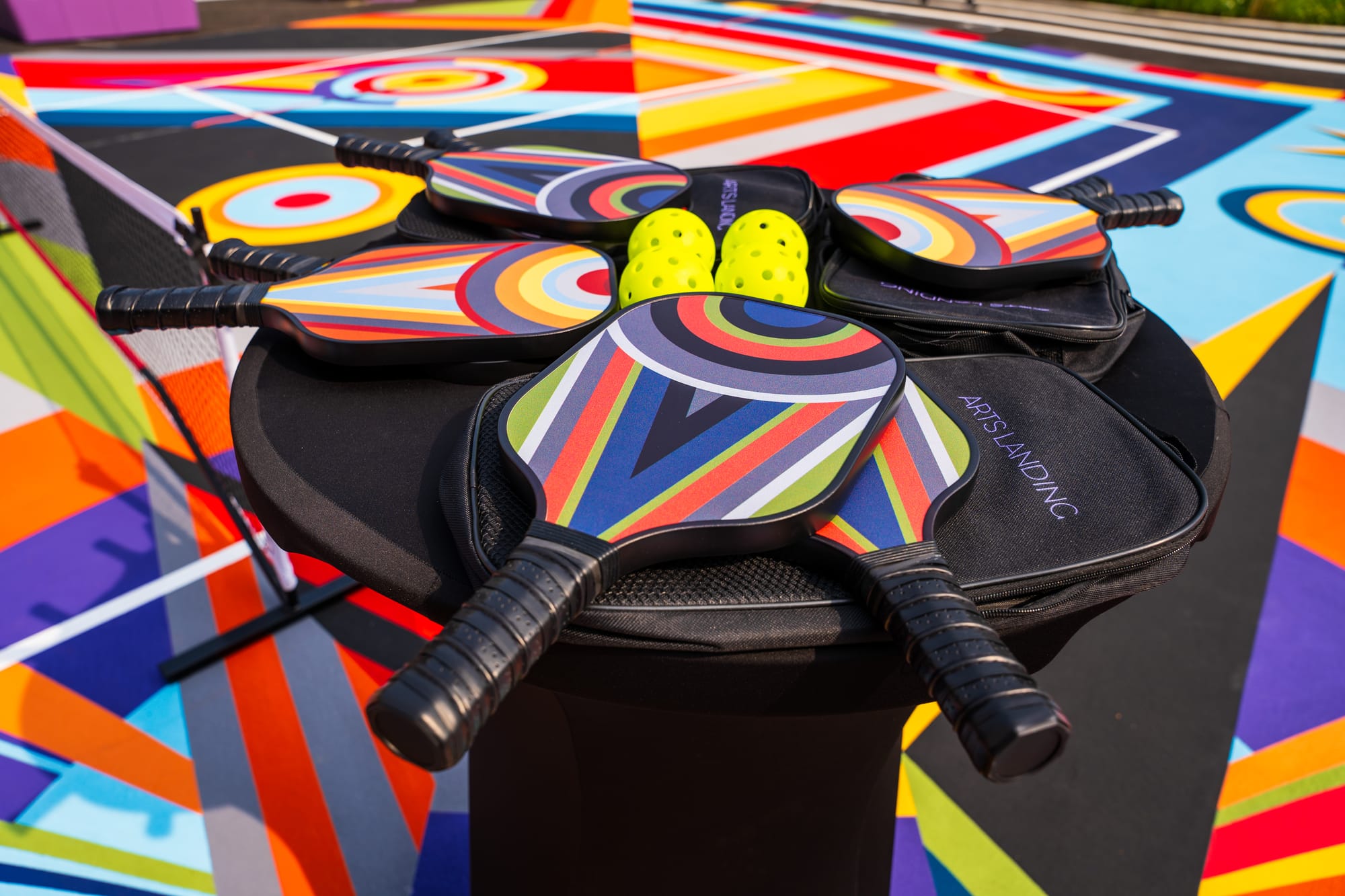
- Installation and Unveiling (July 16, 2026): The courts were finalized and opened to the public, accompanied by a set of custom-designed, matching pickleball paddles available for public use.
Supporting Data: The Rise of Pickleball and the Value of Public Art
The intersection of pickleball and art is not merely an aesthetic choice; it is a response to the shifting demographics of urban leisure. According to the Sports & Fitness Industry Association (SFIA), pickleball has seen a nearly 150% growth in participants over the last three years, solidifying its place as the fastest-growing sport in the United States.
However, the "pickleball boom" has also created a strain on public infrastructure. Many municipalities are scrambling to convert aging tennis courts or underutilized parking lots into playing space. The Pittsburgh Cultural Trust’s $31 million investment in Arts Landing recognizes this demand, but differentiates itself by prioritizing design quality.
Data from the Project for Public Spaces suggests that "placemaking"—the collaborative process by which we shape our public realm—increases local economic activity and community well-being. By installing high-concept art in a functional setting, the Pittsburgh Cultural Trust is betting that the presence of "Geometry of Play" will increase the dwell time of visitors, effectively turning a simple sports outing into a social and cultural event.
Official Responses and the Artistic Philosophy
Sharmistha Ray, a co-founder of the experimental collective Hilma’s Ghost, brings a legacy of feminist and spiritual inquiry to this project. Known for their work in the New York City subway system—specifically a mosaic that fused tarot symbolism with archetypal storytelling—Ray views their transition into the "sports arena" as a natural extension of their career-long focus on community building.
"We were never working in isolation," Ray stated earlier this year regarding their collaborative philosophy. "There was always a village." This sentiment is reflected in the design of the paddles, which mirror the court’s geometry, turning the individual player into an extension of the mural itself.
The Pittsburgh Cultural Trust has lauded the project as a success, noting that the courts have become a centerpiece for the Arts Landing development. While the technical requirements of the sports paint were taxing, the final result stands as a testament to the artist’s ability to translate complex conceptual ideas into accessible, tangible reality.
The Broader Implications: Art as a Civic Utility
The implications of "Geometry of Play" extend far beyond Pittsburgh. As cities across the country grapple with the need to modernize their public spaces, the success of this project serves as a compelling case study for "artistic infrastructure."
- Democratization of Design: Usually, public art is viewed as something to be observed—a statue in a plaza or a mural on a wall. Ray’s work flips this paradigm, requiring the public to interact with the art through movement. It suggests that public art should be experiential rather than just decorative.
- Sustainability of Urban Spaces: By choosing a high-traffic sport as the vehicle for their art, Ray ensures that the mural remains "alive." The work is not static; it is constantly being re-contextualized by the shadows of the players, the flight of the ball, and the varying weather conditions of the downtown corridor.
- The "Village" Approach to Public Policy: The collaboration highlights a shift in how arts organizations engage with the public. Rather than simply gifting a finished product, the Pittsburgh Cultural Trust and Ray engaged in a process that respected the needs of the athlete while challenging the imagination of the viewer.
"Whether you come to play or simply to watch the choreography of movement unfold across the mural, I hope the work offers a moment of joy, connection, and possibility," Ray remarked.
As the sun sets over downtown Pittsburgh, the vibrant colors of "Geometry of Play" under the stadium lights create a surreal, almost hypnotic visual field. It is a reminder that in the right hands, the most mundane aspects of our urban life—a painted court, a plastic ball, a weekend hobby—can be elevated into something that feels vital, communal, and profoundly artistic. In this marriage of sweat and aesthetics, Sharmistha Ray has not only created a place to play; they have created a place to belong.
