

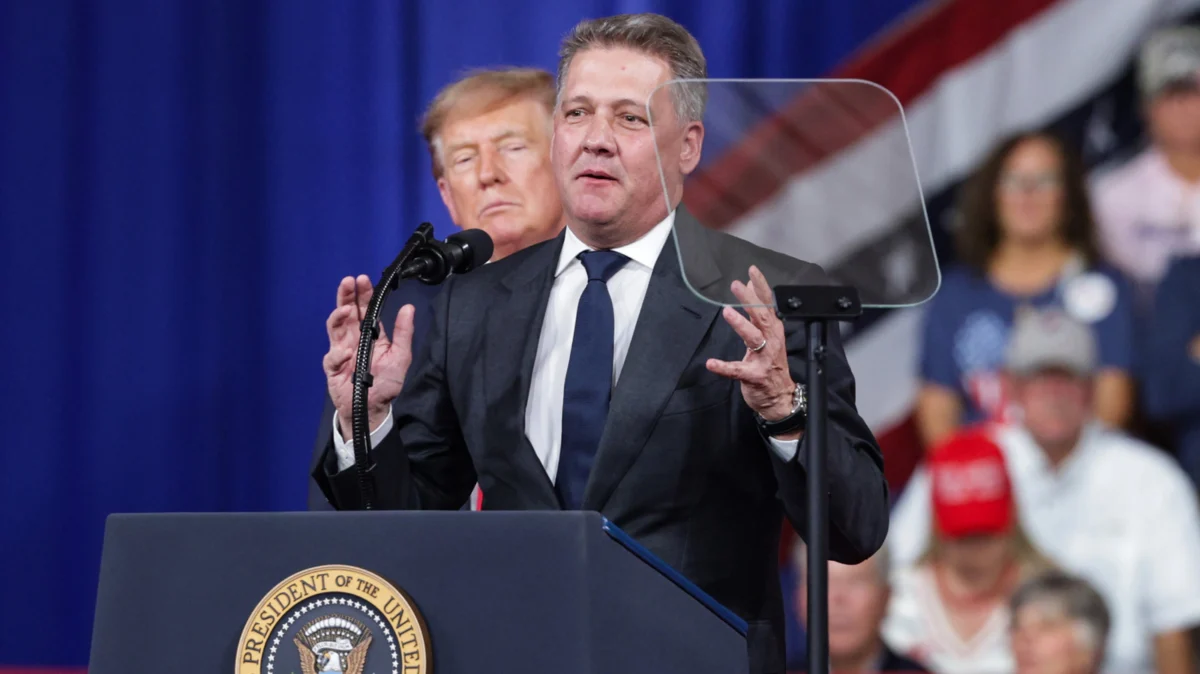
In an era where global commerce and domestic politics are increasingly intertwined, the lines between corporate strategy and political endorsement are becoming dangerously blurred. Audi CEO Gernot Döllner finds himself at the epicenter of a firestorm of controversy following his high-profile appearance alongside former U.S. President Donald Trump at a Republican campaign rally in Perry, Georgia. While the primary objective of the visit was to unveil a massive $4 billion investment in a new American manufacturing facility, the optics of the event—occurring just days before a pivotal midterm election—have triggered a wave of condemnation from German labor leaders, political observers, and the European automotive establishment.
The Collision of Industry and Ideology
The controversy began when Döllner, flanked by high-ranking Volkswagen Group executives, took the stage at a Trump rally to announce the establishment of Audi’s first-ever production plant in the United States. While such announcements are typically celebrated as milestones in corporate growth, the timing and the company in which the executives found themselves proved to be a lightning rod for criticism.
For many, the issue was not the investment itself—which promises to create approximately 4,500 jobs—but the endorsement implied by participating in a political rally defined by aggressive rhetoric. The event, which featured standard campaign themes, was viewed by European stakeholders as an implicit validation of political figures whose platforms often stand in stark opposition to the corporate social responsibility (CSR) values championed by German industrial giants.
Chronology of the Crisis
The unfolding situation can be traced back to the intensifying pressure placed on European automakers by U.S. trade policies.
- Pre-2026: Audi and its parent company, the Volkswagen Group, faced mounting financial pressure due to tariffs imposed on vehicles imported from Europe and Mexico. This necessitated a long-term strategic pivot toward domestic U.S. production to remain competitive in the North American market.
- The Announcement: Following months of negotiations, Audi confirmed plans for a $4 billion facility in Georgia.
- The Rally: In an effort to secure political goodwill and highlight the commitment to the American labor market, Döllner and VW Group chief Oliver Blume joined Donald Trump at a campaign rally in Georgia.
- The Immediate Backlash: Within hours of the event, the German media, specifically Der Spiegel, published scathing rebukes from top labor officials.
- The Fallout: As the news crossed the Atlantic, the conversation shifted from the economic merits of the plant to the moral implications of the executives’ presence on the stage, leading to a public relations crisis for the Volkswagen Group.
Supporting Data: The Economic Logic Behind the Move
To understand why an executive would risk such public scrutiny, one must look at the cold, hard numbers. Audi, despite being a global luxury powerhouse, has historically lacked a manufacturing footprint inside the United States. Currently, the company’s large-format SUVs, such as the Q7, Q8, and the upcoming Q9, are produced in European factories and exported to North America.
This export model exposes Audi to the volatility of international trade law. The tariffs originally implemented during the Trump administration significantly eroded the profit margins of these high-end vehicles. By building a plant in Georgia with a production capacity of up to 200,000 vehicles annually, Audi aims to insulate itself from future trade barriers.
The timeline for this project is ambitious:
- 2027: Groundbreaking and construction of the facility.
- Early 2030s: The first localized premium SUVs are expected to roll off the production line.
- Job Creation: The project is projected to generate roughly 4,500 direct manufacturing jobs, a significant figure that carries immense political weight in the state of Georgia.
Official Responses: The Labor Union Revolt
The most potent criticism has come from within the company’s own ranks. Daniela Cavallo, the influential head of the Volkswagen Group’s works council, has been the leading voice of dissent. Her rebuke was both swift and unsparing.
"Several minutes filled with racism, sexism, xenophobia, transphobia, and contempt for democracy, and then one of our top corporate representatives takes the stage and actively campaigns on behalf of a candidate," Cavallo stated in an interview with Der Spiegel. Her comments reflect a deep-seated anxiety among German labor leaders that the company is abandoning its core identity to appease an unpredictable political climate.
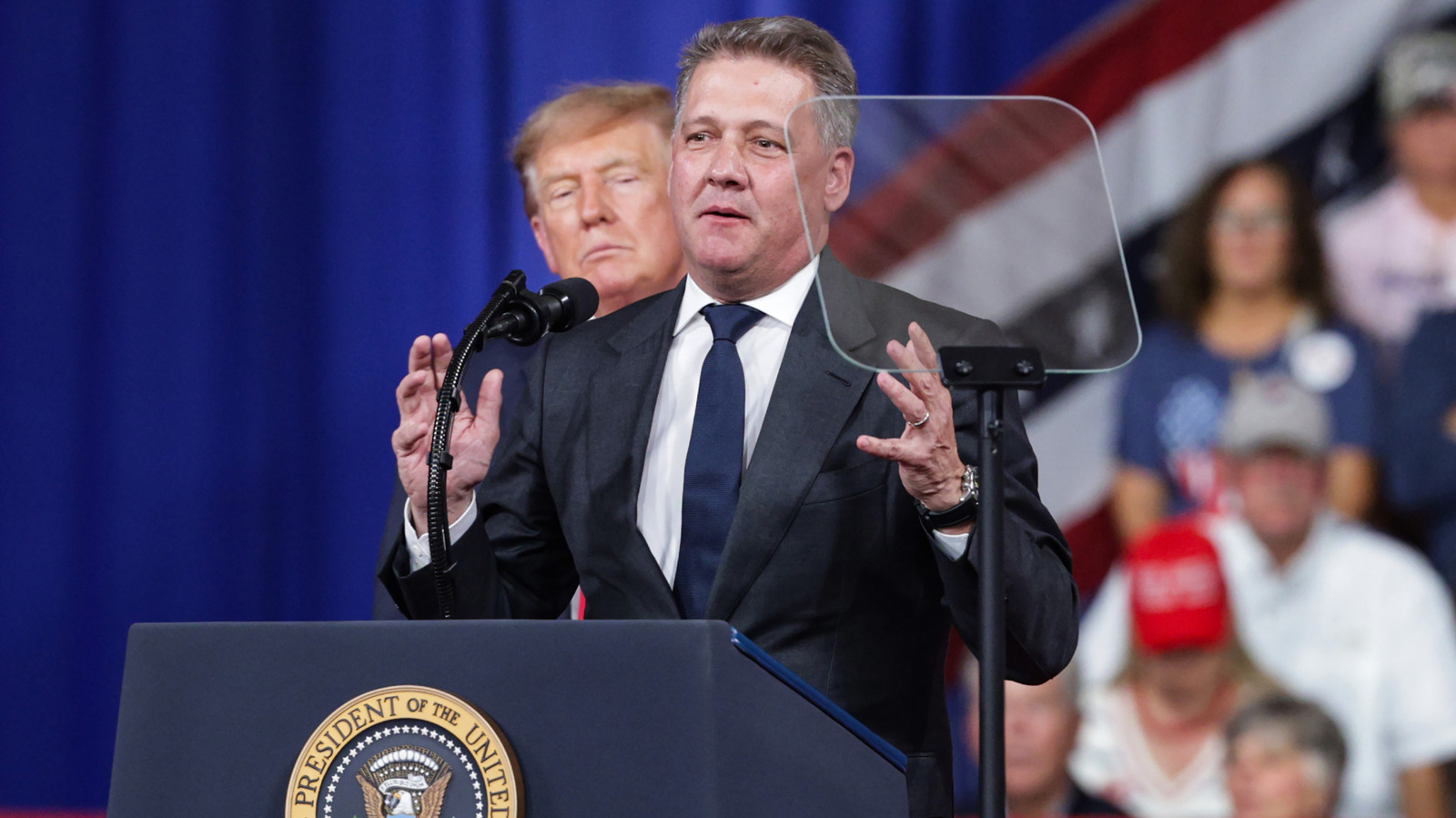
Cavallo further directed her ire toward VW Group CEO Oliver Blume, accusing him of allowing himself to be used as a "puppet" in a "propaganda show." She argued that such an alignment violates the fundamental values that the Volkswagen Group claims to uphold. Echoing these sentiments, Christiane Benner, the head of the powerful IG-Metall union, characterized the appearance as "politically unacceptable" and "embarrassing," highlighting the widening chasm between executive management and the workforce.
Implications for Global Manufacturing
The fallout from the Georgia rally highlights a broader, more existential challenge facing European carmakers. As they struggle with domestic restructuring—which includes potential factory closures and layoffs in Germany—the decision to shift production capacity to the United States is viewed by European unions as a betrayal.
1. The Geopolitical Tightrope
Audi is not acting in a vacuum. Other manufacturers are navigating similar waters. For instance, the recent deal between Jaguar Land Rover and Stellantis to produce the Defender in North America serves as a testament to the fact that the "US-made" requirement is becoming a prerequisite for survival in the luxury sector. European companies are essentially being forced to choose between domestic job security in Germany and market survival in the U.S.
2. The Erosion of Corporate Neutrality
Traditionally, CEOs of major German firms have maintained a posture of political neutrality, focusing on economic policy rather than partisan electoral cycles. By appearing at a rally, Döllner has shattered this convention. This move suggests that in the future, the "cost of doing business" in the U.S. may involve a level of political participation that was previously unthinkable.
3. The Union-Management Schism
The Volkswagen Group has long been known for its collaborative management style, where labor unions possess significant power. This incident has damaged the trust between the C-suite and the works council. If the management continues to prioritize U.S. political alignment over European labor sensibilities, it could lead to increased industrial action, strikes, and a more confrontational relationship between leadership and the workforce in Germany.
Conclusion: A Lesson in Modern Corporate Strategy
The Audi controversy serves as a stark case study for the risks of globalized business in an age of polarization. While the $4 billion investment in Georgia is a sound strategic move from a supply-chain and trade-tariff perspective, the execution of the announcement was a masterclass in tone-deafness.
For Gernot Döllner and the Volkswagen Group, the challenge now is to repair their standing with European stakeholders while simultaneously following through on their American expansion. They must prove that their commitment to the U.S. market is an economic necessity for the long-term health of the entire group, rather than a political alliance with any single candidate.
As the automotive industry continues to transition toward electrification and autonomous technology, the pressure to cut costs and establish localized supply chains will only intensify. However, this incident serves as a warning: economic gains can quickly be eclipsed by the reputational cost of political missteps. Moving forward, the global automotive giants will need to navigate not just the logistics of manufacturing, but the complex, often treacherous, landscape of international political optics. Whether Audi can pivot back to its role as a neutral, global leader remains to be seen, but the events in Georgia have permanently changed the discourse surrounding corporate diplomacy.
