

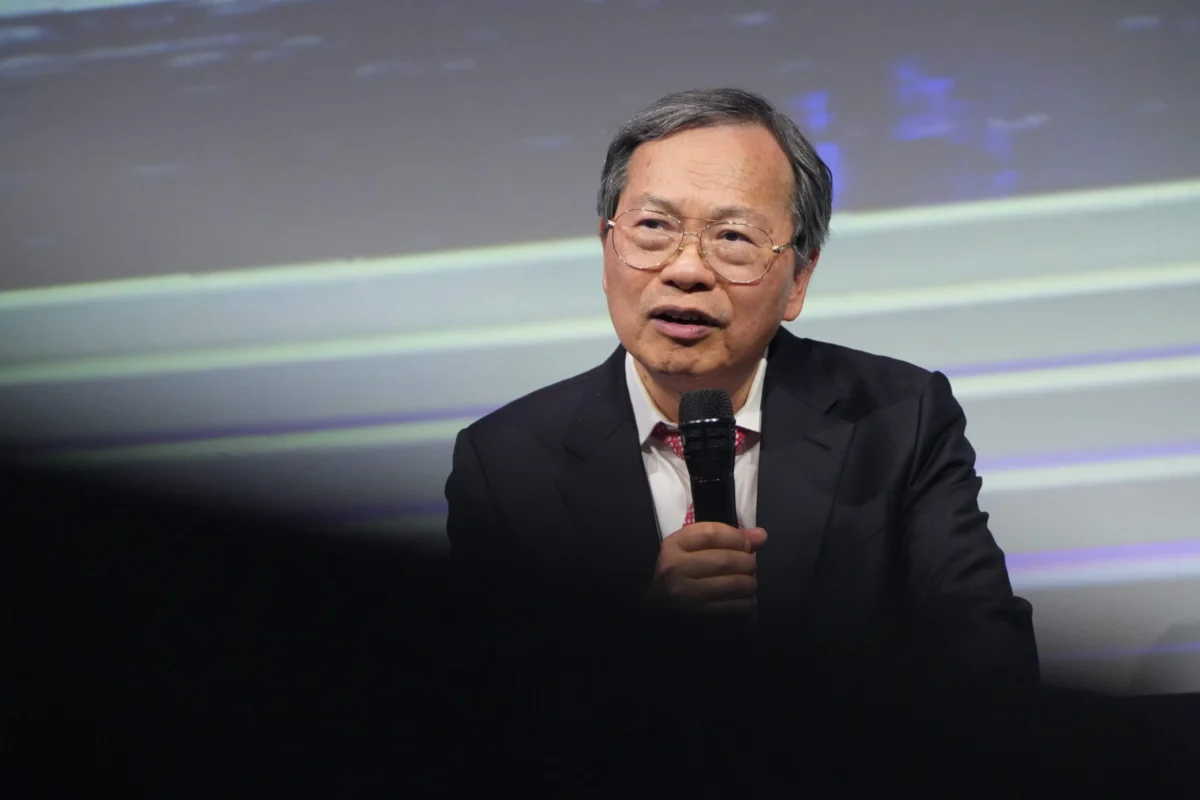
In a move designed to stabilize one of the most volatile yet critical nodes in the global artificial intelligence supply chain, Super Micro Computer has officially appointed Mark Long as its new Chief Financial Officer. The appointment, effective immediately, marks the conclusion of a nearly two-year search for a permanent financial lead—a mandate born from the company’s internal governance struggles and a series of high-stakes regulatory investigations.
Long, 59, joins the hardware titan at a moment of profound uncertainty. Supermicro, a crucial partner to industry giants like Nvidia and Elon Musk’s xAI, has been grappling with intense federal scrutiny, the fallout from a major smuggling indictment involving a co-founder, and a lingering crisis of confidence among investors. By recruiting a seasoned executive with a pedigree that includes stints as CFO and Chief Strategy Officer at the $130 billion data storage powerhouse Western Digital, Supermicro is signaling an urgent need to replace institutional chaos with corporate rigor.
The Core Mandate: Restoring Credibility
The transition from outgoing CFO David Weigand to Mark Long is not merely a change in personnel; it is a tactical pivot. Weigand’s departure was prompted by a board-level independent investigation that identified significant process lapses, including a lack of transparency regarding consulting arrangements.
Long brings a robust toolkit to this “turnaround” effort. Beyond his tenure at Western Digital, he serves as the principal of Prime Impact Capital, an investment and advisory firm. His background also includes co-founding a Special Purpose Acquisition Company (SPAC) that successfully navigated a $300 million raise and a 2023 merger with the Beijing-based auto insurance technology platform, Cheche Technology. For shareholders, Long’s resume represents the kind of disciplined financial oversight that has been conspicuously absent during Supermicro’s recent period of turbulence.
Chronology of a Corporate Crisis
To understand the weight of Long’s new desk, one must look back at the compounding events that have defined Supermicro’s last several years.
2018–2020: The Foundation of Distrust
Supermicro’s recent history is punctuated by a pattern of regulatory friction. In 2018, the company became the subject of an internal audit committee investigation, which ultimately led to an SEC probe regarding improper revenue recognition practices. The company settled with the SEC in 2020, paying $17.5 million in penalties. Notably, this period saw the departure of Yih-Shyan “Wally” Liaw, a co-founder whose recent re-emergence would bring the company back into the crosshairs of the Department of Justice.
2024–2025: The Auditor’s Exit and Internal Probes
The search for a new CFO began in earnest following a series of governance failures. The abrupt resignation of the company’s auditor, EY, served as a catalyst for a board-led probe into export controls and the questionable rehiring of employees who had previously resigned during the 2017–2018 accounting scandal. During this time, it was revealed that the company had maintained undisclosed consulting arrangements with former executives—a "process lapse" that landed squarely at the feet of the outgoing CFO, David Weigand.
2026: The "Smuggling" Indictment
The most severe blow arrived in March 2026, when the FBI and Department of Justice indicted and arrested co-founder Wally Liaw. The charges were staggering: an alleged scheme to divert $2.5 billion worth of Supermicro hardware—equipped with restricted, high-end Nvidia chips—to China in violation of U.S. export controls.
The complexity of the alleged deception was breathtaking. Investigators detailed a plot involving the use of hairdryers to peel off and replace serial numbers and labels, and the staging of "dummy servers"—physical, non-functioning replicas intended to deceive export compliance officers while the genuine, high-tech hardware was diverted.
The Legal Web: Subpoenas and Admissions
Supermicro is not a named defendant in the criminal case, and the company has consistently stated it is cooperating fully with law enforcement. However, the legal periphery is expanding.
The Grand Jury Subpoena
Following Liaw’s arrest, the company disclosed that it had received a grand jury subpoena from the U.S. Attorney’s Office for the Southern District of New York. The scope of the inquiry covers both the specific smuggling allegations against Liaw and the broader health of Supermicro’s compliance programs and internal controls. Furthermore, the company faces parallel inquiries from the Securities and Exchange Commission (SEC) and the Bureau of Industry and Security (BIS), the Department of Commerce arm responsible for policing trade compliance.
The Guilty Plea
The prosecution gained significant momentum last week when Ting-Wei “Willy” Sun, a contractor associated with the smuggling ring, pleaded guilty to four counts. These included conspiracy to smuggle goods, violation of export rules, and, notably, obstruction of justice. The obstruction charge stems from Sun’s destruction of an encrypted messaging application on his phone on the day of the arrests. With sentencing set for September 2027 and a maximum potential penalty of 20 years, the pressure on individuals linked to the case to cooperate with the government remains a volatile variable for the company.
Financial Implications and Governance Shifts
As Mark Long assumes the CFO role, he enters a boardroom that is actively reshuffling. The recent departure of board member Judy Lin—who notably worked with Long at Western Digital—and the addition of Shesha Krishnapura, Intel’s former IT CTO, suggest an attempt to pivot toward a more technically fluent and compliance-oriented leadership structure.
The Compensation Package
The board has incentivized Long with a compensation package that underscores the high-risk, high-reward nature of his new post. His base salary is set at $725,000, bolstered by a $500,000 signing bonus and a guaranteed $500,000 annual cash bonus. Beyond the immediate cash, his equity stake—comprising an initial grant valued at roughly $4.1 million and options for 150,000 shares—ties his long-term financial success directly to the company’s ability to recover its market standing.
The "No Evidence" Finding
In August 2026, an independent investigation commissioned by the board concluded that there was no evidence that current senior management was aware of the smuggling activities involving Liaw. While this finding was a necessary hurdle to clear, it has not fully assuaged the concerns of federal authorities, who remain focused on the company’s internal compliance culture.
Implications for the AI Ecosystem
Supermicro’s role in the current AI gold rush is foundational. Its servers, which utilize the most powerful chips produced by Nvidia, are the backbone for data centers operated by companies like Elon Musk’s xAI. Any disruption to Supermicro’s supply chain—or a sudden loss of its export privileges due to compliance failures—would have immediate, cascading effects on the speed at which the world’s most advanced AI models are trained.
The arrival of Mark Long is a clear message to these partners: the "cowboy" era of growth at any cost is over. The company is now in a "fix-it" phase, where financial transparency, export compliance, and rigorous auditing are the primary performance indicators.
Looking Ahead
The path forward is fraught with obstacles. With Liaw’s trial pushed to March 2027 and the sentencing of key conspirators looming in September of that year, the legal shadow over Supermicro will not dissipate quickly. For Long, the priority will be to finalize the transition from the old guard, shore up the financial reporting processes that have historically been the company’s Achilles’ heel, and convince skeptical institutional investors that Supermicro can operate as a compliant, world-class enterprise.
In a brief statement, CEO Charles Liang expressed confidence in the new hire, noting that he expects Long to have an “immediate positive impact” on financial execution. Whether that impact will be enough to satisfy the U.S. government and the jittery public markets remains the central question for the 2027 fiscal year. For now, the hardware maker remains a bellwether for the intersection of high-stakes technology, international trade policy, and the relentless pressure of corporate governance in the age of AI.
