

In the hyper-competitive landscape of the North American automotive market, brand recognition is rarely the hurdle for a titan like Toyota. With a staggering 98% brand awareness among consumers, the Japanese automaker is a household name synonymous with reliability, longevity, and efficiency. However, a high level of general awareness does not always translate into specific segment dominance. For Toyota, the challenge lies not in being known, but in being perceived as the premier choice for a specific, high-margin lifestyle: the rugged, off-road truck enthusiast.
To bridge this gap, Toyota has embarked on a multi-faceted strategic partnership with OnX, a leader in digital mapping technology. By integrating off-road utility with community-focused stewardship and a robust influencer program, Toyota is attempting to pivot its brand affinity from "reliable commuter" to "authentic adventurer."
Main Facts: The OnX Partnership and the Shift to Lifestyle Marketing
Toyota’s current marketing strategy is moving away from the traditional "top-of-funnel" awareness campaigns and toward "mid-to-bottom-funnel" affinity building. Alex Ahrendsen, Toyota’s Manager of Vehicle Marketing and Communications, notes that while the brand is ubiquitous, its specific standing in the truck and off-road space has room for growth.
The centerpiece of this effort is a collaboration with OnX, specifically its OnX Elite service. Toyota is currently offering six months of complimentary access to this digital mapping tool for owners of its most trail-capable vehicles: the Tundra, Tacoma, 4Runner, Sequoia, and the newly revived Land Cruiser.
What is OnX Elite?
OnX Elite is a specialized GPS and mapping tool designed for areas where traditional cellular service and platforms like Google Maps or Apple Maps fail. It provides:
- Offline Navigation: High-resolution maps that can be downloaded and used via satellite GPS.
- Trail Specifics: Detailed data on trail difficulty, width restrictions, and open/closed status.
- Property Boundaries: Clear indicators of public vs. private land to ensure legal off-roading.
- Layered Data: Topographical maps, weather conditions, and historical wildfire data.
By providing this tool, Toyota is addressing a specific pain point for its customers. According to Ahrendsen, one of the most frequent inquiries to Toyota’s customer service centers is whether their vehicles have built-in off-road mapping. While Toyota’s native infotainment systems are optimized for paved roads, the OnX partnership allows the company to provide a specialized solution for the "off-the-beaten-path" adventures that truck owners crave.
Chronology: From Sponsorship to Stewardship
The partnership between Toyota and OnX is not a one-off promotional event; it is a maturing relationship now entering its second year. The evolution of this collaboration reflects a shift from simple brand association to deep-rooted community involvement.
Year One: Establishing the Connection
The first year focused primarily on the "sweetener" aspect—introducing the OnX membership as a value-add for new vehicle purchases. This established the functional link between the hardware (the truck) and the software (the navigation).
Year Two: The Move Toward Authenticity
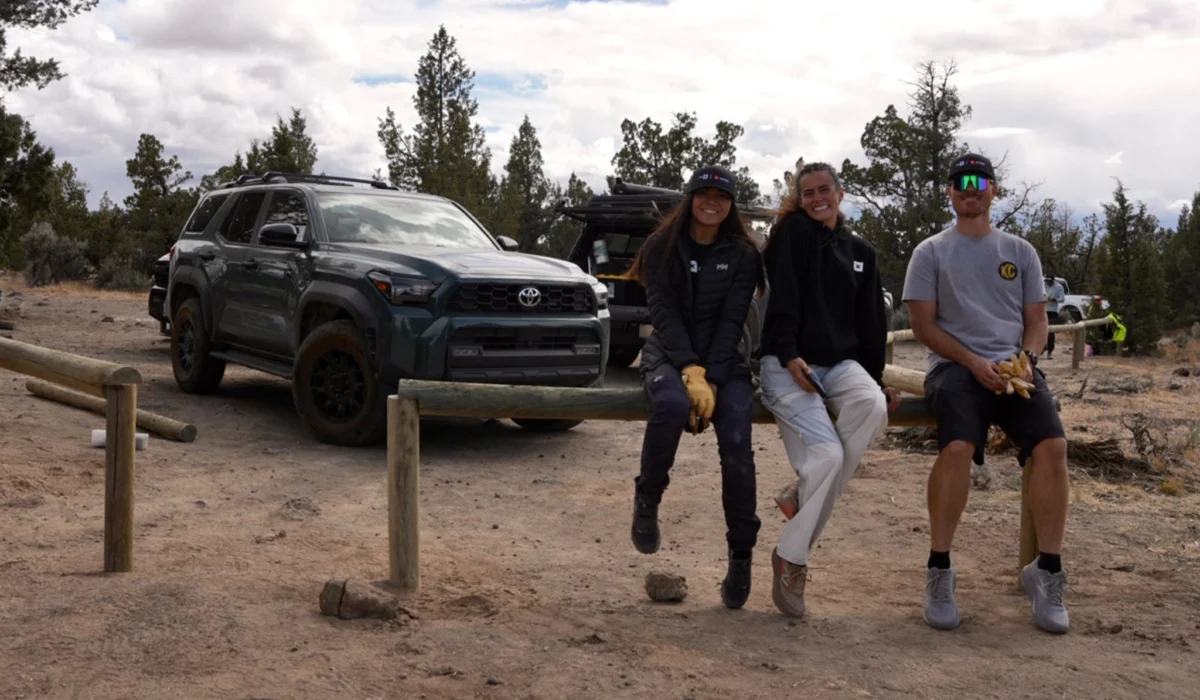
In its second year, the partnership has expanded to include "Trail Restoration" efforts. This initiative moves the brand from a passive service provider to an active participant in the off-road community. Toyota provides the heavy-duty machinery—its trucks—and its employees volunteer their time to restore trails that have suffered from natural disasters, erosion, or simple neglect.
2024 and Beyond: The Content Creator Program
The latest evolution in the timeline is the launch of a dedicated content creator program. Toyota and OnX have contracted six specialized influencers to document their journeys. These creators are tasked with posting content to social media at a high frequency—ten times per month—focusing on responsible recreation, trail stewardship, and the practical use of OnX mapping in Toyota vehicles. While OnX manages the creative direction, Toyota provides the primary funding for this year-long campaign.
Supporting Data: The Metrics of Affinity
The decision to lean into the truck segment is backed by the high value of the "adventure" consumer. While Toyota enjoys 98% general awareness, the "truck awareness" and "consideration" metrics are where the company sees the most significant opportunity for ROI.
Market Positioning
Traditionally, the off-road and "rugged" identity in the United States has been dominated by domestic brands—specifically Ford, Chevrolet, and Jeep. Ahrendsen admits that Toyota has historically lacked that deep, "American-made" rugged perception, despite the legendary durability of models like the Tacoma and Land Cruiser.
Strategic Incentives
Trucks represent a high-capital purchase for consumers, often exceeding $50,000 to $80,000 depending on the trim. An OnX membership, while valuable, is a fraction of that cost. However, Toyota views it as a critical "sweetener." In a market where consumers are cross-shopping the Ford F-150 Raptor or the Chevrolet Colorado ZR2, the inclusion of a specialized off-road tool can be the deciding factor that signals a brand’s commitment to the user’s lifestyle.
Influencer Reach
The influencer program is designed for "saturation" rather than "viral spikes." By requiring 60 posts per month across the creator pool (6 influencers x 10 posts), Toyota ensures a constant "always-on" presence in the feeds of off-road enthusiasts. This frequency is designed to normalize the sight of a Toyota vehicle in extreme environments, slowly shifting the brand perception over time.
Official Responses: Putting "Money Where the Mouth Is"
Alex Ahrendsen’s insights provide a window into the brand’s philosophy. She emphasizes that for a brand as large as Toyota, marketing is no longer about telling people who they are, but showing people what they value.
"We like to sell cars, that’s our main business, but at the same time, we want to give back to communities," Ahrendsen stated. She noted that trail clearing and restoration are "natural extensions" of the truck community’s ethos. By participating in these acts, Toyota seeks to prove that its interest in the outdoors isn’t just a marketing veneer.
Regarding the competitive landscape, Ahrendsen acknowledged that competitors like Ford offer similar OnX benefits. However, she argues that Toyota’s differentiation lies in the holistic nature of its program. In an email statement, she clarified that the combination of the trail restoration program, the influencer-led education on "responsible recreation," and the point-of-sale dealership kits creates a more "authentic" ecosystem than a simple software subscription.
"It positions us in this authentic space, which we’re trying to get more of that perception of this outdoor off-roading space," Ahrendsen said. "Toyota traditionally doesn’t have that connection. That’s a little bit more of the American-made brands."
Implications: The Challenges of "Murky" Measurement
Despite the strategic clarity of the partnership, measuring its success remains a complex challenge for Toyota’s marketing department. Unlike a direct-response ad that tracks "clicks-to-purchase," building brand affinity is a long-term play with "murky" metrics.
The Difficulty of Attribution
Ahrendsen was candid about the difficulty of tracking whether a trail map led to a truck sale. "This is a little bit hard to track, but essentially if there is some sort of connection with that customer buying a new truck and them participating in the OnX offering… that’s a looser metric," she explained.
Primary KPIs
To gauge the program’s health, Toyota is looking at:
- Customer Engagement: OnX provides data on how many Toyota owners actually activate and use the benefit.
- Brand Affinity: Through consumer surveys and sentiment analysis, Toyota tracks whether the perception of their trucks as "off-road capable" is rising.
- Earned Media: The amount of coverage and organic conversation generated by the trail restoration and influencer programs.
- Retention and Loyalty: Using specific email blasts to track click-through rates and engagement among existing owners to see if the benefit increases the likelihood of a repeat purchase.
The Future of the "Lifestyle Ecosystem"
The Toyota-OnX partnership signals a broader trend in the automotive industry: the shift from being a hardware manufacturer to a lifestyle partner. As vehicles become more technologically advanced, the "product" is no longer just the engine and the chassis; it is the entire experience of ownership.
By integrating specialized software like OnX, Toyota is effectively "outsourcing" its R&D for off-road navigation to a company that does it best, while focusing its own efforts on the physical reliability of the vehicles. If successful, this model could be applied to other segments—such as partnering with charging networks for EVs or urban planning apps for city commuters.
For now, Toyota’s goal is clear: to ensure that when a consumer thinks of the rugged American wilderness, they don’t just see a Ford or a Jeep—they see a Tundra or a Tacoma, equipped with the digital tools and the community backing to conquer the trail. Through the OnX partnership, Toyota is betting that authenticity is the ultimate "sweetener" in the high-stakes world of truck sales.
