

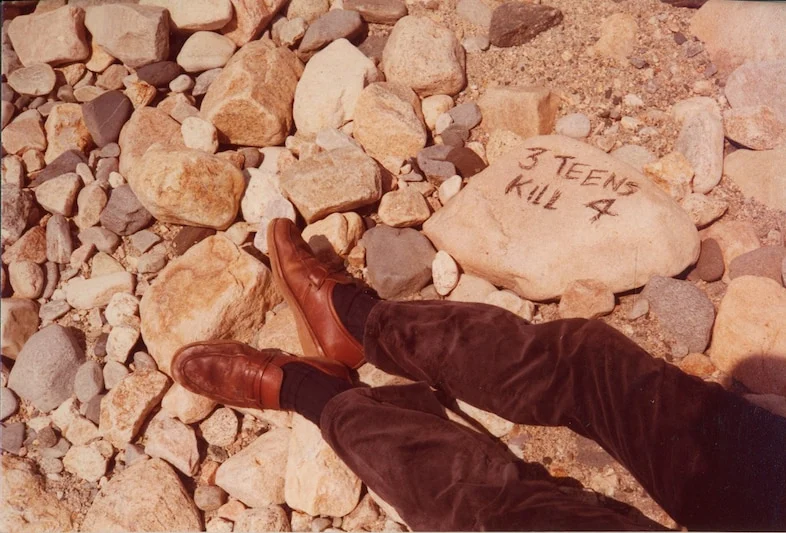
The Modern Institute in Glasgow has opened its doors to a hauntingly visceral retrospective: some day this will all be crumbling ruins. Running until August 28, 2026, as a pivotal component of the Glasgow International Festival, the exhibition serves as a profound meditation on the life and multifaceted oeuvre of David Wojnarowicz. An artist who traversed painting, photography, film, and performance with equal intensity, Wojnarowicz’s work remains a searing testament to the political and social ruptures of the late 20th century.
Simultaneously, the festival plays host to I Only Have Apple Juice, a curated group exhibition organized by author John Douglas Millar and artist France-Lise McGurn. Together, these events create a dialogue between the subterranean queer history of 1970s New York and the contemporary artistic pulse of Glasgow, bridging decades of creative resistance and urban evolution.
The Architecture of Ruin: A Lifelong Fascination
At the heart of the exhibition at Carlton Place is an exhaustive examination of Wojnarowicz’s obsession with the concept of the "ruin." For Wojnarowicz, ruins were not merely aesthetic remnants of the past; they were the inevitable destiny of all systems—social, political, and biological.
His work, often characterized by a chaotic, layered approach, mirrors the disintegration of the American Dream. By incorporating found objects, hand-painted maps, taped texts, and stark animal imagery, he constructed environments that felt less like traditional gallery displays and more like archaeological sites of trauma. Fire, a recurring motif throughout his career, symbolized both the destructive power of state violence and the transformative potential of rage.
The exhibition highlights the artist’s time spent at the Hudson River waterfront piers in New York during the 1980s. This location was more than a derelict transit point; it was a sanctuary for a queer creative family living on the margins of a city in the throes of the AIDS crisis. The photographs and installations on display capture the intersection of urban decay and human intimacy, providing a lens through which to view the fragility of existence in the face of systemic neglect.
A Chronology of Creative Resistance
To understand the significance of the current retrospective, one must trace the arc of Wojnarowicz’s trajectory.
- The Early Years (1970s): Born in 1954, Wojnarowicz emerged from a background of systemic abuse and homelessness. His early work was deeply informed by the transient nature of his life. He began by stencil-painting on the streets of New York, marking his presence in a city that seemed intent on erasing him.
- The Pier Era (1980s): This was a decade of intense productivity and political activism. Wojnarowicz’s involvement with the East Village art scene coincided with the onset of the HIV/AIDS pandemic. His work shifted from a personal exploration of identity to a radical critique of government apathy.
- The Activist Pivot (1990s): As the crisis escalated, so did his voice. He became a central figure in the battle against censorship and the stigmatization of the AIDS community, culminating in his landmark legal battle against the American Family Association, which had misappropriated his work.
- The Legacy (2000s–Present): Since his death in 1992, Wojnarowicz’s work has transitioned from the radical fringe to the institutional center. Retrospectives at the Whitney Museum and now at The Modern Institute have cemented his status as a foundational figure in contemporary art.
Supporting Data: The Curatorial Narrative
The current exhibition is bolstered by a wealth of archival material, much of which was sourced with the support of PPOW and the Fales Library. Curator Olivia Laing, who recently profiled the artist for Another Man, has been instrumental in organizing these rare items.
The selection on display includes intimate letters, early drafts of his writings, and photographs that document the raw, unfiltered reality of his creative process. These items serve to strip away the mythos surrounding Wojnarowicz, revealing a man who viewed his art as a necessary survival tool. According to the exhibition’s supporting literature, the "clean" gallery aesthetic is intentionally subverted, reflecting the artist’s own penchant for visual density and tactile engagement.
Official Responses and Curatorial Perspectives
John Douglas Millar, a pivotal figure in the Glasgow International Festival, emphasizes the importance of context. His curation of I Only Have Apple Juice, housed at The Coach House, provides a necessary counterpoint to the Wojnarowicz retrospective. By gathering works from Vince Aletti, Paul Becker, Phil Collins, Moyra Davey, Peter Hujar, and others, Millar is tracing a lineage of "nefarious lust" and artistic expression across two different cities and eras.
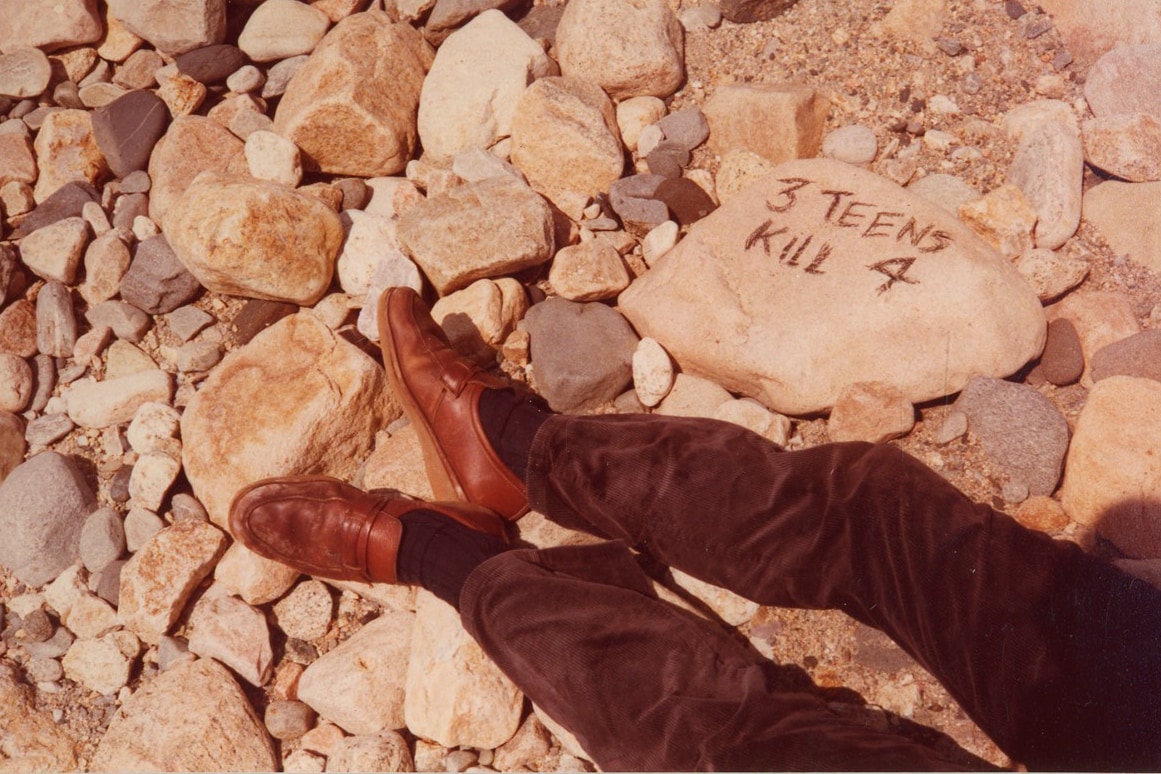
"The intention," Millar noted during the exhibition’s opening, "is to look at how art acts as a witness to the city. Whether it is New York in the 70s or Glasgow in the 2000s, the impulse to express oneself in the face of urban indifference remains constant."
Millar’s own academic contributions—specifically his forthcoming biography of the photographer Peter Hujar—provide a scholarly rigor to the festival. Having chaired critical discussions on the intersection of nightlife, art, and the AIDS crisis, Millar positions these exhibitions as more than historical snapshots; they are active engagements with the politics of memory.
Implications: Why Wojnarowicz Matters Today
The resonance of David Wojnarowicz in 2026 is perhaps greater than at any point since his passing. His work, which dealt so heavily with the themes of extinction and state violence, feels increasingly urgent in a world grappling with environmental collapse and the erosion of bodily autonomy.
1. The Politicization of the Personal
Wojnarowicz proved that the personal is not just political; it is a battlefield. By documenting his own decline and the loss of his friends, he forced a society that wished to look away to confront the realities of a plague. Today, this approach is the blueprint for a new generation of artists who use their lived experience to challenge institutional power.
2. The Aesthetics of Decay
In a digital age defined by polished, ephemeral content, Wojnarowicz’s obsession with physical decay—the peeling paint, the crumbling concrete, the taped-up notes—offers a powerful critique of our modern detachment. His work demands that we look at the physical world, acknowledging the cracks in the foundations of our own civilization.
3. Queer Kinship
The focus on the Hudson River piers highlights the concept of "chosen family." In an era of increased political polarization and the isolation of marginalized communities, the model of community-building that Wojnarowicz and his peers practiced serves as a roadmap for modern resistance.
A Call to Witness
some day this will all be crumbling ruins is an exhibition that asks for active participation from the viewer. It is not designed to be "enjoyed" in the traditional sense; it is designed to be felt. The inclusion of his multisensory works—where sound, image, and text collide—ensures that the viewer leaves with a physical sense of the artist’s urgency.
For those in Glasgow, the exhibition at The Modern Institute is a mandatory experience. It is a rare opportunity to see an artist who refused to compromise, even as he faced the end of his own life. As the festival progresses, the dialogue between the past and the present will only deepen, reminding us that while buildings may crumble, the ideas and expressions born from them endure.
Exhibition Details
- some day this will all be crumbling ruins: Open now at The Modern Institute, 48 Carlton Place, Glasgow. Runs until 28 August, 2026.
- I Only Have Apple Juice: Opens at The Coach House, 12 Sydenham Lane, Glasgow, on Saturday 6 June at 6:00 PM. Runs until 21 June, 2026.
As the city of Glasgow celebrates the spirit of international artistic exchange, these exhibitions stand as a poignant reminder of the power of the artist to act as a witness, a rebel, and a visionary. Whether through the gritty lens of a 1980s Polaroid or the collective output of a contemporary group show, the message is clear: art is not a luxury; it is a necessity for the survival of the human spirit.
