

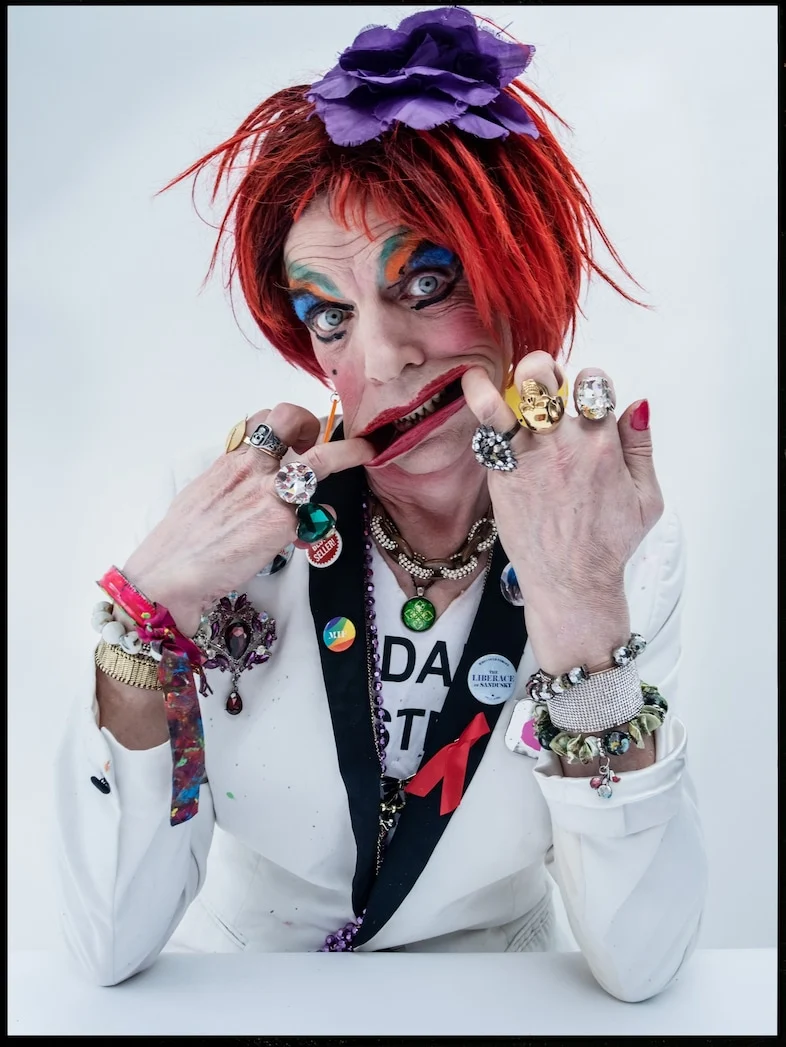
In the hallowed, neoclassical halls of London’s National Portrait Gallery, a radical transformation has taken place. Where one might expect the stiff, stoic visages of historical aristocrats, there now hangs a vibrant, kaleidoscopic tapestry of contemporary life. Fairyland: Love and Legends, the latest exhibition by world-renowned photographer Tim Walker, is not merely a retrospective; it is a sprawling, immersive love letter to the LGBTQ+ community, a reclamation of childhood trauma, and a monumental archive of queer existence.
Spanning six years of meticulous labor, the exhibition features 250 portraits of queer legends, icons, and activists. It is a project that bridges the gap between the ethereal, surrealist dreamscapes for which Walker is famous and the grounded, human-centric reality of social history.
The Genesis of an Escapist Sanctuary
To understand the weight of Fairyland, one must understand the man behind the lens. Tim Walker, a titan of fashion photography whose work has graced the pages of Vogue, Vanity Fair, and W, has spent his career crafting visual poems that defy the laws of gravity and logic. Yet, for all their whimsical beauty, his images have always been rooted in a deeply personal necessity.
“As a young queer kid growing up in Seventies England, I created a Fairyland in my head,” Walker reflects in the exhibition catalogue. “It was a make-believe place I could escape to, full of flowers and mythological creatures. You could be whatever you wanted to be in that place… that was really where I was gay.”
For Walker, his childhood—often marked by the stifling, often hostile environment of a society struggling to reconcile with shifting social mores—was a period of forced concealment. Decorating his family garden with shells and flora became a clandestine act of resistance, “a queer escapade from society’s ‘NO’.” Photography, he notes, became the vehicle for that early survival mechanism. “Luckily, I became a photographer and got to run away to Fairyland every day. All the stories I told were a manifestation of this innate queerness.”
A Chronology of Queer Resistance
The exhibition structure is as deliberate as the lighting in Walker’s studio. It begins at the genesis of the modern UK LGBTQ+ rights movement. In a poignant intersection of personal and political history, Walker discovered he was born on the exact day of the first UK gay rights march in 1970.
The gallery space guides the viewer through 50 years of activism. One of the most striking sections features portraits of Seventies queer activists—the vanguards who fought for decriminalization and social recognition at a time when to be out was to be a pariah. Curator Susanna Brown notes the deliberate choice in how these figures are presented: “They showed extraordinary bravery to fight for gay rights, not long after homosexuality was decriminalized in the UK.”
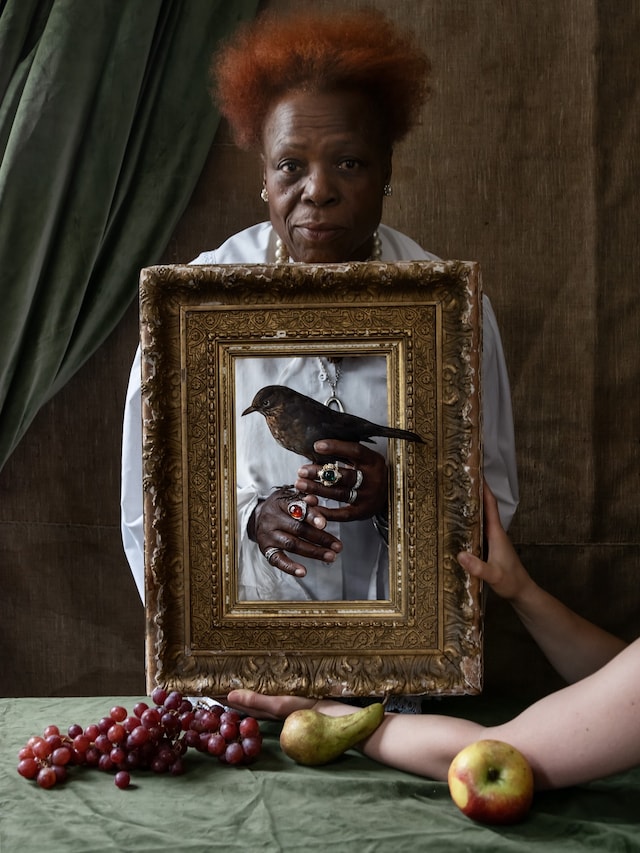
Walker frames these elder activists in the tradition of Hans Holbein, garbing them in Tudor-inspired robes. It is a visual elevation that declares them the “Queeristocracy,” the foundational figures to whom all subsequent generations owe their relative freedom. By situating them within the aesthetic lineage of the Old Masters, Walker forces the viewer to recognize their historical stature.
The Aesthetic Dialectic: Surrealism vs. Truth
The exhibition is a masterclass in visual contrast. Throughout the gallery, visitors encounter the trademark “Walkeresque” style: fish-eye lenses, distorted proportions, and hyper-theatrical set-dressing that feels like a fever dream of a midsummer night. These images—such as the portrait of actor Ben Whishaw, illuminated by a complex, ethereal rainbow prism—capture the joy and playfulness of queer identity.
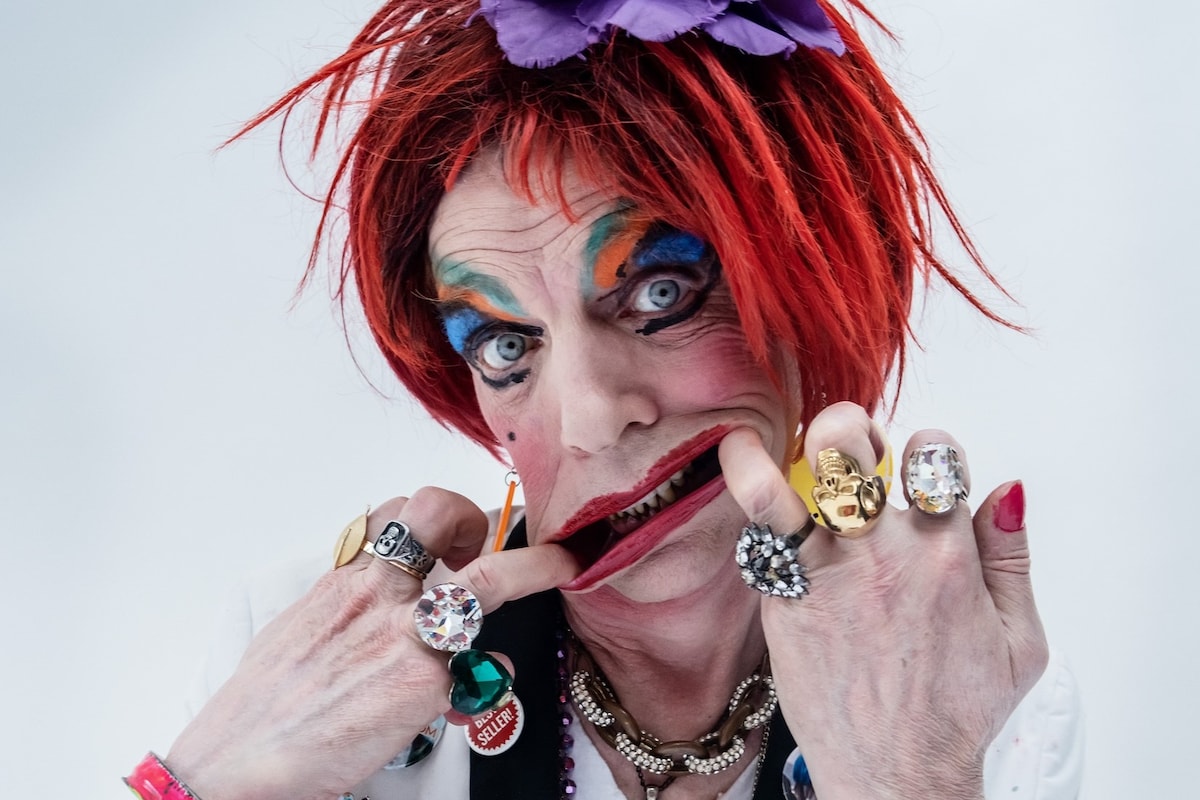
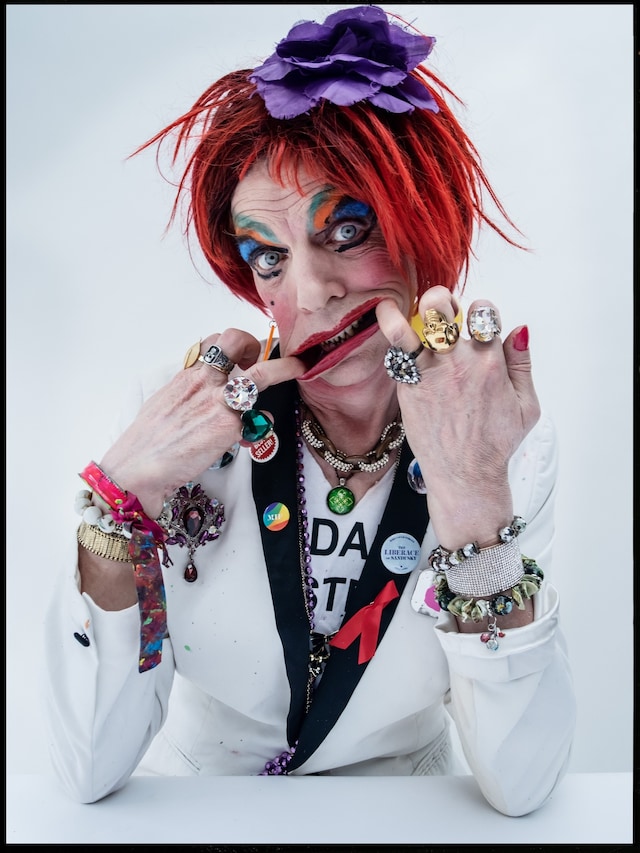
However, these moments of fantasy are balanced by a startling, stripped-back realism. Walker pays homage to his mentor, Richard Avedon, in a series of stark, white-background portraits that emphasize the raw humanity of his subjects. This stylistic pivot serves a specific purpose: it suggests that queerness is not merely a performance or a fantasy, but a lived, tangible reality.
One room is dedicated entirely to the shadow side of the fairytale. The AIDS epidemic, a period of profound loss for the queer community, is handled with immense sensitivity. Portraits of the medics who provided care and the musicians who soundtracked that era—including a hauntingly beautiful shot of an empty hospital bed wreathed in iridescent disco lights—serve as a reminder that the path to today was paved with tragedy. “Within every fairytale, there’s darkness,” Walker reminds us.
Official Responses and Curatorial Insight
The collaboration between Walker and the National Portrait Gallery marks a significant moment for the institution. Curator Susanna Brown, who worked closely with the artist, emphasizes that the exhibition’s intimacy was non-negotiable. “Even the wall texts are written in Tim’s voice,” she explains. “The standard third-person museum tone didn’t feel appropriate for a show that is, at its heart, a personal dialogue with his community.”
The physical environment of the gallery, designed by long-time collaborator Shona Heath, further blurs the line between museum and fantasy. With carefully calibrated color palettes, evocative lighting, and subtle, magical props—such as tiny fairies tucked away in bottles—the exhibition functions as a living space rather than a cold, observational one.
The subjects themselves have spoken to the collaborative power of Walker’s process. Performance artist David Hoyle, whose portrait Prawn Cocktailed serves as a focal point, describes the experience of being shot by Walker as an act of profound validation. “He was so lovely that I wanted to do my best for him,” Hoyle recalls. “He directed me during the shoot… but he brought something out of me. I really liked the result.”
The Implications of Visibility
The significance of Fairyland at the National Portrait Gallery cannot be overstated. For a community that has spent decades—and indeed centuries—fighting for the right to be seen, this exhibition is a sanctuary of visibility.
For figures like David Hoyle, the venue itself is a symbol of how far the culture has shifted. “I used to work on a cooked meat counter,” Hoyle says, reflecting on the journey from his working-class roots to the walls of a national institution. “If somebody had told me then I’d end up here, I wouldn’t have believed them. It’s wonderful and very needed, at a time when some politicians are trying to set the clock back.”
The exhibition is, ultimately, a call to acknowledge the fragility of progress. By placing the faces of modern queer icons and historical activists side-by-side, Walker creates a narrative of continuity. He reminds the viewer that the current cultural climate—where queer rights are both celebrated and contested—is part of an ongoing struggle.
A Love Letter to Humanity
Tim Walker’s own interpretation of his work is refreshingly uncomplicated. “I’ve rarely met anyone who loves people as much as Tim,” says Brown. This affection is the engine of the exhibition. Walker has often remarked that “photography is the greatest job in the world because it gives you permission to meet anyone.” That permission has been used here to build a family portrait on a grand scale.
In his final reflections on the project, Walker is optimistic about the legacy of Fairyland. “Fairyland now exists as a real book and a place—a magical manifestation in the National Portrait Gallery,” he says. “When I was growing up, gayness was so hidden, culturally. For an exhibition of this nature to be in a museum in London would have been unimaginable.”
As the exhibition prepares to conclude its run in February 2027, its impact will likely linger far beyond the walls of the gallery. By reclaiming the slur “fairy” and transforming it into a title of grandeur and historical importance, Walker has pulled off a masterstroke of cultural alchemy.
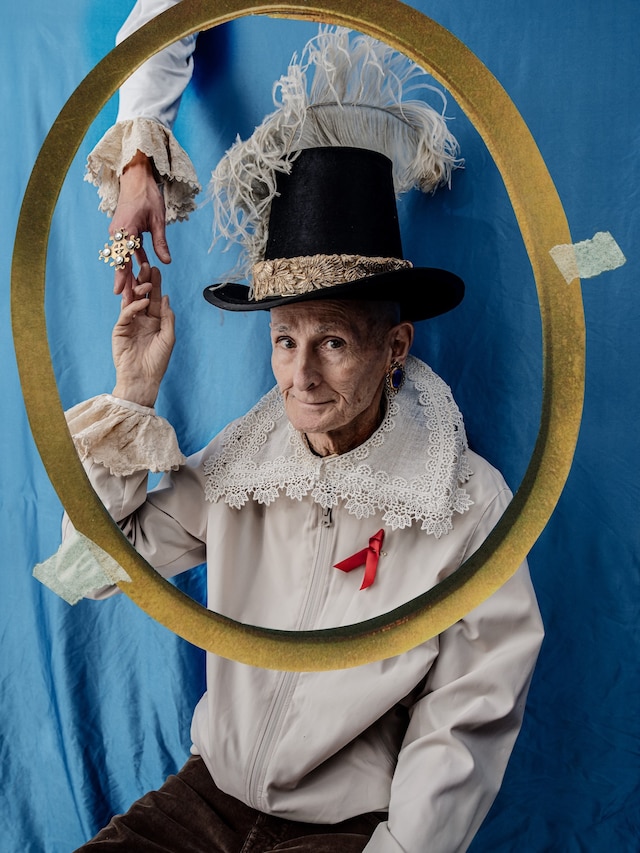
“In the end, everything is about love,” Walker concludes. “There are many different kinds of love, and I hope the pictures open up conversations about love in all its forms.”
Tim Walker’s Fairyland: Love and Legends is currently on display at the National Portrait Gallery, London, until February 7, 2027. It stands as a testament to the idea that, in a world that often demands conformity, the most radical act one can perform is to unabashedly exist within one’s own invented, beautiful, and queer reality. Through the lens of one of the world’s most imaginative photographers, we are all invited to step into the garden, admire the flowers, and recognize the beauty of a community that has turned the act of survival into an art form.
