

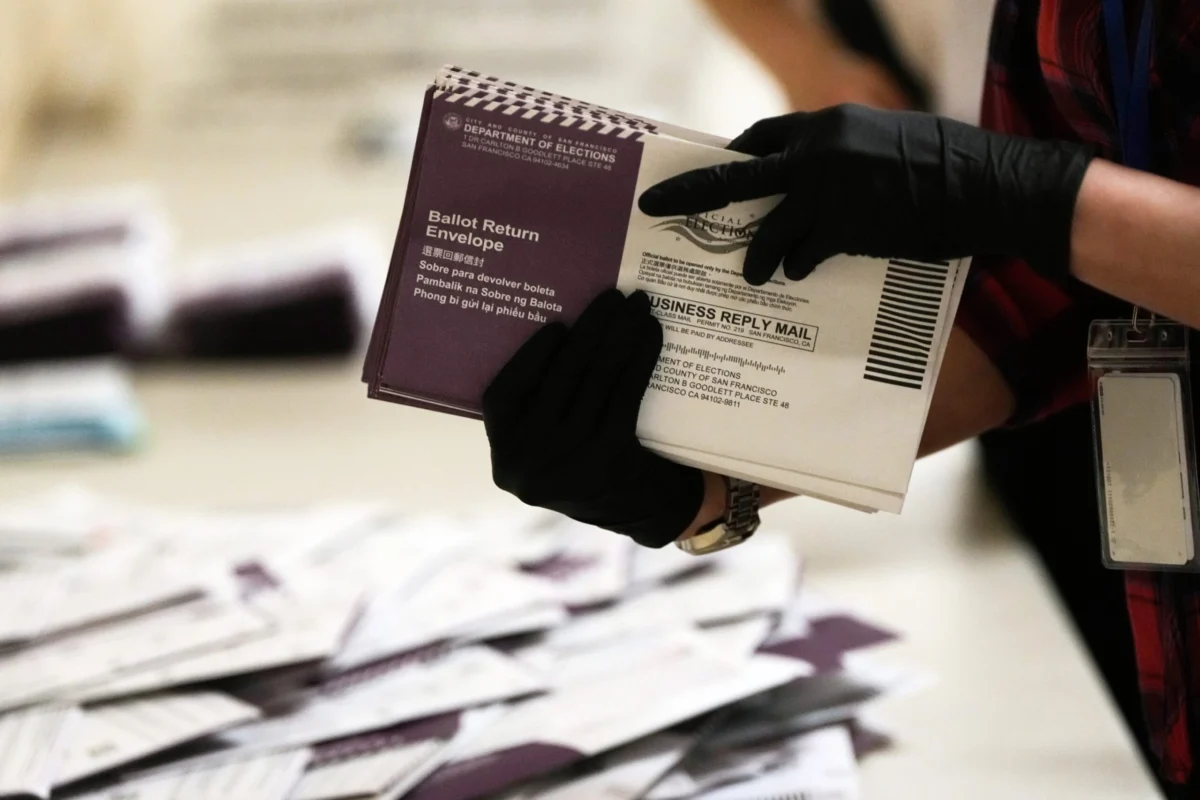
A federal appeals court has delivered a significant legal setback to the Trump administration, upholding a preliminary injunction that blocks a sweeping executive order aimed at overhauling the administration of mail-in ballots. The ruling, handed down by the 1st U.S. Circuit Court of Appeals on Saturday, effectively prevents the White House from forcing states to restrict the distribution of mail-in ballots to a federally curated "state citizenship list."
The decision maintains a legal firewall for 23 states and the District of Columbia, which had collectively challenged the order as an unconstitutional encroachment on state sovereignty and a direct threat to the integrity of the upcoming midterm elections.
The Core of the Dispute: Federal vs. State Authority
At the heart of the conflict is a March executive order signed by President Donald Trump. The directive sought to task the director of U.S. Citizenship and Immigration Services (USCIS) and the commissioner of the Social Security Administration with the creation of a federal "state citizenship list." Under the terms of the order, the U.S. Postal Service would have been restricted to delivering mail-in ballots solely to individuals verified on this federal registry.
While the administration framed the policy as a vital safeguard against non-citizen voting—a phenomenon that data consistently shows is statistically negligible—state election officials viewed the maneuver through a different lens. They argued that the order was not merely a security measure, but an attempt to federalize the electoral process, potentially disenfranchising millions of eligible voters through bureaucratic error or technical malfunction.
The legal challenge, filed in U.S. District Court in Boston, centered on a fundamental constitutional question: Does the executive branch possess the authority to unilaterally dictate the mechanisms of state-run elections? The plaintiffs—a coalition of Democratic secretaries of state and attorneys general—argued that the U.S. Constitution explicitly reserves the power to regulate the "Times, Places and Manner" of elections to state legislatures and Congress, not the president.
Chronology of the Legal Battle
The legal escalation occurred in a rapid, high-stakes timeline that mirrors the broader partisan divide over election security.
- March: President Trump issues the executive order, citing the need for "election integrity" and the prevention of fraudulent voting by non-citizens.
- Spring: State officials express immediate alarm, warning that the federal government lacks the infrastructure and the constitutional mandate to manage voter registration databases.
- Summer: A coalition of 23 states and the District of Columbia files suit in the U.S. District Court for the District of Massachusetts.
- Pre-Election Period: U.S. District Court Judge Indira Talwani, an appointee of President Barack Obama, issues a preliminary injunction. Her ruling acknowledges that the executive order poses a significant risk of irreparable harm to the plaintiffs’ ability to administer elections.
- Saturday Ruling: The 1st U.S. Circuit Court of Appeals denies the Trump administration’s appeal, maintaining the lower court’s injunction. The appellate judges determined that the administration failed to demonstrate a likelihood of success on the merits, essentially agreeing that the federal government was overstepping its jurisdictional bounds.
Supporting Data and Procedural Risks
The plaintiffs’ case was bolstered by testimony from state election experts who argued that the proposed "citizenship list" was inherently flawed. The Social Security Administration and USCIS databases are frequently criticized for inaccuracies—including delays in updating citizenship status or matching names—which could have led to thousands of eligible voters being erroneously purged from mail-in lists.
Furthermore, the logistical burden placed on the U.S. Postal Service was described as "monumental." By requiring the USPS to verify federal status before delivering ballots, the order would have added a layer of complexity to the mail-in process that critics argued would lead to systemic delays, ensuring that many ballots arrived too late to be counted.
The coalition of states highlighted that they already possess robust verification systems. In most jurisdictions, voter registration is verified through a combination of social security number cross-referencing, DMV records, and local residency checks. By attempting to impose a singular federal standard, the executive order threatened to dismantle the nuanced, localized security protocols that have functioned effectively for decades.
Official Responses and Political Rhetoric
The reaction to the appellate court’s ruling has been predictably polarized, reflecting the broader national debate over voting rights.
The Department of Justice (DOJ) signaled that the legal fight is far from over. In an emailed statement released on Sunday, the DOJ stated, "The administration remains committed to ensuring that our elections are secure and that only eligible citizens cast ballots. We are currently reviewing all options regarding our next legal steps and remain confident that the president’s executive order will ultimately be upheld as a lawful exercise of executive authority."
Conversely, the plaintiffs have hailed the ruling as a victory for democracy. "This was an unprecedented attempt to bypass the democratic process," said a spokesperson for the coalition. "The court has affirmed that states are the primary arbiters of their own election laws. The attempt to weaponize federal agencies to interfere with state-run mail-in voting was a bridge too far, and the judiciary has correctly recognized the danger of such an executive overreach."
Implications for Future Elections
The implications of this ruling extend well beyond the current electoral cycle. By reinforcing the boundaries between federal executive power and state-controlled election administration, the court has set a precedent that will likely govern future litigation regarding federal interference in voting procedures.
1. The Erosion of Federal Supremacy Claims
The court’s refusal to grant the administration’s request suggests that "election integrity" is not a "get out of jail free" card for the executive branch. While the federal government has an interest in the security of federal elections, it cannot use that interest to supersede state-level constitutional authority without a clear mandate from Congress.
2. The Future of Mail-In Voting
The ruling provides a temporary sense of stability for the millions of Americans who rely on mail-in ballots. However, it also highlights the vulnerability of these systems to legal challenges. Election officials in the 23 states are now breathing a sigh of relief, knowing that their current mail-in processes can proceed without federal intervention.
3. The Role of the Judiciary
This case serves as a stark reminder of the judiciary’s role as a check on executive power. Despite the political pressure surrounding the midterms, the 1st Circuit Court opted for a strict constructionist interpretation of the Constitution, emphasizing that administrative changes to voting must be legislated, not decreed.
4. Continued Partisan Polarization
Despite the legal defeat, the rhetoric surrounding the executive order remains a staple of the current political climate. The administration’s promise to explore "all options" indicates that the narrative of "non-citizen voting" will remain a central campaign theme, regardless of the judicial outcomes. This ensures that the battle over election administration will likely shift from the courtroom to the legislative floor in the coming years.
Conclusion
The 1st U.S. Circuit Court of Appeals’ decision to uphold the injunction against President Trump’s executive order is a pivotal moment in the ongoing national debate over election procedures. While the administration may continue its legal pursuit, the ruling reinforces a critical constitutional principle: that the machinery of American elections is decentralized by design.
For now, the 23 states and the District of Columbia that challenged the order can proceed with their standard mail-in voting procedures. However, the intensity of this legal clash serves as a harbinger of the tensions likely to characterize future election cycles, as the country continues to grapple with the balance between security, access, and the constitutional limits of presidential power. As the nation approaches the midterm elections, the focus now shifts back to the logistical challenges of ensuring that every eligible vote is counted, free from the shadow of federal interference.
