

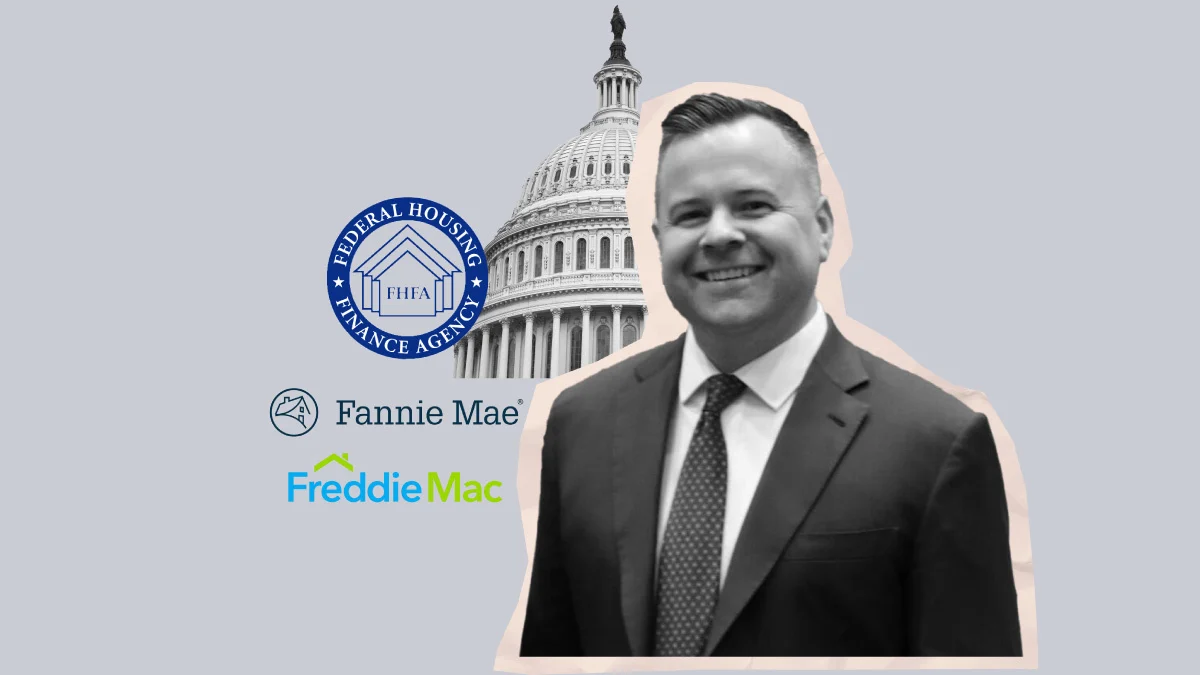
In a significant move that could reshape the regulatory landscape of the U.S. housing market, the Federal Housing Finance Agency (FHFA) has formally requested that Congress grant it the authority to pursue civil litigation against individuals suspected of mortgage fraud. The request, outlined in the agency’s latest Annual Report to Congress, marks a pivotal shift in the FHFA’s operational philosophy, signaling an end to its reliance on third-party intermediaries for enforcement.
Under the leadership of Acting Director Bill Pulte, the FHFA is positioning itself to become a frontline combatant against financial malfeasance. The agency argues that its current regulatory framework is hampered by "indirect or limited" authorities, leaving it toothless when confronted with sophisticated schemes that threaten the stability of the housing finance system.
The Push for Direct Litigation Authority
The core of the FHFA’s proposal rests on a desire for parity with other major financial regulators. Currently, when the FHFA uncovers evidence of fraud, it is legally required to refer the matter to other federal entities, such as the Department of Justice (DOJ). This bureaucratic hand-off often results in delays and a dilution of focus.
The agency has presented Congress with two primary legislative pathways to resolve this:
- Direct Standing: Granting the FHFA the explicit authority to file civil lawsuits in state or federal courts—a power already held by the entities it oversees, including Fannie Mae, Freddie Mac, and the Federal Home Loan Banks (FHLBanks).
- Statutory Enforcement: The creation of a new, standalone federal law specifically targeting mortgage fraud that would empower the FHFA to act as an enforcement body in federal court. This model would mirror the Securities and Exchange Commission’s (SEC) established power to pursue civil litigation in cases of insider trading and market manipulation.
By adopting the SEC model, the FHFA believes it can act with the speed and specificity required to deter fraudulent actors before their activities inflict systemic damage on the secondary mortgage market.
A Chronology of Intensifying Oversight
The current push for expanded power is not an isolated event but the culmination of a broader, aggressive campaign initiated under the current administration.
2024: The Era of Partnerships and AI
Last year, the FHFA took its first major technological leap by partnering with Palantir Technologies. The collaboration resulted in the launch of an artificial intelligence-powered crime detection unit housed within Fannie Mae. By leveraging advanced data analytics, the agency sought to identify patterns of fraudulent activity that human auditors might overlook. This was quickly followed by the launch of a dedicated mortgage fraud tip line, encouraging whistleblowers to bypass traditional reporting channels and communicate directly with the agency.
2025: Aggressive Criminal Referrals
The early months of 2025 have seen a dramatic escalation in rhetoric and action. Acting Director Bill Pulte has moved beyond administrative oversight, utilizing his position to file high-profile criminal referrals with the DOJ. These filings have targeted prominent public figures, including Federal Reserve Governor Lisa Cook, New York Attorney General Letitia James, and Sen. Adam Schiff. While the DOJ has yet to act on these specific referrals, their filing underscores a new, combative tone within the FHFA.
The Legislative Pivot
Following these high-profile actions, the FHFA used its Annual Report to Congress to formalize the request for structural change. The agency framed its plea not as a desire for power, but as a necessary correction to a regulatory environment where the "gatekeeper" of the mortgage market lacks the keys to the gate.
Supporting Data: The Case for Regulatory Reform
The FHFA’s argument for expanded authority is bolstered by findings from the Government Accountability Office (GAO) and the Financial Stability Oversight Council (FSOC). Both bodies have repeatedly flagged the agency’s limited reach as a "top risk" to the financial system.
The Third-Party Problem
A major concern cited in the Annual Report is the reliance on third-party service providers. As the mortgage industry has digitized, the number of entities involved in the lifecycle of a loan—from appraisal management companies to digital verification services—has ballooned. The FHFA notes that it currently lacks the legal authority to directly examine the records, operations, and facilities of these providers.
"FHFA’s regulated entities rely on third-party service providers for a wide range of services, some of which are critical to their operations," the report states. "FHFA has limited authority to assess the impact of third-party relationships on the safe and sound operations of its regulated entities."
By obtaining the power to audit these service providers, the FHFA hopes to eliminate the "blind spots" that have historically allowed fraudulent loans to enter the portfolios of Fannie Mae and Freddie Mac.
Official Responses and Industry Skepticism
To date, the FHFA has maintained a policy of silence regarding specific inquiries from media outlets. When approached for comment on the scope of its request or the potential for political friction, the agency declined to respond.
Industry analysts, however, are divided. Proponents of the measure argue that the housing market has become too complex for a passive regulator. "The mortgage industry is no longer just banks and borrowers; it is a web of fintech, data brokers, and massive financial institutions," says one housing economist. "If the FHFA is to protect the taxpayer, it needs the teeth to punish those who abuse the system."
Conversely, critics express concern that granting an agency direct litigation power could lead to regulatory overreach. There are fears that the FHFA could become a political weapon, particularly given the recent high-profile referrals against elected officials and political appointees. If the agency’s enforcement priorities are perceived to be driven by political ideology rather than objective market risk, the move could invite intense scrutiny from the judiciary and potentially lead to a chilling effect on legitimate mortgage lending.
Implications for the Future of Housing Finance
The implications of this request are profound. If Congress grants the FHFA the power to sue, the following shifts are likely to occur:
- Increased Compliance Costs: Mortgage originators and third-party service providers will likely face significantly higher compliance costs as the FHFA moves to implement more rigorous oversight and direct examinations.
- Heightened Legal Risk: For individual brokers, appraisers, and executives, the prospect of being personally sued by a federal agency—rather than simply facing administrative sanctions—creates a new, high-stakes environment for risk management.
- Market Efficiency vs. Stability: While the FHFA argues that its plan will ensure market safety, some market participants worry that the threat of litigation could lead to "defensive lending," where companies become overly risk-averse to avoid the possibility of an FHFA investigation, potentially tightening credit access for qualified borrowers.
- A Shift in Power Dynamics: Should the FHFA gain this power, it would move from being a supervisory agency to a primary enforcement agency. This would effectively elevate the FHFA to the status of the SEC or the Consumer Financial Protection Bureau (CFPB) in terms of its ability to influence market behavior through the threat of litigation.
As the debate moves to Capitol Hill, the primary question for lawmakers will be whether the benefit of added fraud protection outweighs the risk of empowering a regulator to act as both investigator and prosecutor. For now, the FHFA remains steadfast in its position, arguing that in a modern financial system, the only way to effectively prevent fraud is to have the legal authority to confront it directly. Whether Congress will provide the necessary mandate remains the critical unknown in the 2025 legislative session.
