

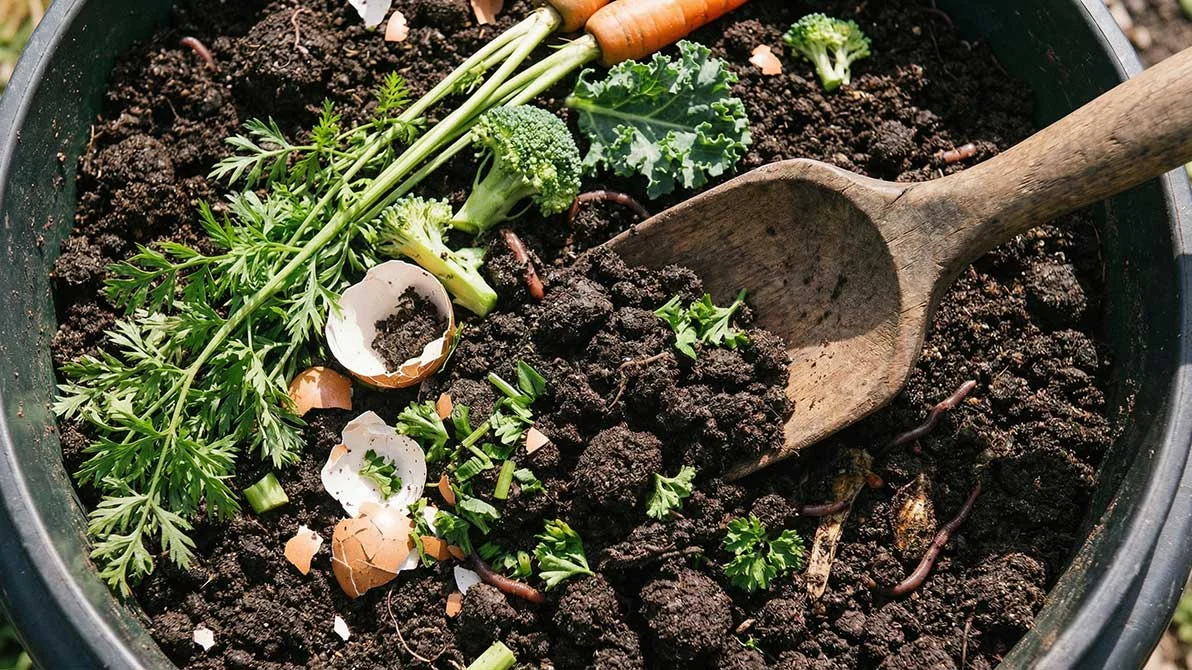
For decades, the American backyard was viewed as a source of refuse—a place to gather up the "clutter" of nature in brown paper bags and ship it off to the municipal landfill. In 1990, this ritual resulted in roughly 25 million tons of grass, leaves, and brush being buried annually. However, a quiet, multi-generational shift has occurred. By 2018, that figure had plummeted to 10.5 million tons, even as the total volume of organic waste generated by households and businesses continued to rise.
Today, the United States diverts 63 percent of its yard waste from landfills, turning it into compost, mulch, and soil amendments. This success story stands as a rare triumph in the history of American waste management, offering a blueprint for how society might tackle even more complex waste streams, such as food scraps. Yet, beneath this statistical victory lies a pressing environmental concern: the remaining 10.5 million tons of yard waste currently hitting landfills are disproportionately composed of fast-rotting materials that act as significant drivers of methane emissions.
A Chronology of Change: How the Landscape Shifted
The transformation of yard waste management was not an overnight phenomenon; it was the result of a three-decade-long convergence of policy, municipal infrastructure investment, and shifting cultural habits.
1990–2000: The Era of Regulatory Intervention
The catalyst for the early decline in yard waste landfilling was policy. Recognizing that organic material occupied precious landfill volume and created operational hazards, states began implementing bans. Pennsylvania led the charge in 1990, followed by Minnesota (1994) and West Virginia (1997). These bans forced municipalities to rethink their waste streams. Rather than simply dumping everything, cities were required to establish separate collection systems for "green waste."
2000–2015: Infrastructure and the Rise of Municipal Composting
As bans proliferated, the infrastructure of recovery matured. Cities began building large-scale composting facilities, creating a secondary market for soil and mulch. This period saw the rise of the "circular" municipal model: residents would leave their yard waste at the curb, the city would process it, and then sell the resulting compost back to those same residents or use it for public landscaping projects.
2015–Present: Behavioral Shifts and Statewide Mandates
The modern era is defined by both high-level legislation and low-level habit changes. California’s landmark SB 1383, which took full effect in 2022, serves as the current gold standard, mandating statewide diversion of organic materials. Simultaneously, "grasscycling"—the practice of leaving clippings on the lawn—gained traction as environmental advocacy groups and university extension programs promoted the idea that a lawn’s waste is actually its own best fertilizer.
Supporting Data: The Scale of the Success
According to the Environmental Protection Agency’s (EPA) material-specific data, the scale of this diversion is staggering. In 2018, the U.S. generated 35.4 million tons of yard trimmings—accounting for 12.1 percent of all municipal solid waste (MSW). Of that, 22.3 million tons were successfully recovered.
To put this in perspective:
- 1990 Recovery Rate: Only 4.2 million tons were composted.
- 2018 Recovery Rate: 22.3 million tons were composted.
- Diversion Efficiency: Yard waste now boasts one of the highest recovery rates of any major material in the American waste stream, far outpacing plastics and textiles.
However, the 10.5 million tons still reaching landfills represent 7.2 percent of all landfilled waste. While this sounds like a minor portion, its impact is amplified by the chemistry of decomposition.
The Methane Asterisk: Why "Mostly Working" Isn’t Enough
The primary environmental danger of landfilling organic waste is the production of methane. Municipal landfills are the third-largest source of human-related methane in the United States, accounting for approximately 14 percent of national emissions. When organic matter—food, paper, wood, and yard trimmings—is buried in an anaerobic (oxygen-free) environment, bacteria break it down into methane, a greenhouse gas 28 times more potent than carbon dioxide over a 100-year horizon.
The Timing Problem
The critical issue with yard waste, particularly grass clippings, is the speed of decomposition. Landfills are typically designed with gas collection systems that are installed and activated only after a cell is filled and capped. This process can take years.
"If there is no immediate gas capture system, it is likely that all of the fresh wet materials will have significantly decomposed before the gas collection system gets turned on," explains Dr. Sally Brown, a soil scientist at the University of Washington.
Because grass and leaves are high in moisture and nitrogen, they rot rapidly. By the time a landfill operator installs the equipment to capture the gas, the "low-hanging fruit" of methane production has already escaped into the atmosphere. In contrast, woody materials like branches and tree limbs are high in cellulose and degrade slowly, effectively acting as carbon storage units within a landfill.
The Economic and Practical Implications for Households
The current model of yard waste management offers a unique economic paradox: households often pay twice for the same nutrients. First, they pay for the collection and disposal of grass clippings and leaves. Then, they head to a garden center to purchase synthetic fertilizers, mulch, and compost to nourish their lawns and flowerbeds.
The "Grasscycling" Advantage
By adopting grasscycling, homeowners can bypass this cycle entirely. According to the University of Missouri Extension, grass clippings contain approximately four percent nitrogen, two percent potassium, and one percent phosphorus. Leaving them on the lawn provides up to 25 percent of a lawn’s annual fertilizer requirements.
Beyond the direct cost savings on fertilizer, there are significant labor and time savings. Avoiding the tedious task of bagging leaves and clippings can save dozens of hours annually. When scaled across millions of households, the collective reduction in fuel consumption for collection trucks and the carbon footprint of manufacturing synthetic fertilizers is substantial.
Lessons for the Future: A Template for Food Waste
The success of the yard waste program stands in stark contrast to the management of food waste. Food is currently the single most common material in U.S. landfills, yet only about 5 percent of it is composted. The yard waste model provides a clear, proven template for how to improve these numbers:
- Legislative Pressure: Landfill bans are effective. When states mandate that organic waste cannot be buried, the market for recovery infrastructure follows.
- Accessible Collection: When municipalities make it as easy to discard yard waste as it is to throw away trash, participation rates soar.
- Behavioral Normalization: Public education campaigns, such as those promoting grasscycling, prove that citizens are willing to change their habits if they understand the benefits.
Conclusion: The Unfinished Business of Organics
The American experience with yard trimmings is a testament to the power of systemic change. We have effectively moved a massive category of organic matter from the landfill to the soil, supporting local jobs, enriching our gardens, and reducing our reliance on synthetic chemicals.
Yet, the 10.5 million tons remaining in our landfills serve as a persistent reminder that the job is not yet finished. The focus of the next decade must be on the "methane-heavy" portion of the waste stream—the fresh, wet organics that decompose before we can catch them. By refining our collection systems to target these high-moisture materials and continuing to encourage decentralized composting, we can turn the final asterisk of our success story into a closed loop.
The path forward is clear: we must continue to view our "waste" not as a burden to be buried, but as a resource that belongs back in the earth from which it grew.
