

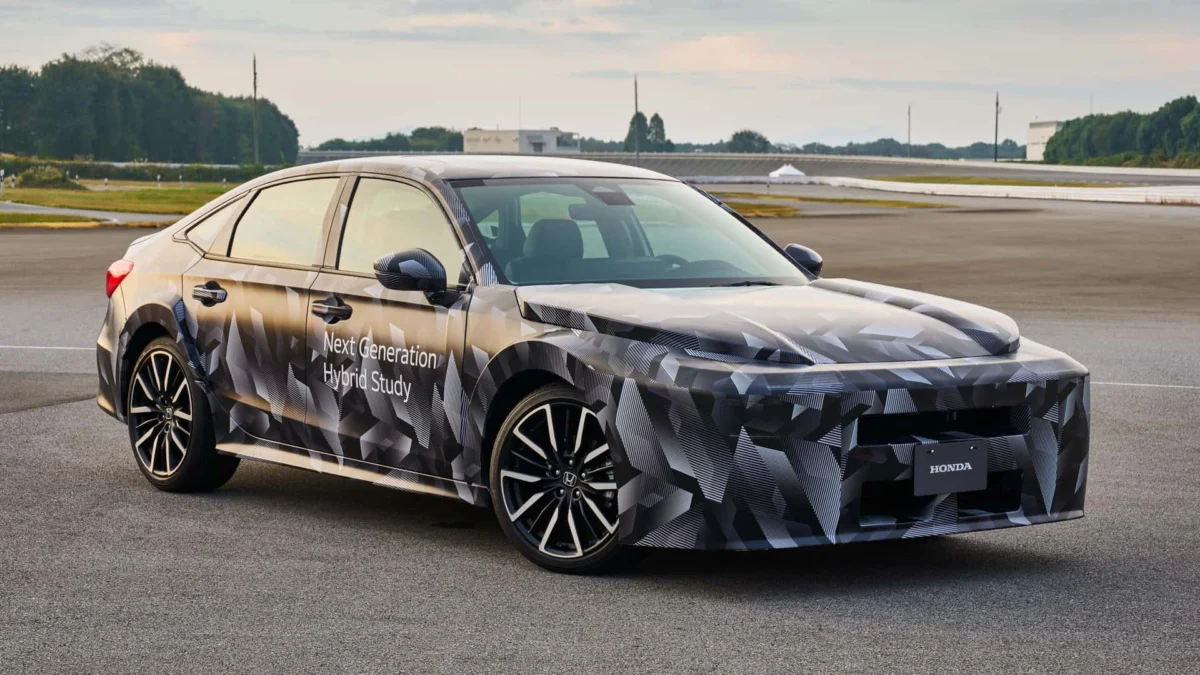
In a move that signals a definitive pivot in its global product strategy, Honda has announced the consolidation of its diverse electrification efforts under a singular, straightforward banner: "Honda Hybrid." This branding strategy, characterized by its minimalist nomenclature, is intended to provide consumers with absolute clarity as the Japanese automaker prepares for a massive transition. Beginning in 2027, this new designation will serve as the primary identity for the company’s next-generation hybrid systems, with an aggressive rollout planned for approximately 15 models across North America, Japan, and India by the conclusion of the fiscal year ending March 2030.
This initiative is far more than a simple marketing rebranding; it represents the culmination of years of engineering refinement and a calculated response to the shifting demands of the global automotive market. By focusing its resources on a unified platform, Honda aims to standardize performance, drive efficiency, and simplify the ownership experience for millions of drivers.
The Evolution of Honda’s Hybrid Lineage
To understand the significance of this shift, one must look at the convoluted history of Honda’s electrification journey. The company has long been a pioneer in hybrid technology, dating back to the late 1990s. In 1999, the original Honda Insight introduced the world to Integrated Motor Assist (IMA), a mild-hybrid system that set the stage for decades of innovation.
However, as the technology matured, Honda’s naming conventions became increasingly fragmented. By 2012, the company had introduced three distinct "Sport Hybrid" branding identities, leading to a landscape where consumers were often confused by the varying levels of complexity and performance across the lineup. This fragmentation stood in stark contrast to competitors who maintained singular, powerful brand identities for their electrification suites.
The "Honda Hybrid" branding serves to sweep away this historical clutter. By sunsetting legacy names and folding the current e:HEV two-motor system—which has served as the backbone of Honda’s hybrid success since 2019—under this new umbrella, the company is signaling a transition toward a more cohesive, globally standardized automotive portfolio.
Engineering the Next Generation: Efficiency and Rigidity
At the heart of the new Honda Hybrid system is a refined philosophy of "incremental evolution." Rather than reinventing the architecture entirely, Honda’s engineering teams have focused on optimizing the two-motor setup that has already proven successful.
The core of this evolution lies in expanding the engine’s most efficient operating range. By refining the thermal management and combustion cycles of the internal combustion component, and simultaneously downsizing the drive unit, Honda has achieved a more compact, lightweight footprint. This efficiency gain is critical, as it allows for the integration of the hybrid system into a wider variety of vehicle segments without compromising interior space or cargo capacity.
Beyond the engine, the vehicle platform itself is receiving a significant overhaul. The next generation of Honda Hybrid vehicles will be built on a new, high-rigidity chassis. Through the strategic use of high-tensile steel and updated structural geometry, Honda has managed to create a frame that is both lighter and substantially stiffer than its predecessors. This increased rigidity is the "secret sauce" for the company’s dual-pronged goal: improved ride comfort and sharper handling. A stiffer chassis allows the suspension system to operate within a more controlled environment, reducing vibrations and ensuring that the vehicle’s geometry remains stable under cornering loads and high-speed maneuvers.
The Introduction of Electric All-Wheel Drive (e-AWD)
Perhaps the most anticipated technical addition to the Honda Hybrid lineup is the implementation of a proprietary electric all-wheel-drive (e-AWD) system. While Honda has offered AWD in various models for years, the new system is designed specifically to integrate with the high-torque, responsive nature of their hybrid motors.
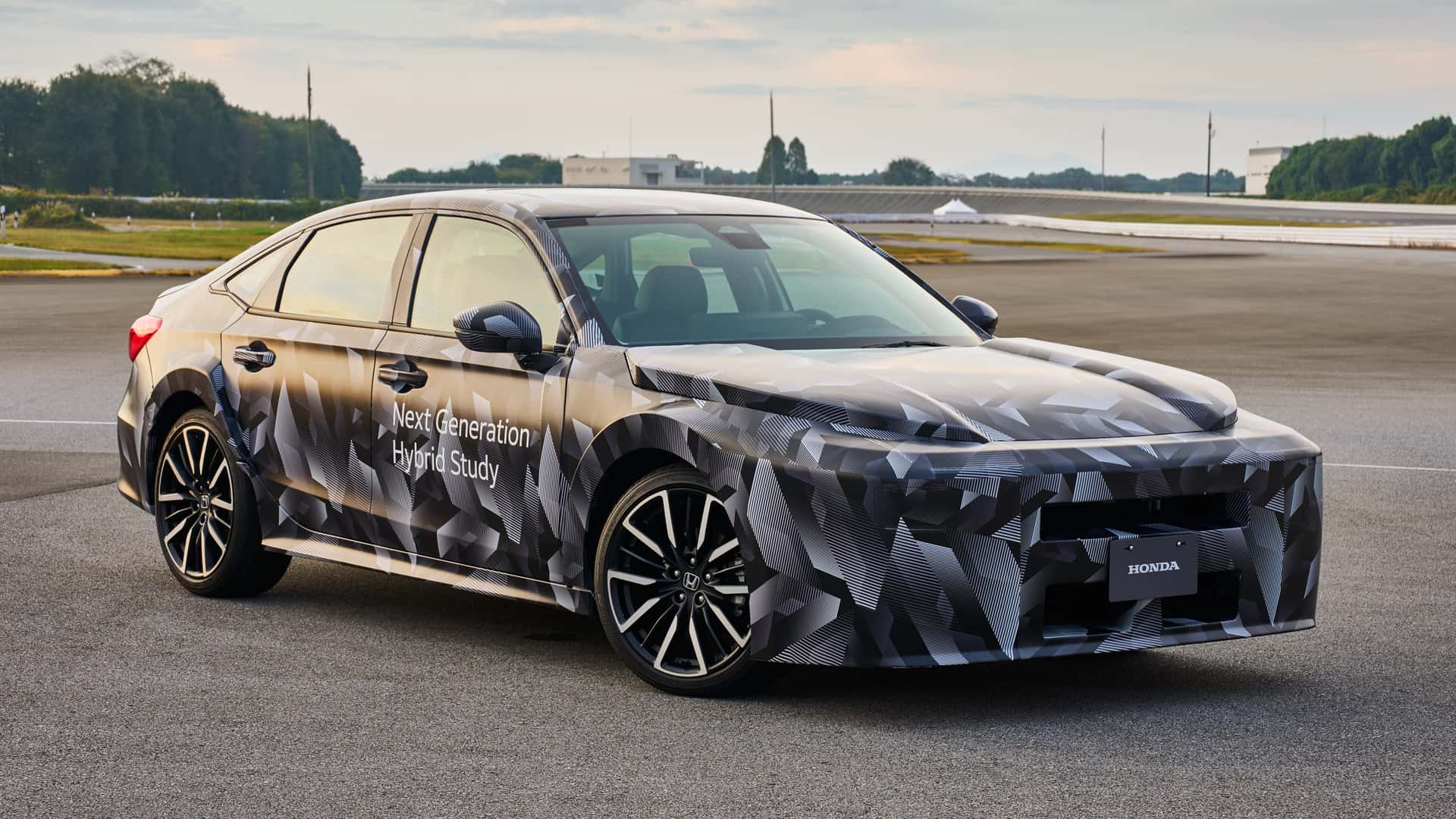
While the company has remained tight-lipped regarding the specific power ratings of the electric motors or the logic used to manage torque distribution between the front and rear axles, the industry expects a highly reactive system. By decoupling the rear axle from the engine via a mechanical driveshaft and instead using dedicated electric motors, Honda can achieve near-instantaneous torque delivery. This is a game-changer for traction control and driving dynamics, particularly in the diverse climates of North America and Japan, where snow and rain necessitate superior road-holding capabilities.
Strategic Implications: A Path to 2030
The 2027 launch date provides Honda with a three-year window to finalize the integration of these technologies. This timeline is perfectly synchronized with the broader organizational restructuring announced in May 2026. Under this plan, Honda has committed to shifting significant portions of its research, development, and manufacturing capital toward the mass-production of hybrid systems.
A prime example of this commitment is the ongoing transformation of Honda’s manufacturing footprint in North America. The recent strategic investments in the Ohio-based hybrid manufacturing facilities are not coincidental; they are the physical manifestation of a company preparing for a high-volume transition. By localizing the production of the next-generation hybrid hardware, Honda is insulating itself against supply chain volatility while ensuring that its most critical markets—North America, Japan, and India—are prioritized for the global launch.
The Competitive Landscape
The decision to focus heavily on hybrids rather than an "EV-only" strategy is a nuanced bet on the current pace of infrastructure development. While many manufacturers are facing headwinds in the transition to full battery-electric vehicles (BEVs) due to range anxiety and charging infrastructure gaps, Honda is positioning its new hybrid lineup as the ultimate "bridge" technology.
By offering a vehicle that provides the fuel economy and environmental benefits of an electrified powertrain without the need for frequent plug-in stops, Honda is appealing to a massive segment of the market that remains hesitant to adopt full-electric vehicles. The "Honda Hybrid" badge is intended to convey reliability, simplicity, and efficiency—traits that have historically defined the brand.
Future Outlook: What to Expect
Looking ahead, the next-generation Civic Hybrid prototype, which features a 2.0-liter engine paired with the new two-motor system, provides a clear template for what is to come. Industry analysts expect this architecture to be modular, allowing it to be scaled up for larger SUVs like the CR-V and Pilot, or scaled down for compact commuters.
The inclusion of the "Motion Management System"—an integrated vehicle control technology that harmonizes braking, steering, and motor torque—will likely become a hallmark of the new Honda Hybrid experience. This software-driven approach to vehicle dynamics will be essential in differentiating Honda’s hybrid feel from the "disconnected" driving experience often associated with older hybrid systems.
Conclusion
As the 2027 deadline approaches, Honda’s strategy appears clear: simplify the brand, refine the hardware, and aggressively scale the production of efficient, reliable, and capable hybrid vehicles. By consolidating its disparate history into the singular "Honda Hybrid" identity, the company is not just updating its marketing—it is resetting its competitive position in the global automotive landscape. Whether this pivot will successfully carry the company through the next decade of decarbonization remains to be seen, but the clear, unified, and engineering-led approach suggests that Honda is playing to win the hearts of the mainstream consumer.
