

For years, the global automotive industry has been locked in an existential race to pivot toward electrification. Legacy manufacturers, under pressure from tightening emissions regulations and the disruptive dominance of Tesla, have poured billions into research, development, and marketing. Yet, as the industry matures into the electric age, the friction between corporate strategy and engineering soul has never been more apparent. Nowhere is this tension more palpable than at the headquarters of Mercedes-Benz, where recent reports suggest a deep, internal divide over the direction of the brand’s high-performance AMG division.
The Performance Dilemma: When Soul Meets Silicon
Automakers are currently engaged in a desperate bid to win over the hearts of legacy enthusiasts. From synthetic engine notes that rumble through cabin speakers to simulated gear shifts designed to mimic the visceral snap of a dual-clutch transmission, manufacturers are attempting to bridge the gap between internal combustion engine (ICE) engagement and electric efficiency.
However, the strategy is not universally embraced. For the traditional Mercedes-AMG buyer—a demographic historically defined by the raw, unbridled character of hand-built V8 and V12 engines—the transition to battery-electric powertrains feels less like an evolution and more like a dilution of identity. This skepticism is not confined to the showroom floor; according to recent reports, it has reached the highest levels of the boardroom.
A "Failure" in the Making: The AMG GT 4-Door Controversy
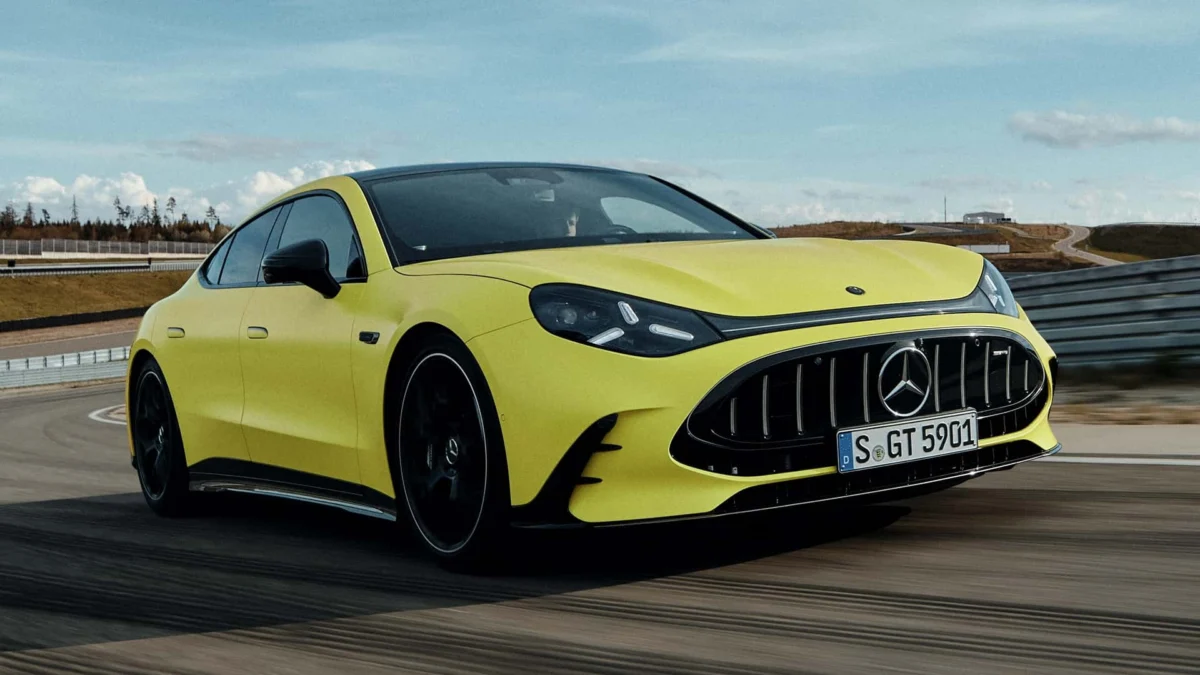
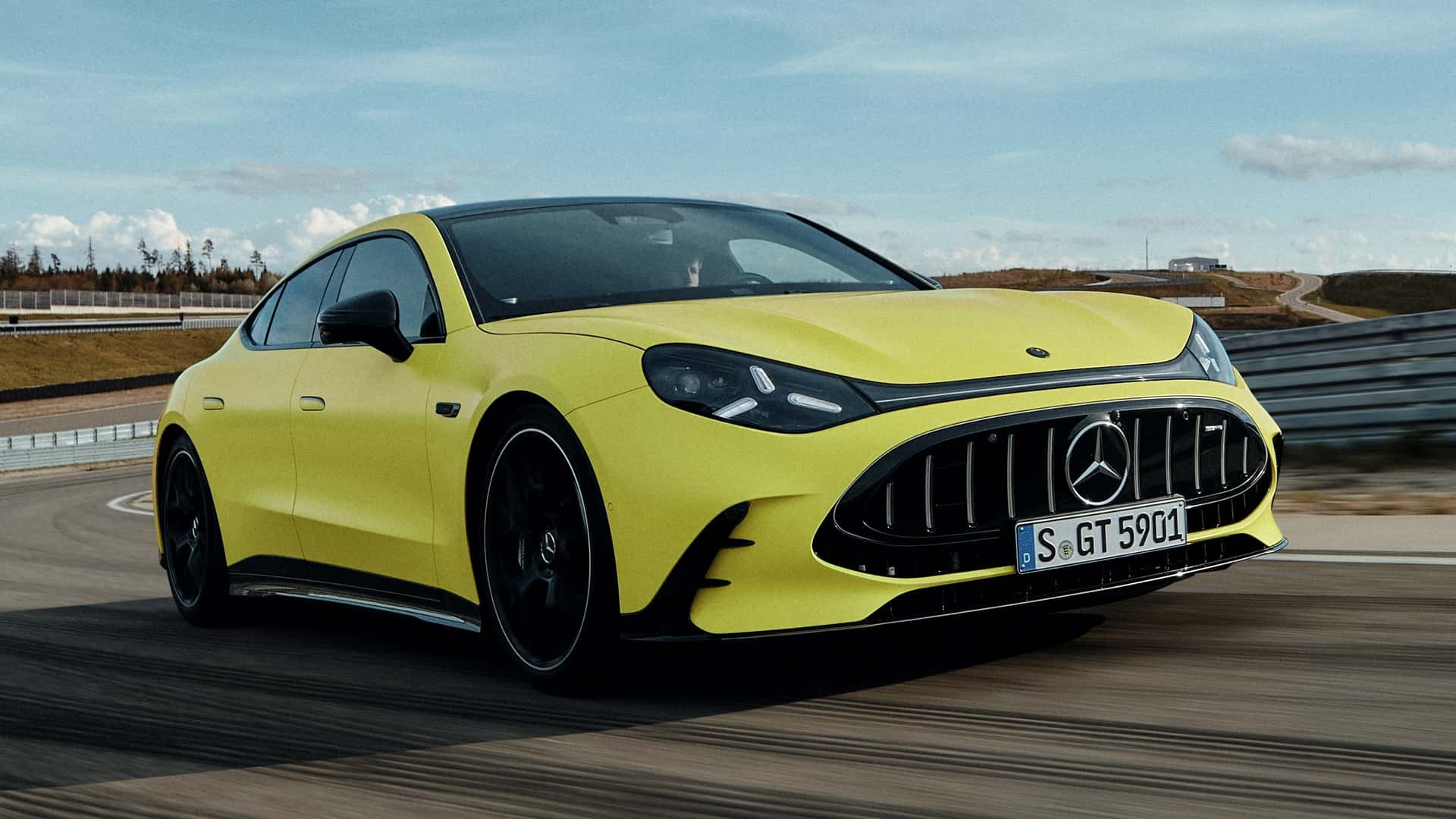
The most striking evidence of this internal strife involves the upcoming electric iteration of the Mercedes-AMG GT 4-Door. In a report published by the German outlet Manager Magazin and corroborated by industry observers at The Autopian, an anonymous senior executive at Mercedes-Benz expressed profound frustration regarding the vehicle’s existence.
"This car shouldn’t even exist," the executive reportedly stated, noting that by the time the internal dissent reached a boiling point, the project had gained too much momentum to halt. It was, in the words of the insider, "too late to stop it."
This sentiment underscores a recurring nightmare for legacy automakers: the "sunk cost" trap. While competitors like Honda have demonstrated a willingness to cancel entire electric vehicle (EV) lineups—writing off billions in development costs in the process—Mercedes-Benz found itself committed to a trajectory that was already deep into the production pipeline. The development costs for the electric AMG lineup alone are estimated to exceed $1 billion, a massive investment that represents both a financial commitment and a high-stakes gamble on the brand’s future relevance.
Chronology of a Corporate Pivot
To understand the current tension, one must look at the timeline of Mercedes-Benz’s aggressive "Electric First" strategy.
- The Tesla Effect (2018–2020): Under the leadership of CEO Ola Källenius, Mercedes-Benz accelerated its electrification plans. Reports suggest that this shift was heavily influenced by the meteoric rise of Tesla’s market valuation. The board, anxious to prove that a century-old German giant could outperform a Silicon Valley startup, fast-tracked the development of the dedicated "EQ" sub-brand.
- The EQ Rollout (2021–2023): The arrival of the EQS and EQE models was met with initial curiosity but growing skepticism. While technologically advanced, the designs—often criticized for their "jellybean" aerodynamics—strayed far from the traditional, aggressive design language of the S-Class and E-Class.
- The 2024 Correction: The market response to the EQ series was sobering. Sales figures plummeted, with reports indicating a 90 percent drop in certain segments compared to earlier projections. The board was forced to confront a harsh reality: the strategy of chasing Tesla’s aesthetic and technical footprint was not resonating with the traditional Mercedes luxury buyer.
The Cost of Ambition: By the Numbers
The financial burden of this pivot is staggering. Industry analysts estimate that the development costs for the initial EQS and EQE platforms reached upwards of 5 billion euros (roughly $5.7 billion in 2026 inflation-adjusted figures). When viewed alongside the $1 billion earmarked for electric AMG performance development, the total capital expenditure is enough to make even the most stable conglomerate pause.
The core issue, according to insiders, was a disconnect between "chasing the market" and "maintaining the brand." By attempting to pivot entirely to satisfy investors’ desires for a high-tech, EV-forward portfolio, the company allegedly sidelined the very attributes—performance, heritage, and design prestige—that made Mercedes-Benz the gold standard for luxury transportation for decades.
Implications: The "Repair" Phase
The fallout from these decisions has triggered what many industry analysts describe as a "repair phase." Mercedes-Benz is currently working to pivot its product strategy toward a more balanced approach that avoids the pitfalls of the initial EQ-branded strategy.
The New Strategy
The future, according to recent shifts in the company’s roadmap, looks different from the early 2020s vision:
- Rationalized Pricing: The upcoming electric CLA, for example, is positioned with a more competitive price tag (under $50,000), acknowledging that the "luxury EV" segment has a ceiling that the $100,000+ EQS models failed to break.
- Diverse Powertrains: There is a renewed focus on flexibility. Rather than forcing a battery-only future, the company is doubling down on the "VLE" (Versatile Luxury Electric) concepts, which aim to provide utility and luxury without compromising on the space or functionality that customers expect.
- Returning to Roots: The success of the updated internal combustion AMG models—like the hybrid-assisted GT63 S E Performance—proves that the market still desires the "AMG soul." By blending high-performance hybrid tech with traditional combustion, the company is finding a middle ground that satisfies both regulators and enthusiasts.
Conclusion: Lessons from the Boardroom
The turmoil at Mercedes-Benz serves as a cautionary tale for the automotive industry. It highlights that in the transition to an electrified future, the greatest challenge is not merely the engineering of batteries or the implementation of software. Rather, the challenge is maintaining the brand identity that has been cultivated over generations.
As Mercedes-Benz navigates this transition, the "biggest failures in the company’s history"—as one executive reportedly described the early EQ lineup—may ultimately serve as the most expensive, but necessary, learning experience. The automaker is now tasked with a delicate balancing act: embracing the unavoidable march toward electrification while ensuring that the "three-pointed star" remains a symbol of automotive excellence, rather than a cautionary case study in corporate over-extension.
For the AMG brand, the path forward is clear: the car of the future must be more than just a battery on wheels. It must be a Mercedes-Benz, capable of delivering the thrill and refinement that its customers have demanded since the inception of the automobile. The question remains whether the company can successfully course-correct before its legacy is irreparably altered by the very technology it sought to master.
