

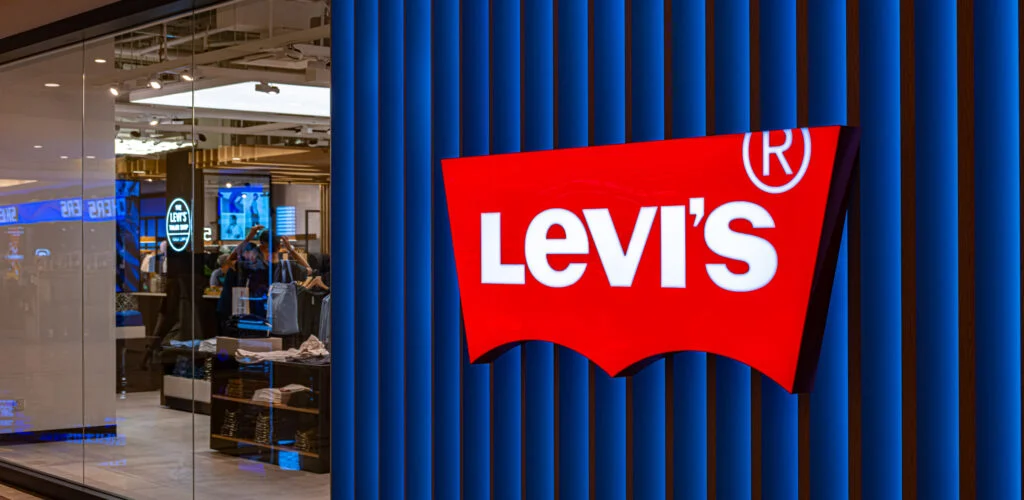
San Francisco, CA – October 8, 2026 – Levi Strauss & Co. has reported a robust 10% surge in its e-commerce revenue for the fiscal third quarter, a significant indicator of the brand’s digital resilience and a bright spot amidst broader direct-to-consumer (DTC) growth that fell short of internal projections. This digital acceleration, coupled with strategic investments in AI-driven customer experiences and an expansion into lifestyle categories beyond its iconic denim, paints a picture of a company actively adapting to evolving consumer behaviors and market dynamics.
The iconic denim giant announced its third-quarter results for the period ending August 30th, revealing a 2% year-over-year increase in its overall DTC business, which encompasses both its physical retail stores and online channels. While this represents a positive step, the company acknowledges that this figure did not meet its internal expectations, largely attributed to a slowdown in key markets like the U.S. and Europe. However, a strong performance in wholesale, which saw a 6% increase, helped to bolster the company’s overall financial health. Total company revenue climbed 4% to $1.61 billion, up from $1.54 billion in the same quarter last year.
Michelle Gass, President and CEO of Levi Strauss & Co., expressed optimism about the company’s trajectory, highlighting the strong contributions from its international and wholesale segments. "We saw strong growth in our international and wholesale businesses, and continued momentum across our lifestyle categories," Gass stated in the company’s earnings release. "While our direct-to-consumer business fell short of our internal expectations, we moved quickly to address the shortfall and are encouraged by the strength we are seeing heading into the holiday season, including in the U.S."
Levi Strauss & Co. is a significant player in the digital commerce landscape, currently ranking at No. 148 in the Digital Commerce 360 Top 2000 Database. This database meticulously ranks North America’s largest online retailers based on annual e-commerce sales and other key metrics, underscoring Levi’s established presence in the online retail sphere.
E-commerce Momentum Fuels AI-Powered Innovation
The impressive 10% growth in Levi Strauss’s e-commerce revenue follows a trend of sustained double-digit expansion in its online sales, as reported in previous quarters. Capitalizing on this digital momentum, the company is significantly increasing its investment in enhancing the online shopping journey. A cornerstone of this strategy is the recent launch of an Artificial Intelligence (AI) shopping assistant in the United States.
This innovative AI tool is designed to revolutionize how consumers discover and purchase Levi’s products. It offers personalized styling advice, assists shoppers in identifying new styles, and helps them curate complete outfits. During the company’s third-quarter earnings call on October 7th, Gass shared compelling early results, noting that shoppers who utilize the AI assistant add products to their virtual shopping bags at approximately three times the average rate of other customers. This data point strongly suggests the AI’s effectiveness in driving engagement and conversion.
Beyond the AI assistant, Levi.com has undergone a significant upgrade, now featuring "richer storytelling, more dynamic videos and inspirational styling content." These enhancements aim to create a more engaging and visually appealing online environment, drawing shoppers deeper into the brand’s narrative and product offerings.
The company’s digital evolution is far from complete. Levi Strauss is actively preparing for a comprehensive redesign and platform migration of Levi.com, slated for a global rollout in 2027. This ambitious undertaking promises to deliver a more personalized shopping experience, with advanced outfit recommendations and what Gass described as "immersive fit navigation." The ultimate goal, she explained, is to "convert more consumers into head-to-toe lifestyle shoppers," encouraging them to explore and purchase a wider array of products beyond their core denim offerings.
Addressing DTC Challenges: A Strategic Pivot
Despite the triumphs in e-commerce, Levi Strauss’s broader direct-to-consumer (DTC) segment faced headwinds during the third quarter. DTC revenue saw an 8% increase in Asia and a more modest 2% rise in the Americas. However, within the Americas, U.S. DTC revenue experienced a slight decline of 1%, while Europe saw a 2% decrease. Globally, DTC comparable sales remained flat. This performance underscores the critical importance of the company’s "DTC first but not DTC-only" strategy, as articulated by Gass, which balances direct engagement with consumers with a strong wholesale presence.
Several external factors contributed to the DTC slowdown. In Europe, unseasonably warm weather persisted for a significant portion of the quarter, deterring shoppers from purchasing seasonal apparel. In the U.S., the company’s back-to-school campaign, which focused on loose-fitting denim styles, unfortunately misaligned with a burgeoning consumer interest in low-rise fits. Gass acknowledged this strategic misstep, explaining that the market was already shifting towards different denim silhouettes at the time of the campaign’s launch.
In response to these challenges, Levi Strauss demonstrated agility by swiftly redirecting its marketing efforts. The company pivoted its focus to promote low-rise fits and other "areas of strong consumer demand." This strategic adjustment was complemented by a refresh of its marketing campaigns and in-store merchandising, intensified digital and social media outreach, and a concerted effort to bolster inventory levels for popular styles.
These proactive measures appear to be yielding positive results. By September, U.S. DTC sales had returned to positive growth, and European trends showed improvement as temperatures began to cool. Gass indicated that global DTC was tracking at a mid-single-digit growth rate in the early weeks of the fourth quarter. For the full fiscal year, Levi Strauss projects high-single-digit DTC growth, reflecting confidence in its ability to navigate and recover from the quarter’s challenges.
Expanding the Levi’s Lifestyle Footprint
Levi Strauss is actively pursuing its vision of becoming a comprehensive "head-to-toe" lifestyle brand, moving beyond its foundational denim category. In the third quarter, categories outside of its core denim bottoms business were responsible for approximately half of the company’s revenue growth. Tops, in particular, emerged as a significant contributor, with overall sales increasing by 7%, and women’s tops showing an impressive 10% jump.
The company’s strategic push towards higher-end apparel is also gaining traction. The premium Blue Tab collection, renowned for its Japanese selvedge denim, experienced "strong double-digit growth" across both men’s and women’s apparel lines. This collection is expanding to include more elevated offerings such as cashmere, silk, and tailored pieces, with price points ranging from $200 to $500.
Gass sees substantial untapped potential in the premium denim market. Despite Levi Strauss’s overall leadership in denim, the brand currently holds less than 1% of the super-premium jeans market. "And that should at least be commensurate with our market share overall," she stated, signaling a strategic imperative to capture a larger share of this lucrative segment.
Reinvesting for the Holiday Season and Beyond
As Levi Strauss gears up for the crucial holiday shopping season, the company is strategically reinvesting a significant portion of an approximately $80 million tariff refund benefit back into its business. Roughly three-quarters of this benefit, totaling about $60 million, will be allocated across the third and fourth quarters. These funds are earmarked for enhanced marketing initiatives, supply chain improvements, and to offer "sharper value for consumers during key holiday promotional moments."
The company is also preparing what Gass described as its "most robust activation plan in years" for the holiday period. This comprehensive strategy includes experiential pop-up shops, improved in-store customer experiences, personalized styling services, and carefully curated gift assortments.
"Combined with strong product newness and focused commercial execution, these efforts are designed to drive traffic, improve conversion and deepen consumer connection with the Levi’s brand," Gass concluded, underscoring the company’s commitment to a strong finish to the fiscal year and setting a positive tone for future growth.
