

In a strategic shift that signals its most ambitious advancement in generative AI to date, Meta’s Superintelligence Lab unveiled a pair of sophisticated models on Monday: Muse Wonder and Muse Wonder Full. Representing the company’s inaugural entry into the "frontier model" category, these releases signify a pivot from the lightweight, low-latency tools of the recent past to high-capacity engines designed to compete with the industry’s most powerful offerings.
This launch is not merely an incremental update; it is a calculated expansion of Meta’s ecosystem, designed to transform its AI agent, Muse, into a more persistent, long-term personal assistant. By prioritizing "active memory"—the ability for an AI to synthesize user context over weeks and months—Meta is betting that the future of personal superintelligence lies not just in raw processing power, but in deep, evolving digital rapport.
The Core Facts: What Are Muse Wonder and Wonder Full?
The Muse Wonder and Muse Wonder Full models are large-scale, state-of-the-art systems built to handle the heavy lifting of complex reasoning and code generation. While previous iterations like Muse Spark were engineered for rapid, ephemeral responses, the Wonder series is built for endurance and depth.
Technical Specifications and Pricing
- Muse Wonder: This version is available through the Meta Model API, aimed at developers and enterprise partners. Its pricing structure is aggressive, set at $4 per million input tokens and $20 per million output tokens. This places it in direct economic competition with industry benchmarks like GPT-6 Sol and Opus 5.5.
- Muse Wonder Full: The "Full" variant is the more restricted, high-performance sibling. It is exclusively available to Muse Code subscribers and will not be accessible via standard API channels. This move suggests that Meta intends to gate its most powerful reasoning capabilities behind its own proprietary software ecosystem.
Both models will serve as the engine for the Muse agent, effectively replacing the infrastructure that previously powered the assistant.
Chronology: A Trajectory of Transformation
To understand the weight of Monday’s announcement, one must look at the timeline of Meta’s AI restructuring.
Pre-2025: The Foundation
For years, Meta’s AI research was decentralized, focusing heavily on open-source Llama releases and various experimental research projects. While the company was influential, it lacked a cohesive, high-end commercial product to rival the "frontier" status of OpenAI’s GPT series or Anthropic’s Claude.
August 2025: The Strategic Pivot
The current roadmap began in earnest in August of last year, when Scale AI founder Alexandr Wang took the helm of Meta’s AI restructuring efforts. This move was widely interpreted by industry analysts as a signal that Meta was done "experimenting" and was ready to dedicate the resources necessary for competitive frontier model development.
Late 2025 – Early 2026: The "Spark" Phase
Following the restructuring, Meta focused on low-latency, lightweight deployment. The release of Muse Spark and the foundational Muse agent proved that the company could deliver responsive tools. However, these were not "frontier" models—they were designed for speed, not for the deep synthesis of massive datasets or high-level abstract reasoning.
The Present: The "Prometheus" Milestone
The training of the Wonder models represents the first fruit of Meta’s massive investment in the Prometheus data center in central Ohio. By moving training to this high-capacity facility, Meta has significantly increased its computational ceiling, allowing for the development of models that require orders of magnitude more training cycles than their predecessors.
Supporting Data: The Benchmark Battle
Meta is making bold claims regarding the performance of the Wonder series, specifically positioning them alongside top-tier competitors like Fable 5.1 and GPT-6 Astra. The company’s model card indicates that in standard benchmark testing, Wonder and Wonder Full perform at near-parity with these industry leaders in coding proficiency, logical deduction, and creative synthesis.
The "MemoryBench" Advantage
The most significant differentiator cited by Meta is the "MemoryBench" benchmark. Unlike standard metrics that evaluate a model’s performance on a static test, MemoryBench specifically probes a system’s ability to maintain continuity. It challenges the model to recall, synthesize, and apply information provided by a user over extended timeframes.
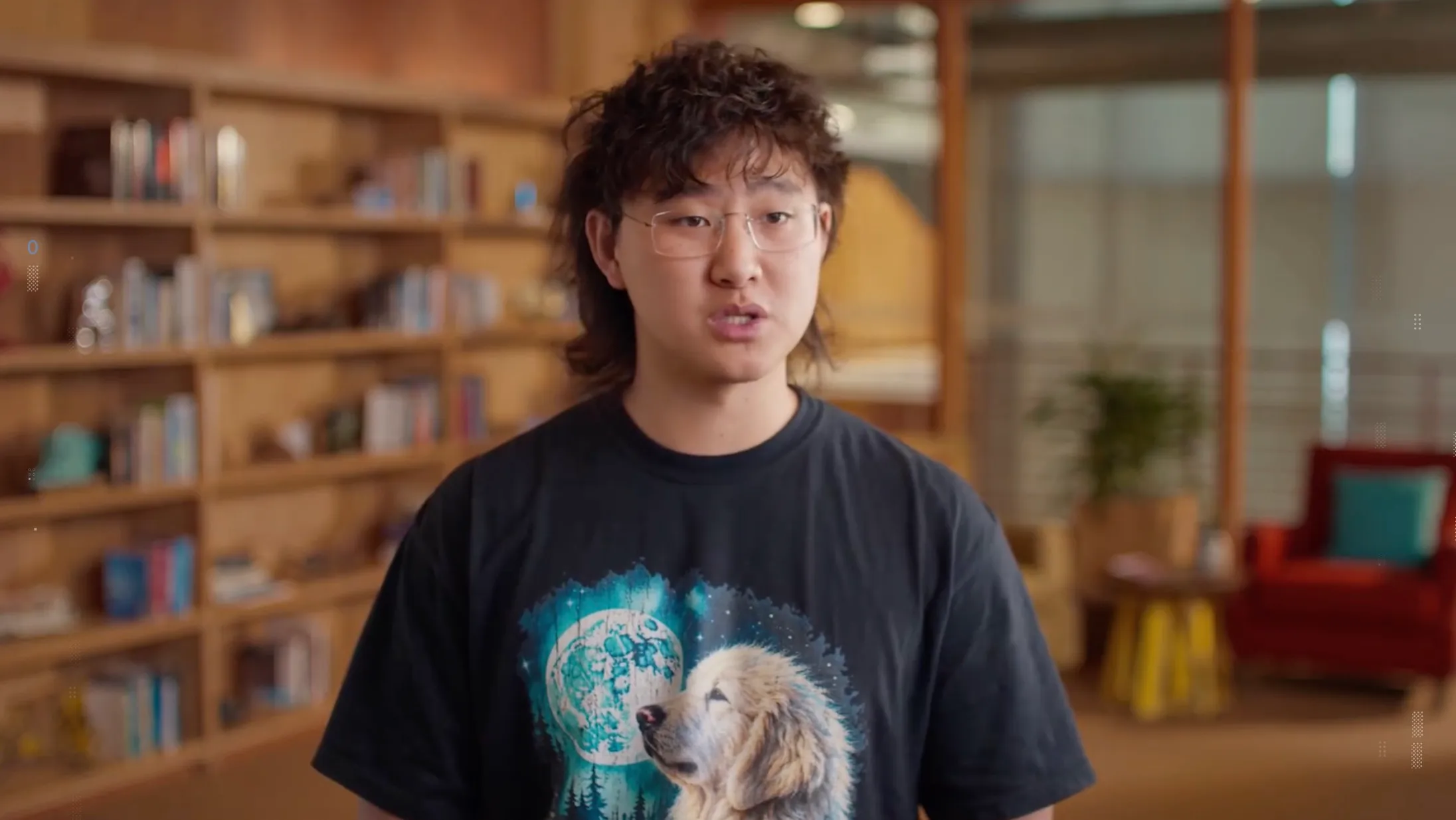
Meta’s internal data shows that Muse Wonder significantly outperforms Fable, Opus, and Astra on this specific metric. This is the bedrock of Meta’s "active memory" strategy. As research scientist Kavya Kopparapu noted in the launch materials, "We put a tremendous amount of effort into making sure your model can remember what’s important to you over days, weeks, months, and beyond."
Official Perspectives: The Vision for "Personal Superintelligence"
In the video accompanying the release, Meta representatives emphasized that the Wonder models represent the next rung on their "scaling ladder." The rhetoric from the company has moved away from "chatbots" and toward the concept of "personal superintelligence."
The vision is for an AI that does not just answer a prompt, but acts as a long-term collaborator. By retaining personal context—such as a user’s coding style preferences, project histories, or past feedback—the Wonder models aim to minimize the "re-learning" process that plagues most contemporary AI interactions. For the user, this translates to a model that becomes more personalized the longer it is used.
Implications: The New AI Frontier
The release of the Wonder series has profound implications for the industry at large, touching on everything from market competition to the definition of a personal assistant.
1. The Death of the "One-Size-Fits-All" Model
By splitting the offering into the API-available Wonder and the subscriber-only Wonder Full, Meta is signaling a move toward a multi-tiered ecosystem. Developers may build on the standard Wonder, but the "full" experience is locked behind the Muse Code subscription. This strategy mirrors the "ecosystem lock-in" approach of Apple, where the hardware and software are inseparable for the premium experience.
2. The Rise of Memory as a Feature
For years, the "context window" was the gold standard for memory—how much data a model could ingest in a single go. Meta is shifting the goalposts to "active memory"—the ability to persist information across sessions. If this technology proves as robust as Meta claims, it will set a new standard for AI assistants. Competitors will likely be forced to pivot their research toward long-term state management rather than just raw token throughput.
3. The Central Ohio Infrastructure Advantage
The reliance on the Prometheus data center cannot be overstated. It represents the physical manifestation of Meta’s commitment to the AI race. By controlling the entire stack—from the data center in Ohio to the model architecture and the user-facing Muse agent—Meta is attempting to minimize dependency on third-party cloud infrastructure, thereby increasing profit margins and control over the model’s update cycles.
4. A Challenge to the "Big Two"
OpenAI and Anthropic have long held the crown for state-of-the-art frontier models. With Wonder, Meta is directly challenging this hegemony. By hitting benchmark scores comparable to Fable and GPT-6, Meta has effectively removed the "quality barrier" that previously kept enterprise customers away from their ecosystem.
Conclusion: Looking Ahead
The release of Muse Wonder and Wonder Full is a watershed moment for Meta. It marks the conclusion of the company’s internal restructuring and the beginning of a new, aggressive phase of product development. As the AI landscape matures, the focus is shifting from "what can a model do" to "how well does a model know me."
Whether Meta can successfully leverage its Prometheus-trained models to capture the enterprise and consumer market remains to be seen. However, by prioritizing memory and context-aware persistence, Meta has identified a critical pain point in the current AI experience. If the Wonder models deliver on their promise, they may well become the default standard for the personal superintelligence of the future.
Disclaimer: When you purchase through links in our articles, we may earn a small commission. This doesn’t affect our editorial independence.
