

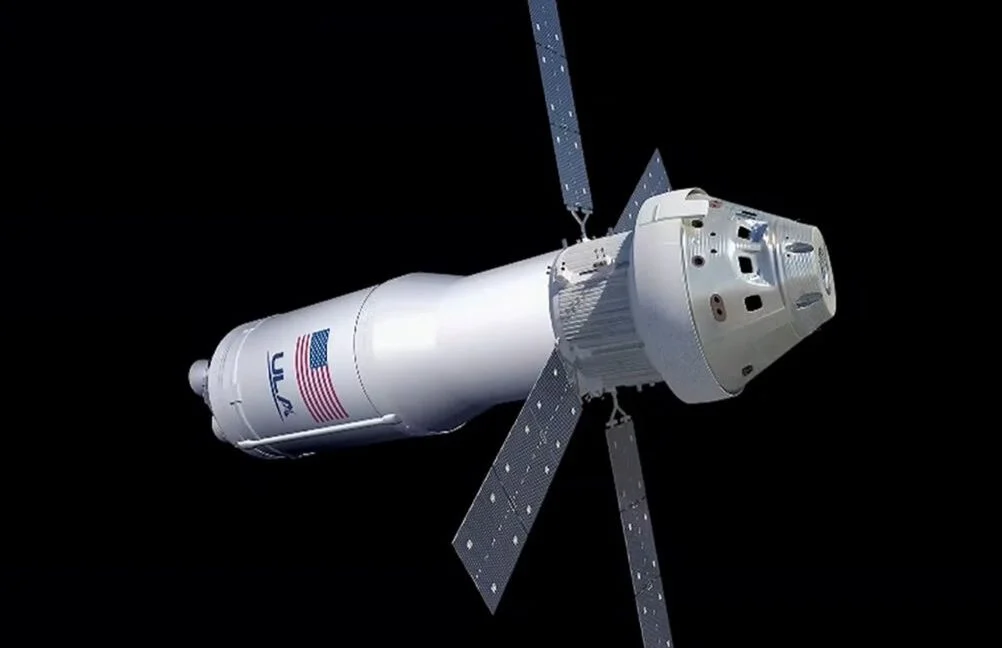
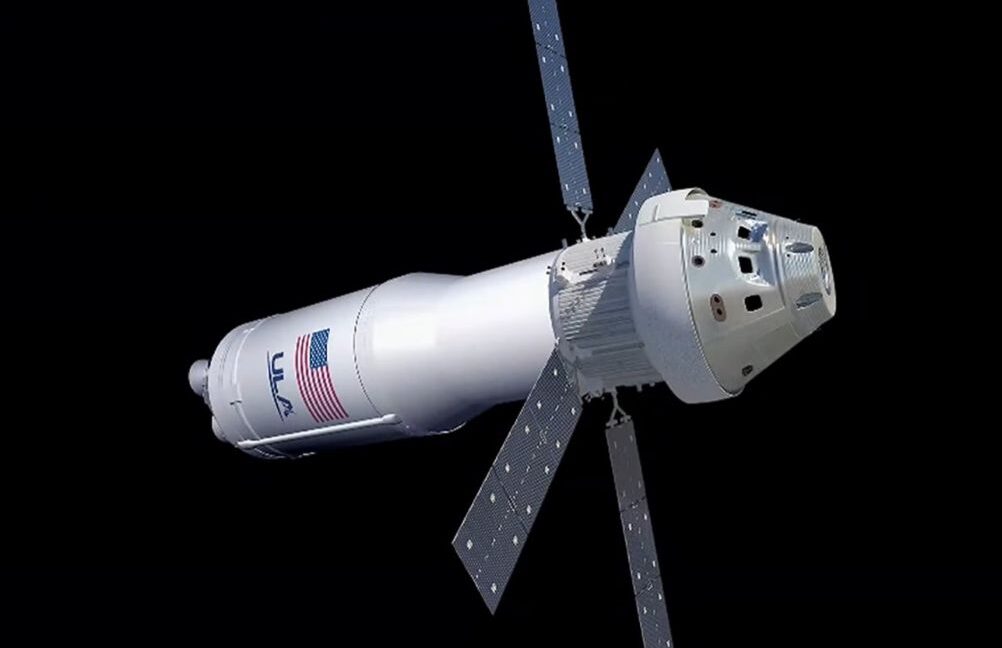
In a significant strategic recalibration, NASA has announced a concerted effort to expand the operational capabilities of the Orion spacecraft, signaling a move toward docking in low-lunar orbit (LLO). This development, which includes a partnership with United Launch Alliance (ULA) to modify the Centaur V upper stage, marks a departure from the agency’s long-standing reliance on high-altitude, near-rectilinear halo orbits. By enabling Orion to reach lower altitudes, NASA aims to drastically reduce the engineering burden on commercial lunar lander partners, most notably Blue Origin and its "Blue Moon" architecture.
The Operational Shift: Moving Closer to the Surface
Historically, the Artemis program has utilized a Near-Rectilinear Halo Orbit (NRHO) for its lunar missions. While this orbit offers stability and persistent communication with Earth, it is distant—located approximately 8,500 kilometers above the lunar surface. From an engineering perspective, this distance imposes a massive "delta-V" penalty on lunar landers. A lander must carry significantly more propellant to traverse the vast gap between the NRHO and the surface, and back again, which limits payload capacity and mission duration.
NASA’s new initiative seeks to move the docking point to a low-lunar orbit, just a few hundred kilometers above the surface. According to Jeremy Parsons, manager of the Artemis Program, this shift is a game-changer. "Reducing the orbital distance significantly diminishes the propellant requirements for the Blue Moon lander," Parsons noted. "That saved mass is not just an efficiency gain; it translates directly into increased cargo capacity, enhanced life support redundancy, or expanded scientific instrumentation."
Furthermore, a lower orbit provides critical safety advantages. In the event of an emergency on the lunar surface, a shorter ascent trajectory allows for faster recovery and docking maneuvers, shortening the time astronauts spend in a high-risk environment.
Chronology: From Gateway Dependency to Direct Access
The path to this decision has been marked by years of technical constraints and evolving mission architectures.
- The Early Artemis Era (2017–2021): NASA focused on the development of the Lunar Gateway, a space station intended to serve as a staging point in NRHO. The architecture assumed that Orion’s limited propulsion system would be insufficient for LLO operations, making the Gateway a necessity rather than an option.
- The Lander Challenges (2022–2024): As commercial partners like SpaceX and Blue Origin began their lunar lander designs, the technical reality of the NRHO requirement became clear. Companies struggled to balance the immense fuel requirements of the "long descent" with the strict mass constraints of their launch vehicles.
- The Paradigm Shift (2025): Recognizing that the burden on commercial partners was potentially jeopardizing the 2026-2028 landing timelines, NASA leadership began evaluating methods to "turn the knobs" of the existing SLS/Orion stack to improve performance.
- The October 2026 Announcement: NASA confirmed a formal collaboration with ULA to develop an "extended" Centaur V stage. This represents the first major admission that the original design limitations of the Orion Service Module were hindering the broader goals of the Artemis program.
Supporting Data: The Physics of Delta-V
To understand why this change is essential, one must look at the "tyranny of the rocket equation." Every kilogram of propellant required to move a spacecraft from a high orbit to a low orbit is a kilogram that cannot be used for scientific gear or crew supplies.
In the current NRHO configuration, a lander must perform a massive burn to drop into a descent trajectory and an even more intensive burn to return to the high-altitude docking point. By moving the rendezvous point to LLO, NASA essentially "buys back" a substantial portion of the lander’s mass budget.
Industry analysts estimate that shifting to LLO could improve the net payload capacity of a lander by 15% to 25%. For a mission carrying multiple astronauts and complex surface experiments, this shift is the difference between a viable mission and a prohibitively expensive one. By optimizing the "orbital infrastructure," NASA is effectively subsidizing the performance of private industry, ensuring that companies like Blue Origin can meet the program’s ambitious goals without having to engineer around the limitations of the Orion spacecraft.
Official Responses: Addressing the "Orion Embarrassment"
The decision to modify the Centaur V is, in many ways, an admission of a long-standing weakness. For years, critics of the Artemis program pointed to the Orion Service Module—a derivative of the European Space Agency’s Automated Transfer Vehicle—as an underpowered component. It lacked the necessary delta-V capability to perform a full lunar mission cycle independently, necessitating the "Gateway workaround."
"Getting Orion to low-Lunar orbit means solving propulsion and spacecraft integration problems that were left unaddressed for far too long," said noted aerospace analyst and industry advocate Jared Isaacman during a press conference on Friday. "It’s a bold admission that the original design lacked the versatility we now require for a sustained lunar presence."
NASA leadership, however, frames the decision as a pragmatic evolution. "We are listening to the data," said a senior NASA official. "We are looking at what is happening around us. We are seeing where our landing partners are struggling, and we are asking ourselves: ‘What can we do to be helpful?’ We could choose to stay on our original track and hope everyone meets the timelines, or we can start turning those knobs to provide real, tangible support."
The agency emphasized that this is not an abandonment of the Gateway, but rather a diversification of access. The Gateway will remain a vital platform for deep-space science and research, but it will no longer be a bottleneck for lunar landings.
Implications: A New Era for Lunar Commerce
The implications of this shift are profound, affecting not just the immediate Artemis timeline, but the long-term viability of the lunar economy.
1. Reducing Commercial Risk
By making the landing sequence easier, NASA is lowering the barrier to entry for commercial contractors. This reduces the risk of project failure and encourages private firms to invest more heavily in their own lander architectures, knowing that NASA is committed to providing a favorable operational environment.
2. Streamlining the Timeline
The "urgency" mentioned by NASA officials is telling. The agency is under immense pressure to maintain its lead in the new space race. If moving the docking point to LLO saves six months of development time for a contractor, that is a six-month gain for the entire program. By alleviating the technical strain on Blue Origin and other partners, NASA is effectively buying speed.
3. Future-Proofing Exploration
Once the "extended" Centaur V is operational, the capabilities of the Artemis stack will be significantly expanded. A system that can reach LLO is a system that can theoretically support a much broader range of missions, including orbital assembly of larger structures or potentially even support for future Mars-bound architecture.
4. Correcting the Design Narrative
Perhaps most importantly, this move restores confidence in the program’s adaptability. The willingness to admit a technical shortcoming and pivot toward a solution involving an industrial partner (ULA) suggests a more flexible, results-oriented management style at NASA. It moves the agency away from the "static" architecture of the past and toward a more fluid, mission-centric approach.
Conclusion
The decision to transition toward low-lunar orbit docking represents a mature, realistic assessment of the challenges facing the Artemis program. By bridging the gap between the high-altitude constraints of the Orion spacecraft and the physical requirements of landing on the lunar surface, NASA is providing its commercial partners with the support necessary to succeed.
While it involves the admission that the initial design of the Orion Service Module was insufficient for the task, the collaborative development of the extended Centaur V marks a significant step forward. It is a reminder that in the unforgiving environment of space, the most successful programs are those that can pivot when the data dictates—and that by lifting the burden off its partners, NASA is ensuring that the return to the Moon is not just a symbolic gesture, but a sustainable foundation for the next century of space exploration.
