

Executive Summary: A New Front in Ethical Governance
In a decisive move to preserve the integrity of national security operations, Secretary of Defense Pete Hegseth has issued a sweeping directive prohibiting Department of War personnel from leveraging nonpublic information for financial gain within prediction markets. The memorandum serves as a stark warning to military and civilian staff alike: utilizing classified or sensitive operational data to place wagers on geopolitical outcomes is not merely an ethical lapse—it is a potential criminal offense.
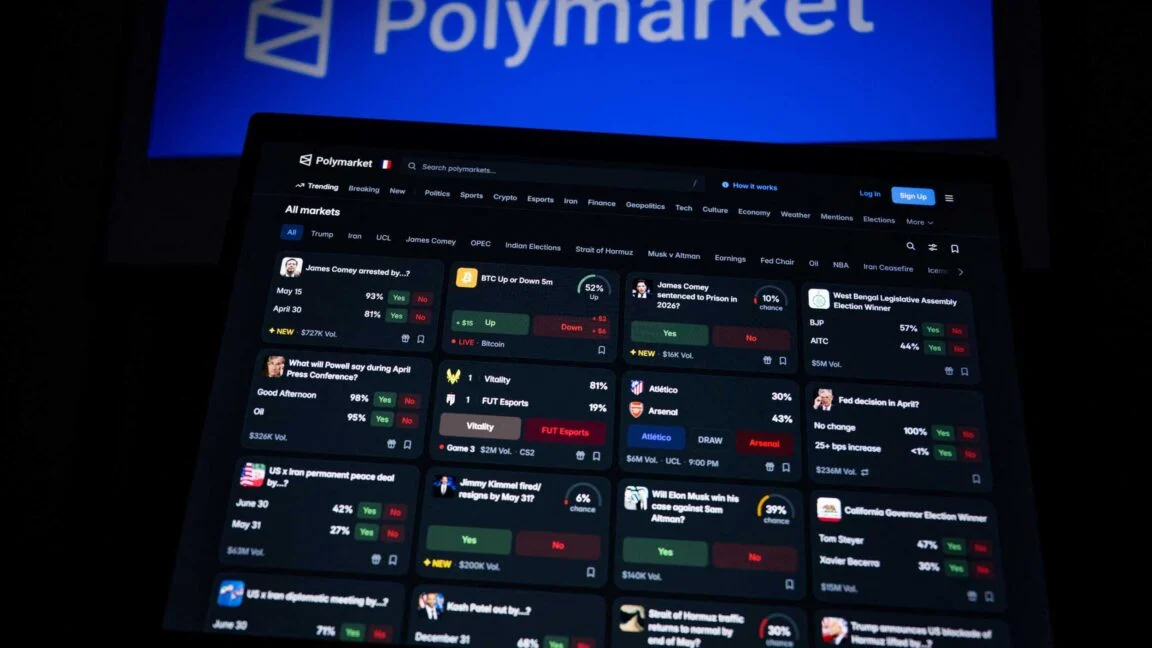
The directive, which threatens administrative, disciplinary, and, where appropriate, criminal action under the Uniform Code of Military Justice (UCMJ) and federal statutes, marks a significant escalation in the government’s efforts to combat the "gamification" of intelligence. As decentralized prediction platforms like Polymarket and Kalshi continue to grow in popularity and influence, the Pentagon is moving to insulate its decision-making processes from the corrosive influence of financial self-interest.
The Core Mandate: Hegseth’s Directive
The memo signed by Hegseth is unequivocal in its scope. It explicitly bans the use of nonpublic information—whether the employee acts directly or through a third-party intermediary—to influence or profit from financial transactions on prediction markets.
“Beyond operational security, financial stakes can warp judgment,” Hegseth wrote in the memo. The Secretary’s logic highlights a fundamental risk to the defense apparatus: the potential for "conflict-of-interest bias." He provided illustrative examples of the danger, noting that "a logistician with money riding on a strike date has an interest in that date. An analyst with a position on an outcome has an interest in that outcome."
By framing the issue as a matter of both national security and professional integrity, the Pentagon is attempting to draw a hard line. While platforms like Kalshi and Polymarket maintain internal policies against insider trading, Hegseth’s memo underscores the reality that industry-level bans lack the coercive power of the UCMJ. For a military analyst or logistician, the threat of federal prison time or a dishonorable discharge acts as a far more potent deterrent than a simple platform account suspension.
Chronology of Escalation: From Suspicion to Sanction
The Pentagon’s mandate does not exist in a vacuum; it is the culmination of a series of high-profile incidents that have embarrassed the administration and raised alarms among federal regulators.
The April "Iran Ceasefire" Anomaly
The regulatory scrutiny began in earnest following a series of suspicious, high-stakes trades related to U.S.-Iran relations. Reports from the Associated Press revealed that a cluster of newly created accounts on Polymarket placed highly specific, well-timed bets on the possibility of a U.S.-Iran ceasefire. These bets were executed shortly before President Donald Trump’s official announcement in April. The result was a windfall of hundreds of thousands of dollars for the account holders. The precision of the timing suggested that the information was not merely speculative but likely derived from internal government communications.
The Teleprompter Aide Incident
The issue gained further momentum when reports surfaced regarding a Trump teleprompter aide. According to investigations, the staffer utilized internal access to draft remarks to place successful wagers on Kalshi, netting approximately $100,000. This incident crystallized the fear that even low-level staff with access to sensitive materials could effectively "mine" their daily work for personal profit, turning the machinery of government into a betting engine.
White House Response
The White House has moved in lockstep with the Pentagon to contain the fallout. On the same day reports of the Iran-related betting profits emerged, the White House issued a blanket warning to all staff, prohibiting the use of private information to trade on prediction markets. This dual-pronged approach—administrative warnings from the White House and formal directives from the Pentagon—signals that the administration views the integrity of these markets as a matter of institutional survival.
The Landscape of Prediction Markets
Prediction markets have seen a meteoric rise under the Trump administration, aided by a "light-touch" regulatory philosophy. Proponents argue that these markets provide a more accurate forecast of world events than traditional polling or expert consensus. However, critics argue that the lack of robust oversight has created a "wild west" environment where information asymmetry is the primary driver of profit.
The Regulatory Tug-of-War
The legal status of these platforms remains a subject of intense debate. The Trump administration has consistently argued that the Commodity Futures Trading Commission (CFTC) holds exclusive jurisdiction over these markets, a position that effectively preempts state-level regulations.
The strategy has been to shield these platforms from a patchwork of state laws that might otherwise impose stricter gambling regulations. However, the move has faced stiff resistance. Several state governments, concerned about the potential for fraud and the social implications of widespread gambling on government stability, have challenged the federal position in court. The legal battle is currently in flux, with various district courts issuing conflicting rulings. Many legal observers anticipate that the Supreme Court will eventually be forced to intervene to determine whether states retain the right to impose their own restrictions on prediction-market gambling.
Implications for National Security and Institutional Integrity
The intersection of high-stakes finance and national security poses a unique threat to the "chain of command." If an intelligence analyst is financially incentivized to see a specific outcome—for example, the success of a military strike—the objectivity required for accurate intelligence reporting is fundamentally compromised.
The "Warped Judgment" Problem
Hegseth’s warning about "warped judgment" addresses the psychological component of the risk. In intelligence work, the ability to pivot based on changing facts is essential. If an individual has a financial position tied to a specific trajectory, they may subconsciously—or consciously—filter out contradictory data. This creates a dangerous feedback loop where financial self-interest degrades the quality of the information provided to senior decision-makers.
Operational Security (OPSEC)
Beyond the psychological aspect, there is the direct threat to OPSEC. Every trade placed on a prediction market leaves a digital footprint. If an adversary were to gain access to trading data, they could potentially map out the internal movements and expectations of U.S. personnel. By banning these transactions, the Pentagon is not just policing ethics; it is closing a massive intelligence vulnerability.
Future Outlook: A Turning Point?
As prediction markets continue to integrate into the mainstream financial ecosystem, the Pentagon’s crackdown may serve as a blueprint for other government agencies. If the goal is to prevent the commodification of government information, the military’s rigid approach to disciplinary action may become the gold standard for the federal civil service.
However, the efficacy of this policy remains to be seen. In an era of anonymous decentralized finance, detecting a violation is significantly more difficult than simply declaring it illegal. The burden of proof will fall on internal investigators to trace the link between a specific trade and a specific staffer.
The administration’s challenge is twofold: they must continue to foster an environment where technology and innovation can thrive, while simultaneously ensuring that the core functions of the state—intelligence, diplomacy, and defense—are shielded from the volatility of speculative markets.
Conclusion
The directive from Secretary Hegseth is a necessary, if overdue, response to the rapid proliferation of prediction markets. By drawing a clear line between legitimate personal investment and the exploitation of nonpublic information, the Department of War is attempting to re-establish the boundaries of professional conduct in the 21st century. Whether this directive will be sufficient to deter the allure of six-figure profits remains the defining question of this administration’s internal ethics policy. For now, the message to those in the halls of power is clear: the government is no longer a casino, and the cost of betting on the job could be the career itself.
