

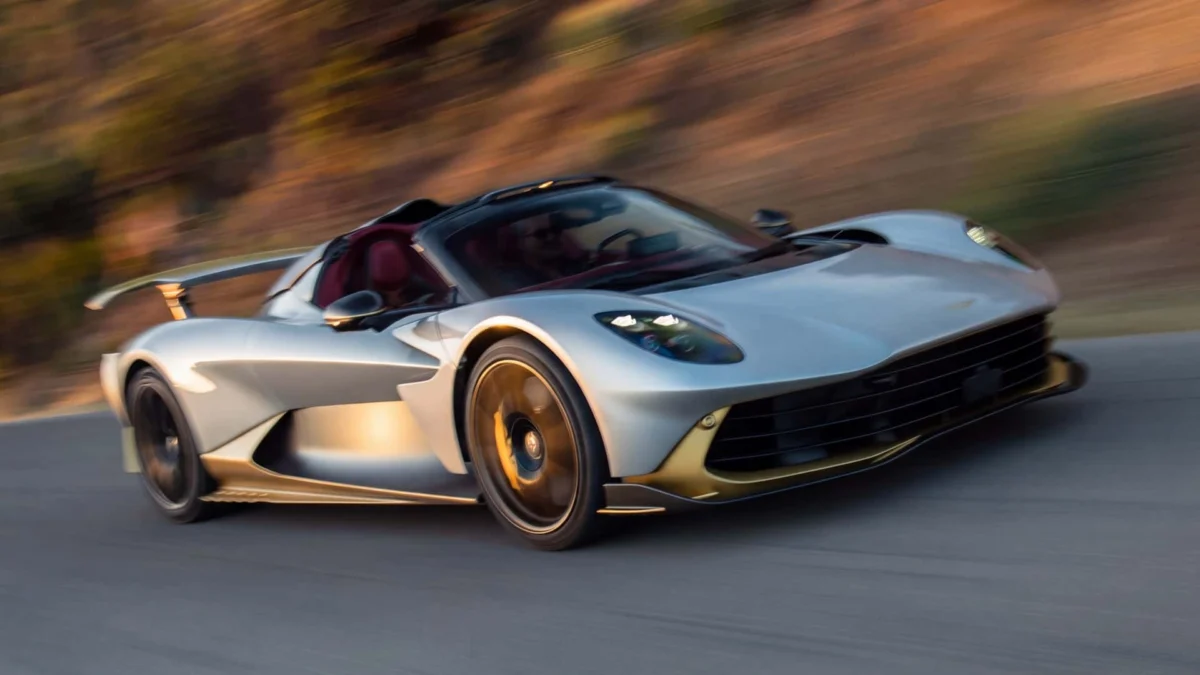
Aston Martin has officially pulled the curtain back on the latest iteration of its flagship mid-engined performance machine: the Valhalla Spider. By stripping the roof from the already formidable Valhalla coupe, the British luxury marque has created a visceral, open-top experience that promises to blend hypercar-tier technical specifications with the raw, sensory intensity of a classic roadster.
The unveiling, which serves as a landmark moment for the brand, signals a new chapter in Aston Martin’s history as it seeks to redefine the mid-engined supercar category. With a powertrain delivering over 1,000 horsepower and a design architecture rooted in high-end carbon-fiber engineering, the Valhalla Spider is poised to be one of the most significant performance vehicles of the decade.
The Genesis of the Valhalla: A Chronology of Innovation
The journey toward the Valhalla Spider began years ago with the conceptual "AM-RB 003," a project born from the technical partnership between Aston Martin and Red Bull Advanced Technologies. Over time, the project evolved from a design study into a focused production reality.
- 2019: The concept is first teased at the Geneva Motor Show, showcasing a revolutionary hybrid powertrain and advanced aerodynamics.
- 2021: Aston Martin confirms that the Valhalla will enter production, moving toward a more road-focused, yet track-capable architecture.
- 2024 (Early): The production-intent Valhalla Coupe makes its formal debut, solidifying the use of a twin-turbocharged 4.0-liter V8 hybrid system.
- 2024 (Late): The Valhalla Spider is unveiled at the prestigious Concours at Wynn in Las Vegas, marking the first time the company has offered a mid-engined open-top car in its modern production lineup.
- 2027 (Q3): Scheduled delivery for the first units, marking the culmination of years of iterative development.
Engineering the Impossible: Powertrain and Performance
At the heart of the Valhalla Spider lies the same complex, high-output hybrid architecture that defines its coupe sibling. The powertrain is a masterpiece of modern automotive engineering, centering on a custom-developed, twin-turbocharged 4.0-liter V8 engine.
This internal combustion powerhouse is augmented by a trio of electric motors, creating a sophisticated hybrid system that delivers a combined output of 1,064 horsepower and a staggering 811 pound-feet of torque. This immense energy is managed by an all-wheel-drive system designed to maximize traction and corner-exit velocity, whether the vehicle is on a winding mountain pass or a professional-grade race circuit.
Technical Specifications at a Glance:
- Total Power Output: 1,064 Horsepower.
- Peak Torque: 811 lb-ft.
- Top Speed: 217 mph (349 km/h).
- Drive Layout: Advanced All-Wheel Drive.
- Structural Material: Full carbon-fiber monocoque.
Despite the loss of the fixed roof, Aston Martin engineers have ensured that the performance remains virtually identical to the coupe. The car is capable of reaching a blistering top speed of 217 mph, provided the carbon-fiber hardtop is installed. When opting for the removable fabric roof, the vehicle is electronically limited to 124 mph, a necessary precaution to maintain structural integrity and cabin comfort at extreme velocities.
Aerodynamics and the Art of the Open Cockpit
Removing the roof of a 1,000-hp hypercar is not merely an aesthetic choice; it is a profound engineering challenge. The Valhalla Spider utilizes active aerodynamics—a signature trait of the Valhalla line—to manage airflow around the cabin.
The vehicle features a sophisticated, removable wind deflector system. When driving with the top down, the deflector mitigates the buffeting effect, allowing for high-speed motoring without compromising the driver’s comfort. When the roof is replaced, the deflector conveniently folds and stows within dedicated compartments integrated into the vehicle’s chassis, ensuring that the car’s sleek lines remain unblemished.
The chassis itself is constructed from a high-stiffness carbon-fiber structure. This rigidity is critical; without a fixed roof to act as a structural pillar, the car relies on the strength of its monocoque to prevent torsional flex. This ensures that the handling characteristics—the crispness of the steering and the responsiveness of the suspension—remain as sharp as those found in the coupe.
Design and Ergonomics: A Cabin for the Enthusiast
The visual drama of the Valhalla Spider is punctuated by the return of Aston Martin’s signature dihedral doors. These doors don’t just offer an entry point; they are a design statement, swinging upward and outward to invite the driver into a cockpit defined by carbon fiber and premium materials.
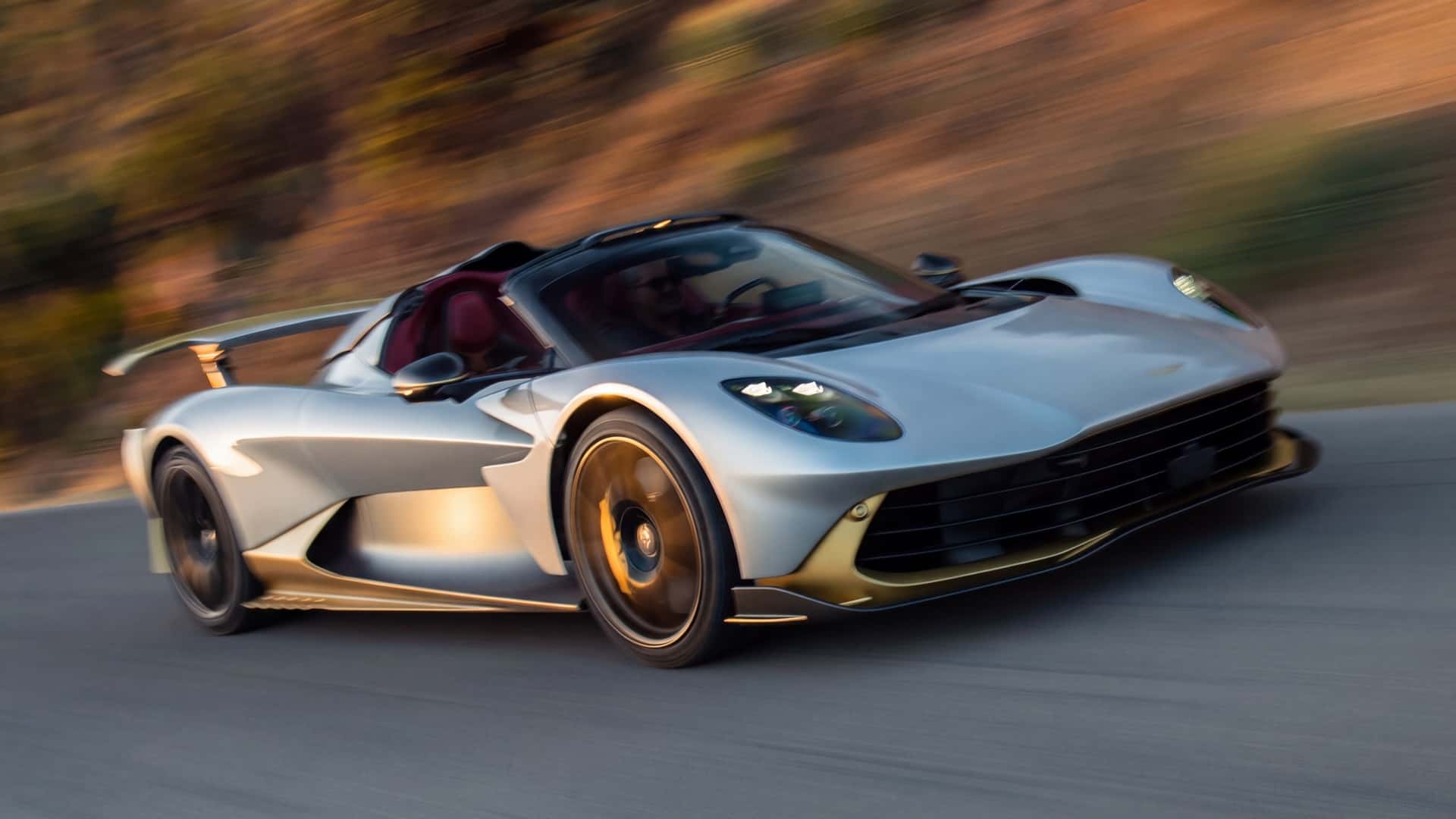
Inside, Aston Martin has introduced the new "Touring Seat," a carbon-fiber bucket seat designed to balance long-distance comfort with the lateral support required for aggressive track driving. For those who prefer a more uncompromising approach, the company also offers the aggressive performance seats found in the standard coupe at no additional cost.
The interior layout focuses on minimalism and driver-centric ergonomics. Every switch, dial, and screen is positioned to reduce distraction, ensuring that the driver remains the focal point of the machine. The cockpit is an immersive environment, designed to amplify the sound of the V8 engine, which is now significantly more audible to the driver with the top removed.
Official Perspectives: The Vision of CEO Adrian Hallmark
The introduction of the Valhalla Spider comes at a pivotal time for Aston Martin. Under the leadership of CEO Adrian Hallmark, the brand is pushing toward a future that respects its heritage while embracing electrification and high-performance hybridization.
In his official commentary regarding the launch, Hallmark emphasized that the Valhalla Spider is not just a secondary variant of the coupe, but a unique proposition in the market. "High speed or low speed. Rain or shine. Roof on or roof off. Road or track," Hallmark noted. "Valhalla Spider ticks every box."
His sentiment underscores the company’s goal: to prove that high-performance hybrid technology does not have to come at the expense of the visceral, emotional experience that defines a true supercar. By offering a vehicle that can perform at 217 mph while simultaneously offering the leisure of open-air cruising, Aston Martin is attempting to capture a segment of the market that demands both luxury and absolute performance.
Implications for the Supercar Market
The arrival of the Valhalla Spider signifies a major shift in the competitive landscape. With a release date slated for the third quarter of 2027, the car will enter a field populated by elite competitors from brands like Ferrari, McLaren, and Lamborghini.
Key Market Impacts:
- Normalization of Hybrid Hypercars: By committing to a 1,000+ horsepower hybrid powertrain, Aston Martin is helping to normalize the transition away from naturally aspirated engines toward more efficient, yet more powerful, hybrid systems.
- Increased Demand for Customization: The inclusion of different roof options and seat configurations suggests that Aston Martin is moving toward a highly bespoke model, likely aiming to leverage its Q by Aston Martin division for personalized colorways and materials.
- Brand Positioning: The Valhalla Spider solidifies Aston Martin’s standing as a manufacturer of cutting-edge technology. While the brand has historically been associated with grand tourers, the success of this mid-engined platform signals its permanent transition into the elite supercar tier.
As the industry moves toward 2027, the Valhalla Spider will likely serve as a halo product, drawing attention to the brand’s broader lineup. While pricing remains unannounced, the market expects it to carry a premium over the coupe, positioning it as one of the most expensive and exclusive vehicles in the Aston Martin portfolio.
Conclusion: A New Era of Performance
The Aston Martin Valhalla Spider is a testament to the brand’s commitment to pushing boundaries. By merging the extreme power of a 1,064-hp hybrid system with the elegance of a convertible, Aston Martin has created a vehicle that challenges the traditional constraints of the mid-engined supercar.
As the automotive world pivots toward a new era of electrification, the Valhalla Spider stands as a reminder that performance, sound, and the simple joy of driving remain at the core of the automotive experience. With deliveries beginning in 2027, the wait for this masterpiece will be long, but for those seeking the pinnacle of British engineering, the prospect of an open-top, 217-mph, 1,000-hp experience is one that is undoubtedly worth the anticipation.
