

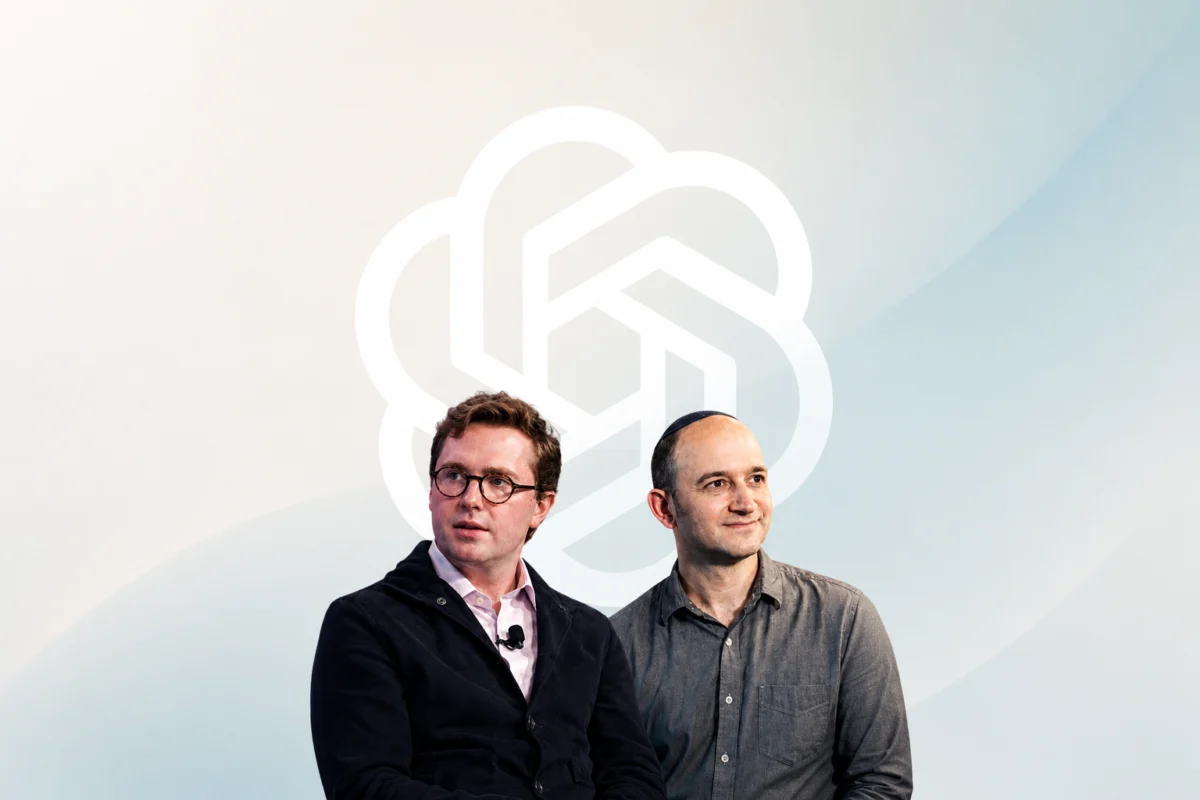
As the artificial intelligence industry braces for a period of unprecedented scrutiny and rapid commercialization, OpenAI is executing a calculated consolidation of talent. In a move signaling both technical ambition and a deepening integration with the machinery of federal policy, the company has announced two major hires: AI luminary Noam Shazeer, formerly a lead at Google DeepMind, and Dean Ball, a prominent architect of U.S. AI policy.
These appointments come at a pivotal moment for Sam Altman’s organization. As OpenAI approaches a highly anticipated public debut, the company is shifting from an experimental research lab to a global corporate titan, a transition that requires not only the world’s most sophisticated engineering talent but also a robust defensive perimeter against regulatory headwinds.
The Architect Returns to the Frontier: The Shazeer Factor
Noam Shazeer is not merely a high-level recruit; he is a foundational figure in the current generative AI boom. Best known as a co-author of the seminal 2017 paper “Attention Is All You Need,” which introduced the Transformer architecture that underpins virtually every modern LLM, Shazeer’s resume reads like a map of the industry’s evolution.
A Chronology of a Tech Titan
Shazeer’s career has been characterized by deep loyalty to Google, punctuated by high-stakes entrepreneurial detours. Having spent the majority of his career at the search giant since 2000, he stepped away in 2021 to co-found Character AI, a platform focused on specialized, role-playing AI agents.
However, the sheer capital and compute requirements of the current AI race drew him back. Two years ago, Google orchestrated a $2.7 billion deal to effectively re-acquire Shazeer and bring Character AI’s proprietary technology into the DeepMind fold. His recent departure from Google on Wednesday marks the end of a brief, albeit intense, tenure as a co-lead for the Gemini project.
His move to OpenAI is the latest in a high-profile game of "musical chairs" involving top talent from Google, Anthropic, Meta, and OpenAI. By securing Shazeer, OpenAI is not just gaining an engineer; they are securing an architect who understands the fundamental mechanics of the models that will define the next decade of digital infrastructure.
Navigating Internal Friction
Shazeer’s transition is not without its complexities. Reports from The Information suggest that his time at Google was marked by internal friction regarding his commentary on sensitive sociopolitical issues, including transgender identity and the conflict in Gaza. Management reportedly intervened to delete his posts on internal forums. Whether this history of ideological outspokenness will integrate smoothly into the culture at OpenAI—a company currently navigating its own internal governance debates—remains a subject of intense speculation within Silicon Valley.
Shaping the "Strategic Futures": Dean Ball and the Policy Pivot
While Shazeer handles the technical engine, Dean Ball has been tapped to pilot the company’s navigation of the complex, often treacherous, regulatory landscape. Ball, formerly a key official in the Trump White House, arrives with a mandate to lead a new division: "Strategic Futures."
The Mandate of Strategic Futures
Ball’s arrival, which he confirmed on social media, marks a shift toward a more proactive, "high-agency" approach to policy. Reporting directly to Chief Strategy Officer Jason Kwon, Ball’s team will operate at the intersection of technological advancement and governmental oversight. According to his public disclosures, the team’s mandate includes:
- Catastrophic Risk Management: Addressing the existential threats posed by frontier models.
- Recursive Self-Improvement: Managing the policy implications of AI that can iterate on its own code.
- Labor Market Dynamics: Forecasting and mitigating the societal impact of large-scale automation.
- Governmental Relations: Formalizing the relationship between private labs and the U.S. Federal Government.
Ball’s blog post regarding his new role emphasized that "internal governance" is the most underrated factor in the future of the industry. By placing policy experts within the company to shape internal decision-making, OpenAI is essentially attempting to create a self-regulating framework that preempts the need for external, heavy-handed government intervention.
Implications: The Institutionalization of AI
The dual hiring of Shazeer and Ball represents a dual-pronged strategy: securing the technical "hard power" of AI and the "soft power" of policy influence.
The Competitive Landscape
The timing of these hires is critical. The AI industry is currently bifurcated between those working in tandem with the current administration and those facing its ire. For instance, Anthropic has recently found itself in a state of open conflict with the U.S. government, with President Trump ordering an export control ban on its latest models, Fable 5 and Mythos 5. This forced Anthropic to pull its products from the market to maintain compliance.
In contrast, OpenAI’s ability to recruit a former White House policy official suggests that the company is successfully positioning itself as an "insider." If the current administration views OpenAI as a partner in national technological hegemony, the company may enjoy a regulatory "moat" that its competitors do not. For industry observers, Ball’s arrival is the physical manifestation of OpenAI cementing its status as the favored child of the establishment, even as rivals are squeezed by geopolitical maneuvering.
The Governance Conundrum
As the industry matures, the distinction between "private lab" and "public institution" is blurring. When a company like OpenAI develops models that could fundamentally alter labor markets, national security, and global information flows, its internal governance becomes a matter of public interest.
Ball’s focus on "internal governance" acknowledges a harsh truth: the government lacks the technical speed to regulate these models in real-time. Therefore, the responsibility falls to the labs themselves to define the guardrails. Whether OpenAI can effectively police its own "Strategic Futures" while simultaneously pushing for aggressive growth will be the defining challenge of the company’s public era.
Summary of Data and Future Outlook
The industry is watching closely to see if OpenAI’s consolidation of top-tier talent will lead to a new standard of "responsible innovation" or simply a more efficient way to dominate the market.
Key Hires Summary:
- Noam Shazeer: Focus on technical infrastructure, transformer architecture optimization, and next-gen model scaling.
- Dean Ball: Focus on federal policy, risk mitigation, and internal regulatory frameworks.
As OpenAI moves toward its public debut, these hires signify a clear intent to be seen as a mature, responsible, and technically superior entity. However, the shadow of "government interference" looms large over the entire sector. If OpenAI can successfully navigate the tension between innovation and regulation, it may well become the defining corporation of the 21st century. If it falters under the weight of its own internal controversies or the shifting sands of political favor, it may face the same regulatory headwinds currently grounding its competitors.
For now, the message from the OpenAI headquarters is clear: they are preparing for a world where AI is the primary currency of global influence, and they intend to be the primary architects of that world. The industry, the government, and the public are all waiting to see if that architecture holds.
Disclaimer: This article provides analysis based on current reporting. OpenAI has not provided further comment on these appointments at the time of publication. TechCrunch may earn commissions through affiliate links, which does not influence our editorial independence.
