

By Zoe Cooper
October 24, 2026
PARIS — The heartbeat of Paris, usually defined by the refined hum of gallery openings and the quiet prestige of its world-class institutions, has been replaced by the roar of the barricades. On October 24, 2026, the French capital witnessed an unprecedented escalation in civil unrest as tens of thousands of artists, students, and cultural workers flooded the streets, converging at the Porte d’Italie.
The demonstration was not merely a display of political dissent; it was an existential cry from a sector that feels increasingly discarded by the French state. Organized in part by Cultures en Lutte—a sprawling network of culture-sector coalitions—and bolstered by the National Union of Visual Artists (SNAP-CGT), the march represented a significant pivot in the ongoing labor movement that has gripped France since mid-September.
The Main Facts: A Sector at the Breaking Point
The protest on October 24 follows a week of mounting tension that has brought the French cultural apparatus to a standstill. The impact on the art world has been immediate and profound: Art Basel Paris, the premier event of the season, was forced to shutter its doors two days ahead of schedule, citing safety concerns as the city devolved into turmoil. Major institutions, including the Louvre, the Musée d’Orsay, and the Centre Pompidou, have similarly suspended operations, effectively turning Paris from a global art hub into a city under a state of psychological and literal siege.
The demonstrators, a diverse coalition of painters, sculptors, filmmakers, and precarious gig-workers in the arts, are demanding a fundamental restructuring of how culture is valued and supported in France. Their grievances are twofold: the eroding economic stability of the creative class—exacerbated by inflation and the lack of state protection—and the broader, systemic frustration with the current administration’s fiscal policies.
A Chronology of Escalation
The current unrest did not emerge in a vacuum; it is the culmination of weeks of simmering discontent that reached a boiling point in mid-October.
- Mid-September 2026: Initial stirrings of organized labor action begin, primarily targeting cost-of-living adjustments and protections for freelance cultural workers.
- October 17, 2026: A day of widespread destruction and clashes across Paris, which prompted the French government to abandon its measured approach in favor of an overwhelming security posture.
- October 22–23, 2026: Major cultural institutions, including the Louvre, announce emergency closures. Art Basel Paris management confirms it will terminate its fair early, marking a historic interruption to the international art market’s calendar.
- October 24, 2026: The "Day of the Arts" march. Tens of thousands gather at Porte d’Italie. The government deploys Operation Sentinelle anti-terror soldiers, alongside armored vehicles and water cannons, to contain the crowds. Police report approximately 1,000 arrests by the end of the day.
Supporting Data: The Scale of the Uprising
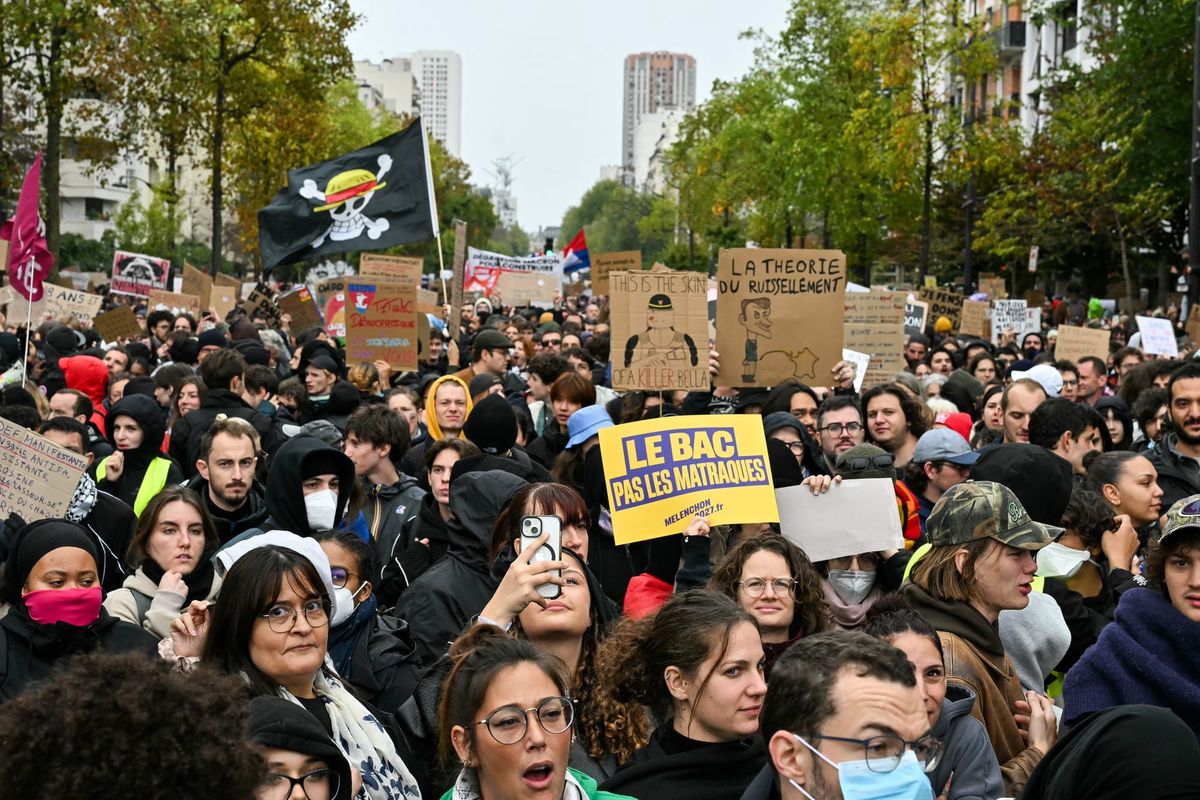
The sheer scale of the October 24 mobilization defies the government’s attempt to characterize the protests as isolated incidents of vandalism. Despite the deployment of military-grade security—including helicopters, specialized riot units, and armored carriers—the turnout remained staggering.
Independent estimates suggest that at least 800,000 people took to the streets nationwide on this single day. In Paris alone, 250,000 individuals defied the government’s "massive security deployment." The arrests—nearing the 1,000 mark in Paris—signal a hardening of the state’s stance. These figures represent more than just raw statistics; they underscore a profound disconnection between the Elysée Palace and the labor force, including the intellectual and creative vanguard of the country.
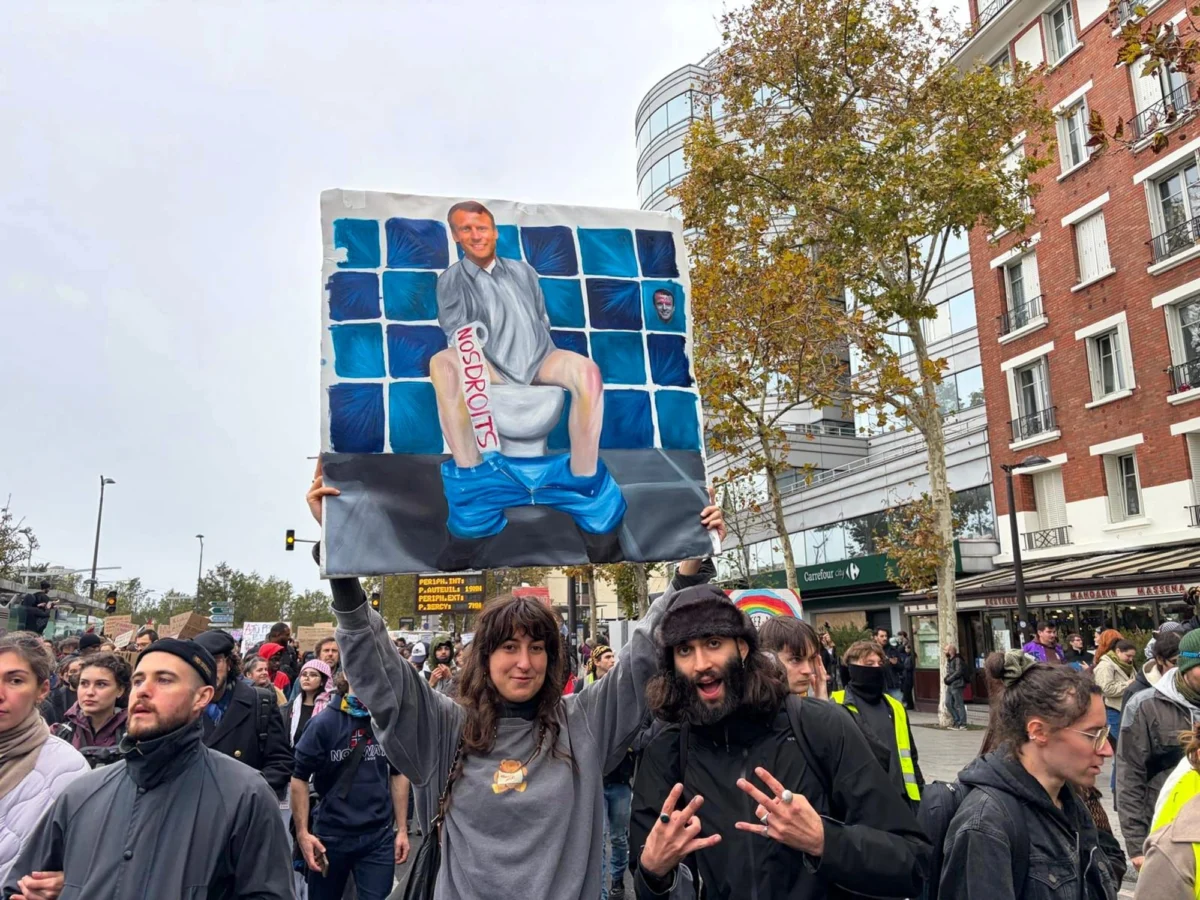
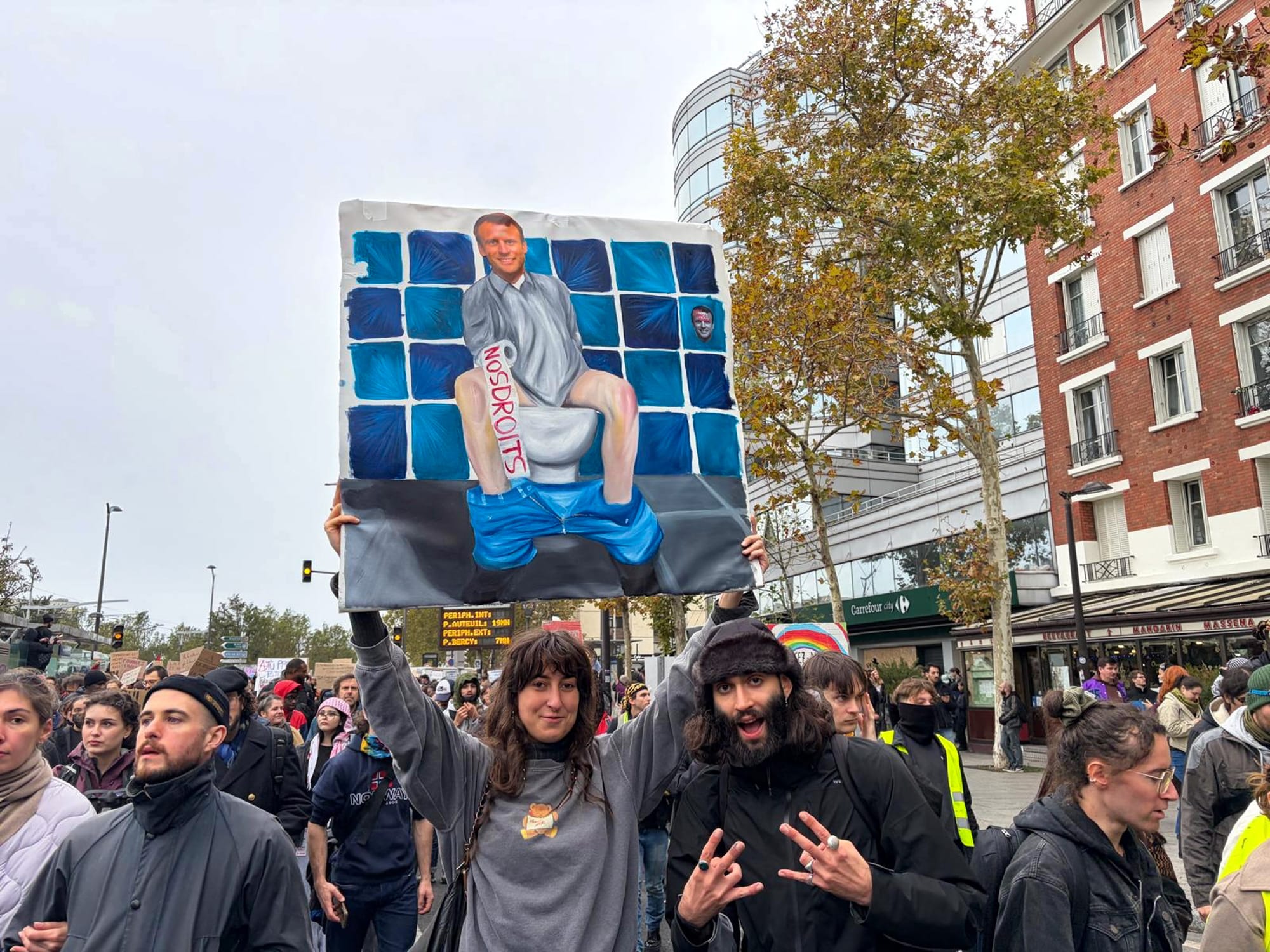
Photographic evidence from the front lines captured the mood: homemade signs depicting President Emmanuel Macron treating the concept of "our rights" as disposable paper, and placards decrying the encroachment of unregulated Artificial Intelligence in the arts. One particularly resonant sign read, "The boat is sinking, but the politicians are fighting over who will be captain," a sentiment that echoes the frustration of a generation of students and artists who see the current French administration as distracted by ego and optics while the social fabric frays.
Official Responses: A State in Defensive Posture
The response from the French government has been markedly aggressive. By drafting the Sentinelle anti-terror force—typically reserved for preventing extremist violence—to manage domestic civil protests, the administration has signaled a total securitization of public space.

Interior Ministry officials have defended the crackdown, citing the need to prevent "elevated violence" and property damage. In official briefings, spokespeople for the government have framed the protesters as "extremist agitators" attempting to derail the economic recovery of the capital. However, the government has remained largely silent regarding the specific grievances of the Cultures en Lutte movement, failing to offer a concrete policy pathway for the financial relief of artists who have seen their livelihoods decimated by the combined pressures of inflation and the closure of the city’s cultural infrastructure.
The decision to shutter institutions like the Louvre is seen by many in the art world as a strategic miscalculation. By removing the public’s access to the nation’s cultural treasures, the government has inadvertently highlighted the very "cultural void" that the artists are protesting against.
Implications: The Future of French Culture
The ramifications of these protests extend far beyond the immediate damage to storefronts or the loss of revenue for the art market. We are witnessing a fundamental shift in the relationship between the French state and its creators.
1. The Death of the "Cultural Exception"
France has long prided itself on its "cultural exception," a policy that protects the arts through state subsidies and unique labor status. The current protests suggest that this model is no longer functioning. If the government cannot or will not support the artists it claims to champion, the very foundation of the French cultural identity is at risk.
2. The Radicalization of the Creative Class
Historically, the art sector in France has operated with a degree of separation from the more volatile aspects of national labor strikes. That wall has now collapsed. When art students and gallery workers stand alongside industrial labor unions, it signals a movement that has moved from "sector-specific complaints" to a unified rejection of the administration’s socio-economic vision.
3. The International Impact
The early closure of Art Basel Paris sends a chilling message to the international art community. As the world watches, the perception of Paris as a safe harbor for global capital and culture is being severely tested. Should this unrest continue, we may see a significant migration of art capital to other European centers, such as Berlin, London, or Milan, which currently appear more stable.
4. The Digital Question
The emergence of signs protesting AI—alongside traditional demands for fair wages—shows that the creative class is looking toward the future with deep anxiety. The protesters are not just fighting for a paycheck today; they are fighting for the relevance and viability of human-led art in an era of rapid technological displacement.
Conclusion: A City at the Crossroads
As night fell over Paris on October 24, the air remained thick with the scent of tear gas and the echoes of chants. The march at Porte d’Italie was more than a protest; it was a testament to the fact that the culture sector—once the soft power of the French state—has now become a primary source of political resistance.
Whether the government chooses to engage in a genuine dialogue with these coalitions or continues to rely on the Sentinelle force to silence them will determine the fate of the country’s cultural future. For now, the museums are dark, the galleries are boarded up, and the streets belong to those who refuse to let their creative voice be drowned out by the sound of sirens. The "City of Light" remains, for the moment, a city in the shadows of its own internal struggle.
