

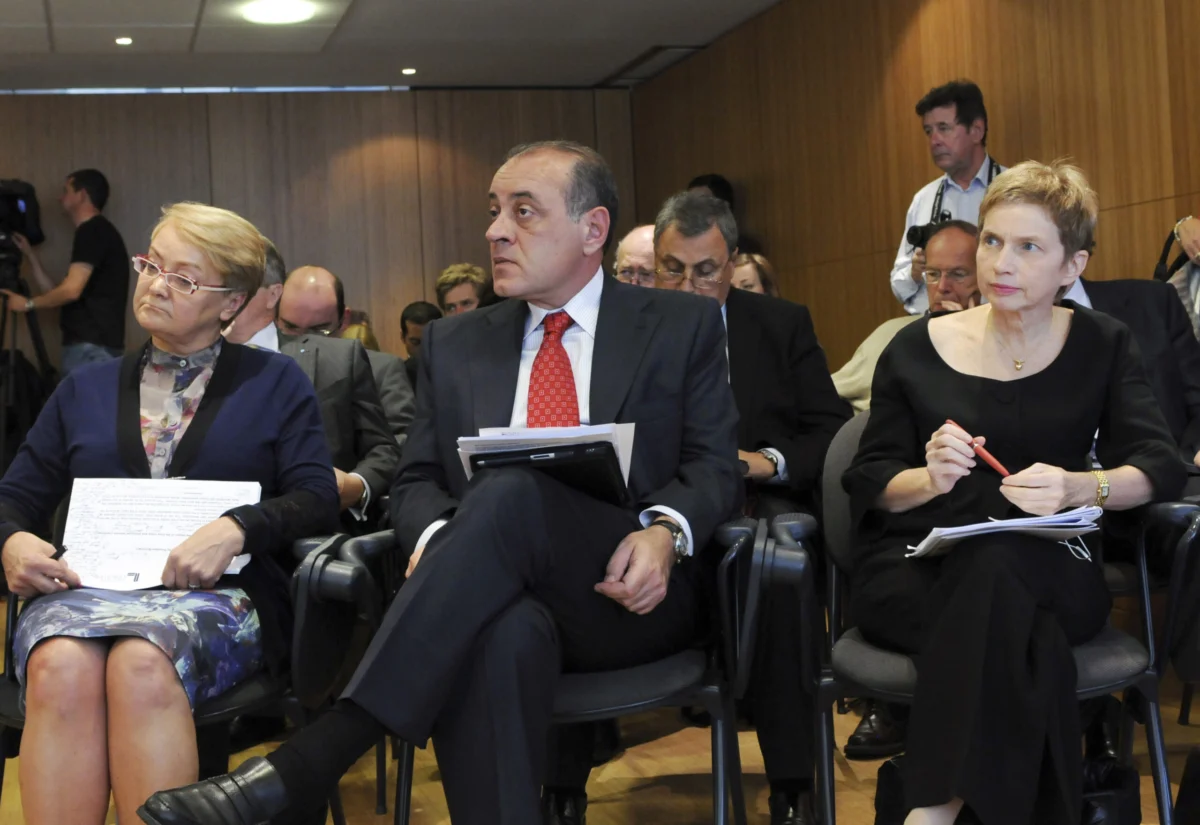
In a move that underscores the evolving relationship between private collectors and public institutions, Greek entrepreneur and visionary philanthropist Dimitris Daskalopoulos has announced a significant new donation from his personal collection. The gift, consisting of fifty-one meticulously curated artworks, will be distributed across four major cultural institutions in Greece and Scotland. This latest installment is not merely a transfer of assets; it is a strategic maneuver in Daskalopoulos’s ongoing, multi-year campaign to democratize contemporary art and ensure that vital works find a permanent, accessible home within the public trust.
The donation spans a diverse array of media—including sculpture, installation, and painting—and is heavily weighted toward the promotion of Greek artistic talent, while also reinforcing the international dialogues inherent in his broader collection.
The Distribution: A Geographic and Artistic Map
The fifty-one pieces have been allocated to reflect both local heritage and global interconnectedness. The recipients represent a balanced cross-section of institutional significance:
- The National Gallery of Greece (Athens): Receiving the lion’s share, the gallery will welcome twenty-nine works created between the 1960s and the 1990s. This selection serves as a retrospective of a pivotal era in Greek art, featuring contributions from influential figures such as Io Angeli, Yiannis Spyropoulos, Konstantinos Andreou, Christos Sarakatsianos, Yiannis Psychopedis, George Vorres, and Kostis Georgiou.
- MOMUS – Museum of Contemporary Art (Thessaloniki): This institution will gain sixteen works by a roster of artists that highlights the intersection of local and global perspectives. The list includes Subodh Gupta, Seth Price, Kelley Walker, Elias Kafouros, Haluk Akakçe, Catharina Van Eetvelde, Stefanos Tsivopoulos, and Alex Hubbard.
- The Museum of Contemporary Art of Crete: Three works have been allocated to this regional hub, highlighting the importance of decentralizing the arts. These works are by Nobuko Tsuchiya, Ioanna Pantazopoulou, and Nana Sachini.
- National Galleries Scotland (Edinburgh): Reflecting the international reach of the donation, three seminal works by Mike Kelley, Bruce Nauman, and Margarita Myrogianni will join the Scottish national collection, bridging the aesthetic gap between the Mediterranean and the United Kingdom.
A Legacy of Institutional Support: A Chronology of Giving
The recent donation is a continuation of a systematic divestment of his vast collection that began in earnest in the early 2020s. To understand the magnitude of Daskalopoulos’s impact, one must look at the timeline of his philanthropic trajectory:
2022–2023: The Great Consolidation
Following years of building a collection that grew to include more than 500 works by 220 international artists, Daskalopoulos initiated a massive redistribution project. In 2022 and 2023, he donated more than 350 works to a consortium of the world’s most prestigious museums. This included the National Museum of Contemporary Art in Athens (EMST), the Tate in London, the Solomon R. Guggenheim Museum in New York, and the Museum of Contemporary Art Chicago. This move effectively cemented his collection as a global standard for contemporary artistic discourse.
2025: Expanding the Network
The mission continued in 2025, when six additional pieces were gifted to the Guggenheim Bilbao, signaling a continued interest in European cultural institutions and the fostering of cross-border artistic exchanges.

2026: The Current Initiative
The latest donation of fifty-one works marks the 2026 phase of this project. By focusing on both established Greek masters and contemporary international practitioners, Daskalopoulos is moving beyond the simple "gifting" model, instead functioning as a curator of public institutional histories.
The Philosophy of the Collector: Why Now?
In an official statement regarding the most recent donation, the sentiment focused on the longevity of the works and the endurance of the ideas they represent. "This initiative seeks to ensure the long-term preservation of the works while sustaining an ongoing dialogue with the art of the future," the statement read.
Dimitris Daskalopoulos, the chairman of Damma Holdings and a titan of the Greek food industry, has never viewed his collection as a private trophy. His collection—rich in installations, sculptures, drawings, collages, films, and video—was always intended to challenge the viewer. His support for artists such as Louise Bourgeois, Robert Gober, David Hammons, Annette Messager, and Ernesto Neto suggests a preference for art that is deeply psychological, structurally complex, and socially resonant.
The inclusion of works by Greek artists alongside global icons is a deliberate act of institutional positioning. As the official statement noted, "The inclusion of works by Greek artists within the collection’s museum donations reflects a commitment to promoting contemporary Greek creativity and increasing its visibility on the global cultural stage." By grouping these artists together, Daskalopoulos is forcing a re-evaluation of the Greek contribution to the international contemporary canon, insisting that it be viewed not as a regional outlier, but as a core component of the global narrative.
Supporting Data: The Scale of the Collection
Daskalopoulos’s collection has long been considered one of the most significant private holdings of contemporary art in Europe. Its sheer volume—over 500 works—is bolstered by the diversity of its medium.
- Breadth: The collection spans nearly every major movement of the late 20th and early 21st centuries.
- Influence: By donating to institutions like the Tate and the Guggenheim, Daskalopoulos has ensured that his collection remains part of the "circulating" history of art. These works are not destined for storage; they are intended to be curated, studied, and displayed to a diverse public.
- Institutional Impact: For smaller institutions like the Museum of Contemporary Art of Crete, receiving works by international figures like Nobuko Tsuchiya represents a transformative moment for their permanent collection, elevating their status and increasing their drawing power for visitors.
Implications: The Shift in Museum-Donor Dynamics
The actions of Daskalopoulos highlight a broader trend in the art world: the "super-donor." In an era where public funding for museums is often strained or unpredictable, the role of the individual collector has become paramount. However, Daskalopoulos’s approach is distinct. Rather than holding his collection in a private foundation, he is actively dissolving his private ownership to empower public entities.

Promoting Regional Artistry
Perhaps the most important implication of this move is the validation of the Greek art scene. By placing works by artists like Io Angeli and Kostis Georgiou alongside heavyweights like Mike Kelley and Bruce Nauman, Daskalopoulos is effectively "auditioning" Greek artists for a permanent place in the international art history books. This creates a halo effect, where local museums gain prestige by association, and the artists gain a global platform that would otherwise be difficult to penetrate.
Democratization of Art
The core goal of the Daskalopoulos philanthropic campaign remains the "accessibility" of contemporary art. By gifting these works to four different institutions, he is ensuring that the art is not concentrated in a single "capital of culture" but is spread across different regions. This geographical dispersal encourages a wider demographic of the public to engage with challenging, contemporary pieces.
Conclusion: A Living Legacy
As the art world looks toward the future, the actions of collectors like Dimitris Daskalopoulos set a high bar for philanthropic responsibility. By prioritizing the "dialogue with the art of the future," he is ensuring that his legacy is not found in the acquisition of objects, but in the sustained vitality of the institutions he has chosen to support.
Through these fifty-one works, the narrative of Greek contemporary art is being rewritten and integrated into the global story, one gift at a time. Whether in the halls of the National Gallery in Athens or the corridors of the National Galleries of Scotland, the impact of this donation will be felt for generations, proving that when private wealth is channeled into public access, the entire cultural landscape is enriched.
