

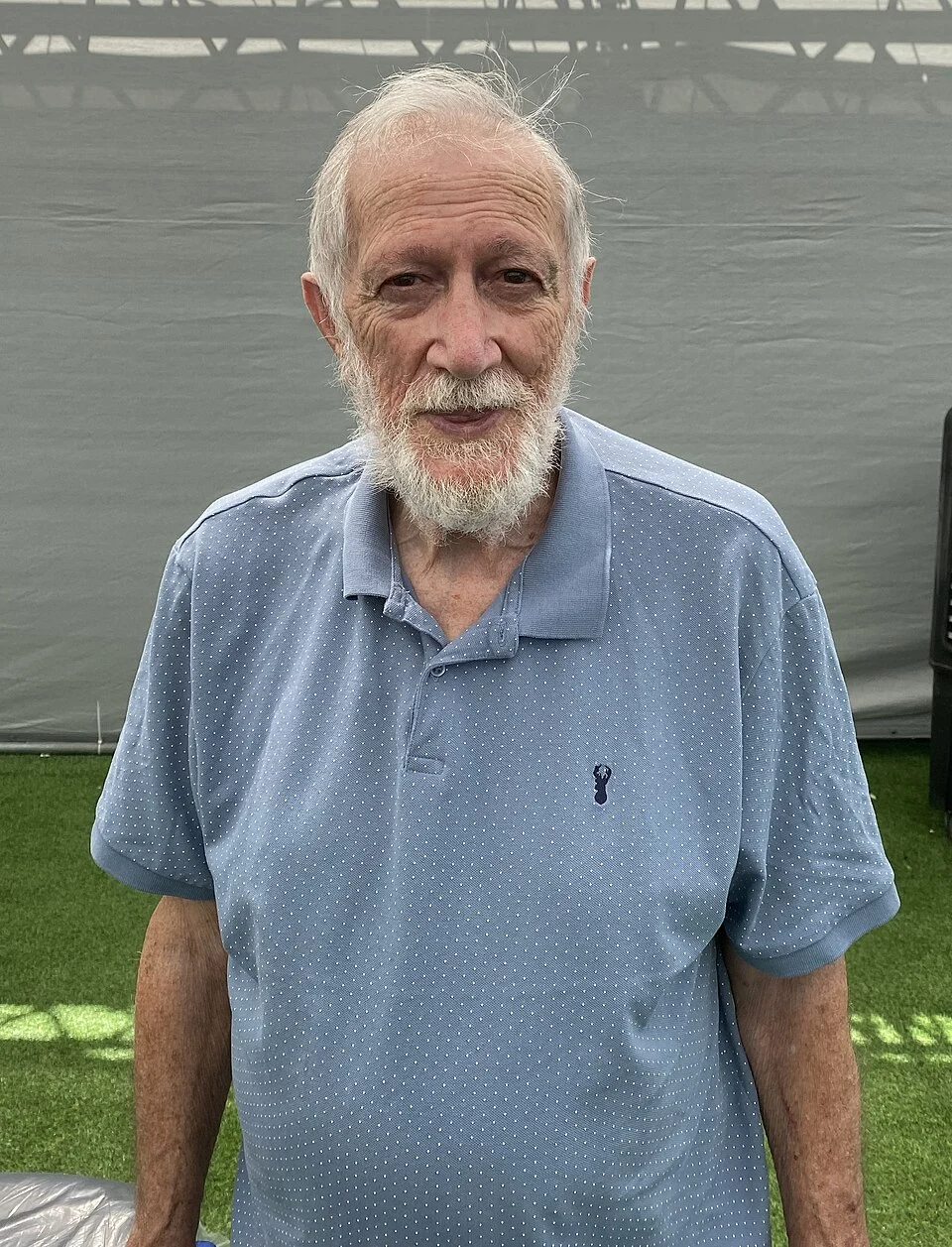
Sliman Mansour, the visionary Palestinian painter whose evocative canvases became synonymous with the endurance and cultural identity of his people, passed away in Jerusalem on August 24, 2026. He was seventy-nine. His death, following a long and arduous illness, marks the loss of a foundational pillar in the Arab art world—a man whose life’s work transformed the visual language of a nation grappling with the legacy of the 1948 Nakba.
Mansour was not merely an artist; he was a cultural strategist who understood that in the face of erasure, the act of creation is an act of defiance. For decades, he navigated the precarious intersection of art and politics, often facing censorship, imprisonment, and the stifling limitations of military occupation. Yet, he leaves behind a body of work that serves as a permanent, vibrant testament to the Palestinian spirit.
A Life Forged in the Shadow of History
Born on July 27, 1947, in the town of Birzeit, Mansour entered a world on the precipice of seismic change. His birth occurred just months before the founding of the State of Israel and the subsequent 1948 Nakba—the "Catastrophe"—which displaced hundreds of thousands of Palestinians. The early loss of his father at age four forced a young Mansour into a boarding school for orphans in Bethlehem. It was there, amidst the austerity of his upbringing, that his innate artistic sensibilities were first recognized by an observant teacher.
This early encouragement set him on a trajectory that would eventually land him at the prestigious Bezalel Academy of Arts and Design in Jerusalem. At Bezalel, Mansour found himself at odds with the prevailing academic trend of the era: Abstract Expressionism. While his peers were enamored with the detached, non-representational forms of Western modernism, Mansour sought a language that could communicate the specificity of his experience. He turned toward the figurative, drawing deep inspiration from the social realism of Mexican muralist Diego Rivera and the intricate, mathematical grace of traditional Islamic and Arabic calligraphy. By fusing these influences, he began to develop a unique visual vocabulary that would eventually define Palestinian modern art.

Chronology of a Resilient Career
- 1947: Born in Birzeit, Palestine, into a climate of rising political instability.
- 1960s–1970s: Attends the Bezalel Academy, rejects Western abstraction in favor of cultural storytelling.
- 1972: Co-organizes the first exhibition of Palestinian art in the occupied territories.
- 1973: Paints Jamal al Mahamel (Camel of Hardship), an iconic image of a porter carrying Jerusalem, which cements his status as a national voice.
- 1986–1990: Serves as the head of the League of Palestinian Artists; pioneers the use of the "watermelon" as a symbolic vessel for the prohibited Palestinian flag.
- 1989: Co-founds the "New Visions" movement, shifting toward locally sourced, organic materials like mud and coffee as a form of artistic protest.
- 2024: Completes his final major mural for the Palestinian Museum in Birzeit, requesting a fig tree instead of payment.
- August 24, 2026: Passes away in Jerusalem at age seventy-nine.
The Art of Symbolism: From Camels to Watermelons
Mansour’s brilliance lay in his ability to imbue everyday objects with profound national significance. His 1973 masterpiece, Jamal al Mahamel (Camel of Hardship), remains perhaps the most recognizable work of Palestinian art. It depicts an elderly man, his face etched with the lines of struggle, straining under the immense physical weight of the city of Jerusalem and the Al-Aqsa Mosque. It was a visceral representation of the Palestinian burden, an image that resonated far beyond the gallery walls.
When the Israeli government enforced strict bans on political art—specifically prohibiting the use of the colors of the Palestinian flag (red, green, white, and black) in a single composition—Mansour and his colleagues at the League of Palestinian Artists responded with characteristic ingenuity. They popularized the watermelon. By painting the fruit, which contains all four colors, they successfully bypassed censorship, creating a coded language that empowered the public to identify with their heritage without triggering legal repercussions. This act of "subversive aesthetics" remains a landmark example of how artists can weaponize imagery against authoritarian overreach.
The "New Visions" Movement: Materiality as Protest
As the First Intifada intensified in the late 1980s, Mansour sought to deepen his commitment to self-reliance. Alongside fellow artists Nabil Anani, Vera Tamari, and Tayseer Barakat, he launched the "New Visions" movement. This was a radical pivot for the group; they rejected commercialized, imported art supplies in favor of the earth itself. They began crafting sculptures and paintings using mud, henna, hay, and coffee.
This choice was profoundly symbolic. By using the land to depict the land, they were making a statement about indigeneity and autonomy. This movement is now widely viewed as the artistic antecedent to the modern Boycott, Divestment, and Sanctions (BDS) movement. For Mansour, art was never meant to be a luxury; it was a tool for survival. He famously championed the mass distribution of prints of his work, ensuring that his message was accessible to those who could never afford a high-end original.

Portraying Strength: The Role of Women
Mansour’s treatment of women was central to his philosophy. He frequently depicted them not as passive victims of war, but as the active, beating heart of Palestinian society. In works like Flight to Egypt and Woman from Bethlehem, he captured the dignity of daily life.
"For me, women and mother figures are symbols of the homeland," he told the Southeast Review. "They must always be strong, with big working hands, beautiful, proud." By portraying his subjects with such agency, he pushed back against orientalist tropes that sought to define Palestinians purely through the lens of conflict and misery.
Official Responses and Lasting Legacy
The global art community has mourned his passing, recognizing his inclusion in the permanent collections of the British Museum, the Institut du Monde Arabe, and the Guggenheim Abu Dhabi as proof of his enduring global relevance. Fellow artist Vera Tamari summarized the sentiment of many when she told the BBC, "He wanted people to know that we are rooted here."
His final act in 2024—the creation of a mural for the Palestinian Museum in Birzeit—served as a poignant coda to his life. By refusing payment and asking only for a fig tree to be planted in his name, he emphasized the themes of growth, patience, and stewardship that permeated his career.

The Broader Implications for Palestinian Culture
Sliman Mansour’s death leaves a void, but it also solidifies the path he carved for future generations. His career demonstrates the power of the artist as a chronicler of collective memory. In an era where digital archives are vulnerable and physical spaces are often under threat, Mansour’s canvases have acted as a form of cultural archiving.
His life proved that art, when stripped of its pretense and grounded in the struggle for human dignity, becomes an unbreakable force. Whether through the humble use of mud or the defiant display of a watermelon, Mansour taught his people—and the world—that even in the face of the most systematic attempts at erasure, culture can be a vessel for truth. As his legacy is re-evaluated by historians and curators, it is clear that his "language of resistance" will continue to speak for those whose voices have been systematically marginalized, ensuring that the story of Palestine remains as vibrant and indelible as the colors on his canvases.
