

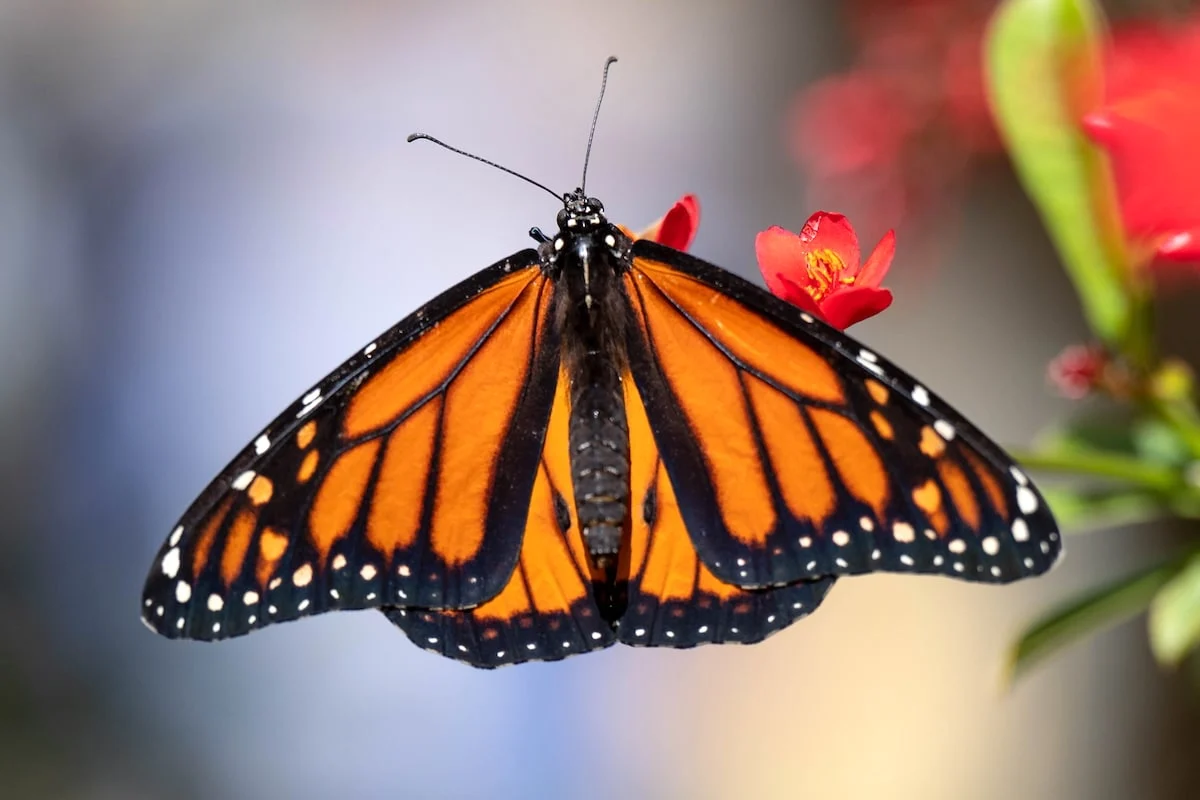
In the quiet groves of Pacific Grove, California—a site famed for providing a winter sanctuary to the iconic Western monarch butterfly—the start of 2024 brought a grim discovery. Hundreds of these delicate, orange-and-black pollinators were found dead or dying on the forest floor. What initially appeared to be a localized ecological mystery has now been confirmed as a symptom of a much larger, systemic threat.
A peer-reviewed study published in the journal Environmental Toxicology and Chemistry has definitively linked this mass mortality event to acute pesticide poisoning. The findings provide the most concrete evidence to date that our modern chemical landscape is not just harming pollinators in the abstract, but actively driving them toward extinction.
The Anatomy of a Tragedy: Main Findings
The investigation, led by the Xerces Society for Invertebrate Conservation, utilized advanced chemical analysis to determine the cause of death. By employing liquid and gas chromatography alongside mass spectrometry, researchers analyzed the carcasses of the butterflies collected at the Pacific Grove Monarch Sanctuary.
The results were staggering. The team discovered a "toxic cocktail" of 15 different insecticides, herbicides, and fungicides present on the butterflies. On average, each individual butterfly carried seven different pesticides.
"We found an average of seven different pesticides per butterfly, including multiple insecticides that are highly toxic to insects," said Staci Cibotti, the study’s lead author and a pesticide risk prevention specialist at the Xerces Society.
Among the chemicals identified were three human-made pyrethroids—bifenthrin, cypermethrin, and permethrin—which were found at or near lethal doses. The prevalence of these substances, which are commonly used in agricultural and urban pest control, points to a fatal intersection between the butterflies’ migratory behavior and human-managed landscapes.
A Chronology of the 2024 Die-Off
The timeline of the Pacific Grove incident highlights the speed at which these chemical exposures can devastate a vulnerable population:
- January 2024: Observers and researchers at the Pacific Grove Monarch Sanctuary report the discovery of hundreds of dead and struggling monarch butterflies. The site, a critical overwintering location, is suddenly transformed into a scene of ecological alarm.
- Early 2024 (Data Collection): Scientists from the Xerces Society and partner organizations collect the samples, initiating a rigorous testing phase to rule out environmental stressors like extreme weather or disease.
- July 2025: The findings are formally published in Environmental Toxicology and Chemistry, confirming that neurotoxic pesticide poisoning was the primary cause of the mass mortality.
- August 2025: Following the publication, experts emphasize that while the event occurred in 2024, the lessons learned remain vital for the survival of the species during their upcoming migration cycles.
Supporting Data: A Species on the Brink
The mass death in Pacific Grove is not an isolated event; it is a flashpoint in a decades-long decline. The Western monarch population has plummeted by nearly 95% since the 1980s.
The latest data from the Xerces Society’s annual Western Monarch Count provides a harrowing context:
- Record Lows: By 2025, the total number of overwintering Western monarchs had dwindled to just 9,119 individuals, marking the second-lowest population count ever recorded.
- Extinction Risk: The status of the species is dire. The International Union for Conservation of Nature (IUCN) has officially listed the migratory monarch as endangered. Furthermore, modeling by the U.S. Fish and Wildlife Service suggests an alarming 99% probability that the Western monarch will face extinction by 2080 if current trends are not reversed.
The vulnerability of the species is exacerbated by their life cycle. Because monarchs gather in dense, high-concentration clusters during their overwintering and migration phases, a single, localized application of a pesticide can result in a "massacre" of hundreds or thousands of individuals at once.

The Ubiquity of the Threat: Official Responses
The implications of this study extend far beyond the borders of Pacific Grove. Experts warn that pesticide exposure is a ubiquitous, invisible threat that follows the monarch throughout its entire range.
Staci Cibotti, reflecting on the broader implications, noted that these chemicals are not limited to industrial farming. "These chemicals are commonly used not only in agriculture, but also across developed landscapes for structural pest control, home gardening, landscaping, turf management, mosquito abatement, and more," she explained.
This creates a "death by a thousand cuts" scenario. When monarchs travel through suburban neighborhoods, public parks, and agricultural corridors, they are repeatedly exposed to chemical residues. This constant background exposure weakens their immune systems, disrupts their navigation, and, as seen in 2024, results in acute lethal poisoning.
Emily May, co-author of the study and agricultural conservation lead at the Xerces Society, emphasized that the solution requires a fundamental shift in how society interacts with its environment. "Protecting monarchs from pesticides will require both public education and policy change," May stated. "We are committed to working with communities and decision-makers to ensure that overwintering sites are healthy refuges for these butterflies."
Implications for Conservation and Policy
The confirmation that pesticides are killing monarchs at overwintering sites has forced a re-evaluation of current conservation plans. The Xerces Society has outlined a multi-tiered strategy to mitigate these risks:
- Pesticide-Free Zones: Establishing and enforcing strict buffer zones around known monarch overwintering and breeding sites.
- Increased Public Education: Informing homeowners and landscape managers about the lethal impact of common garden insecticides on pollinators.
- Policy Reform: Implementing stronger regulations on the application of pyrethroids, especially during the peak months of monarch migration and overwintering.
- Coordination: Improving communication between agricultural officials and environmental conservationists to ensure that pest management programs—such as mosquito abatement—do not coincide with monarch migratory pulses.
The comparison to a similar 2020 disaster in North Dakota, where hundreds of monarchs were killed by aerial mosquito spraying, serves as a sobering reminder of the consequences of poor coordination. In that event, as in Pacific Grove, the timing of the spray coincided exactly with the migration, turning a standard public health measure into an ecological catastrophe.
Conclusion: A Window for Recovery
The 2024 die-off is more than just a tragic data point; it is a clear warning. The Western monarch butterfly is a flagship species for the health of our environment. When they suffer, it is an indicator that our landscapes are becoming increasingly hostile to insect life, which in turn impacts the broader food web, including the birds and other animals that rely on these insects.
As we look toward the future, the window to prevent the extinction of the Western monarch is rapidly narrowing. However, the path forward is scientifically clear. By reducing the reliance on broad-spectrum neurotoxic pesticides and creating "safe corridors" for these travelers, there remains a glimmer of hope that the skies of California will once again be filled with the rhythmic flutter of the monarch.
The research published in Environmental Toxicology and Chemistry provides the evidence needed to demand better protections. The question remains whether policymakers, local municipalities, and the public will act with the urgency this crisis demands. For the Western monarch, the time for half-measures has passed; only decisive, systemic change can ensure their survival through the end of the century.
