

Introduction: The Return of a Cultural Legacy
In a remarkable victory for the preservation of fine art, two stolen paintings by the legendary Impressionist master Pierre-Auguste Renoir have been recovered by French authorities, bringing a swift and definitive conclusion to a brazen burglary that had shocked the art world last month. The works—Portrait of Madame Colonna Romano (1910) and Jeune fille au puits (1886)—were discovered secreted behind a false wall in a private residence, ending an intensive manhunt across the French Riviera.
The recovery of these canvases, valued at approximately €4.2 million ($4.7 million) each, has brought immense relief to the town of Cagnes-sur-Mer. The Musée Renoir, which serves as both a repository of the artist’s work and a monument to his final years, had been reeling since the predawn heist. With six individuals now in custody and four formally charged, the investigation has shed light on a sophisticated criminal operation that targeted the heart of France’s cultural heritage.
The Anatomy of a Heist: A Chronology
The theft, which occurred under the cover of darkness, was characterized by its clinical speed and cold calculation. Investigators reconstructed the events of the fateful night, revealing a timeline that suggests the perpetrators had conducted meticulous reconnaissance of the museum grounds.
The Breach
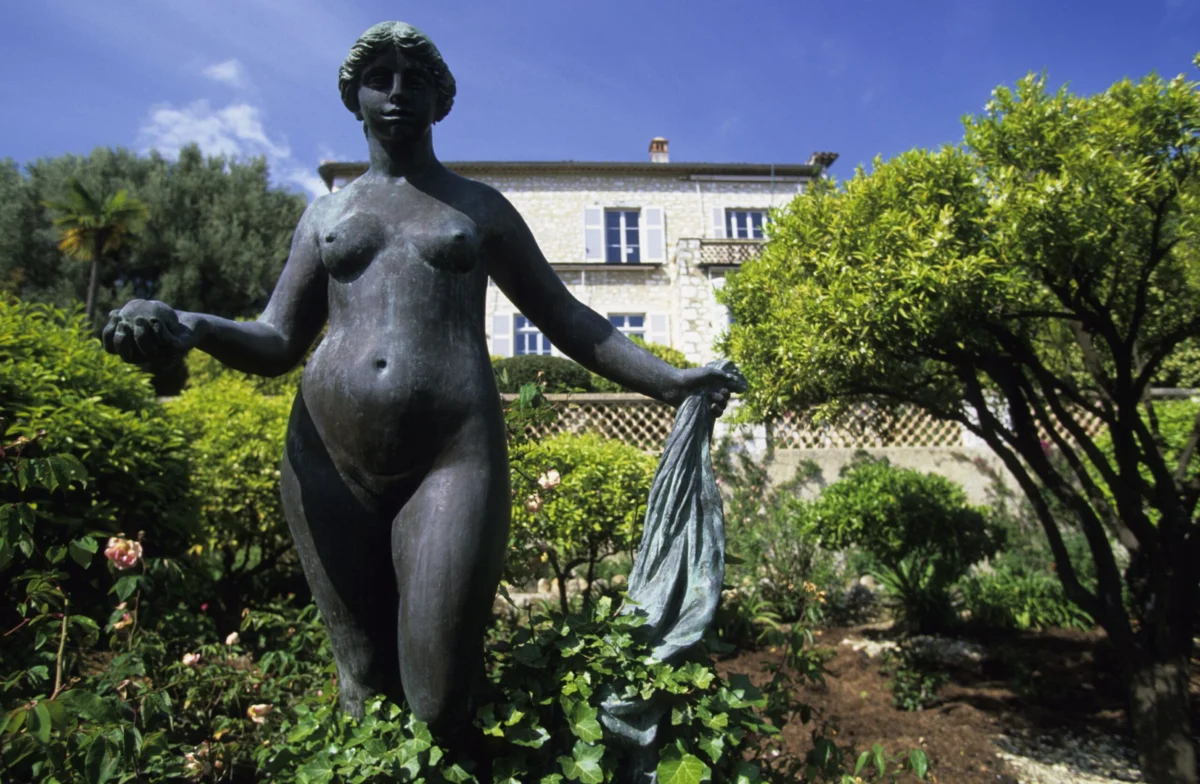
In the early hours of the morning, the thieves bypassed the museum’s perimeter security by slicing through a metal fence. Moving with practiced efficiency, they gained entry into the historic villa—the very house where Renoir lived and painted during his later years—by forcing a window. Once inside, the burglars targeted specific, high-value works. Using tools to sever the canvases from the walls to which their frames were bolted, the thieves operated with such haste that the entire operation was concluded in under three minutes.
The Escape and Abandonment
The urgency of the escape, however, proved to be the undoing of the thieves’ initial plans. As they fled the scene, the perpetrators were forced to abandon two additional paintings: Portrait of Madame Pichon (1895) and Coco Lisant (1905). These masterpieces were discovered scattered in the museum’s garden, likely discarded as the burglars sought to lighten their load and flee before law enforcement could respond to triggered alarms.
The Investigation and Apprehension
Following the theft, a regional task force was established to track the suspects. The breakthrough came when investigators observed one of the suspects conducting suspicious surveillance at a secondary museum location. Fearing that a second heist was imminent, police accelerated their operation. A series of coordinated raids across the region led to the arrest of six individuals. Following subsequent interrogations, authorities located the two missing paintings hidden behind a false wall in a residential property, successfully preserving the integrity of the works.
The Artworks: A Valuation of History
The two recovered paintings represent quintessential examples of Renoir’s late-period brilliance.
- Portrait of Madame Colonna Romano (1910): A testament to Renoir’s ability to capture the ethereal elegance of his subjects, this portrait remains a cornerstone of the museum’s collection.
- Jeune fille au puits (1886): An evocative work that highlights Renoir’s mastery of light and rural composition, reflecting the pastoral beauty of the French countryside.
With a market value totaling nearly $10 million, the theft was clearly motivated by the high demand for Renoir’s work in the illicit black market. However, experts note that the international "stolen art" registry makes such pieces nearly impossible to sell through legitimate auction houses or galleries. The recovery underscores the futility of targeting such high-profile, recognizable works, which are effectively "toxic" assets for any criminal enterprise.
Official Responses and Public Sentiment
The recovery of the paintings has been met with widespread celebration, particularly by those charged with the stewardship of Cagnes-sur-Mer’s history.
Bryan Masson, the mayor of Cagnes-sur-Mer, issued a poignant statement following the confirmation that the paintings were safe. "These two paintings are far more than works of art," Masson stated. "They are part of our city’s history, our cultural heritage, and the legacy Auguste Renoir left to Cagnes-sur-Mer. Their recovery is a tremendous relief for the people of Cagnes-sur-Mer and for everyone who cares deeply about our museum."
Local officials have praised the swift actions of the French police, noting that the intelligence-led approach prevented further loss of cultural assets. The prosecution has confirmed that among the six arrested, two individuals have been formally charged with "organized theft," a charge that carries significant weight under French law, reflecting the gravity of targeting national treasures.
Implications for Museum Security
The incident has triggered an immediate and necessary conversation regarding the security infrastructure of smaller, historic house-museums. While major institutions like the Louvre or the Musée d’Orsay benefit from multi-layered, high-tech security grids, smaller regional museums often face the challenge of balancing accessibility and preservation with limited budgets.
Vulnerabilities in Historic Architecture
The Musée Renoir presents a unique set of challenges. As a historical residence, the building’s architecture is not easily retrofitted with modern, intrusive security systems without compromising its aesthetic integrity. The burglars’ ability to enter through a window and sever frames from walls suggests that while electronic alarms were likely present, physical hardening of the displays—such as reinforced mounting brackets or enhanced vibration sensors—may have been insufficient.
The "High-Value" Target Paradigm
Criminals are increasingly aware that smaller, regional museums may offer a path of least resistance compared to global institutions. This heist serves as a wake-up call for the European art community to implement a more robust information-sharing network. The fact that the police were able to stop a second attempted theft by tracking the movements of suspects between different museum locations underscores the importance of inter-agency cooperation.
Conclusion: A Future Secured
As the Musée Renoir prepares to reinstall the recovered paintings, the focus now shifts toward ensuring that such a breach never occurs again. Plans are already underway to enhance the physical security of the villa, with a renewed commitment from local and national authorities to protect the sites that house France’s artistic soul.
The recovery of these Renoirs is a victory not only for the town of Cagnes-sur-Mer but for the global art community. It serves as a reminder that the value of art lies not in its price tag, but in its capacity to connect us to the visionaries of the past. For now, Portrait of Madame Colonna Romano and Jeune fille au puits are back where they belong—under the watchful eye of the public, safe from the shadows of those who sought to trade history for greed. The case remains open as investigators continue to probe the extent of the criminal network, but for the citizens of Cagnes-sur-Mer, the return of these treasures marks the beginning of a long-awaited chapter of healing and preservation.
