

Introduction: Abandoning Truth for the Aesthetic
"Abandon the search for Truth; settle for a good fantasy." These words, borrowed from the acerbic wit of Fran Lebowitz, serve as the thematic North Star for the latest group exhibition at Luhring Augustine’s Chelsea gallery. Titled Settle for a Good Fantasy, the show functions as a meta-commentary on the medium of photography itself. By positioning these words at the entrance, the gallery invites visitors to dispense with the documentary expectations often tethered to the camera lens and instead embrace the seductive, constructed, and inherently fractured nature of the image.
Photography has long grappled with its own identity—is it a window into reality or a mirror for the imagination? At Luhring Augustine, the answer leans heavily toward the latter. The exhibition posits that the photograph is not a vessel for objective fact, but a curated artifact of desire, memory, and artifice.
Chronology and Curation: A Narrative of Fragments
The trajectory of the exhibition is carefully paced, beginning with an immediate challenge to the viewer’s perception. Upon entry, the viewer is greeted by Shaun Pierson’s Untitled (Strawberry on Lace) (2026). The image features a hyper-saturated, bulbous strawberry resting atop delicate fabric. Its physical presence is overwhelming, its form reminiscent of the prehistoric Venus of Willendorf. By placing this near the Lebowitz quote, the curators draw a direct line between the desire for consumption and the act of looking. The strawberry, in all its "voluptuous" geometry, serves as a tongue-in-cheek reminder that photography—much like the objects we crave—is designed to heighten reality until it becomes a fantasy.
As one moves into the main exhibition space, the focus shifts from the still life to the human form, specifically through a lens of eroticized fragmentation. The gallery has curated a selection of works by Pierson, David Seider, and Janice Guy that act as a "fractured peep show."
Key Highlights:
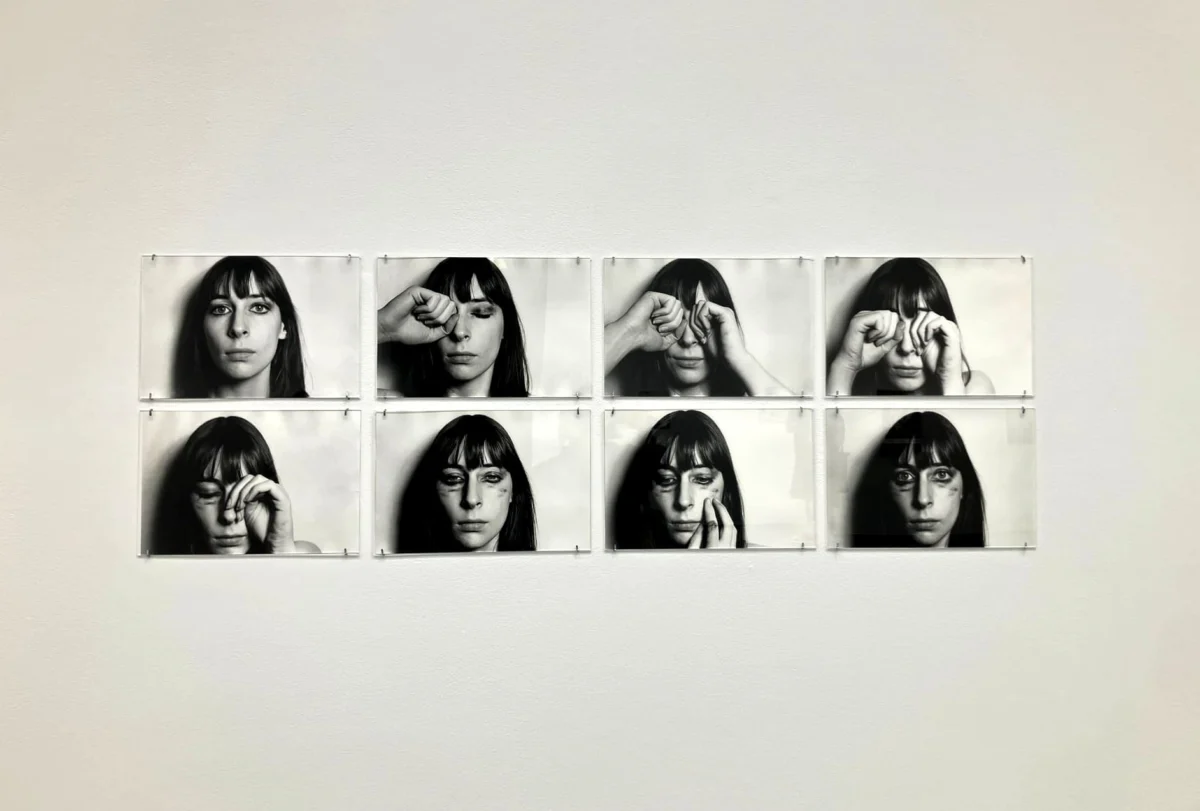
- Janice Guy’s Retrospective Grids: Perhaps the most compelling anchor of the show, Guy’s series of self-portraits from the 1970s (printed in 2026) offers a stark counterpoint to the more contemporary works. Her grids suggest a woman caught in the act of becoming, her identity sliced into silver gelatin strips that feel both historical and urgently present.
- The Erotics of the Unseen: Works by David Seider and Shaun Pierson emphasize the "unknowability" of their subjects. We see curves of backs, the subtle map of freckles, and fragments of faces emerging from deep shadows. These are not portraits in the traditional sense; they are glimpses of a narrative that the viewer is never permitted to fully inhabit.
Supporting Data: The Medium of Desire
To understand the significance of this exhibition, one must look at the technical and historical data surrounding the featured works. The shift from 1970s silver gelatin prints to 2026 archival pigment prints highlights the evolution of photographic reproduction.
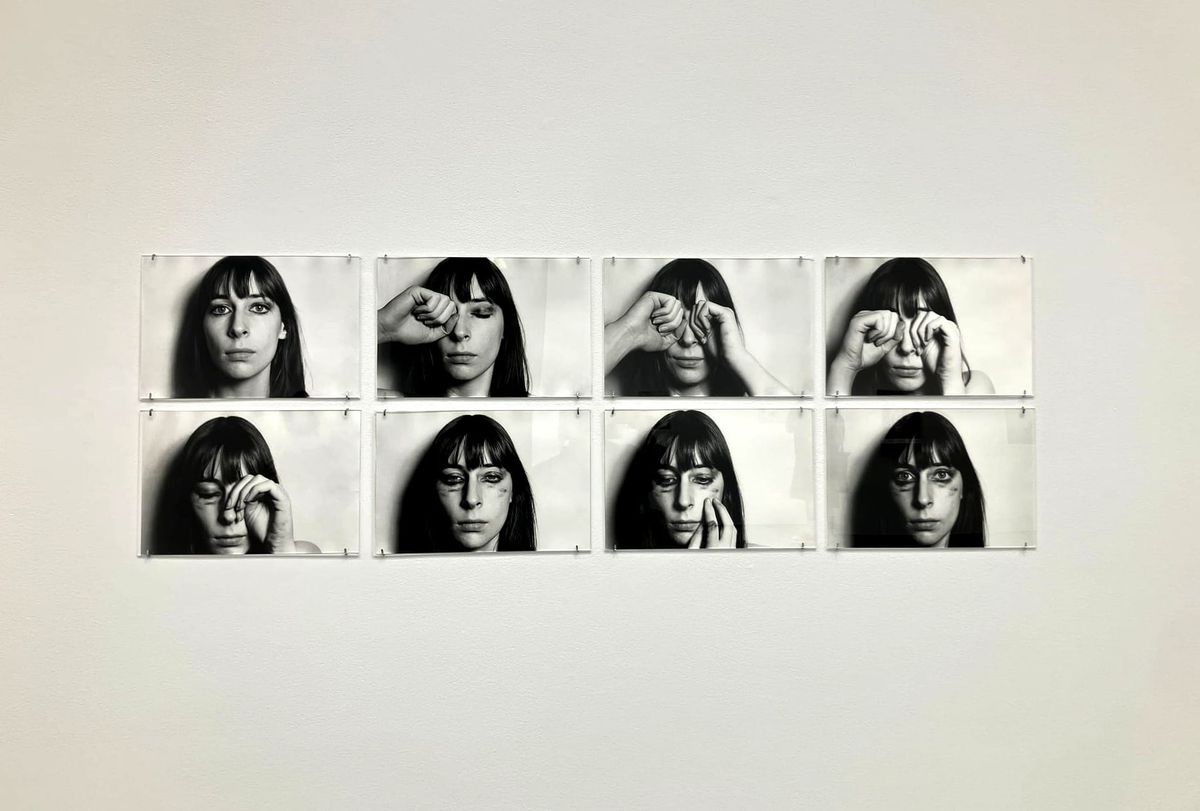
Janice Guy’s work, for instance, exists in a liminal space. By re-printing her 1970s negatives in 2026, the gallery highlights the continuity of the gaze. The technical fidelity of the modern prints does not "fix" the image in time; rather, it amplifies the mystery.
In total, the exhibition features a lean, highly curated selection of pieces. This intentional sparseness serves the "peep show" aesthetic—the fewer the images, the more the viewer is forced to project their own desires onto the voids left between the frames. The curation avoids the didactic, preferring instead to let the visual dissonance of the pieces do the heavy lifting.
Official Perspectives and Critical Discourse
While the gallery has maintained a relatively understated presence, the discourse surrounding the show centers on the subversion of the "decisive moment." Traditionally, photography is heralded for its ability to capture a singular, truthful instant. However, the contributors to Settle for a Good Fantasy reject this.
Critics have noted that the exhibition functions as a critique of the digital age’s obsession with "authenticity." In an era where filters and AI-generated imagery have made the "Truth" of a photograph nearly impossible to verify, the works at Luhring Augustine lean into the artifice. By framing the human body as a landscape of shards and shadows, the artists acknowledge that we are all merely viewing fragments of one another.
"There is a tension here between the intimacy of the subject and the distance of the lens," noted one gallery representative during the opening week. "We are not trying to reveal the subjects. We are trying to reveal the act of looking."

Implications: The Future of Photographic Interpretation
The implications of Settle for a Good Fantasy extend beyond the walls of the Chelsea gallery. The show asks a fundamental question: What remains when we stop demanding that photography tell us the "truth"?
- The Death of the Documentary: The exhibition signals a broader trend in contemporary art where the documentary impulse is being replaced by a more subjective, painterly approach to the camera.
- The Re-evaluation of the Archive: By revisiting works from the 1970s alongside contemporary pieces, the show suggests that the "fantasy" of an image is not tied to the era in which it was captured, but to the psychological state of the viewer.
- The Commodification of Intimacy: The "peep show" framing invites a discussion about how we consume images of the body. By presenting the human form as fragmented, the artists prevent the viewer from objectifying the subject entirely. The lack of context for these bodies forces the viewer to confront their own voyeurism.
Conclusion: The Final Verdict
Settle for a Good Fantasy is a masterful exercise in restraint. It does not provide the viewer with a roadmap or a clear thesis. Instead, it offers a series of visual prompts that invite introspection. Whether through the hyper-real texture of a fruit or the haunting, recurring self-portraiture of Janice Guy, the exhibition succeeds in its primary goal: it makes us realize that our hunger for "Truth" is perhaps less satisfying than the delicious, lingering ache of a well-constructed fantasy.
For those visiting Chelsea, the exhibition serves as a necessary pause. It is a reminder that in the space between what we see and what we imagine, art happens. As the Lebowitz quote suggests, if you stop searching for the cold, hard facts of the image, you might just find something much more interesting: a version of reality that you can live with, and perhaps, one that you can love.
The exhibition remains on view at Luhring Augustine, standing as a testament to the fact that while the camera may be a tool of precision, the photograph itself will always be an instrument of the imagination. In a world saturated with digital certainty, the ambiguity of these silver gelatin prints and archival pigment works feels not just refreshing, but essential. It is a call to look closer, to look longer, and—most importantly—to settle for the beautiful lies that make the truth bearable.
