


The financial landscape of the mid-2020s has been nothing short of extraordinary. For the average investor, the past five years have felt like a rocket ship ride, with the S&P 500 doubling in value and posting a staggering 57% gain in the last two years alone. However, this period of unprecedented prosperity has brought with it a haunting question that looms over every retirement account and index fund: Are we witnessing a genuine economic expansion fueled by revolutionary technology, or are we drifting into the dangerous territory of a speculative bubble?
The Mechanics of Value: Stocks as Rental Properties
To understand the current market, one must strip away the noise of the nightly news and return to the fundamental definition of a stock. At its core, a stock is a fractional ownership interest in a business—a sophisticated, liquid version of a rental property.

When an investor buys a rental house, the value is derived from the net income generated by the tenant. If the sale price of that home skyrockets while the rent remains stagnant, the property has not become more profitable; it has simply become more expensive to acquire. The buyer is paying a premium for the same underlying cash flow.
In the stock market, this relationship is measured by the Price-to-Earnings (P/E) ratio. Since 2019, the market has seen a disconnect between price and profit. While a $100,000 investment in the market five years ago would have grown to over $250,000 today—a 157% return—the actual underlying earnings of those companies have only increased by about 42%. Consequently, the P/E ratio of the market has surged from 20 to 30. Investors are paying significantly more for every dollar of earnings than they were just a few years ago. By the laws of basic finance, this suggests that future returns, as a percentage of portfolio value, are likely to be lower than in the past.

The "Magnificent Seven" and the AI Euphoria
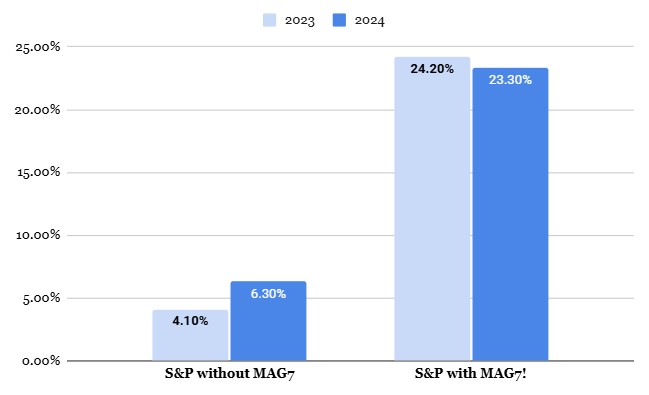
The recent bull market is not a uniform rise across all sectors of the economy. A granular analysis reveals that approximately 75% of the market’s recent growth is attributable to just seven companies: Apple, Nvidia, Microsoft, Amazon, Google, Meta, and Tesla.
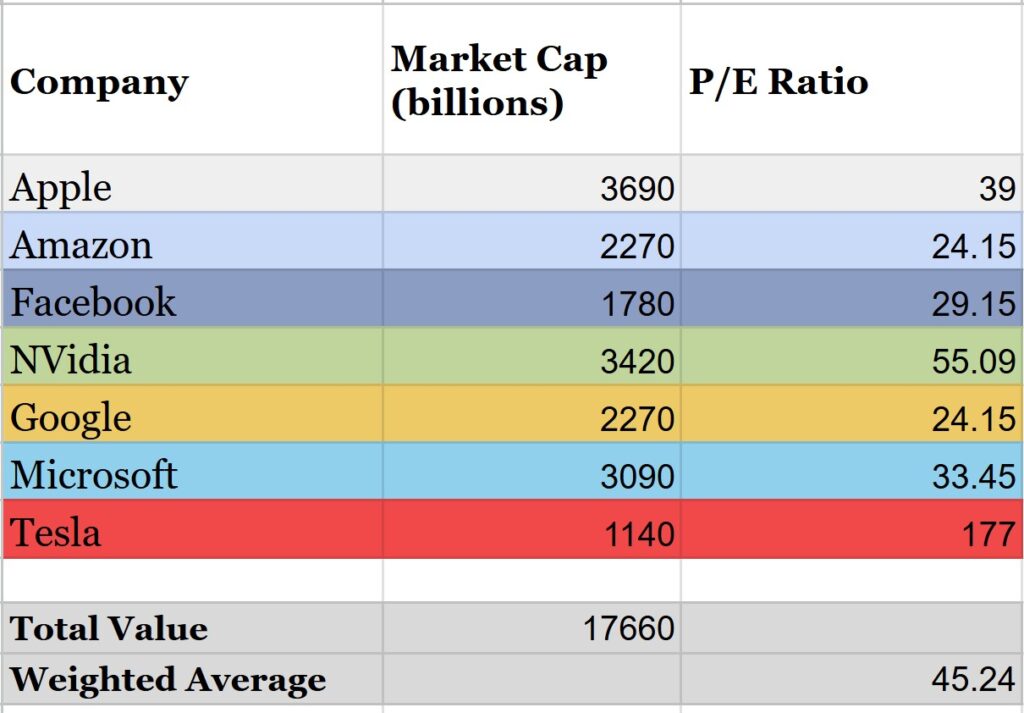
These "Magnificent Seven" entities, which now account for over 25% of the total U.S. market value, trade at an eye-watering average P/E ratio of 45. The driver of this valuation is the pervasive belief that we are on the precipice of an Artificial Intelligence revolution. The logic is simple yet speculative: these companies are pouring hundreds of billions of dollars into massive data centers and specialized hardware, anticipating that AI will eventually function as an "infinite workforce"—a tireless, highly intelligent labor force that will bypass the historical constraints of human productivity.

Whether this scenario manifests as a permanent shift in global GDP or a classic cycle of over-investment remains the primary point of contention for analysts. If these companies can deliver on the promise of increased margins and radical efficiency, the current premiums may be justified. If, however, the "AI gold rush" encounters the same fate as previous tech fads—where high capital expenditure fails to translate into sustained profitability—the correction could be significant.
Chronology of a Market Surge
To contextualize the current environment, one must look at the progression of the last several years:
- 2020-2021 (The Pandemic Shift): The sudden surge in digital consumption led to a boom in remote-work technologies and consumer goods, creating a "pull-forward" effect on demand that many investors mistook for permanent growth.
- 2022 (The Reality Check): Rising inflation and interest rates caused a temporary pullback, as the market grappled with the end of easy-money policies.
- 2023-2024 (The AI Catalyst): The release of advanced Large Language Models sparked a new wave of investor optimism, shifting the focus from pandemic-era trends to the potential for automated productivity.
- 2025 (The Current State): The market currently sits at historically high valuations, with the "Magnificent Seven" leading a rally that masks the more modest performance of the remaining 493 companies in the S&P 500, which trade at a more grounded P/E of 20.
Supporting Data and Vanguard’s Forecast
The disparity between U.S. markets and the rest of the world has reached a notable inflection point. Vanguard, in its ten-year annualized return projections, suggests that international equities and bonds are currently poised to outperform U.S. stocks. The reasoning is rooted in valuation: international markets are currently trading at a P/E ratio of roughly 16, nearly half that of the U.S. market.
While Vanguard has been correct in its theoretical assessment of value for several years, the U.S. market has repeatedly defied these expectations, largely due to the concentration of innovation and capital within domestic borders. This highlights a persistent truth: being "right" about valuations is not the same as being "right" about market timing.
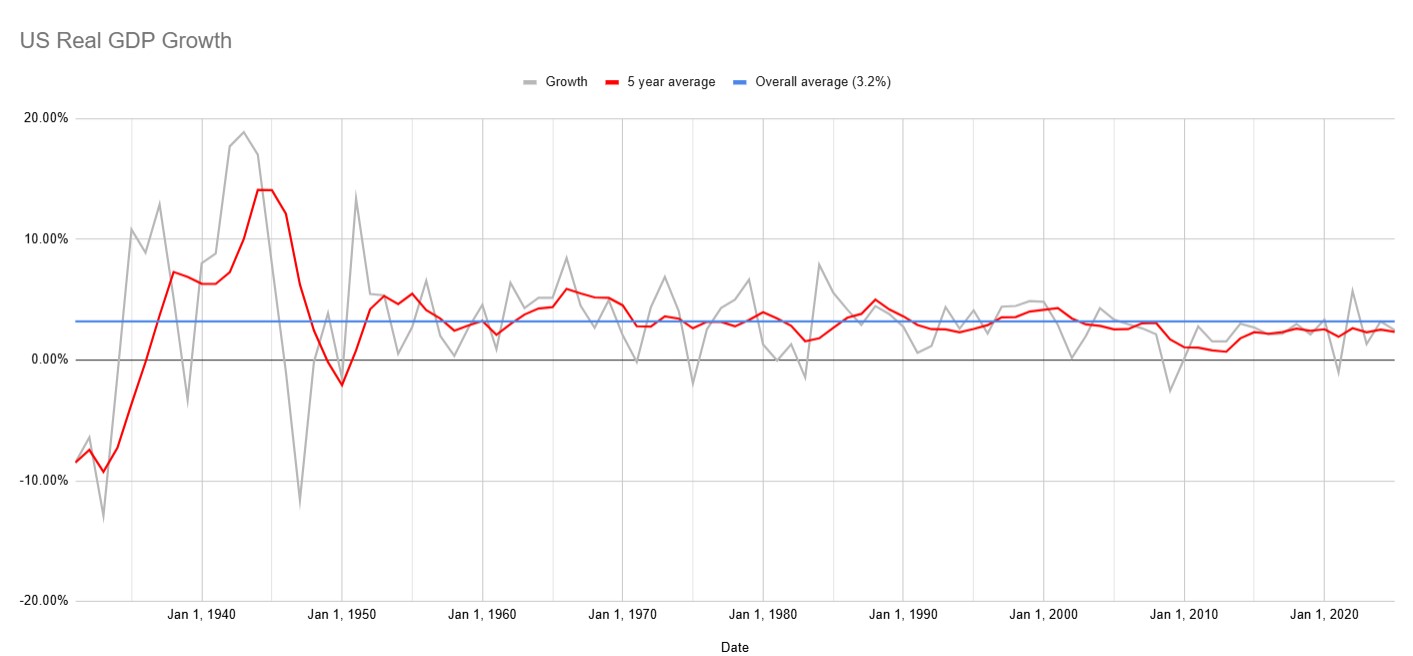
Furthermore, economic data suggests that despite the rapid technological advancement, U.S. GDP growth has remained remarkably steady at approximately 3% per year, adjusted for inflation, over the long term. In fact, recent decades have shown growth rates slightly below this historical average, providing further evidence that current stock prices are driven more by investor sentiment and the promise of future AI-driven expansion than by current tangible economic output.
Official Stance: The "Oracle" Perspective
Even the most seasoned observers are showing caution. Warren Buffett, the chairman of Berkshire Hathaway, has signaled a defensive posture, accumulating a record $334 billion in cash. By refusing to buy back shares or aggressively enter the market at these price levels, the company is effectively stating that the current market environment lacks the "margin of safety" that value investors require. When a long-term bull like Buffett chooses to hold cash, it serves as a powerful indicator that the current market is, by historical standards, priced for perfection.

Implications for the Individual Investor
For the individual, the implications of this high-valuation environment are nuanced.
1. The Trap of Market Timing
Attempting to sell all holdings to "wait for a crash" is rarely a winning strategy. The history of the market shows that missing just a few of the best-performing days can significantly derail long-term compound interest. Even if the market is currently expensive, it remains the most effective engine for wealth creation available to the public.
2. Diversification as a Hedge
The current concentration in tech stocks poses a risk to portfolios that are not well-diversified. Investors relying exclusively on a handful of U.S. tech giants may find themselves vulnerable to sector-specific corrections. Strategies that involve automated rebalancing, such as those used by robo-advisors or index funds that incorporate international exposure, provide a layer of protection against the volatility of a single geographic region or industry.
3. The Mortgage vs. Investment Decision
The traditional advice—to keep a mortgage and invest the surplus—is currently being tested by higher interest rates and lower expected future stock returns. For many, paying off a mortgage acts as a "guaranteed return" at the rate of the loan interest. In an environment where the stock market is priced for lower returns, the psychological and financial stability of being debt-free has gained renewed appeal.
Conclusion: The Path Forward
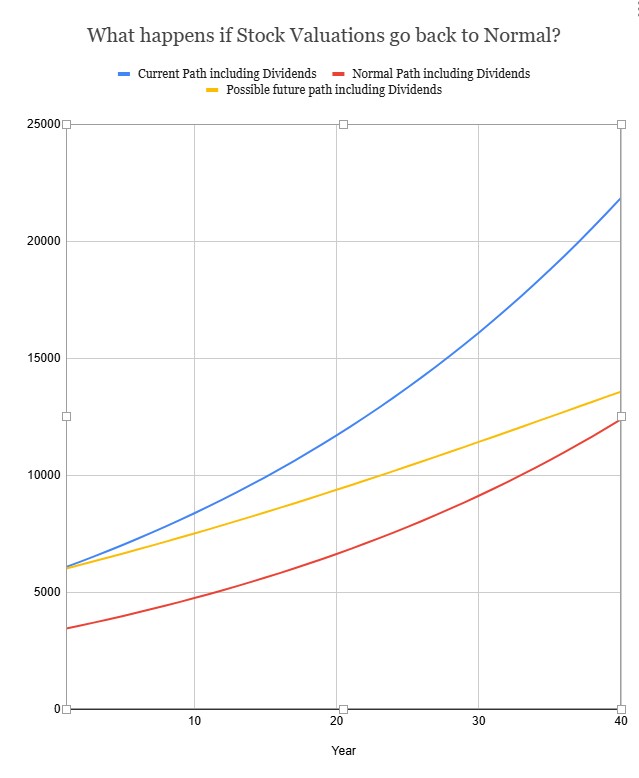
Ultimately, the future of the stock market remains fundamentally unpredictable. While the "blue-sky" scenario of a productivity explosion driven by AI is a plausible path to growth, a more conservative "yellow" path—characterized by slower growth and lower future valuations—is equally possible.
The most prudent approach remains unchanged by the headlines: ignore the daily fluctuations, maintain a consistent investment rhythm, and avoid the trap of speculative mania. True wealth is built on the foundation of boring, disciplined habits rather than the pursuit of the next "magnificent" trend. As the world continues to navigate the complexities of an AI-integrated economy, the most valuable asset an investor can possess is not an algorithm, but the patience to stay the course, and the perspective to realize that a life well-lived in the real world is the ultimate dividend.
