

In the annals of corporate fraud, few figures have captured the public imagination—and invited as much scrutiny—as Elizabeth Holmes. Once the darling of Silicon Valley, the former Theranos CEO saw her world collapse under the weight of her own fabrications. Now, in a striking post-script to her downfall, Holmes has once again placed herself in the spotlight, this time through the lens of directors Lance Oppenheim and Nathan Fielder in the three-hour documentary You Can See Everything.
The film, which has drawn significant attention from critics and audiences alike, poses a persistent, haunting question: What was the motive behind allowing a film crew into her private life during her final month of freedom? As the documentary unfolds, viewers are left to navigate the chasm between the woman seen on screen and the fraudster convicted of orchestrating one of the most audacious deceptions in modern corporate history.
The Premise: A Final Month of Liberty
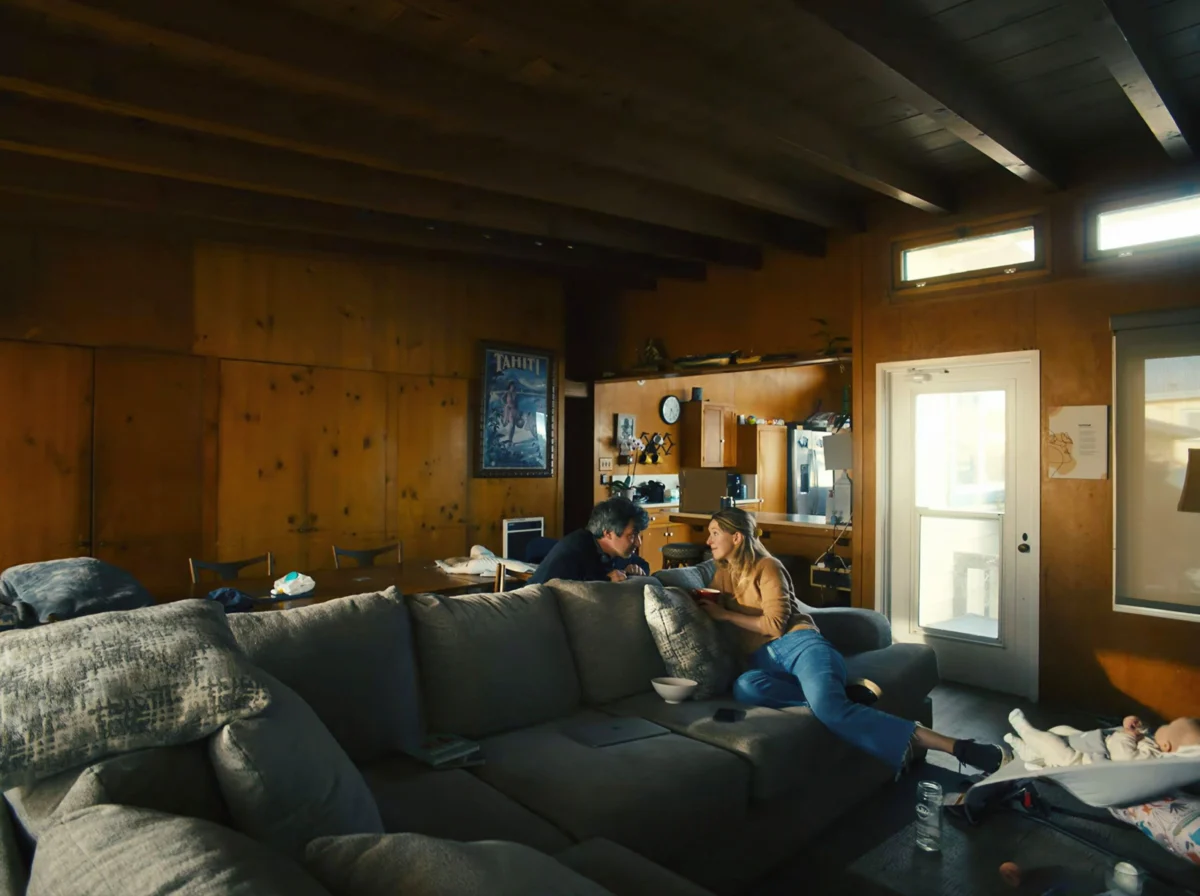
The documentary serves as a fly-on-the-wall observation of Holmes’s final days before reporting to prison to serve her 11-year sentence. Shot in a modest, rented beach house near San Diego, the film depicts a side of Holmes rarely seen during her years at the helm of Theranos. Gone are the trademark black turtlenecks and the calculated, deep-voiced persona that once commanded boardrooms. Instead, the audience is presented with a softer, seemingly domestic version of the disgraced entrepreneur, one who spends her time caring for her children and engaging with her partner, Billy Evans.

However, the "truth" presented in the film remains elusive. Fielder, known for his penchant for psychological tension and meta-commentary, captures a subject who remains steadfast in her narrative of innocence. Throughout the three-hour runtime, Holmes insists she has never told a lie, a claim that stands in direct opposition to the federal findings that led to her conviction.
Chronology of a Curated Life
To understand the significance of the setting in You Can See Everything, one must look at the timeline of Holmes’s residential choices. These choices have frequently served as a mirror for her shifting public image.
2013–2014: The Myth of Austerity
In 2014, when The New Yorker published a profile by Ken Auletta, the article painted a portrait of a CEO living an "austere life" in a two-bedroom Palo Alto condo. The narrative was clear: she was a visionary who sacrificed personal luxury for her mission. The reality, as we now know, was far more opulent. Holmes was living in a sprawling, 9,000-square-foot estate in Atherton, California, alongside her then-partner and Theranos executive, Sunny Balwani. The property, complete with crystal chandeliers and formal gardens, was a testament to the wealth she had accumulated while promising revolutionary technology that did not exist.

2021–2022: The Green Gables Enclave
As the legal walls closed in, Holmes shifted her base of operations. In September 2021, reports surfaced that she and Evans had taken up residence at the historic Green Gables Estate in Woodside. A 74-acre property with a storied past, Green Gables offered the couple a degree of insulation from the outside world. Here, they resided in one of six guest houses while the main mansion, a 10,000-square-foot English country-style home, stood as a symbol of the immense wealth that surrounded her. She remained on the estate throughout her trial, finally departing after her sentencing in November 2022.
2023: The Beach House "Pivot"
The documentary’s setting—a two-bedroom house in Del Mar, California—represents a distinct departure from the grandeur of Green Gables. While the home is located in a high-value zip code (valued at approximately $9 million), it is undeniably "low-key" in comparison to her previous dwellings. This choice of environment acts as a stage, framing Holmes not as a titan of industry, but as a mother and a partner, a narrative that has, for some viewers, rendered her surprisingly sympathetic.
Supporting Data: The Cost of Performance
The juxtaposition between Holmes’s actual lifestyle and the image she projects is a recurring theme in the film. While the documentary portrays her as a woman living a humble life, the financial reality remains complex. The Del Mar rental, despite its "rustic" appearance, is situated in an exclusive area where real estate is at a premium.

The documentary highlights a phenomenon often noted by critics: Holmes’s ability to "blend in." A New York Times profile from May 2023 noted that she appeared to be just another mother in the neighborhood. This performative normalcy is a hallmark of her career. Whether she is in a boardroom or a domestic setting, the architecture of her surroundings is clearly intended to serve a specific purpose: the management of perception.
Official Responses and The "Handler" Dynamic
A significant portion of You Can See Everything is dedicated to the interactions between Holmes and her domestic partner, Billy Evans. Throughout the filming, Evans is seen acting as a protective, if not controlling, presence. He frequently intervenes when interview questions veer into uncomfortable territory, micromanages Holmes’s daily tasks, and appears to actively curate her public-facing image.
This dynamic raises questions about the agency of the subject. Is Holmes a willing participant in this re-branding, or is she being managed by those around her? The film does not provide a definitive answer, but the tension is palpable. When faced with inquiries about her past, Holmes utilizes a combination of vague responses and displays of emotion, which have been described by some analysts as a strategic attempt to deflect accountability.

The Implications: Why Now?
The release of You Can See Everything invites a broader discussion about the nature of the "true crime" genre and the ethics of documenting public figures who have caused real-world harm. By granting such intimate access, what did Holmes hope to achieve?
1. The Erasure of History
By focusing on her life as a mother and a partner, the documentary risks obscuring the victims of the Theranos fraud—the patients who received false medical results and the investors who lost millions. The "softening" of her image through domesticity is a classic public relations move, one that aims to replace the image of the "fraudster" with that of the "wrongfully accused" or "misunderstood."
2. The Power of Space
Architecture, as explored in the film, is rarely neutral. The move from the 74-acre Green Gables to a "relatable" beach cottage is a deliberate aesthetic shift. It aligns with the narrative of a woman who has been "stripped" of her former life, encouraging the audience to focus on her current, more modest circumstances rather than the scale of the deception she orchestrated.

3. The Unreliable Narrator
Nathan Fielder’s involvement adds a layer of irony to the proceedings. Known for highlighting the absurdities of human behavior, Fielder’s presence suggests that the documentary is aware of the manipulation taking place. However, the result is a disquieting viewing experience. The audience is trapped in the same loop as the directors: trying to distinguish between genuine human emotion and the calculated performance of a woman who built an empire on the premise that she could convince anyone of anything.
Conclusion: A Lingering Shadow
As You Can See Everything continues to circulate, it remains a testament to the enduring mystery of Elizabeth Holmes. Whether or not the documentary succeeds in "humanizing" her is secondary to the fact that it succeeds in highlighting her most dangerous asset: the ability to command attention.
In her final month of freedom, Holmes did not choose to disappear. She chose to be filmed, to be observed, and to be the subject of a narrative that she clearly hopes will define her legacy. Whether that legacy is one of a visionary fallen from grace or a master manipulator remains a point of contention. What is clear, however, is that in the architecture of her life—from the grand estates of Woodside to the quiet beach houses of Del Mar—Holmes has always been the one building the walls. And as the documentary proves, she is still trying to decide which version of the truth we should see.
