

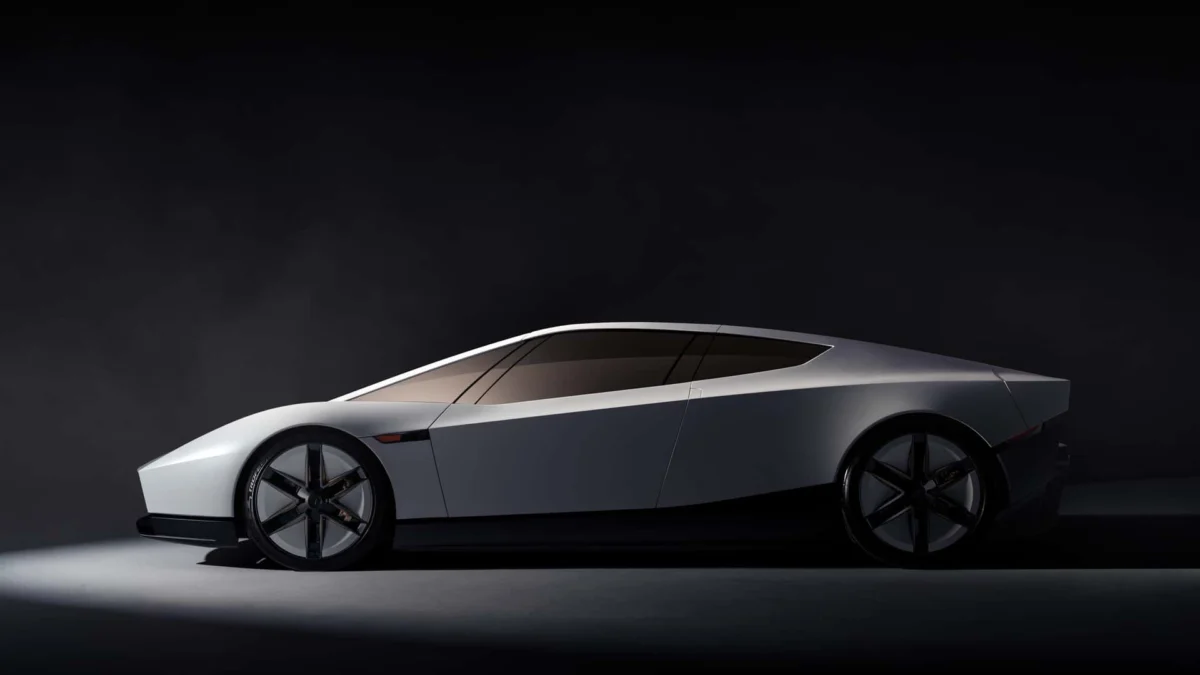
In the hyper-competitive world of automotive engineering, where brand loyalty is often a religion and executive praise for a rival is heresy, Ferrari CEO Benedetto Vigna has broken the mold. In a move that caught industry analysts and enthusiasts off guard, Vigna awarded Tesla’s recently unveiled next-generation Roadster a perfect 10 out of 10 score for both its technological achievement and its daring presentation.
This rare public endorsement, delivered during an industry conference hosted by Quattroruote, signals more than just professional courtesy. It represents a watershed moment where the established masters of Italian performance engineering recognize a paradigm shift occurring in the heart of Texas. As Ferrari navigates its own delicate transition toward electrification, Vigna’s praise highlights an industry-wide realization: the era of the internal combustion engine may be evolving, but the appetite for raw, audacious innovation is more ravenous than ever.
A Spectacle in the Texas Desert: The Anatomy of a Reveal
To understand Vigna’s enthusiasm, one must look at the event that triggered it. Tesla’s reveal of the next-generation Roadster—slated for a 2028 market arrival—was not a traditional press conference. It was a high-octane performance staged at SpaceX’s rocket testing facility near Waco, Texas, a setting that underscored the blurring lines between automotive manufacturing and aerospace engineering.
The demonstration was a masterclass in theatrical engineering. The vehicle, utilizing a proprietary suction fan system, displayed the physics-defying ability to drive up a vertical ramp and remain adhered to the surface while inverted. The climax of the presentation involved the car launching into the air, executing a mid-air rotation, and landing with the assistance of compressed-gas thrusters—technology directly derived from SpaceX’s Falcon 9 rocket hardware.
While skeptics pointed to the ambitious 2028 timeline—a date that follows years of delays and broken promises since the Roadster was first teased—Vigna chose to look past the financial noise and logistical skepticism. For him, the Roadster was not a product delivery update; it was a manifesto. It was an argument that, despite the constraints of modern regulations and the sobering realities of battery weight, the dream of the high-performance sports car is not only alive but capable of evolving into something entirely new.
Chronology of an Ambition: From Concept to Catalyst
The journey of the new Tesla Roadster has been long and circuitous, marked by a series of pivots that mirror the evolution of the electric vehicle (EV) market itself.
- 2017: Tesla first unveils the concept for the new Roadster, promising record-shattering acceleration and a range that challenged every major supercar manufacturer on the planet.
- 2018-2024: The project experiences repeated delays as Tesla prioritizes the mass-market rollout of the Model 3 and Model Y, alongside the development of the Cybertruck.
- May 2026: Ferrari announces the "Luce," its first fully battery-electric vehicle. The market reaction is lukewarm, leading to a dip in share price as investors struggle to reconcile the brand’s V12 heritage with an all-electric future.
- Present Day: Following the successful SpaceX-backed demonstration in Texas, industry leaders like Benedetto Vigna publicly acknowledge that the "old world" of automotive manufacturing must embrace a new level of risk-taking to remain relevant.
This chronology underscores the pressure on heritage brands like Ferrari. While Tesla has spent years building a narrative of disruption, companies like Ferrari have had to carefully balance the preservation of their "Prancing Horse" legacy with the existential necessity of moving toward a zero-emissions future.
Beyond the Stunts: The Philosophy of Collaboration
Perhaps the most significant takeaway from Vigna’s commentary is his appreciation for Tesla’s collaborative approach. Vigna noted that Tesla’s decision to integrate outside design expertise—specifically mentioning the impact of external studios—allowed the Roadster to reach a level of conceptual purity that might have been impossible within the insular echo chamber of a single company.
"If we had worked on our own, we would not have done what we did," Vigna admitted, referring to Ferrari’s own development of the Luce. Ferrari’s partnership with Jony Ive’s design studio, LoveFrom, was a strategic attempt to force the company to confront uncomfortable questions regarding what a "Ferrari" can be when it is stripped of the visceral roar of an engine.
Vigna’s endorsement of the Roadster is, by extension, an endorsement of the process of "creative friction." By bringing in outsiders, both Tesla and Ferrari are attempting to insulate themselves against the complacency that often plagues legacy firms. When a company as steeped in tradition as Ferrari looks to a disruptor like Tesla and finds a blueprint for innovation, it signals that the barriers between Silicon Valley tech firms and Italian luxury houses are dissolving.
The Industry’s Appetite for Risk
Vigna’s comment, "As a European, thank you for showing us how that, even in an old world, you can still innovate and dare," serves as a poignant reminder of the current state of the automotive sector. The European market, governed by strict emissions mandates and a conservative design ethos, has often been criticized for playing it safe.
The "Roadster effect" is now forcing a conversation about risk. If Tesla can use rocket thrusters to turn a car into a stunt vehicle, what is the ceiling for the next generation of supercars? For Ferrari, the path forward involves more than just swapping fuel injectors for battery cells; it involves re-imagining the experience of the drive.
Vigna’s decision to emphasize the importance of "dreaming" suggests that he believes the industry has become too focused on the mechanics of the energy transition and not enough on the emotional resonance of the product. The Roadster, with its theatrical, almost cartoonish physics, is a reminder that people buy sports cars not just for their efficiency, but for the thrill of the impossible.
Implications for the Future of Performance
What does a 10/10 from the head of Ferrari mean for the broader market?
First, it validates the "Performance EV" segment. For years, EVs were viewed as the utilitarian antithesis of the supercar. With the Roadster and the impending launch of various high-end electric coupes, that perception is shifting. The instant torque of electric motors provides a performance floor that even the most advanced combustion engines struggle to match.
Second, it pressures the supply chain and R&D departments of other luxury marques. When the CEO of Ferrari praises a competitor’s engineering, it sets a standard. Competitors must now answer a simple question: If Ferrari sees the Roadster as a gold standard, how do our current projects stack up in terms of "daring" and "innovation"?
Finally, it marks a shift in how legacy CEOs communicate. By stepping outside the corporate script and providing a candid, subjective critique, Vigna is attempting to project a sense of confidence and openness. He is signaling that Ferrari is not afraid of the competition; rather, he is energized by it.
Conclusion: Keeping the Dream Alive
As the automotive industry stands on the precipice of a full-scale electrification, the voices of its leaders carry significant weight. When that voice belongs to the man at the helm of Ferrari, and the subject is a radical machine from the mind of Elon Musk, the implications are profound.
Benedetto Vigna’s perfect score for the Tesla Roadster is not just about a fan system or a set of thrusters; it is a tribute to the spirit of invention. In a world where the regulations are getting tighter and the paths are becoming more standardized, Vigna’s words serve as a challenge to the entire industry.
"We have to keep dreaming," he stated. As the industry moves toward 2028 and beyond, the companies that succeed will be those that find the middle ground between the cold, calculated efficiency of the electric powertrain and the wild, untamed spirit of the internal combustion era. If the Tesla Roadster is the benchmark, the next decade of performance motoring promises to be the most daring in history.
