

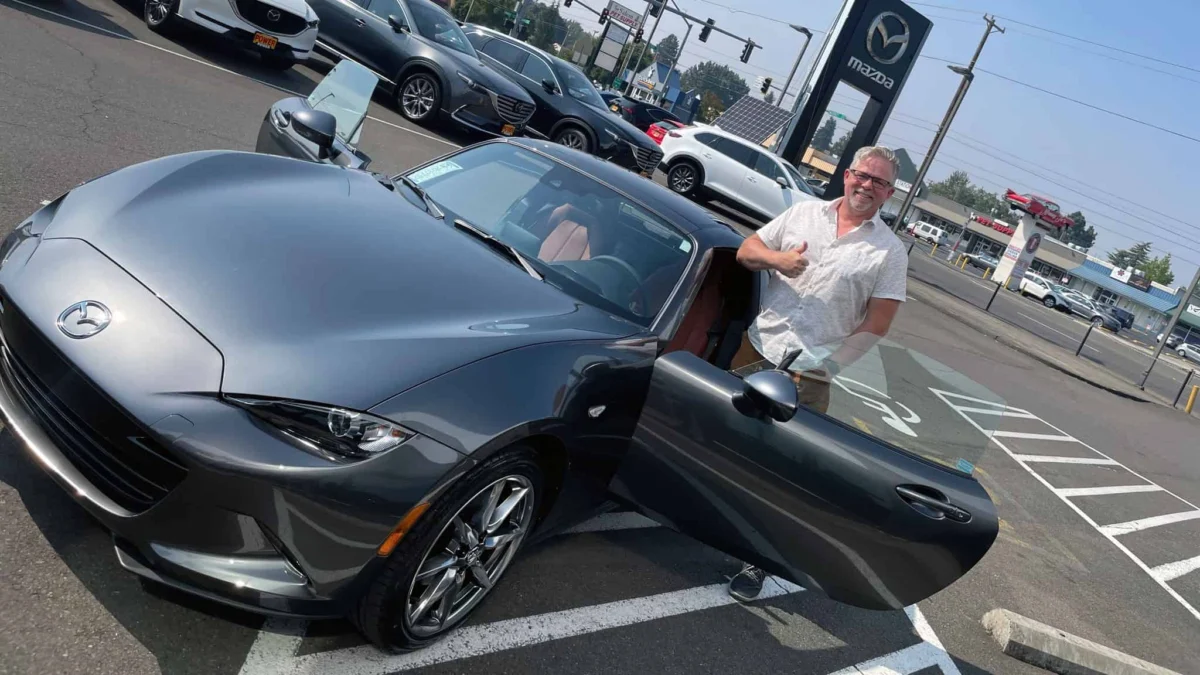
At 53, I have spent a lifetime adhering to the pragmatic gospel of personal finance. I have meticulously tracked my expenses, invested for the long term, and—crucially—always prioritized function over form. I have lived my life in the shadow of compromise, driving vehicles that made sense on a spreadsheet but left me cold in the driveway.
That changed last month. In an uncharacteristic, whirlwind decision, I did something I had never allowed myself to do: I bought a car simply because I loved it. This is the chronicle of how an accidental windfall in a volatile used-car market transformed into a masterclass in "conscious spending," proving that even the most frugal among us deserve to invest in the joy of the present.
The "Maxi Cooper" Mistake
The story begins in the heat of the pandemic. In July 2020, searching for a successor to my aging 2004 Mini Cooper, I found myself steered away from my instincts by the siren call of practicality. I settled on a 2019 Mini Countryman SE All4, a vehicle I quickly dubbed the "Maxi Cooper."
I paid $35,990 for the privilege. It was a perfectly competent compact SUV, but it was fundamentally the wrong car for me. I am, and have always been, a "small-car guy." For 26 months, I drove the Maxi Cooper with a sense of lingering, quiet resignation. It was a vehicle of compromise—a decision made to satisfy a perceived need for utility rather than a genuine desire for the driving experience.
The Market Anomaly: A Financial Miracle
The turning point arrived with a routine maintenance visit. While my Countryman was in the shop for an oil change, the dealer approached me with a buy-back offer. In the current economic climate, the U.S. automotive market has been turned on its head. According to the Federal Reserve, used-vehicle prices have surged by a staggering 55% since July 2020. Even new car prices have climbed by roughly 18% during the same window.
When the dealership offered me $33,000 for a car I had owned for over two years, the math was impossible to ignore. I reached out to a trusted contact—a veteran of the automotive sales industry named Jeremy—to verify my sanity.
"It’s not just a good deal," Jeremy told me. "It’s a miracle. It’s as if you leased that car for $115 per month. You should take the offer. Now. Before they change their mind."
The logic was undeniable. The depreciation that typically eviscerates the value of a new vehicle purchase had been effectively nullified by a supply-chain-induced shortage of computer chips and widespread inflation. The "frugal" move was no longer holding onto the car—it was selling it while the market was at its zenith.
The Philosophy of "Self-Centered Shopping"
With the sale finalized, I found myself in an unfamiliar position: carless and in the market for a replacement. For the first time in my life, I decided to apply my "self-centered shopping" strategy—a method of filtering purchases through the lens of personal satisfaction rather than societal pressure or "rational" utility.
I considered several options: going entirely car-free, as I live in a walkable city with decent infrastructure, or simply hunting for another 2004 Mini Cooper. However, I realized that I didn’t want to settle for the past. I wanted to see if I could find a vehicle that balanced modern engineering with the visceral, small-car spirit I had been missing for over two years.
My search criteria were specific:
- Size: Small and agile.
- Reliability: High marks for long-term ownership.
- Joy Factor: A machine that offered an engaging, tactile driving experience.
After consulting Consumer Reports and various automotive benchmarks, a clear frontrunner emerged: the Mazda MX-5 Miata. While the Tesla Model 3, Hyundai Ioniq 5, and Kia Niro Electric were technically impressive, they lacked the specific "fun-to-dollar" ratio I craved. The Miata, conversely, was consistently cited as one of the last truly intimate driving experiences on the market.
The Case for the Impractical
The Miata is, by traditional metrics, a terrible car. It seats two, the cabin is tight, the trunk space is negligible, and it is notoriously loud at highway speeds. Yet, as the Consumer Reports evaluation noted: "There isn’t a better fun-per-dollar performance car on the market that delivers the Miata’s magic."
I stopped looking for reasons to justify the purchase and started looking for reasons to decline it. I couldn’t find any. Even the YouTube reviews confirmed my suspicion: this was a car that would "bring joy to your heart every time you drive it."
The Dealership Experience: Standing My Ground
On a Thursday in August, I traveled to a dealership in Salem, Oregon. I was prepared to negotiate. When I arrived, the salesperson attempted the classic "four-square" negotiation tactic, trying to push me into a car currently on the lot.
I stood my ground. "You don’t have the car I want," I told him, pointing to a specific gray hardtop model in transit. I wasn’t looking for a deal on the lot’s inventory; I was looking for the right tool for the job.
We eventually agreed on a price of $39,245—a figure that included a market-adjustment markup I found acceptable given the vehicle’s rarity and my desire to avoid further compromise. I walked away without signing a single piece of paper, waiting for the exact configuration I desired.
The Reality Check: Is it "Rich Life" or Reckless?
Before committing, I had to address the guilt associated with spending $40,000 on a vehicle. I asked myself the fundamental question: Would I rather have the 2019 Maxi Cooper plus $7,000 in cash, or a brand-new 2022 Mazda Miata?
The answer was immediate and unequivocal: the Miata.
I sought the counsel of peers in the personal finance space, such as "The Happy Philosopher," and discussed it with my partner, Kim. Both provided the same validation: this wasn’t a reckless emotional outburst; it was a calculated indulgence. I realized that my childhood spent in poverty had conditioned me to view all spending as a moral failure. But as Ramit Sethi often preaches, the goal of accumulating money is not to hoard it, but to build a "Rich Life." For me, the Miata represented the freedom to finally stop compromising on my own happiness.
Implications: The Joy of the Open Road
When the car finally arrived, it had only five miles on the odometer. As I drove from Salem back to Corvallis, traversing winding riverside roads with the top down, the logic of the decision became crystal clear.
The Miata isn’t just a car; it is a catalyst for engagement. It forces the driver to be present. In a world of autonomous features and bloated, disconnected SUVs, the Miata is an anomaly—a machine that asks you to participate in the act of driving.
This purchase serves as a reminder that financial independence is not merely about the absence of debt or the size of a portfolio; it is about the capacity to make choices that align with your values. I spent 53 years being the "smart" buyer. I am delighted that I finally decided to be the "happy" one. The Miata is, and will remain, an essential component of my rich life—a tangible reminder that while money can’t buy happiness, it can certainly buy a very well-engineered path to it.
