

Beneath the rolling Pacific swells off the California coast lies a realm of startling biological complexity. In the kelp forests surrounding the Channel Islands, sheephead fish—striking in their vibrant patterns of crimson and obsidian—dart through amber-colored stalks, while giant sea bass, some reaching the size of industrial refrigerators, drift through the currents like ancient sentinels. Here, seals and sea lions weave through intricate tapestries of sponges and sea stars, a display of biodiversity that UC Santa Barbara marine scientist Doug McCauley calls “our Galapagos in California.”
However, this current vibrancy is not a historical constant. It is a hard-won victory of policy and restoration. As the state approaches a pivotal decision regarding its Marine Protected Area (MPA) network, the conversation has shifted from mere preservation to a more profound vision of stewardship: one that bridges the gap between modern conservation science and ancient indigenous knowledge.
The Evolution of the Ocean’s "State Parks"
The state of California’s marine environment was not always so resilient. Violet Sage Walker, chair of the Northern Chumash Tribal Council, recalls haunting archival footage of the Channel Islands captured prior to the implementation of modern protections. In that era, the cumulative weight of intensive, unregulated commercial fishing had stripped the kelp forests bare, leaving a barren, monochromatic seabed.
“It looked like Mars,” Walker says, describing the decimated landscape. “It was a dead planet.”
The turning point arrived in 2003, when the state began designating Marine Protected Areas (MPAs). Functioning much like terrestrial state parks, these zones impose restrictions on extractive activities such as commercial fishing, industrial oil and gas drilling, and other seafloor disturbances. Today, roughly 150 square miles of protected waters serve as vital nurseries for juvenile fish and sanctuaries for iconic species, including rockfish, leopard sharks, and kelp bass.
Now, for the first time in 15 years, the state is undergoing a comprehensive review of its MPA network. This review process, which culminates in crucial votes by the California Fish and Game Commission scheduled for October 14–16, represents a rare, historic opportunity to expand these protections into new, high-value ecological corridors.
Chronology of a Conservation Movement
The trajectory of California’s marine policy has been defined by a shift from reactive management to proactive stewardship:
- Pre-2003: An era of unregulated extraction leads to the collapse of kelp forest ecosystems and the decline of apex predators and key habitat-forming species.
- 2003–2010: The establishment of the first network of California MPAs. This period marks the beginning of a long-term recovery for the Channel Islands.
- 2012–2021: Ongoing monitoring confirms that MPAs are working. Research, including a 2021 study, demonstrates that these zones act as "spillover" centers, increasing catch rates for lobster and fish in adjacent, non-protected fishing grounds.
- 2025–2026: The state initiates its first decadal review of the entire MPA network.
- October 2026: The California Fish and Game Commission holds final hearings to determine the fate of new proposed sites, including Point Sal and Mishopshno.
Data-Driven Resilience: Why MPAs Work
The scientific consensus regarding the efficacy of MPAs is increasingly robust. According to Sandy Aylesworth, director of the Pacific Initiative at the Natural Resources Defense Council (NRDC), the mechanism is simple: when you remove the stressors of industrial disturbance, the ecosystem demonstrates an innate, powerful capacity for regeneration.
“In areas where these disturbances are removed, you consistently see larger fish, more abundant wildlife, and a healthier, more complex habitat,” Aylesworth explains.
Data support this. In southern California, MPAs have not only bolstered biodiversity within their borders but have also acted as an economic catalyst for local fisheries. The 2021 study highlighting a 225% increase in lobster catches in areas surrounding specific MPAs debunks the long-standing myth that conservation is inherently detrimental to the commercial fishing industry. Instead, these protected zones serve as "biological banks," where fish populations reach maturity, reproduce, and naturally migrate into surrounding waters, replenishing the stocks that humans rely upon.
Tribal Stewardship: A New Paradigm
Perhaps the most significant development in this current review cycle is the active leadership of California Tribes. The proposed Point Sal and Mishopshno State Marine Conservation Areas are the first to be co-sponsored by Tribal nations—specifically the Northern Chumash Tribal Council and the Santa Ynez Band of Chumash Indians—in formal collaboration with groups like the NRDC and the Environmental Defense Center.
This collaboration is not merely symbolic; it is a long-overdue recognition of 10,000 years of indigenous management. Tribal leaders are pushing for a framework that goes beyond simple "no-take" zones, advocating for a system of co-management. This would allow for the continuation of traditional cultural practices while leveraging indigenous ecological knowledge to combat climate change and coastal erosion.
“Being able to reconnect and offer our vision and our help with dealing with climate resiliency and coastal stewardship is critical,” says Walker. For the Chumash, these waters are not just biological zones; they are ancestral homelands, dotted with submerged village sites that connect the present to a deep, storied past.
Case Studies: Point Sal and Mishopshno
The two proposed sites illustrate why these specific locations are worth the political and logistical effort to protect.
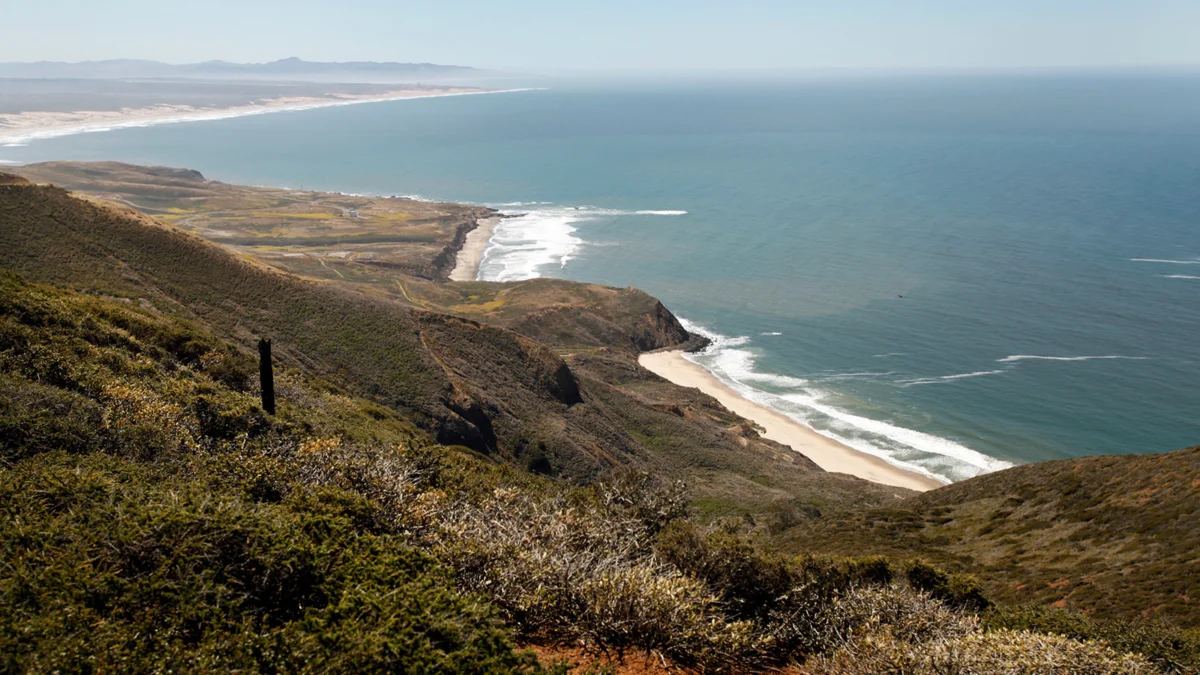
Point Sal: Located off the coast of Santa Barbara County, this nine-square-mile area acts as a natural shelter. A jagged headland protects the southern waters from harsh winds, creating a serene environment where fish larvae can linger and mature in safety. The area is a hub of biodiversity, with scientists documenting over 880 sea lions on a single day. It is, in the words of Walker, a “little tiny paradise.”
Mishopshno: Near Carpinteria, this site represents an unusual, high-value convergence of habitats. A 1.6-mile rocky reef sustains one of the most resilient kelp forests on the Central Coast. Adjacent to this are protected salt marshes and sandy-bottom nurseries that provide a critical lifeline for juvenile white sharks and bat rays.
Carlos Gauna, a renowned shark researcher and filmmaker, has spent thousands of hours documenting the waters of Mishopshno. He describes the area as a global anomaly. “I live and breathe sharks daily, and this is one of the most amazing spots in the world to see a great white shark,” he says. Gauna notes that the area is currently plagued by illegal fishing and recreational harassment, including jet skis that intentionally strike wildlife. He argues that MPA status would provide the legal framework necessary to deter these activities, transforming the area from a chaotic, vulnerable site into a true refuge.
The Implications of the October Vote
As the Fish and Game Commission prepares for its final deliberations, the atmosphere is one of both urgency and optimism. With public support for these protections polling at roughly 70%, the mandate from the electorate is clear: Californians value their coastal heritage and are willing to defend it.
The implications of this decision extend far beyond the state’s borders. At a time when federal-level environmental protections are facing significant headwinds and regulatory rollbacks, California has the chance to set a standard for regional ocean governance. As Doug McCauley points out, this is a "historic opportunity" that is unlikely to reappear for another decade, given the ten-year cycle of the MPA review process.
The debate is not without opposition. A vocal minority representing certain fishing interests has raised concerns regarding the restriction of access. However, the scientific evidence consistently suggests that the long-term benefits of a healthy, functioning ocean outweigh the short-term gains of unrestricted extraction.
Conclusion: Healing the Horizon
The story of California’s marine protections is, at its core, a story of redemption. It is a narrative that acknowledges past mistakes—the "dead planet" of the pre-protection era—and chooses a path of active, restorative stewardship.
As the October 2026 deadline approaches, the decision rests on whether the state will choose to prioritize the long-term health of its underwater ecosystems or succumb to the pressures of the status quo. For those leading the charge, like Violet Sage Walker, the path forward is clear.
“The ocean, given the opportunity, will thrive,” Walker says, looking out at the Pacific. “But we have to give it the space and the time to heal itself.”
The upcoming vote is more than a bureaucratic milestone; it is a fundamental test of the state’s commitment to its own natural identity. By embracing the leadership of California’s Tribes and listening to the data provided by decades of scientific research, the state has the chance to secure a legacy of abundance, ensuring that the "Galapagos of California" continues to bloom for generations to come.
