

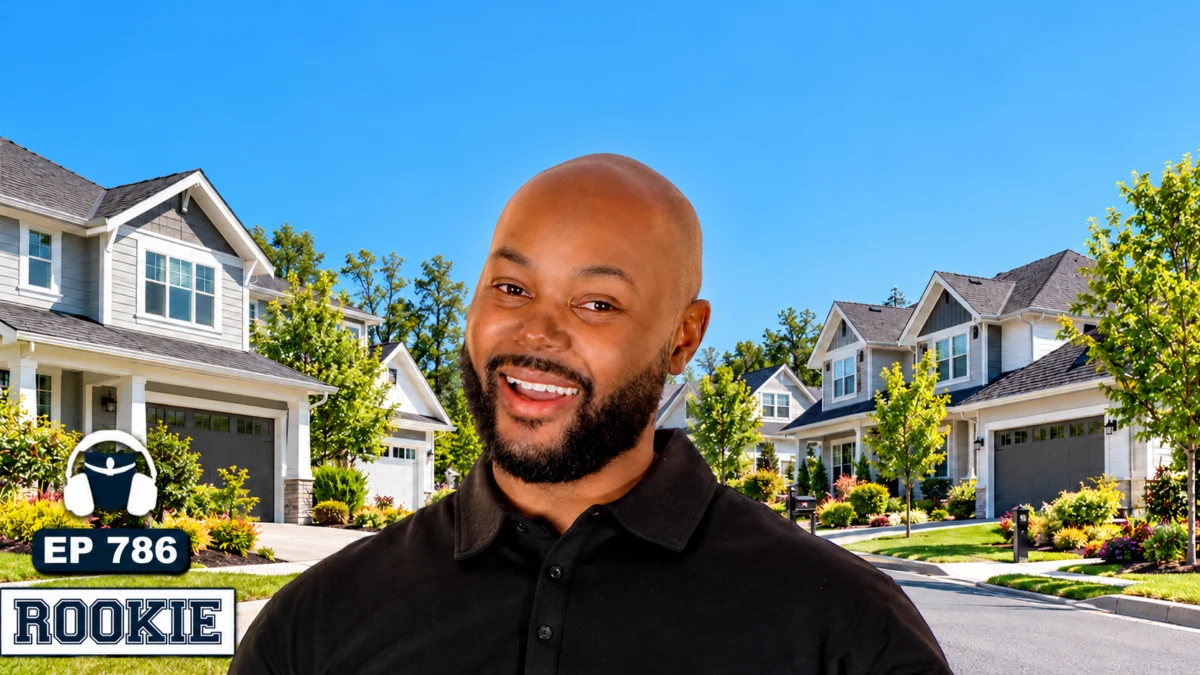
In an era defined by fluctuating interest rates and economic uncertainty, the dream of achieving financial independence through real estate remains a compelling objective for millions. However, for the aspiring investor, the barrier to entry often feels insurmountable. Many potential investors ask the same fundamental question: "If I had to start over today—with minimal capital and zero experience—how would I do it differently?"
The hosts of the Real Estate Rookie podcast, Ashley and Tony, have spent years interviewing hundreds of successful investors while scaling their own portfolios to replace their traditional incomes. By synthesizing these experiences, they have developed a definitive, seven-step framework designed to help beginners navigate the current market landscape with greater speed, intelligence, and efficiency than those who came before them.
The Core Philosophy: Shifting from Theory to Action
The fundamental premise of the Rookie framework is that real estate success is not reserved for the elite or the ultra-wealthy. Instead, it is a repeatable process rooted in strategy, networking, and discipline. The journey begins long before a potential investor ever submits their first offer. It starts with a shift in mindset: moving away from passive consumption of content toward active, intentional engagement with the market.
A Seven-Step Chronology for Modern Investing
The roadmap to building a portfolio is divided into three distinct phases: the setup, the strategic execution, and the streamlining process.
Phase I: The Setup
1. Get Into the Right Rooms:
Success in real estate is rarely a solitary endeavor. Many beginners isolate themselves by consuming content alone—at the gym, in the car, or at home. While knowledge is essential, it does not replace the confidence gained by meeting people who are already successfully executing the strategies you wish to pursue. Whether through local meetups, conferences, or digital communities like the BiggerPockets forums, the goal is to immerse yourself in an ecosystem of practitioners.
2. Providing Value Before Asking for Help:
A common pitfall for rookies is entering a network solely to request favors. Instead, investors should lead with value. Even those with "no experience" possess professional skills that are highly coveted by seasoned investors. Whether it is project management expertise, social media savvy, or simply the gift of time—such as handling site photography or running errands to job sites—every individual has a contribution that can serve as a catalyst for a partnership.
3. Leveraging Partnerships to Accelerate Growth:
For those lacking capital or confidence, partnering with a seasoned investor is a "force multiplier." By bringing sweat equity—such as property management or deal sourcing—to the table, a rookie can trade labor for the guidance and financial backing of an experienced mentor. This not only mitigates risk but also provides a "real-world" education that is impossible to replicate in a classroom.
Phase II: Strategic Execution
4. Defining a Focused Strategy:
One of the most common errors is a lack of focus. Whether it is flipping, short-term rentals, or long-term buy-and-holds, trying to do everything leads to doing nothing well. Investors must align their strategy with their unique personality and resources. For some, the high-touch service required for short-term rentals is a perfect fit; for others, the systems-based approach of long-term rentals is more sustainable.
5. Sourcing Undervalued Deals:
The mantra "you make money when you buy" holds as true in 2027 as it did a decade ago. While many investors dismiss the Multiple Listing Service (MLS), it remains a primary source for deals. The key is to look past the listing and understand the seller’s motivation. Investors should look for properties that have been sitting on the market, properties with deferred maintenance, or even homes that are mispriced due to poor marketing. Beyond the MLS, direct-mail campaigns and networking with wholesalers offer alternative, off-market pathways to acquisition.
Phase III: Streamlining for Scale
6. Documenting Systems and Processes:
Scaling is impossible without standardized operations. From the moment the first property is acquired, every step—from the initial walkthrough and rehab checklist to the tenant screening and property management protocols—must be documented. Utilizing software for bookkeeping and maintenance requests ensures that when the time comes to add the second, third, or fourth property, the investor is not reinventing the wheel.
7. Contributing to the Ecosystem:
The final step is the act of giving back. By sharing knowledge, hosting local meetups, or creating resources for others, the investor becomes a "linchpin" in their local market. This creates a reciprocal loop where opportunities are brought to you by others in your network, ensuring a steady pipeline of deals and connections.
Supporting Data and Market Insights
Market volatility often serves as a psychological barrier, yet data consistently shows that the most successful investors are those who remain active during all market cycles. Analysis of property sales suggests that price fluctuations are rarely uniform; in any given market, specific asset classes (like small multifamily duplexes) may be stagnant while others (like single-family homes) are seeing bidding wars.
For example, recent observations show that while some properties sell above asking price due to emotional competition, others in the same neighborhood may languish because of poor positioning. Savvy investors use this information to make "low-ball" offers on neglected properties, essentially finding value where others see only frustration.
Expert Perspectives on Modern Challenges
When addressing concerns about high interest rates or inventory shortages, the consensus among veteran investors is clear: do not take advice from people who have not achieved the goals you are chasing. There is always a contingent of "doom and gloom" observers, but real estate is a long-term play.
The Real Estate Rookie approach emphasizes that there is never a "perfect" time to enter the market. The best time to start is when the individual is prepared. By focusing on fundamental metrics—cash flow, debt coverage ratios, and conservative rehab estimates—the macroeconomic environment becomes secondary to the quality of the individual deal.
Implications for the Aspiring Investor
The implications of this framework are twofold. First, it democratizes wealth-building; by emphasizing skill-based partnerships, the barrier of "lack of money" is effectively removed. Second, it shifts the focus from "getting rich quick" to "building a sustainable business."
The transition from a single rental property to a scalable portfolio requires a shift in identity: from a consumer of information to an operator of assets. The Real Estate Rookie model suggests that by starting with a disciplined approach—getting in the right rooms, finding a specific niche, and documenting every process—anyone can build a foundation for generational wealth.
Conclusion: The Path Forward
The path to financial freedom is rarely a straight line, but it is a paved one. For those looking to launch their portfolios in 2027, the tools, resources, and community support available are greater than at any point in history. By following this seven-step plan, investors can avoid the costly mistakes of their predecessors, accelerate their learning curve, and ultimately transition from rookie to seasoned investor.
The market does not wait for the perfect moment. It waits for those prepared to act. As the saying goes, the best day to buy real estate was yesterday; the second best day is today. Whether through an online forum, a local meetup, or a direct-mail campaign, the first step is simply to begin.
