

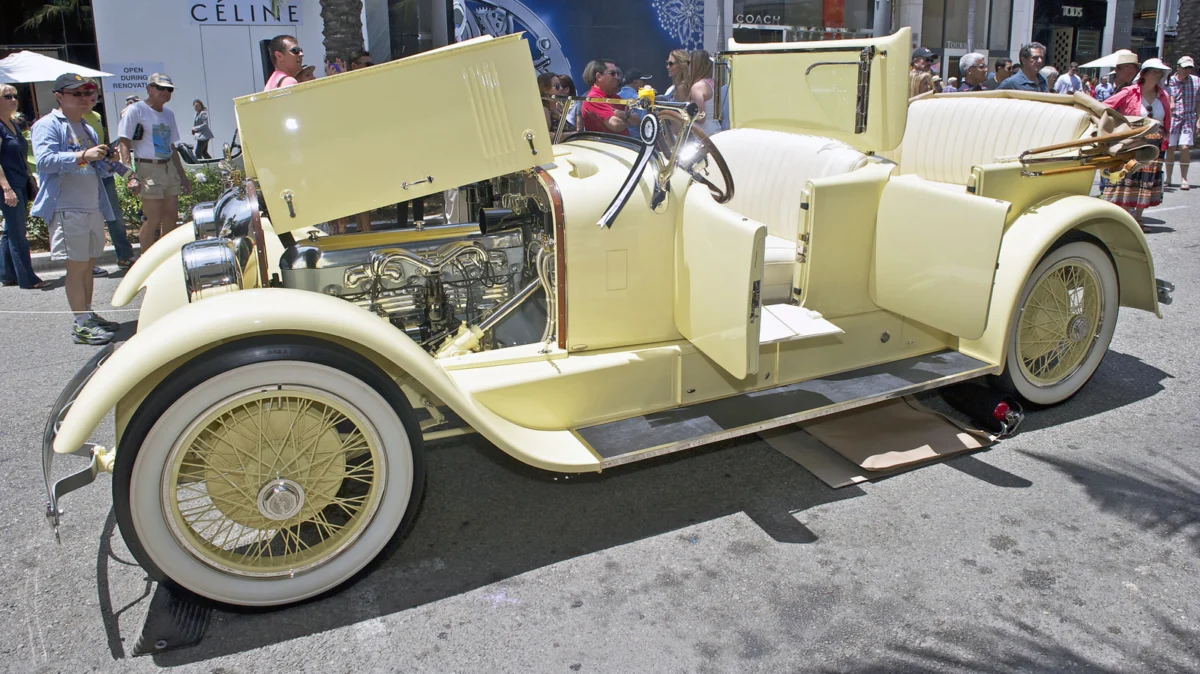
In the pantheon of automotive history, few names carry the weight of "Duesenberg." To enthusiasts, the name evokes images of opulence, straight-eight engines, and the roaring ambition of the Jazz Age. However, beneath the elegant coachwork and the prestige of the Model A, there lies a foundational contribution to human safety that changed the trajectory of the motorcar forever: the mass-market implementation of four-wheel hydraulic brakes.
While the Duesenberg brothers, Fred and August, are often remembered for their luxurious passenger cars that could outrun the law, their engineering prowess was honed on the dust and grit of early 20th-century racetracks. By bridging the gap between experimental racing technology and reliable production-line manufacturing, Duesenberg did more than build a car; they provided the world with the stopping power necessary to match the increasing velocity of the modern era.
The Genesis of an Engineering Dynasty
Born in Germany in the late 1870s, Frederick (Fred) and August (Augie) Duesenberg arrived in America with little more than a keen mechanical aptitude and a drive to innovate. After settling in Iowa around 1903, the brothers established a modest garage. It was here, far from the polished boardrooms of Detroit, that they began their journey by modifying and racing automobiles.
Their reputation grew organically, rooted in a "hands-on" engineering philosophy. By the time the world was engulfed in the fires of World War I, the Duesenbergs had cemented their status as elite engine designers. Their work on aircraft and marine motors for the military sharpened their expertise in precision manufacturing. By the time they relocated to New Jersey—a state that would become the crucible for their most famous creations—they were ready to debut their signature straight-eight engine.
Chronology: The Path to the Model A
To understand the impact of the Duesenberg braking system, one must view the timeline of their success in the 1920s:
- 1913: The seeds of four-wheel braking are planted elsewhere, as Henri Perrot secures a U.S. patent for a four-wheel mechanical brake system on the Argyll 15 HP.
- 1915: Knox Motors begins experimenting with hydraulic brakes on the rear wheels of commercial fire trucks, demonstrating the potential for fluid-based pressure.
- 1917: Malcolm Loughead patents a four-wheel hydraulic system, though production applications remain elusive for several years.
- 1920: Fred Duesenberg files the patents for his revolutionary four-wheel hydraulic-brake system.
- 1921: The Duesenberg Model A enters production, officially becoming the first passenger car in history to feature four-wheel hydraulic brakes as a standard, reliable system.
- 1921 (June): A Duesenberg racer, driven by Jimmy Murphy, dominates the French Grand Prix at Le Mans, proving the efficacy of their engineering on the world’s most demanding stages.
Engineering Excellence: The Duesenberg Difference
While the Duesenberg brothers did not "invent" the concept of hydraulics, they were the first to master its application in a way that was both commercially viable and mechanically superior.
Internal vs. External Systems
A critical distinction in this era of automotive engineering was the method of friction. Malcolm Loughead’s early hydraulic designs relied on external contracting bands—a system that tightened a friction band around the outside of a drum. These systems were prone to debris ingestion, overheating, and rapid wear, ultimately proving to be an automotive "dead end."
In stark contrast, Duesenberg utilized internal expanding shoe-type stoppers, or drum brakes. By housing the braking mechanism inside the wheel hub, Duesenberg protected the system from the elements and ensured a more consistent, linear application of force. This design choice provided the foundation for the drum brake systems that would remain the global standard for decades to come.
The Le Mans Validation
The 1921 French Grand Prix served as the perfect theater for Duesenberg’s technology. While the automotive press of the time was fixated on the power of the straight-eight engine, the true advantage lay in the corners. Jimmy Murphy was able to carry significantly more speed into the turns and brake much later than his rivals—including the heavily favored Ralph DePalma. Murphy’s victory, by a staggering 14-minute margin, was a public demonstration that superior braking was just as important as superior horsepower.
Supporting Data and Technical Nuance
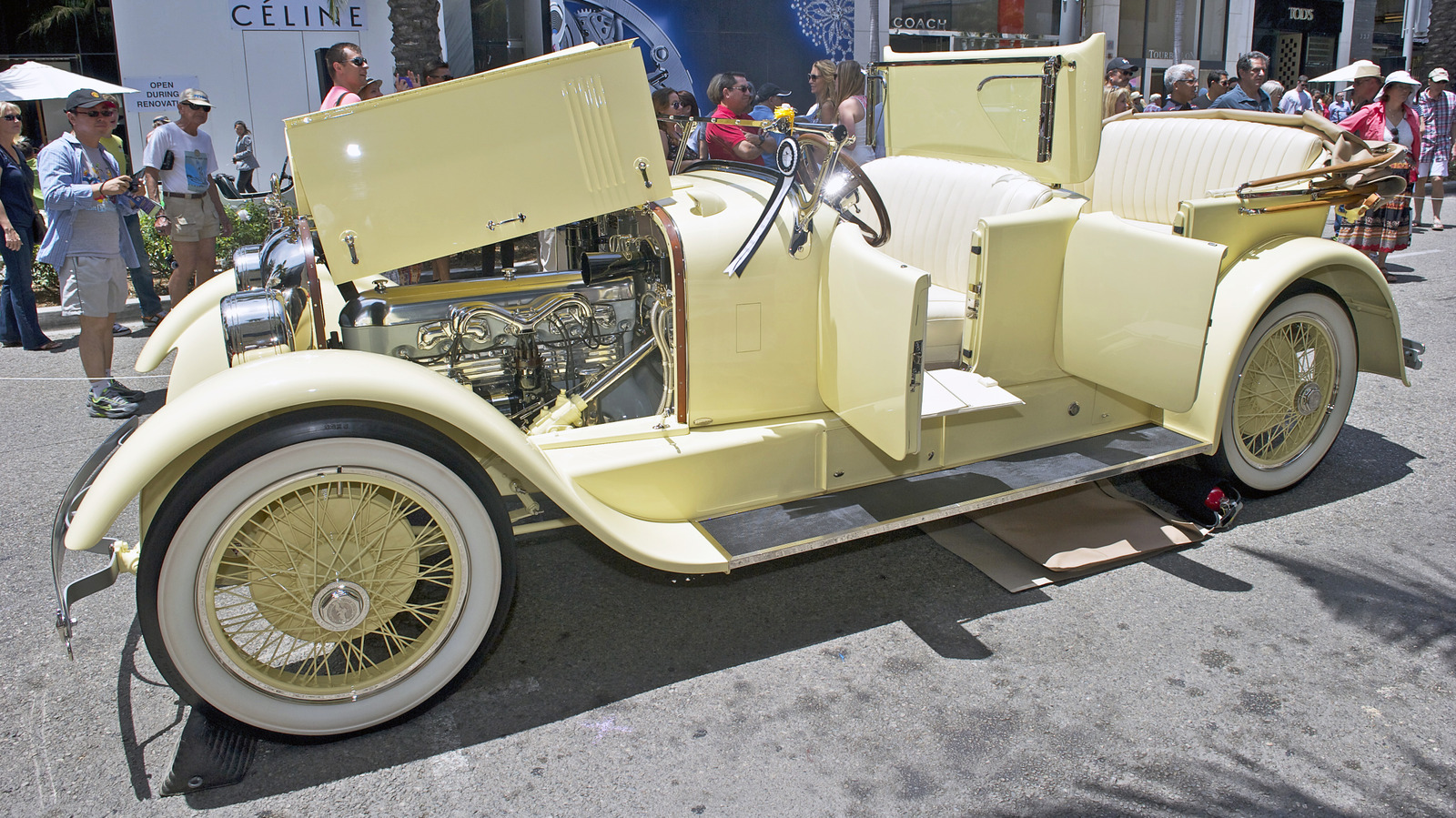
The Duesenberg Model A was a "rolling chassis" vehicle. This meant that while the brothers produced the mechanical heart and soul of the car—the engine, the frame, and the hydraulic brakes—they relied on independent coachbuilders to provide the aesthetic bodies. This hybrid manufacturing approach allowed Duesenberg to focus entirely on mechanical innovation while offering customers bespoke luxury.
When evaluating the state of the industry at the time, the transition from two-wheel to four-wheel braking was not merely a convenience; it was a revolution in physics. On a two-wheel brake system, panic stops often led to the vehicle "swapping ends" or losing directional control. By distributing the stopping force across all four corners of the chassis, Duesenberg allowed for shorter stopping distances and, crucially, maintained steering control during deceleration.
The Implications for Modern Motoring
The legacy of the Duesenberg hydraulic system ripples through the decades, connecting the 1921 Model A to the sophisticated braking systems found in the high-performance vehicles of today.
The Evolution of Braking Technology
The industry eventually moved away from drum brakes to the disc brakes that are universal on modern passenger vehicles. However, the move toward disc brakes was simply the next logical evolution of the hydraulic principles refined by Fred Duesenberg. Whether it is the regenerative braking found in modern EVs or the electromagnetic braking systems currently being tested for high-speed transport, the core philosophy remains the same: the efficient, distributed, and fluid-actuated conversion of kinetic energy into heat.
Coachbuilding in the Electric Era
Interestingly, the Duesenberg model of using independent coachbuilders has seen a resurgence. Modern manufacturers like Automobili Pininfarina, with their Battista Targamerica, echo the early 20th-century practice of separating the rolling chassis from the aesthetic bodywork. As we transition to electric platforms, which are often modular and "flat," the industry is witnessing a renaissance in boutique body design that mirrors the golden age of the Duesenberg Model A.
Official Historical Perspective
While history often seeks a single "inventor," the reality of the automotive industry is one of iterative progress. Historical societies and automotive museums, such as the Auburn Cord Duesenberg Automobile Museum, acknowledge that while Perrot and Loughead held patents for early iterations of braking technology, it was the Duesenberg brothers who possessed the foresight to integrate these components into a reliable, high-performance, production-ready package.
The brothers understood that technology is only as valuable as its application. By prioritizing the safety and control of the driver through four-wheel hydraulic brakes, they moved the industry away from "motoring as a thrill" toward "motoring as a science."
Conclusion: A Lasting Benchmark
The Duesenberg Model A is frequently cited in textbooks as the "first" to feature four-wheel hydraulic brakes, but this label does not fully capture the magnitude of the achievement. It was the moment that the automobile transitioned from a mechanical novelty into a sophisticated machine capable of managing its own momentum.
Today, as we navigate a world of autonomous driving and advanced electronic stability control, the spirit of Fred and Augie Duesenberg remains relevant. They proved that the most significant advancements in automotive safety do not always come from the largest corporations, but from engineers who refuse to accept the limitations of current designs. The Duesenberg brothers did not just stop their cars; they stopped the industry in its tracks, forcing a standard of excellence that every car maker thereafter was compelled to follow.
