

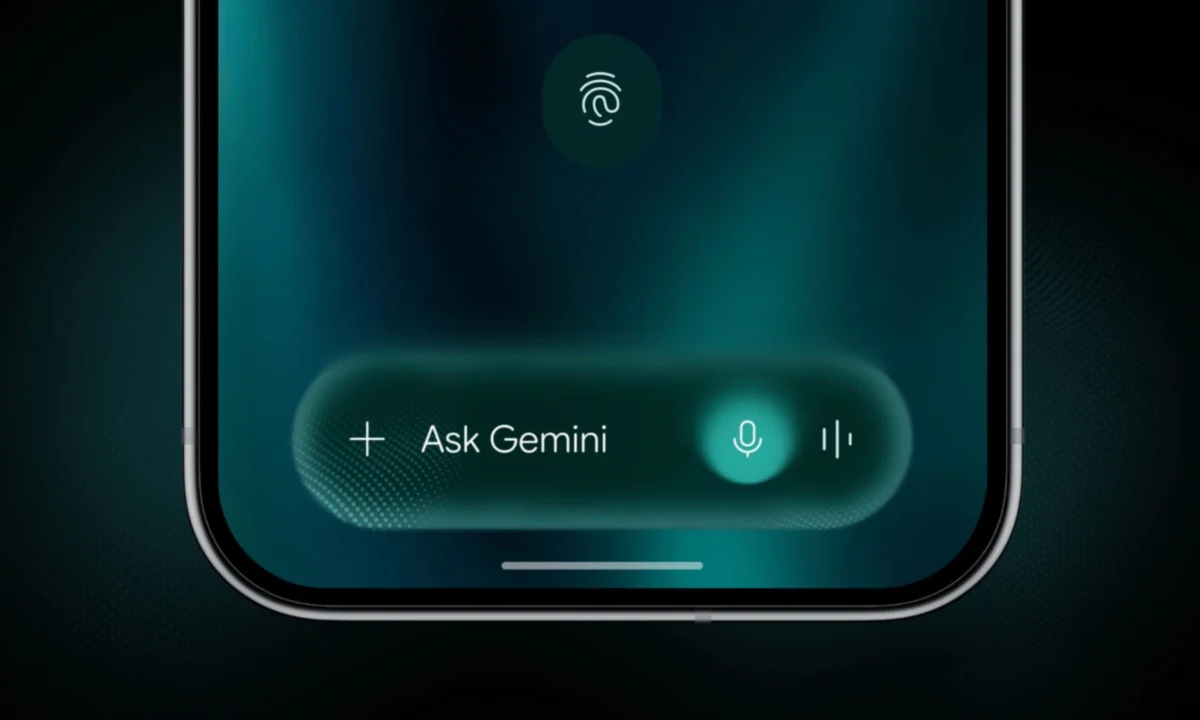
Google is embarking on its most ambitious transformation of the Android ecosystem to date. In a move that signals the final transition from the legacy "Google Assistant" era to a generative AI-first paradigm, the tech giant is deepening Gemini’s integration with one of the most fundamental pillars of any smartphone: the Google Contacts app.
Recent findings from the latest Google app beta have unveiled that Gemini is being engineered to transcend its current role as a standalone chatbot. Instead, it is being woven into the very fabric of how users store, manage, and interact with their personal networks. This development suggests that the future of Android is not just about having an AI that can answer questions, but an OS-level companion that understands the nuances of your professional and personal relationships.
Main Facts: A New Frontier for AI Connectivity
The core of this update, as first reported by 9to5Google, revolves around a functional shift in how Gemini accesses and utilizes contact data. Previously, voice assistants were limited to rudimentary "call [Name]" or "text [Name]" commands—scripts that required precise, rigid syntax. The new integration aims to replace these barriers with natural language processing (NLP).
Under the new framework, Gemini will be able to perform complex tasks by parsing conversational intent. For example, rather than needing to open the Contacts app to find a phone number, a user could simply ask, "What’s the best way to reach Sarah for the project update?" or "Remind me when I last spoke with my brother."
The AI is being designed to understand the context of the user’s communication history. By tapping into the Google Contacts API with higher permission levels, Gemini acts as an intelligent intermediary between the user and their data. This integration isn’t just about utility; it is about reducing the "app-switching fatigue" that plagues modern mobile usage. By centralizing these tasks within the Gemini interface, Google is attempting to turn the AI into the primary control plane for the Android operating system.
A Chronology of the Gemini Transition
To understand why this move is significant, one must look at the rapid evolution of Google’s AI strategy over the last 24 months.
- Early 2024: Google begins the aggressive rollout of "Gemini for Android," starting to replace the legacy Google Assistant on select Pixel devices. Initial reception was mixed, as early iterations of Gemini lacked the deep system-level hooks that made the classic Google Assistant so reliable for setting timers or managing smart home devices.
- Late 2024: Google introduces Gemini extensions for Workspace. Users gain the ability to query their Gmail, Google Drive, and Docs. This established the proof-of-concept that Gemini could safely handle private, user-specific data.
- Early 2025: The integration expands to Messages and Photos. Users begin to see "Help me write" features and AI-powered search capabilities within their media libraries.
- Mid-2026 (The Current Development): The discovery of deep Contacts integration marks the latest phase. By this point, Gemini has moved from an external utility to an integrated system service. It is no longer just "using" apps; it is beginning to act as a bridge between them.
This progression demonstrates a clear, deliberate strategy: Google is slowly replacing the "app-silo" model of smartphone usage with a "unified-intelligence" model.
Supporting Data: The Shift in User Interaction Patterns
The necessity for this change is backed by shifts in how consumers interact with their devices. Recent industry data suggests that mobile users are spending an increasing amount of time managing fragmented workflows. The average Android user switches between four or more communication apps—WhatsApp, Gmail, SMS, Slack, and LinkedIn—on a daily basis.

Google’s internal research appears to confirm that this "context switching" creates friction. By allowing Gemini to act as a central hub, Google aims to minimize the cognitive load.
Why Contact Integration is the "Holy Grail"
The Contacts app is the most underutilized "database" on a smartphone. It contains not just phone numbers, but addresses, job titles, relationship tags, and communication history. By giving Gemini access to this, the AI gains:
- Relationship Context: Understanding who your "manager" is versus your "family members."
- Temporal Context: Knowing how long it has been since you last reached out to a contact.
- Cross-App Context: Linking a contact entry directly to a specific email thread or a shared Google Drive folder.
This shift transforms the contact list from a static address book into a dynamic, queryable database that the AI can act upon in real-time.
Official Responses and Strategic Vision
While Google has not released a formal press release detailing every feature of the upcoming contact integration, the company’s recent "Gemini Intelligence" developer blogs have provided a roadmap. Google’s vision, as articulated by their product teams, is to make AI "proactive rather than reactive."
In recent statements regarding the integration of Gemini into the Android framework, Google executives noted:
"Our goal is to build an operating system that anticipates the user’s needs. By moving away from rigid command structures and toward contextual awareness, we allow the device to become an extension of the user’s intent, rather than a tool they must struggle to command."
This official stance highlights that Google is not just looking to compete with other AI assistants like ChatGPT or Apple Intelligence; they are looking to redefine the OS experience itself. They view the phone not as a collection of apps, but as an environment where the AI is the primary interface.
Implications: The Privacy Paradox
The transition toward a hyper-integrated AI is not without significant risks, particularly regarding user privacy. By granting Gemini deep, granular access to contacts, call logs, and messaging history, the barrier between "private life" and "AI analysis" becomes dangerously thin.

The Privacy Trade-off
Privacy advocates have already begun to voice concerns. If an AI can "remember" that you haven’t called your mother in three weeks and suggests you do so, that is a convenience. However, if that same AI is analyzing the frequency of your calls to a business competitor or monitoring the contents of your messages to manage your contact database, the potential for data misuse or algorithmic bias becomes a major point of contention.
Google has stated that it employs "on-device processing" for many of its core Gemini functions to mitigate these risks. However, deep integration with cloud-based services like Gmail and Contacts often requires some level of server-side processing to achieve the "omniscience" that makes the assistant truly useful. This creates a "privacy paradox": to get the best, most personalized experience, users must surrender their most sensitive data to the cloud.
The Impact on Third-Party Developers
There are also broader implications for the app ecosystem. If Gemini can handle messaging, calling, and organization natively, does the need for third-party productivity apps diminish? If the Android OS provides a "perfect" AI-driven contact manager, developers may find it increasingly difficult to differentiate their apps. This could lead to a consolidation of the Android app market, where only the most specialized tools survive outside the orbit of the Gemini ecosystem.
Conclusion: The Road Ahead
As we look toward the remainder of 2026 and beyond, the integration of Gemini into Google Contacts serves as a microcosm of the larger war for the future of mobile computing. The days of tapping through menus and manually searching for information are numbered.
Google’s bet is that users will gladly trade some degree of data transparency for a device that "just works"—a phone that knows who you need to talk to, when you need to talk to them, and how to get the job done without you ever having to open an app.
However, the success of this strategy will depend entirely on trust. If Google can maintain its commitment to security while delivering on the promise of a truly intelligent assistant, the Android platform could see a renaissance of productivity. If, however, the integration feels like an overreach into personal privacy, the company may find itself facing a backlash from a user base that is becoming increasingly wary of the "always-on, always-watching" nature of modern AI.
One thing is certain: with Gemini now positioned at the core of the Android experience, the smartphone is no longer just a communication device—it is becoming a digital partner that is learning, in real-time, exactly how you live your life.
