

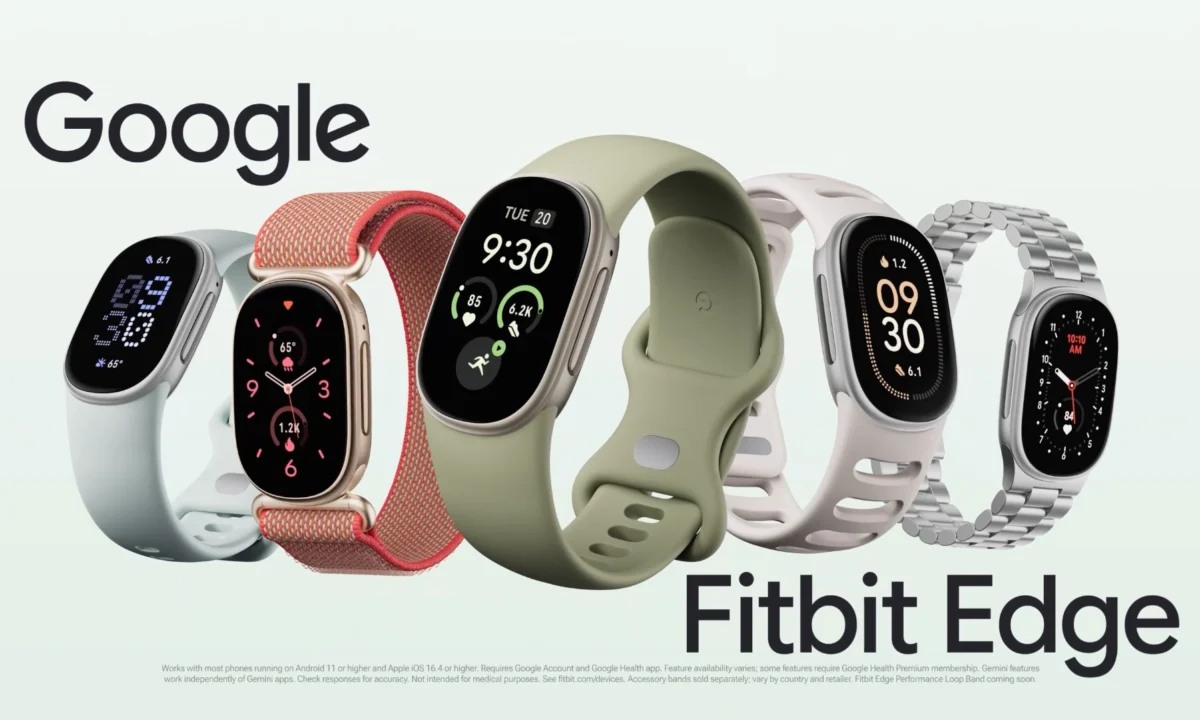
For years, the promise of wearable technology has been seamless integration into our daily lives—a silent, intelligent companion that monitors our health without requiring constant manual input. Yet, the reality for many users has been a source of minor frustration: the need to manually initiate a workout session, or worse, realizing halfway through a gym session that you forgot to press "start."
Google is finally addressing this friction point. In a significant overhaul of its ecosystem, the tech giant is expanding its automatic activity detection capabilities for Fitbit devices and the Pixel Watch series, moving from a modest 10 supported exercises to a comprehensive library of over 100. This update, rolling out via Google Health 5.11, marks a major milestone in how wearable devices interpret human movement and physiological signals.
The Main Facts: A Leap in Precision
The core of this update lies in the transition from simple motion-based tracking to a context-aware system. Previously, Fitbit and Pixel Watch users were limited to basic automatic detection, which primarily focused on high-level activities like walking, running, or general elliptical use.

With the new update, the system now utilizes advanced sensor fusion and machine learning models to identify a vast array of niche activities. The expanded list includes, but is not limited to:
- Strength Training: Differentiating between weightlifting modalities.
- Aquatic Sports: Specialized tracking for various swimming strokes.
- Team and Racket Sports: Recognizing the erratic movement patterns of tennis, pickleball, or soccer.
- Cardio Equipment: Distinguishing between different gym machines.
- Niche Pursuits: Golf, high-intensity interval training (HIIT), and various indoor/outdoor movement patterns.
Google reports that this architectural upgrade has yielded impressive results in internal testing. The system is now claimed to be nearly twice as accurate as its predecessor, successfully reducing instances of missed workout logs by more than 50%.
A Chronological Progression
The path to this update has been a steady march toward the unified "Google Health" vision.

- Initial Foundations: For years, Fitbit built its reputation on the "SmartTrack" feature, which provided basic activity recognition. However, as the Pixel Watch launched and Google fully integrated Fitbit into its health stack, the demand for more granular data became apparent.
- Early October 2026: Google first teased the expanded detection capabilities during the unveiling of the Fitbit Edge. The presentation highlighted a new approach to biometric monitoring that prioritized "effortless tracking."
- Late October 2026: The rollout began in earnest. The update is now arriving for the Fitbit Air, the Pixel Watch 3, 4, and 5, and the newly launched Fitbit Edge.
- Software Deployment: The feature is being pushed through the Google Health 5.11 update. As of the current reporting, the update is widely available on iOS and is in the final stages of its staggered rollout on Android devices.
Behind the Tech: Beyond Mere Movement
One of the most compelling aspects of this upgrade is how Google defines an "activity." The system no longer relies solely on the accelerometer or gyroscope. Instead, it aggregates multiple data streams to reach a conclusion:
- Activity History & Routines: The system learns your personal habits. If you consistently visit the gym at 6:00 PM on Tuesdays, the algorithm prioritizes the likelihood of a strength training session over a casual walk.
- Location Context: With user permission, the device leverages GPS data. If the device detects a tennis court or a swimming pool, it narrows down the potential activities accordingly.
- Physiological Markers: The system specifically looks for a sustained elevated heart rate combined with specific movement profiles. By default, the system requires 15 minutes of continuous activity to trigger an auto-log, ensuring that walking to the mailbox isn’t misidentified as a HIIT session.
- User-Driven Learning: The system is iterative. If a user corrects an automatically logged activity, the machine learning model adjusts, creating a personalized feedback loop that improves detection accuracy over time.
Once an activity is confirmed, a summary typically populates within the Google Health interface within 30 minutes, allowing users to review, edit, or delete the session if the AI misinterpreted their actions.
Official Responses and Strategic Implications
Google’s strategy is clear: it is moving away from the "fitness tracker" moniker and toward "preventative health management." By making data collection passive, Google is lowering the barrier to entry for users who want to be healthy but find the manual friction of tracking software to be a chore.

"The goal is to provide a comprehensive health profile without the user feeling like they are working for their device," noted a spokesperson during the initial unveiling.
For the Fitbit Air, this update is particularly crucial. Positioned as a screenless, budget-friendly alternative to premium trackers, the Air relies heavily on its software intelligence to maintain its value proposition. By adding advanced features like this, Google ensures that its entry-level hardware remains competitive against cheaper, less intelligent alternatives on the market.
Future Horizons: The "Health Guardian"
While automatic activity tracking grabs the headlines, the backend improvements for Google Health Premium subscribers are equally significant. Launching alongside this update is the "Health Guardian" feature for the Fitbit Air.

Health Guardian is designed to provide long-term, trend-based insights rather than just daily snapshots. By monitoring metrics such as blood pressure and insulin resistance trends, the system aims to provide a monthly health report. This report is designed to be shared with healthcare providers, effectively bridging the gap between consumer wearables and medical-grade diagnostics.
Furthermore, the integration of Google Health Coach allows the system to synthesize this data. If the Health Guardian identifies a trend in metabolic health, the Coach can automatically adjust the suggested workout intensity or recovery protocols, creating a closed-loop health ecosystem.
Implications for the Wearable Market
The broader implications of this update are profound for the wearable industry.

The Commoditization of Tracking
As accuracy in activity tracking reaches a plateau, manufacturers are forced to pivot toward contextual intelligence. It is no longer enough to know that a user walked 5,000 steps; the future lies in knowing why they walked, what their heart rate was during the walk, and how that walk fits into their long-term cardiovascular health.
Addressing Health Disparities
With reports surfacing about the links between low step counts and chronic conditions like dementia, Parkinson’s, and stroke, the importance of "passive" tracking cannot be overstated. By making it easier to track activity, Google is essentially encouraging a more sedentary population to engage with their health data. When tracking becomes a "set it and forget it" experience, the data collected becomes more representative of a user’s true lifestyle, providing better insights for both the user and their physicians.
The Competitive Landscape
Competitors like Samsung are also pushing the envelope. With leaks surrounding the Galaxy Fit 4 suggesting a refined, familiar design, the battle is clearly shifting from hardware aesthetics to software ecosystems. If Google can maintain its lead in AI-driven health insights, it may create a "stickiness" in its user base that hardware alone cannot replicate.

Conclusion
The rollout of 100+ activity detection in the Google Health ecosystem is more than just a software patch; it is a fundamental shift in how we interact with our digital health tools. By removing the friction of manual tracking, Google is inviting its users to stop worrying about the "how" of tracking and start focusing on the "why" of living healthier.
As the update continues to propagate across the Fitbit and Pixel Watch lineups, the true test will be the real-world performance of these algorithms. Can they truly distinguish between a casual game of pickleball and a competitive tennis match? Will the 15-minute threshold be the "Goldilocks zone" for accuracy, or will it prove too restrictive for some?
Only time, and the continuous feedback of millions of users, will tell. But one thing is certain: the era of the "smart" wearable has officially entered its next, most sophisticated phase. We are no longer just tracking movement; we are tracking life as it happens, automatically, intelligently, and—most importantly—without the need for an interruption.
