

Computex 2026 has officially drawn to a close, leaving behind a sprawling landscape of technological ambition that reflects a pivot toward specialized, high-performance computing. As the global hub for the PC industry, the Taipei-based exhibition floor was once again a sensory overload of sleek ultrabooks, gargantuan gaming rigs, and experimental hardware that challenged the very definition of consumer electronics. While the show was defined by the relentless integration of AI into every facet of the ecosystem, it was the "oddball" engineering marvels that truly captured the imagination of attendees.
From space-faring motherboards to climate-controlled peripherals, the following report explores the most significant and memorable innovations that emerged from the event.

Chronology of the Show Floor
The show kicked off with an industry-wide focus on the next generation of connectivity and thermal management. Throughout the week, the narrative shifted from standard incremental upgrades to radical architecture shifts.
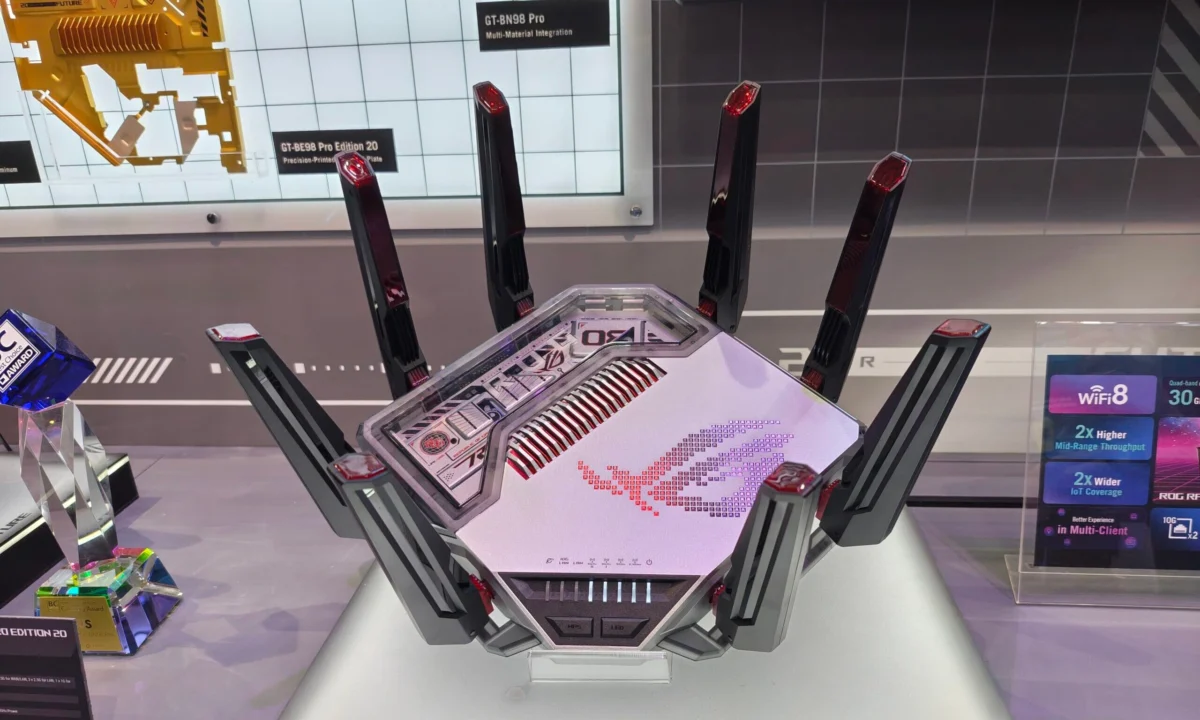
- Early Week: The introduction of the ASUS ROG Rapture GT-BN98 Pro signaled the premature but exciting arrival of Wi-Fi 8, setting the tone for a focus on infrastructure reliability over raw, unachievable speed.
- Mid-Week: The discourse turned toward user experience and niche-filling devices, exemplified by the long-awaited unveiling of the Pulsar Feinmann F01 Noctua Edition mouse, which successfully transitioned from a conceptual "gimmick" to a viable, ergonomic solution for high-performance gamers.
- Late Week: The event culminated in displays of pure engineering bravado, most notably with Gigabyte’s aerospace-inspired motherboard, proving that even at 40 years old, the industry is still capable of producing "moonshot" projects that serve as a showcase of manufacturing capability.
The Vanguard of Connectivity: ASUS ROG Rapture GT-BN98 Pro
The ASUS ROG Rapture GT-BN98 Pro was perhaps the most visually striking piece of networking hardware on the floor. Boasting a spider-like silhouette that leans heavily into "sci-fi prop" aesthetics, the router is more than just a centerpiece for a battlestation.

Key Features and Strategic Implications
While the world is still in the process of adopting Wi-Fi 7, ASUS has moved to define the parameters of Wi-Fi 8. The GT-BN98 Pro represents a strategic shift in the industry: moving away from the "speed-first" marketing of the last decade toward "efficiency-first" connectivity.
- Adaptive QoE: The router utilizes intelligent traffic prioritization to ensure that latency-sensitive tasks—such as competitive gaming or high-fidelity streaming—receive dedicated bandwidth.
- Wi-Fi Insight: A real-time monitoring suite that allows users to visualize network congestion, a feature usually reserved for enterprise-grade hardware.
- Physical Connectivity: Dual 10G ports ensure that the local backbone of the network is as robust as the wireless signal.
For the average consumer, this router is clearly overkill. However, as an indicator of where the home networking market is headed—toward increased stability in crowded wireless environments—it is a vital piece of future-facing hardware.

The Ergonomics of Cooling: Pulsar Feinmann F01 Noctua Edition
Perhaps the most relatable innovation at Computex 2026 was the Pulsar Feinmann F01 Noctua Edition. Gaming for extended periods often leads to thermal discomfort for the user—specifically, sweaty palms. Pulsar’s solution, in collaboration with cooling titan Noctua, is to integrate a micro-fan directly into the mouse chassis.
Performance Data
- Fan Specs: The mouse features a Noctua NF-A4x10 5V PWM fan, capable of reaching 5,000 RPM.
- Weight: While the addition of a fan mechanism makes the mouse heavier than ultra-light competitive alternatives, the trade-off in hand comfort is significant.
- Polling and Precision: Despite its "novelty" cooling, the mouse does not compromise on performance, featuring a 42,000 DPI sensor and 8K polling rates.
The practical implication here is a new category of "active comfort" gaming peripherals. While initial reactions to the announcement last year were skeptical, the hands-on experience on the show floor silenced many critics. It is a genuine solution to a common gamer pain point, proving that even niche collaborations can yield meaningful user-centric designs.

Visual Fidelity: The Alienware AW3926QW
Alienware continues to push the boundaries of display technology with the AW3926QW. At $1,099, the monitor sits in a high-end price bracket, but it justifies the cost through its advanced Tandem OLED technology and versatile functionality.
Technical Specifications
The monitor offers a 39-inch curved display with a 5K2K resolution (5120 x 2160) at 165Hz. The RGB stripe layout is the star of the show, addressing the long-standing issue of text clarity that has plagued early-generation OLED panels.

Perhaps the most impressive feature is the "Competitive Mode." With a single toggle, the monitor software shrinks the display area to 27 inches (2560 x 1080) and boosts the refresh rate to 330Hz. This dual-purpose design makes the monitor a "jack of all trades," effectively replacing the need for a separate cinematic display and an esports panel.
The Aerospace Engineering Feat: Gigabyte X870E AORUS INFINITY NEXT
If there was a "Best in Show" for sheer engineering excess, it would go to the Gigabyte X870E AORUS INFINITY NEXT. Celebrating the company’s 40th anniversary, the board features "gyroid" structures—hollow, organic-looking designs created through advanced 3D metal printing.

Official Engineering Rationale
According to Gigabyte, these structures are not purely aesthetic; they are designed to dissipate heat in environments where convection airflow is nonexistent, such as in low Earth orbit. The board utilizes "thruster-grade thermal materials" and a 3D-printed vapor chamber to manage the heat generated by its 64 power phases.
The board is rated to deliver an staggering 5,120 amps of current. While this is objectively unnecessary for current consumer CPUs, it serves as a massive flex of manufacturing prowess. Gigabyte has not committed to a mass-market release, noting that the manufacturing cost alone sits at approximately $3,000 per unit. It stands as a monument to what is possible when cost is removed from the design equation.

The Sustainable Future: Framework Laptop 13 Pro
In contrast to the extreme excess of the AORUS motherboard, the Framework Laptop 13 Pro represents the triumph of practical design. Framework has successfully refined its modular concept, moving to an aluminum unibody chassis that feels indistinguishable from premium offerings from competitors like Apple.
Key Improvements
- LPCAMM2 Memory: This allows for the use of high-speed LPDDR5x memory while maintaining the ability for the user to upgrade, a breakthrough in laptop architecture.
- Improved Latch Design: The expansion card system has been updated, allowing for one-handed swapping, a massive quality-of-life improvement.
- Battery Efficiency: A 74Wh battery—22% larger than the previous generation—claims 20+ hours of 4K streaming.
The implications for the industry are profound. Framework is proving that repairability and high performance are not mutually exclusive. While the $1,499 starting price is a premium, the long-term value of a machine that can be upgraded indefinitely, rather than replaced, is a compelling argument for the sustainability-conscious consumer.

Summary of Implications
Computex 2026 underscored three major trends:
- Specialization: Hardware is becoming increasingly tailored to specific user behaviors (e.g., cooling for gamers, high-resolution modularity for productivity).
- Sustainability vs. Excess: The industry is simultaneously pursuing extreme, experimental engineering (Gigabyte) and refined, sustainable longevity (Framework).
- Integration: AI is no longer a "feature" but a baseline expectation for component management, as seen in the intelligent traffic prioritization of the new Wi-Fi 8 routers.
As the industry moves forward from these announcements, the focus will likely remain on how these high-end innovations can be democratized. While the X870E AORUS motherboard may never reach a standard consumer’s desk, the cooling methodologies developed for it may eventually trickle down into standard PC builds. Similarly, the modularity perfected in the Framework 13 Pro is setting a standard that other manufacturers will eventually be forced to address. Computex 2026 was not just a show of what is currently available; it was a blueprint for the next decade of hardware evolution.
