

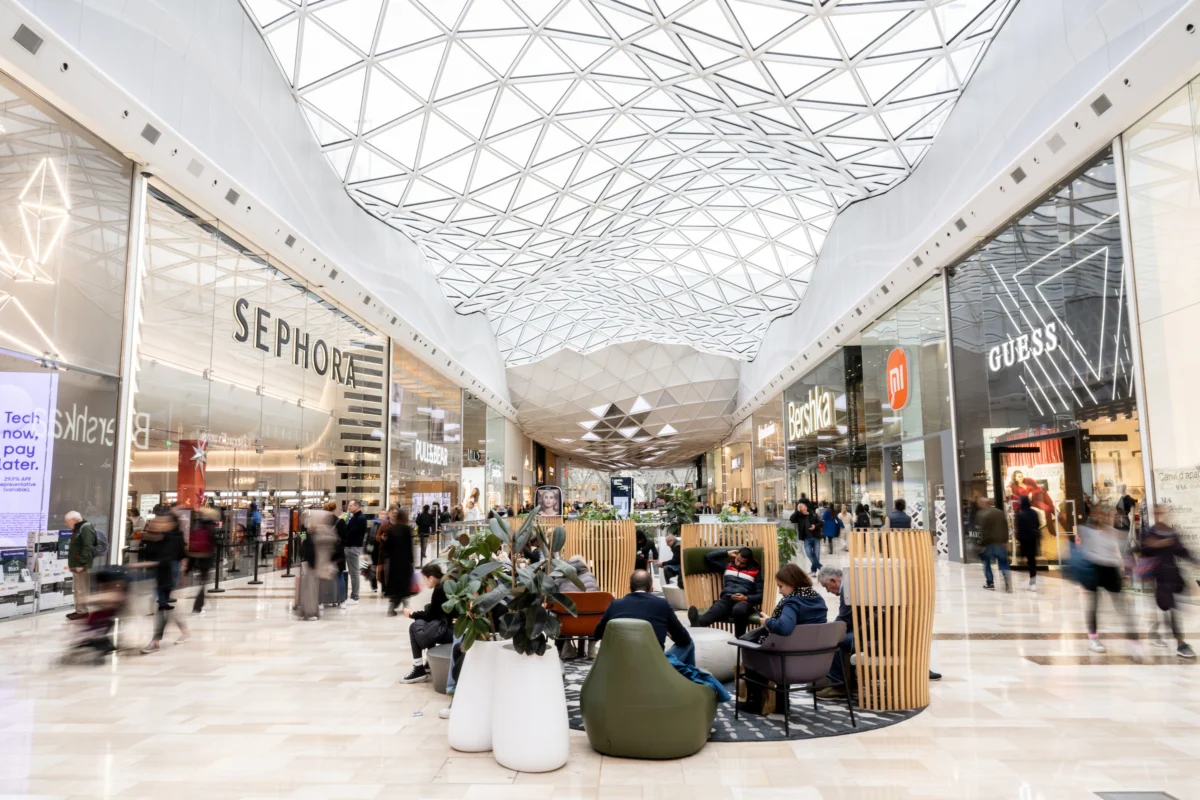
LONDON — In an era where the traditional boundaries between commerce, culture, and community are rapidly dissolving, Westfield is turning to the next generation of creative visionaries to redefine the blueprint of the modern shopping center. The retail giant has announced a strategic seven-week partnership with Central Saint Martins (CSM), a world-renowned arts and design college, tasking postgraduate students with a bold objective: to transform Westfield London and Westfield Stratford City into sophisticated, future-facing, mixed-use urban hubs.
This collaboration marks a significant pivot for one of the world’s largest retail property owners. By integrating the academic rigor of CSM’s MA Innovation Management course with the operational scale of two of London’s most prominent retail destinations, Westfield is signaling that the shopping mall of the future will be less about the transaction and more about the experience, social connectivity, and urban integration.
The Strategic Mandate: A New Vision for Retail
The partnership involves approximately 40 postgraduate students, who are tasked with utilizing Westfield’s London locations as "living laboratories." The challenge is multifaceted, requiring students to synthesize complex societal shifts into actionable design and operational concepts.
The students are being asked to address four primary pillars:
- Shifting Consumer Expectations: Moving beyond traditional retail to meet the demands of a generation that values convenience, authenticity, and personalization.
- Immersive Technologies: Integrating augmented reality (AR), virtual reality (VR), and hyper-personalized digital interfaces to blur the lines between physical and digital spaces.
- Sustainability Imperatives: Reimagining the carbon footprint of massive retail assets through circular economy models and sustainable design.
- Urban Evolution: Designing spaces that function as social infrastructure rather than mere commercial transit points.
The core intent is to transition these centers from "destinations for buying" to "destinations for being." This involves conceptualizing retail environments that function as community centers, cultural hubs, and sustainable green spaces that contribute to, rather than extract from, their surrounding urban environments.
A Brief History: From White City to Stratford
To understand the significance of this partnership, one must look at the historical trajectory of Westfield’s footprint in London.
2008: The White City Catalyst
Westfield burst onto the London scene in 2008 with the opening of Westfield London in White City. At the time, it was an ambitious project designed to anchor the massive regeneration of West London. It set a new standard for luxury retail, attracting high-end brands and creating a singular, climate-controlled ecosystem that became Europe’s largest shopping destination.
2011: The Stratford Expansion
Three years later, Westfield expanded its reach to East London with the opening of Westfield Stratford City, coinciding with the preparations for the 2012 Olympic Games. Unlike its West London sibling, Stratford was designed for high-volume foot traffic, blending high-street brands with athletic and lifestyle-focused retail. It served as a critical component in the urban renewal of the Stratford area, proving that a shopping center could act as an engine for regional economic growth.
2024: The Pivot to Innovation
The current partnership with Central Saint Martins represents the third chapter in this story. Having mastered the art of physical retail, Westfield is now attempting to "future-proof" its assets against the headwinds of digital disruption and changing urban lifestyles.
Themes of Exploration: Retail as Cultural Infrastructure
The proposals emerging from the MA Innovation Management students are expected to move beyond conventional retail design. Preliminary briefs suggest a focus on:
1. Social and Cultural Infrastructure
Students are investigating how retail malls can house non-commercial entities, such as public workshops, art galleries, performance spaces, and co-working zones. By embedding cultural assets into the retail mix, Westfield aims to increase the "dwell time" of visitors, transforming the mall into a third space—a concept describing social environments separate from the home and the workplace.
2. Circularity and Sustainability
In a world increasingly concerned with the environmental impact of physical construction, students are exploring how to retrofit these massive assets. This includes circular material loops, rooftop urban farming, and energy-efficient systems that turn the mall into a net-contributor to the city’s power grid.
3. The Layering of Play
A significant portion of the research focuses on "phygital" (physical + digital) experiences. This involves creating "playful" environments where digital gaming, interactive installations, and real-world interactions intersect. The goal is to make the shopping center a place of discovery and entertainment, rather than a static environment for inventory display.
Official Perspectives: Bridging Industry and Academia
The leadership teams at both Westfield and Central Saint Martins have emphasized the importance of this cross-pollination of ideas.
Katie Wyle, Managing Director, Customer and Retail Operations (Northern Europe) at Westfield:
"As customer expectations evolve, it is important that we continue to explore new ideas and perspectives that can help shape the future of our U.K. destinations. This partnership is a unique opportunity to tap into a new generation of creative talent. We aren’t just looking for academic exercises; we are looking for ideas that could help inform the real-world evolution of our destinations."
Iris Ben-David, Course Leader for MA Innovation Management at Central Saint Martins:
"This project situates our students at the intersection of creativity, strategy, and real-world complexity. By working with a titan like Westfield, they are able to test ideas at scale, exploring how retail environments can evolve into spaces that are more socially engaged, culturally relevant, and environmentally responsible. It’s an opportunity to turn critical thinking into tangible propositions for the future of cities."
Implications: The Road to Real-World Pilots
The partnership concludes this fall with a public exhibition in London, where the students will present their final proposals to a panel of Westfield executives. Crucially, the project is not merely an academic exercise. Westfield has indicated that selected concepts will be earmarked for further development or potential real-world pilots.
The implications for the retail sector are profound. If these pilots succeed, they could serve as a template for other retail developers globally. As high streets continue to struggle with vacancies, the "Westfield-CSM model" offers a roadmap for how large-scale retail assets can avoid obsolescence by pivoting toward becoming multifunctional urban hubs.
A Data-Driven Shift
While the specific metrics of the student proposals are confidential, the underlying data driving this partnership reflects broader industry trends:
- Retail Spend per Foot: Increasing through experiential engagement.
- Dwell Time: Target increases of 15-20% through cultural and community programming.
- Carbon Neutrality: A commitment to long-term decarbonization of the physical retail footprint.
Conclusion: The Future of the "Third Space"
The collaboration between Westfield and Central Saint Martins serves as a microcosm for the broader transformation of the global retail landscape. By inviting the next generation of strategists and designers to challenge the status quo, Westfield is acknowledging that the future of retail cannot be solved by retailers alone. It requires an interdisciplinary approach that considers urban planning, sociology, environmental science, and cutting-edge technology.
As the students prepare their final presentations, the industry will be watching closely. Whether these concepts manifest as pop-up cultural hubs in Stratford or new immersive, eco-conscious zones in White City, one thing is clear: the era of the "mall" is ending, and the era of the "urban hub" is beginning. The success of this experiment will depend on how effectively Westfield can balance the commercial necessity of retail with the social mandate of creating meaningful, sustainable, and culturally vibrant spaces for the cities of tomorrow.
