

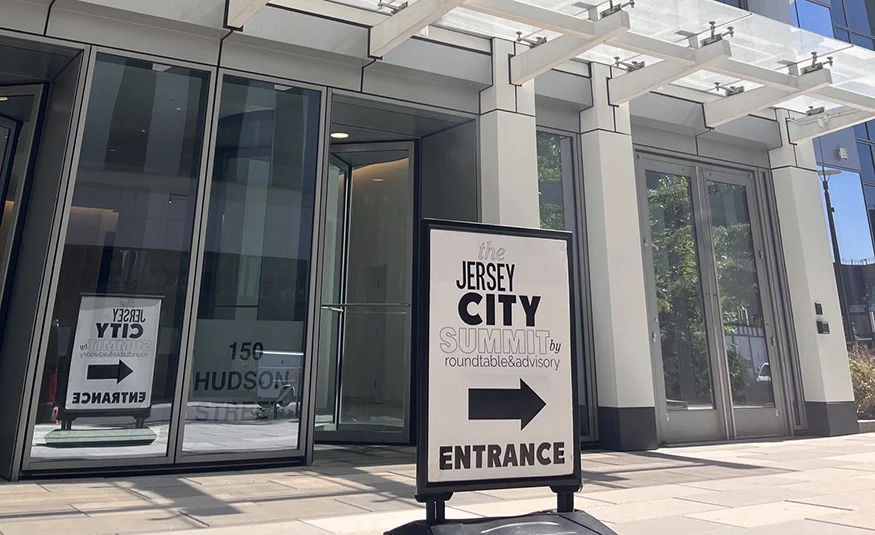
JERSEY CITY, N.J. — On June 4, 2026, the Harborside 1 complex in Jersey City became the epicenter of New Jersey’s commercial real estate and economic development discourse. The annual Jersey City Summit for Real Estate Investment, Placemaking & Innovation, organized by roundtable&advisory, drew a high-profile crowd of industry titans, urban planners, capital market analysts, and tech innovators.
As the skyline of Jersey City continues its aggressive transformation into a regional financial and residential powerhouse, this year’s summit served as a critical pulse-check on how the state’s urban centers are evolving to meet the demands of a post-pandemic, technology-driven economy.
Main Facts: A Convergence of Capital and Community
The Jersey City Summit is not merely a conference; it is a strategic forum designed to align the interests of private capital with the public goals of municipal urban planning. The 2026 iteration focused on several pillars:
- The Evolution of the Waterfront: Examining how historic industrial assets are being repurposed into high-density, mixed-use hubs.
- Innovation Districts: The integration of telecommunications and digital infrastructure into the architectural fabric of new developments.
- Capital Markets Resilience: How rising interest rates and fluctuating property values are influencing investment strategies in the Tri-State area.
- Placemaking: The shift toward creating "human-centric" environments where work, life, and leisure overlap seamlessly.
Harborside 1, the event’s venue, provided a poignant backdrop. Once a massive railroad terminal, the site is now a prime example of the very "placemaking" principles discussed by the speakers: a modern, transit-oriented hub that bridges the gap between traditional office space and experiential retail.
Chronology: A Day of High-Level Discourse
The summit unfolded through a series of moderated panels and keynote discussions that tracked the trajectory of New Jersey’s real estate market from the early morning hours into the afternoon.
Morning Sessions: Macro-Economic Trends
The day began with a deep dive into the macroeconomic factors shaping New Jersey’s development landscape. Experts noted that while the national office market faces significant headwinds due to hybrid work models, the Hudson Waterfront remains an outlier, largely due to its proximity to Manhattan and its reputation as a "secondary hub" for financial services and technology firms.
Mid-Day: Innovation and Telecommunications
Following a networking lunch, the focus shifted to the "Innovation" portion of the summit’s mandate. This session featured prominent voices in the telecommunications sector, including a special highlight on Ari Rabban, the CEO of Newark-based Phone.com.
Rabban’s participation underscored a pivotal shift in the real estate sector: the increasing reliance on digital infrastructure as a core utility. For modern developers, "innovation" no longer refers only to smart-glass windows or LEED-certified heating systems; it refers to the seamless integration of cloud-based communications and high-speed data connectivity that allows businesses to operate from anywhere within a commercial property.
Afternoon: The Future of Placemaking
The concluding sessions explored the "placemaking" element—how to keep urban centers vibrant after 5:00 p.m. Discussions centered on the need for diverse housing stock, public green spaces, and the integration of the arts to transform business districts into 24/7 neighborhoods.
Supporting Data: The New Jersey Market Landscape
To understand the significance of the 2026 Summit, one must look at the data driving the discussions. New Jersey’s commercial market is currently navigating a complex transition.
- Vacancy Rates vs. Quality: While older "Class B" office spaces are struggling to find tenants, high-end "Class A" developments—such as those discussed during the summit—are seeing high demand. Tenants are increasingly willing to pay a premium for "experiential" office spaces that offer high-end amenities and transit connectivity.
- Multifamily Resilience: Jersey City continues to lead the state in multifamily absorption. Despite a surge in supply, the demand for rental units in the city remains robust, driven by a demographic of young professionals seeking a lifestyle alternative to the outer boroughs of New York City.
- Capital Markets: With borrowing costs remaining higher than in the previous decade, the summit highlighted a shift in investment strategy. "Patient capital"—investors willing to hold assets for longer periods to realize value-add potential—is becoming the industry standard.
Official Responses and Key Voices
The dialogue at the summit was defined by a balance of cautious optimism and strategic pragmatism.
The Tech Perspective:
Ari Rabban of Phone.com emphasized that for a company like his, location is secondary to connectivity, yet the "vibe" of a place like Jersey City or Newark is crucial for talent retention. "People want to work in environments that feel alive," Rabban noted during his segment. He argued that the intersection of technology and physical office space is the next great frontier for commercial real estate—creating "intelligent buildings" that respond to the needs of the modern, hybrid worker.
The Developer Perspective:
Prominent developers in attendance echoed a common theme: the necessity of public-private partnerships. With the complexity of modern zoning and the rising costs of construction, developers stressed that the success of projects in Jersey City and beyond depends on a collaborative relationship with municipal leadership.
Implications: What Comes Next?
The 2026 Jersey City Summit left participants with a clear takeaway: the era of the "single-use" office tower is over. The future of real estate in the Garden State lies in adaptability.
The Shift Toward "Newark" and Beyond
While Jersey City has served as the gold standard for waterfront revitalization, the summit signaled that the spotlight is shifting toward other key urban centers. The upcoming Newark Summit for Economic Development, Placemaking & Innovation, scheduled for December 8 at 550 Broad St., is already being positioned as the logical successor to the discussions held in Jersey City.
The implications for developers and investors are clear:
- Diversification: Investors are looking beyond the Gold Coast, seeking opportunities in Newark, New Brunswick, and Camden.
- Infrastructure-First Development: Future projects must lead with digital and transit infrastructure to attract the next generation of tenants.
- Community Integration: "Placemaking" is no longer a buzzword; it is a financial imperative. Projects that do not engage with their local communities and provide public value are finding it increasingly difficult to secure local government support or long-term financing.
Conclusion: A Blueprint for 2027 and Beyond
The 2026 Jersey City Summit was a microcosm of the state’s broader economic ambition. By bridging the gap between legacy development and future-facing innovation, the event provided a roadmap for stakeholders navigating a period of unprecedented change.
As the industry looks toward the end of 2026, the focus now turns to implementation. Whether it is through the deployment of advanced telecommunications in new construction or the revitalization of urban corridors in cities like Newark, the themes of the Jersey City Summit will continue to influence the architectural and economic landscape of New Jersey for years to come.
For those interested in the ongoing evolution of these urban centers, the December Newark Summit offers the next opportunity to engage with the architects of New Jersey’s future. In a market where agility is the most valuable asset, these summits provide more than just networking—they provide the intelligence required to build the cities of tomorrow.
For more information on upcoming industry events, visit the official roundtable&advisory website.
