

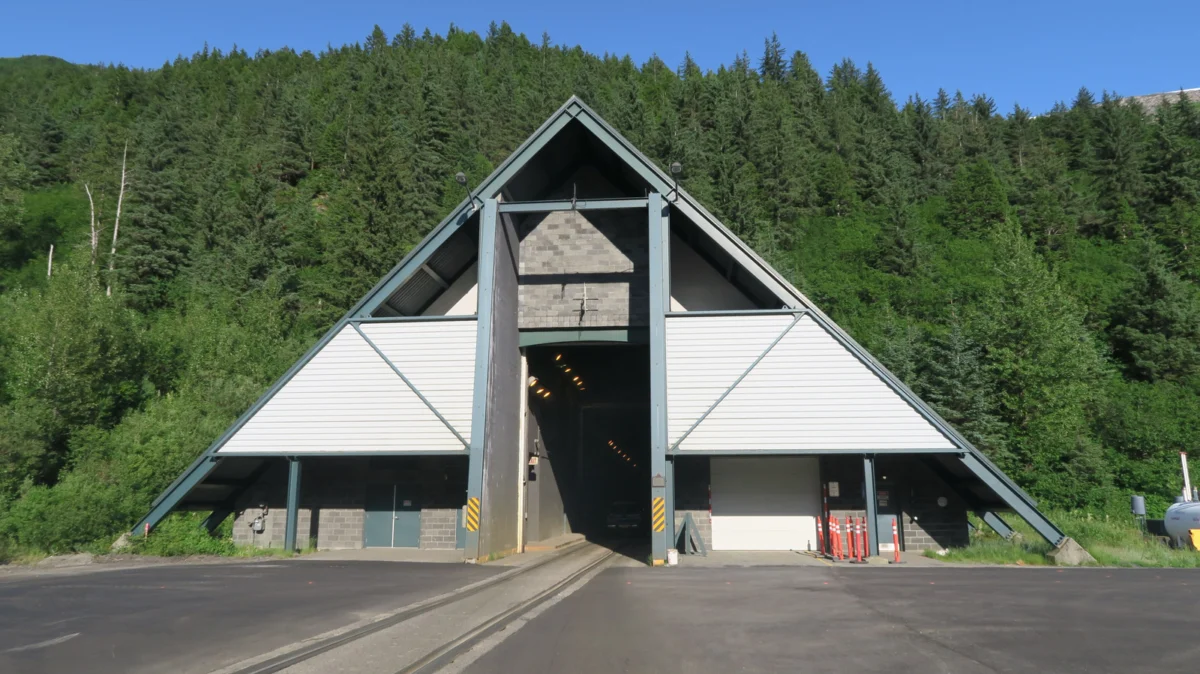
In the rugged landscape of Southcentral Alaska, where the Chugach Mountains collide with the icy waters of Prince William Sound, lies a town that defies conventional urban planning. Whittier, Alaska, is a place defined by its isolation and its unique, claustrophobic necessity. Accessible to the outside world only by sea or through a single, subterranean portal, the town has become a cult icon of American geography. At its heart lies the Anton Anderson Memorial Tunnel—a 2.5-mile engineering marvel that forces a rare, rhythmic dance between automobiles and freight trains.
Main Facts: A Convergence of Steel and Stone
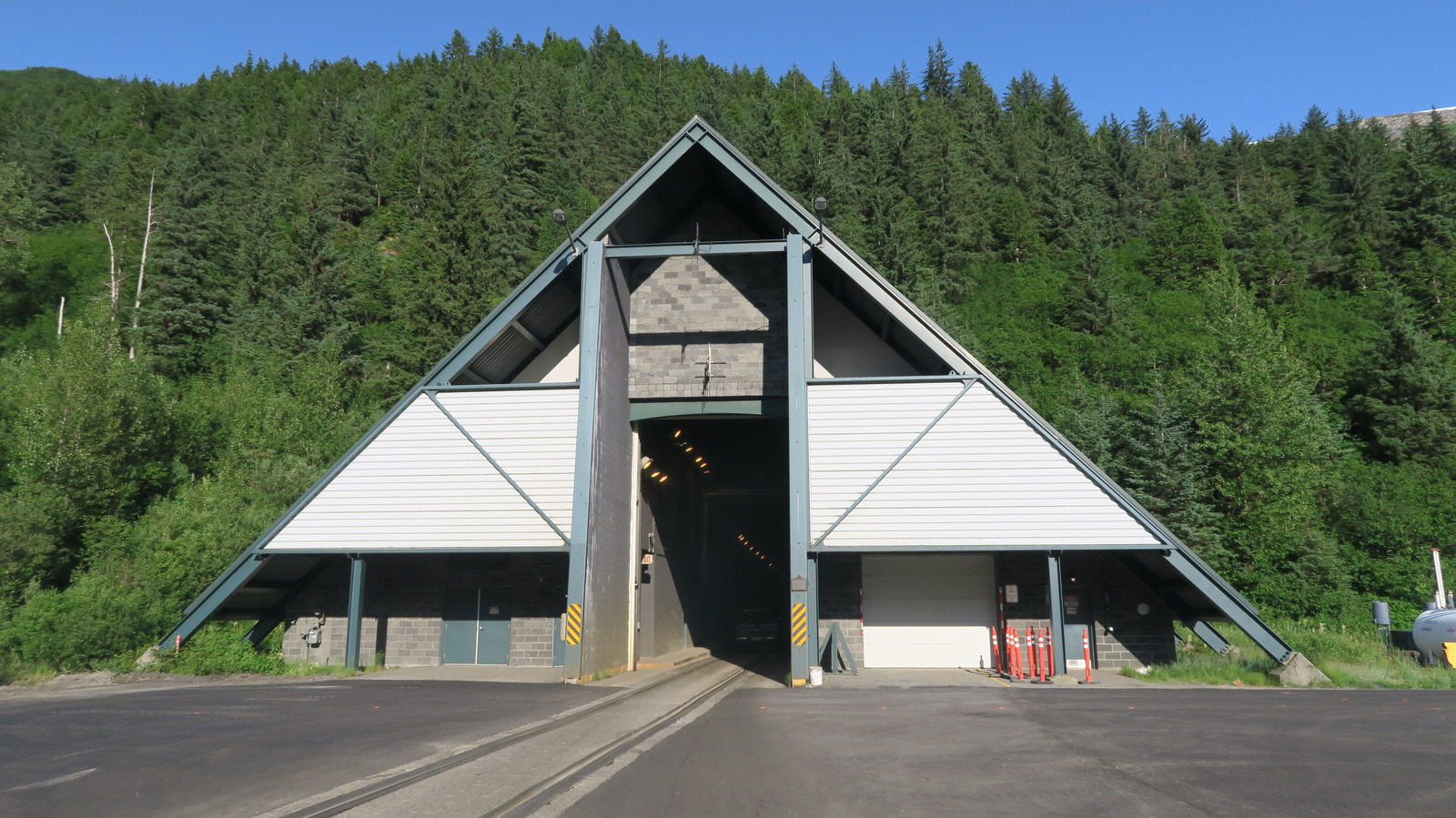
The Anton Anderson Memorial Tunnel serves as the singular umbilical cord connecting Whittier to the rest of the Alaskan road network. Completed in its current iteration in 2000, it is the longest highway tunnel in North America to feature a shared rail-and-road design. While the concept of a multi-modal tunnel may seem fraught with logistical peril to the uninitiated, the tunnel operates on a strictly regulated, one-way alternating schedule.
Spanning 2.5 miles through the sheer granite of Maynard Mountain, the tunnel functions as a high-stakes gatekeeper. For travelers, the transit is not merely a drive; it is a timed performance. Because the tunnel is a single lane, traffic flows in 30-minute intervals, alternating between vehicle directions and the occasional passage of the Alaska Railroad. This shared usage is a necessity born of extreme topography, where the cost and engineering difficulty of carving a separate highway over or around the mountain proved insurmountable.
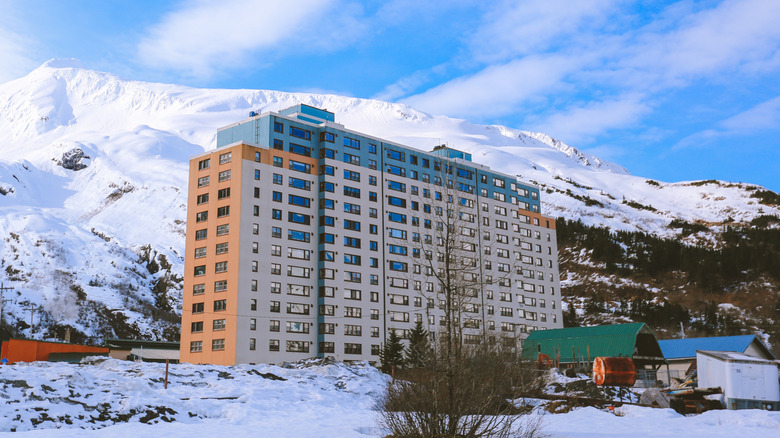
Beyond its function as a conduit, the tunnel acts as the entry point to a town often described as a "vertical city." Whittier is home to the Begich Towers, a 14-story condominium complex that houses the majority of the town’s approximately 250 to 300 year-round residents. Within these walls, the town’s post office, police station, clinic, and grocery store operate, creating a self-contained ecosystem that effectively seals itself off from the harsh, wet, and often unpredictable Alaskan climate.
Chronological Evolution: From Military Bastion to Tourist Hub
The history of Whittier is fundamentally rooted in the strategic paranoia of the mid-20th century. During World War II, the United States Army recognized that the deep-water, ice-free fjord of Passage Canal provided an ideal, protected port for the logistics of the Pacific theater. However, the town was effectively landlocked by the formidable Chugach range.
1941–1945: The Military Need
The U.S. Army Corps of Engineers began the construction of a railway tunnel to pierce Maynard Mountain, creating a vital link for the Alaska Railroad to transport troops and equipment to the port. This initial construction was purely for rail, and it set the template for the town’s future development.
1950s: The Era of "The Town Under One Roof"
As the Cold War escalated, the military expanded its presence in Whittier, constructing two massive concrete monoliths: the Buckner Building and the Hodge Towers (now Begich Towers). The Buckner Building was a masterpiece of mid-century industrial isolationism, designed to be a completely self-sustaining city. It housed barracks, a hospital, a gymnasium, a bowling alley, and even a jail. For a time, it was the largest building in Alaska.
1960s–1970s: Decommissioning and Transition
Following the Great Alaska Earthquake of 1964, which caused significant damage to the town’s waterfront, the military began a phased withdrawal. By 1966, the Buckner Building was abandoned. The civilian population gradually consolidated into the Begich Towers, repurposing the structure for municipal and residential use.
2000: The Tunnel Revolution
For decades, the only way to reach Whittier by car was to pay a premium to have one’s vehicle loaded onto a flatbed train car. This changed in 2000 with the completion of the "glow up" of the Anton Anderson Memorial Tunnel. By installing a heavy-duty ventilation system, railroad track-embedded pavement, and a sophisticated traffic control system, the state finally opened the town to the general public.
Supporting Data and Technical Specifications
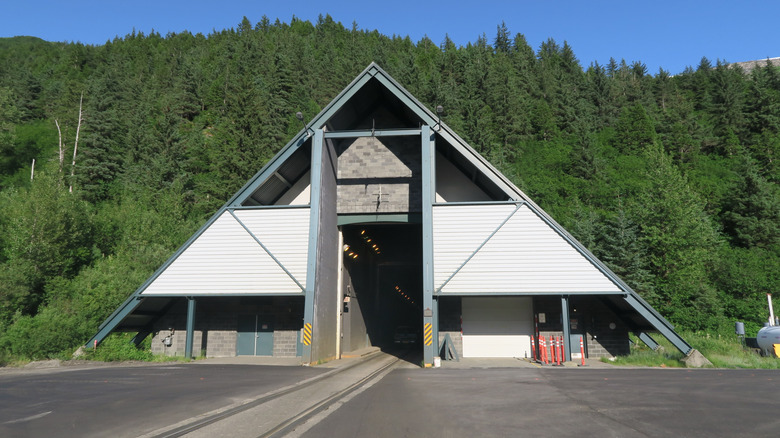
The logistics of the Anton Anderson Memorial Tunnel are a triumph of modern civil engineering. The tunnel’s ventilation system is arguably its most critical component. Because internal combustion engines and diesel locomotives generate significant toxic fumes in a confined space, the tunnel utilizes high-capacity jet fans capable of clearing the entire 2.5-mile bore in minutes.
Operational Parameters:
- Length: 13,300 feet (approx. 2.5 miles).
- Schedule: One-way traffic flows every 30 minutes, managed by a centralized computer system.
- Traffic Volume: The tunnel sees over 275,000 vehicle transits annually, a number that continues to rise as Whittier expands its role as a cruise ship terminal and adventure tourism destination.
- Cost: The project to convert the tunnel for vehicle use cost approximately $80 million in the late 1990s, a testament to the high cost of infrastructure in extreme environments.
The Begich Towers, conversely, serve as a study in high-density living in a low-density state. The building is managed by a homeowners’ association, and while it lacks the luxury amenities of modern high-rises, it provides a sense of community that is unique to the North. The integration of a post office and a school into the residential structure ensures that residents—particularly children—can traverse their entire daily life without ever stepping into the sub-zero temperatures of an Alaskan winter.
Official Responses and Perspectives
State officials and the Alaska Department of Transportation (DOT) have long viewed the tunnel as a vital economic artery. In official statements, the DOT emphasizes the safety protocols, noting that "the tunnel’s design, while unconventional, incorporates redundant fire suppression and automated monitoring systems that exceed standard highway tunnel safety requirements."
Local residents offer a more pragmatic perspective. For many in Whittier, the tunnel is a double-edged sword. It is their only path to the grocery stores and medical specialists of Anchorage, yet it is also a source of vulnerability. If the tunnel closes—due to a mechanical failure, avalanche, or security concern—Whittier becomes an island.
"We live by the clock," one resident noted in a public forum regarding the town’s infrastructure. "You learn to live with the 30-minute intervals. If you miss the slot, you wait. It’s not just a road; it’s a lifestyle."
Implications: The Future of Isolated Communities
The case of Whittier poses significant questions regarding the sustainability of isolated communities in the age of climate change. As glacial retreat alters the local environment and tourism continues to increase, the pressure on the town’s single-lane tunnel will only intensify.
Infrastructure Challenges
The reliance on a single, shared-use tunnel creates a "bottleneck economy." Any expansion of the port or tourism industry is strictly capped by the hourly throughput of the tunnel. There is currently no plan for a secondary road, meaning the tunnel must be maintained to a degree of near-perfection.
The Tourism Boom
Whittier has successfully pivoted from a military outpost to a premier destination for glacier tours, sea kayaking, and jet skiing. The influx of cruise ship passengers during the summer months puts immense strain on the tunnel, leading to seasonal traffic congestion that can stretch for miles on the Portage side.
Environmental Stewardship
The town’s location in the Prince William Sound, an area still recovering from the ecological impact of the 1989 Exxon Valdez oil spill, places it at the center of environmental sensitivity. Any future expansion or maintenance of the tunnel or the port must be balanced against the preservation of the surrounding wilderness.
Ultimately, Whittier stands as a testament to human ingenuity. It is a place where, out of necessity, disparate modes of transit—trains and cars—are forced into a harmonious, if strictly regulated, coexistence. It remains a fascinating anomaly: a town where you can live, work, and shop under one roof, all while the wild, icy pulse of Alaska beats just outside the door.
