

By Higher Ed Dive Staff
Published June 5, 2026
As the 2026 fiscal year draws to a close, a sobering reality has settled over the landscape of American higher education. From the Atlantic coast to the Pacific Northwest, colleges and universities are signaling that the era of expansion is, for many, firmly in the rearview mirror. In its place, a season of austerity has taken root, characterized by layoffs, program closures, and a fundamental restructuring of institutional operations.
While the causes are multifaceted—ranging from demographic shifts and enrollment volatility to the lingering effects of inflationary pressures—the result is a unified trend: a widespread push to stabilize budgets by trimming the workforce and consolidating administrative overhead.
The State of the Sector: A Multi-Front Crisis
The challenges facing institutions in the summer of 2026 are not merely cyclical; they are structural. University presidents and boards of trustees are navigating a "perfect storm" of headwinds. Declining birth rates—a phenomenon often referred to as the "enrollment cliff"—have begun to translate into fewer high school graduates entering the pipeline. Simultaneously, the costs of maintaining aging infrastructure, providing competitive financial aid, and keeping up with the rapid pace of technological integration have placed immense pressure on operating budgets.
Federal policy uncertainty, particularly regarding student loan regulations and the fluctuating nature of research grants, has further complicated long-term financial forecasting. When these pressures collide with inconsistent state-level appropriations, the result is an inevitable contraction.
For many institutions, the goal of these recent cuts is not merely to balance the ledger for the coming academic year, but to preemptively address deficits that could jeopardize the long-term solvency of the university.
A Geography of Austerity: Key Developments
The trend is national in scope, with institutions of varying sizes and missions feeling the pinch.
Bowie State University (Maryland)
In Maryland, Bowie State University recently announced a significant reduction in its workforce, cutting nearly 79 positions. The move, while painful, was described by leadership as a necessary recalibration to align the university’s staffing levels with its current enrollment reality. For a public institution that serves as a vital economic engine for its region, the decision to trim staff highlights the difficult choices inherent in public-sector higher education.
Portland State University (Oregon)
On the other side of the country, Portland State University has moved forward with a budget plan that includes the elimination of 52 positions. The administration at PSU has framed these cuts as a direct response to a structural deficit that has persisted for several years. By streamlining administrative departments and reducing personnel costs, the university aims to protect its core academic mission and student support services, though the reduction in staff remains a point of intense discussion among faculty unions and student advocacy groups.
Kent State University (Ohio)
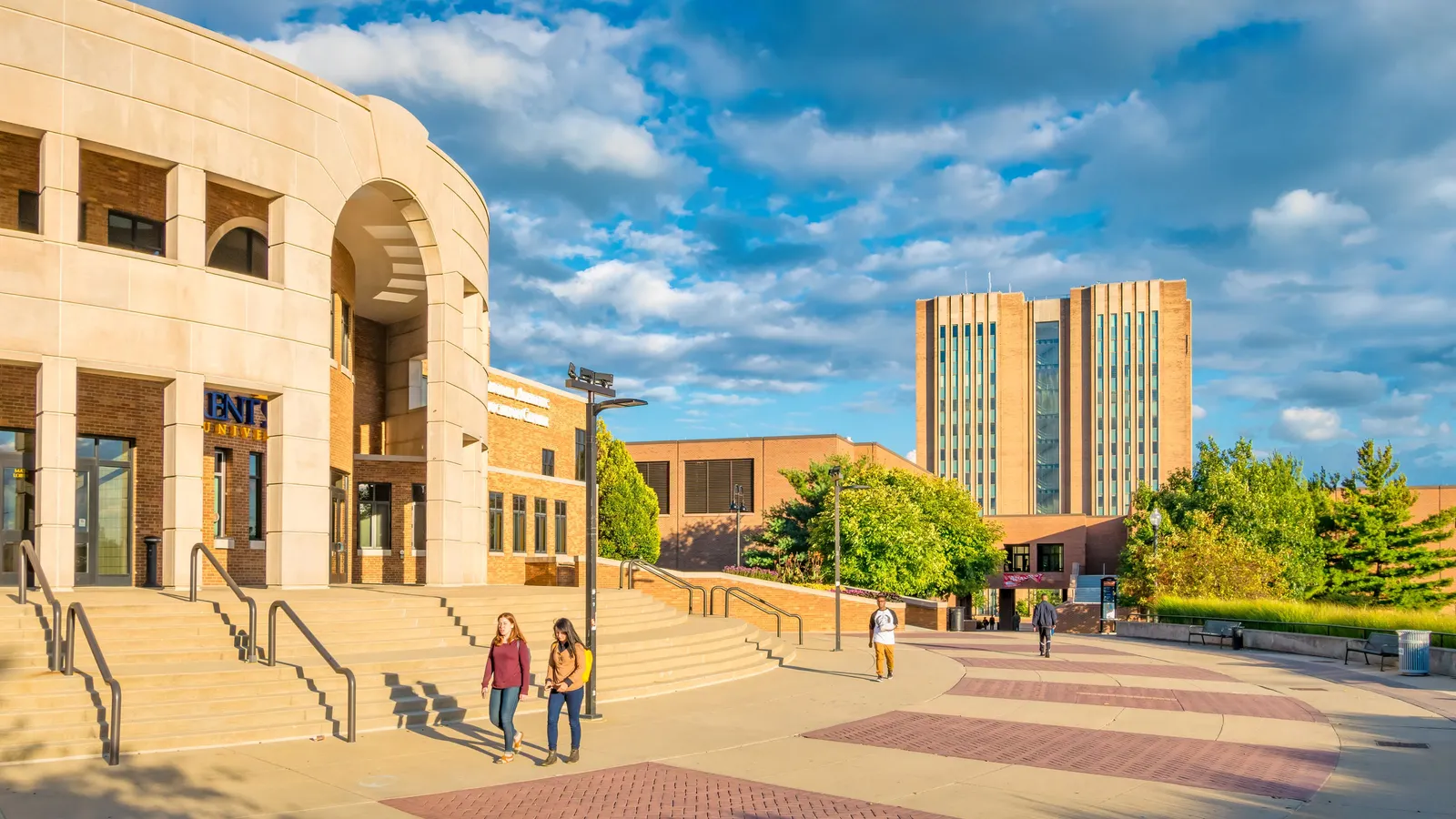
Kent State University has also joined the ranks of institutions forced to make difficult personnel decisions. With plans to lay off up to 45 staff members, the university is attempting to navigate a shifting landscape where traditional revenue streams are no longer sufficient to cover rising labor and operational costs. The image of students navigating the Kent campus, while starkly juxtaposed against the news of layoffs, serves as a poignant reminder that institutional stability is inextricably linked to the student experience.
Supporting Data: Why Colleges Are Retrenching
The decision to initiate layoffs is rarely taken lightly, yet the data suggests that these institutions are reacting to objective, systemic pressures:
- Enrollment Volatility: Across the U.S., public four-year institutions have reported stagnant or declining headcount over the last 36 months. As tuition revenue makes up the lion’s share of most university budgets, even a 3% to 5% decline in enrollment can result in millions of dollars in lost annual revenue.
- Inflationary Wage Pressure: While universities are cutting staff, the cost of retaining essential faculty and specialized administrative talent has risen. Competition for high-skilled labor has forced institutions to increase salaries, even as their overall budgets tighten.
- Deferred Maintenance: Many public institutions are carrying significant debt loads related to facility expansions built during the previous decade. As these facilities age, the cost of upkeep has soared, forcing administrators to choose between "bricks and mortar" and human capital.
- Discount Rates: To attract students in an increasingly competitive environment, many colleges have increased their institutional discount rates. By offering larger tuition discounts, colleges are effectively lowering their net tuition revenue per student, further straining the budget.
Official Responses and Strategic Framing
Institutional leadership has adopted a bifurcated approach to communicating these cuts. Some leaders are blunt, characterizing the situation as a "full-blown crisis" that requires immediate, aggressive intervention. They argue that waiting to cut would only lead to a deeper, more traumatic reduction in the future.

Conversely, others frame these actions as "strategic repositioning." In these narratives, layoffs are not signs of failure, but rather the result of a calculated effort to modernize the institution. By shedding legacy departments or redundant administrative layers, these leaders argue they are creating a leaner, more agile institution capable of thriving in the 2030s.
However, labor unions and faculty senates often offer a different perspective. Many contend that administrative bloat—specifically in middle-management and non-academic auxiliary services—is rarely the target of these cuts. Instead, they argue, the burden falls disproportionately on frontline staff and essential support services, which could ultimately harm the student experience and exacerbate the very enrollment issues the cuts are meant to solve.
The Implications: What This Means for the Future
The current wave of retrenchment suggests several long-term implications for the higher education sector:
1. Consolidation and Mergers
As institutions struggle to maintain operational viability, the appetite for mergers and strategic alliances is growing. We are likely to see more regional institutions consolidating their back-office functions—such as IT, payroll, and human resources—to achieve economies of scale.
2. A Shift in Academic Portfolio
Expect to see a narrowing of academic offerings. Colleges are increasingly evaluating programs based on ROI (Return on Investment) and workforce demand. Humanities and social science programs that do not draw significant enrollment may face permanent sunsetting as universities prioritize high-demand fields like nursing, data science, and technical certifications.
3. Heightened Accountability
The era of "growth at any cost" is over. Boards of trustees are demanding greater transparency and stricter fiscal accountability from university presidents. We can expect to see more frequent budget reviews and a greater reliance on data-driven decision-making, even when such decisions are politically or socially unpopular.

4. The Student Experience
The most pressing question remains: How will these cuts affect students? If student-to-faculty ratios increase and support services—such as counseling, advising, and career centers—are thinned out, the perceived value of a college degree could decline. This creates a dangerous feedback loop where lower quality leads to lower enrollment, which leads to further cuts.
Conclusion: Navigating the "New Normal"
The month of May 2026 will likely be remembered as a pivotal moment in the history of American higher education. It marks the point where the warnings of the "enrollment cliff" and the realities of fiscal constraints converged into a definitive, nation-wide movement toward austerity.
While the cuts at Bowie State, Portland State, and Kent State are unique to their local contexts, they represent a shared, systemic challenge. As we look toward the remainder of the decade, the institutions that survive—and thrive—will be those that can successfully balance the necessary, if painful, fiscal discipline with a commitment to their core mission of education and discovery.
The path forward is narrow. Institutions must find a way to become more efficient without sacrificing the very elements that make them centers of innovation and social mobility. The "Great Retrenchment" is not merely a budgetary exercise; it is a fundamental test of the resilience and adaptability of the American university system.
