

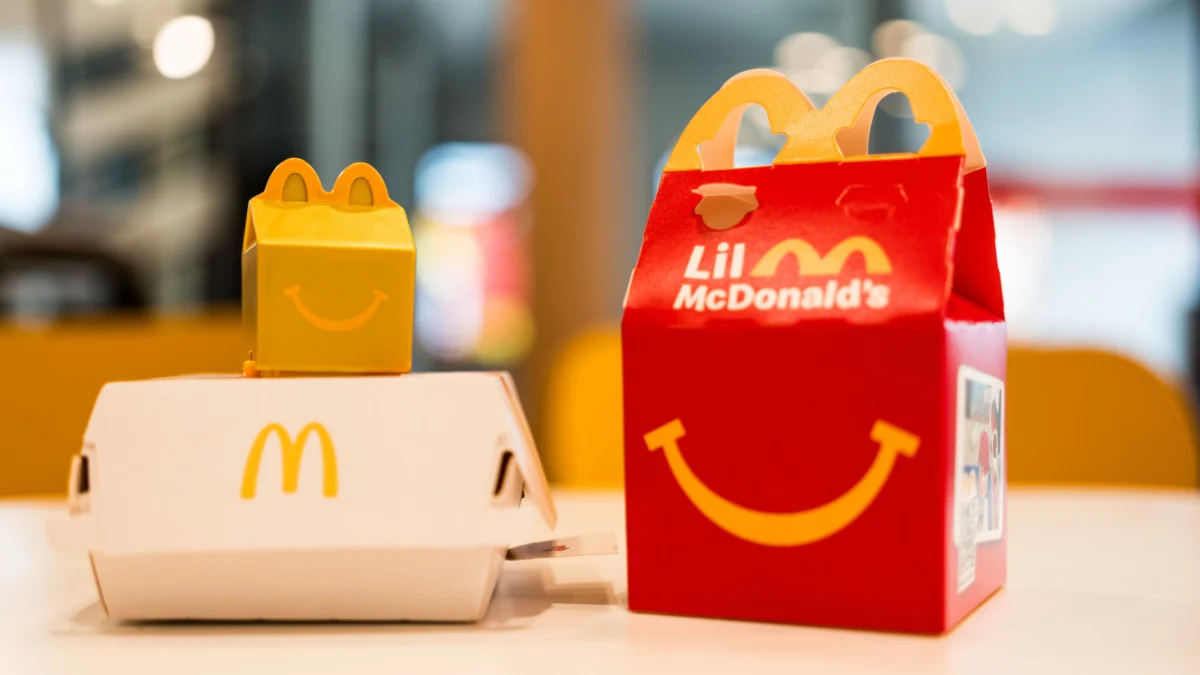
For millions of families across the globe, the iconic red cardboard box with the golden arches is a cultural institution. Since its inception, the McDonald’s Happy Meal has been more than just a quick lunch; it is a meticulously designed vessel meant to provide an experience, a toy, and a meal all in one. However, recent viral sensations on social media have illuminated a “hidden” engineering marvel within the box design—one that has left American consumers feeling notably left out.
A simple, perforated edge located at the base of the Happy Meal box allows it to be transformed into a sturdy, handheld serving tray. While this feature has been a staple in select international markets for years, it remains a mystery to many U.S. customers, sparking a digital discourse on the evolution of fast-food packaging and the importance of user-centric design in the quick-service restaurant (QSR) industry.
The Viral Discovery: A Lesson in Ergonomics
The phenomenon gained traction as social media users began posting videos demonstrating the "pop-out" tray functionality. By pulling a small, discreet tab, the bottom portion of the cardboard box detaches cleanly, providing a flat surface. This serves a dual purpose: it stabilizes the meal, allowing children to enjoy their burger and fries without the precarious balancing act often required with a deep box, and it provides a dedicated, clean surface for dipping sauces.
For parents, this small adjustment is a game-changer. It mitigates the common "spill-and-scramble" scenarios that occur when a child tries to navigate a box filled with food items. Yet, as the videos circulated, a clear geographic divide emerged. While customers in the United Kingdom have been enjoying this iteration of the Happy Meal since its rollout in 2017, the feature has yet to become a standard in the United States. This discrepancy highlights the complex logistics of global packaging, where local preferences and manufacturing capabilities often dictate the features of a product as ubiquitous as a fast-food meal.
A Chronological Evolution: From Circus Wagons to Global Icon
To understand the significance of the modern Happy Meal box, one must look back to its origins in the late 1970s. The Happy Meal was not an immediate invention of a corporate boardroom, but rather the result of a keen observation of consumer behavior.
1979: The Birth of the Circus Wagon
In 1979, McDonald’s officially launched the Happy Meal. The original design was a vibrant, circus-themed cardboard wagon. The concept was championed by Bob Bernstein, a Kansas City advertising executive who noticed his son staring intently at his cereal box during breakfast. Bernstein realized that the "boredom" of a meal could be mitigated by turning the packaging into a form of entertainment. He theorized that if a box could hold a child’s attention at the breakfast table, it could do the same at a McDonald’s franchise.
The 1990s: The Shift to Paper
By the 1990s, the brand faced increasing pressure regarding environmental impact and waste management. This led to a brief pivot away from the signature cardboard box toward paper bags. While more environmentally friendly, the shift resulted in a significant loss of "brand personality." The paper bags lacked the interactive puzzles and the structural integrity that made the box a coveted item. Eventually, the company returned to the box, acknowledging that the physical structure was an integral part of the brand experience.
2010s to Present: The Era of Optimization
In the last decade, McDonald’s has focused on "value-added" engineering. This includes the implementation of the aforementioned perforated trays in Europe, as well as the transition to more sustainable, fiber-based materials to meet global ESG (Environmental, Social, and Governance) goals. The evolution has been marked by a constant tug-of-war between cost-efficiency, environmental responsibility, and the "delight factor" that keeps children engaged.
Supporting Data: Why the Happy Meal Matters
The economic footprint of the Happy Meal is staggering. Estimates suggest that McDonald’s sells approximately 5,000 Happy Meals every minute globally. This volume of production means that even a minor change to the box—such as adding a perforation or changing the thickness of the cardboard—has massive implications for the company’s supply chain.
- Market Reach: With thousands of locations in over 100 countries, the Happy Meal serves as a primary touchpoint for the brand’s youngest consumers, effectively building brand loyalty that often lasts into adulthood.
- The "Toy" Factor: The Happy Meal toy remains one of the most effective marketing tools in history. Studies have shown that the combination of food and a collectible item creates a psychological reward loop, reinforcing the "Happy Meal" as a treat rather than just a source of calories.
- Menu Flexibility: Over the years, the contents of the box have evolved to reflect changing health standards. The introduction of apple slices, the removal of soda as a default, and the trial of breakfast Happy Meals in 2016 all demonstrate a brand attempting to modernize its image while maintaining its core identity.
Official Responses and Corporate Strategy
McDonald’s has generally been tight-lipped about why certain design features, like the perforated tray, are not standardized globally. Industry analysts suggest this is largely due to regional supply chain differences. Each McDonald’s region often sources its packaging from local vendors, and the technical requirements for "perforated cardboard" can vary based on local manufacturing equipment and moisture-control standards in different climates.
When asked about the differences in packaging, representatives have often pointed to the company’s "Global Design Standards," which allow for regional customization based on consumer feedback. While the U.S. market has not yet adopted the "tray-box," the company frequently tests new packaging solutions in localized pilot programs. If the social media sentiment continues to grow, it is highly probable that corporate headquarters will evaluate the feasibility of bringing the tray feature to North American markets as a way to enhance the user experience and maintain a competitive edge.
Implications for the Future of QSR
The "hidden" feature of the Happy Meal box serves as a case study in the power of "Micro-Innovation." In an era where food quality is often debated, the physical experience of consuming the meal has become a primary differentiator.
1. Enhancing the In-Store Experience
As more consumers choose to eat on the go, the structural integrity of packaging becomes paramount. The ability to turn a box into a tray transforms the meal from a "messy endeavor" into a convenient, portable dining solution. This is a direct response to the "on-the-go" lifestyle of modern families.
2. Sustainability as a Design Principle
Future iterations of the Happy Meal box are expected to focus heavily on sustainability. The industry is currently moving toward "circular packaging"—materials that are not only recyclable but also designed for reuse or easy composting. The perforated tray is, in essence, a form of sustainable design; it eliminates the need for extra plastic serving trays in the restaurant, reducing the environmental footprint of the dining process.
3. The Digital Influence
Perhaps the most significant takeaway from this story is the role of social media in driving product development. The fact that customers had to "discover" this feature via TikTok and Instagram suggests that the gap between corporate innovation and consumer awareness is closing. Brands are now listening to social media sentiment as a primary source of market research.
Conclusion: More Than Just a Box
The McDonald’s Happy Meal box is a masterpiece of ephemeral design. It is meant to be opened, enjoyed, and discarded—yet its influence is anything but temporary. Whether it is the nostalgia of the 1979 Circus Wagon or the modern utility of a perforated serving tray, the box is a physical manifestation of McDonald’s brand promise: to make eating out simple, fun, and accessible.
While American consumers may currently be looking across the Atlantic with a sense of "packaging envy," the discourse surrounding the tray feature serves as a reminder that even the most mundane objects are subject to constant, thoughtful improvement. As the QSR landscape continues to evolve, we can expect the humble Happy Meal box to remain at the forefront of this innovation, proving that sometimes, the biggest changes in the industry are found in the smallest details.
For now, the perforated tab remains a "hidden gem" in international markets, but its viral success suggests that it may only be a matter of time before this simple, mess-saving feature becomes a standard global expectation. After all, in the fast-paced world of modern dining, anything that makes the experience a little more convenient is a welcome addition to the menu.
