

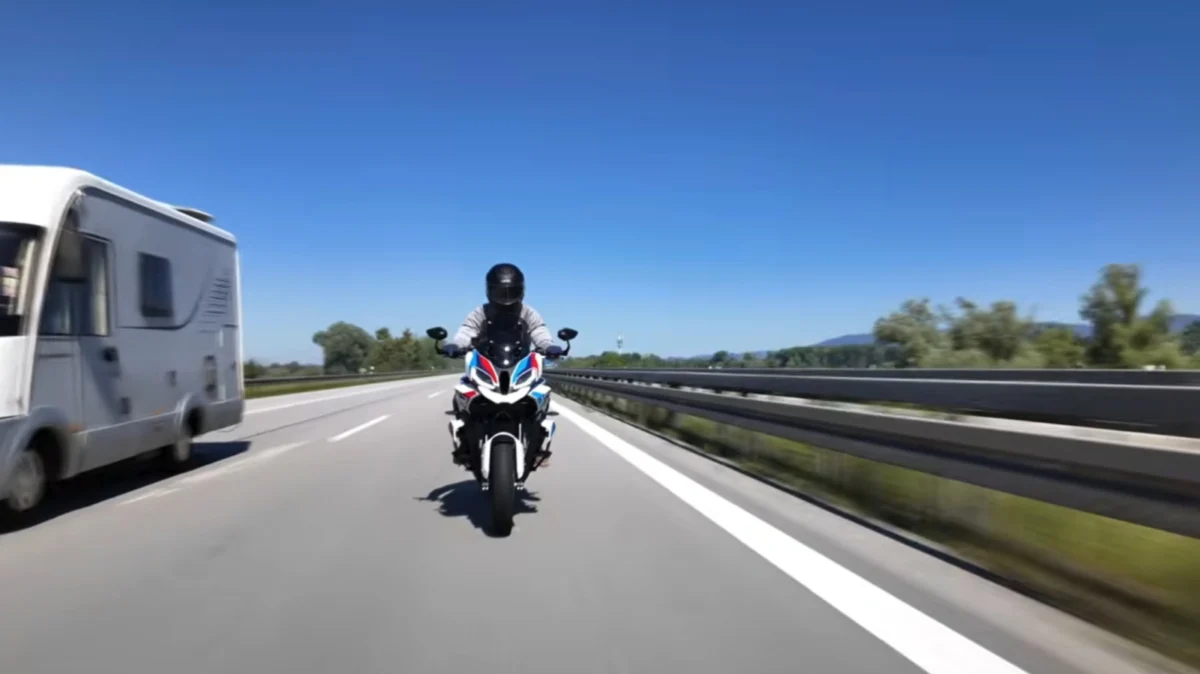
It is a common fantasy among motorcycling enthusiasts: the open road, a high-performance machine with 200 horsepower at the wrist, and the unrestricted pavement of the German Autobahn. The assumption is that at triple-digit speeds, the world should blur into a kaleidoscope of adrenaline, with the sheer forces of physics providing an unmatched sensory overload. However, as motorcycle journalist Ryan “F9” Kluftinger recently discovered while testing the BMW M 1000 XR, the reality is often far more clinical—and surprisingly calm—than the imagination suggests.
The Main Facts: A Paradox of Speed
When Kluftinger took the BMW M 1000 XR to its limits on an unrestricted section of the German Autobahn, he reached speeds of approximately 160 mph. On paper, this is a velocity that defines the extreme edge of motorcycle performance. Yet, his report from the saddle highlighted a striking disconnect: the machine did not feel as fast as the speedometer indicated.
The phenomenon is not a failure of the bike, but rather a quirk of human biology and environmental perception. Despite the massive power output and the high-tech aerodynamics of the BMW, the experience lacked the visceral, heart-pounding intensity one might associate with such extreme travel. This raises a fundamental question: if our eyes are telling us we are moving at 160 mph, why does our brain struggle to register the intensity of that speed?
A Chronological Breakdown of the Test
The journey began with the goal of testing the BMW M 1000 XR, a "crossover" motorcycle that blends sportbike engine DNA with a more upright, adventure-touring ergonomics package.
- Preparation: Kluftinger utilized the unique legal infrastructure of the German Autobahn, which allows for testing at maximum velocity without the legal risks associated with North American roads.
- Initial Acceleration: As the bike surged toward 100 mph, the sensation was exactly as expected: raw, forceful, and thrilling. The G-forces associated with rapid acceleration provided the necessary sensory feedback to register "speed."
- The Cruising Phase: As the bike crested 140 mph and settled toward 160 mph, the initial thrill began to dissipate. The bike, engineered for high-speed stability, remained composed. The road surface, which is significantly better maintained than most North American highways, failed to transmit the expected vibrations or "danger cues."
- The Realization: Once the machine stopped accelerating and entered a steady-state cruise, the illusion of speed evaporated. The lack of visual peripheral markers and the elevated seating position resulted in a ride that felt, paradoxically, mundane.
Supporting Data: The Science of Perception
To understand why high speeds feel "slow," we must look at how the human brain processes motion. The sensation of speed is rarely about the absolute number on the gauge; it is about the rate at which objects pass through our field of vision and the proximity of the road to our eyes.
The Role of Peripheral Markers
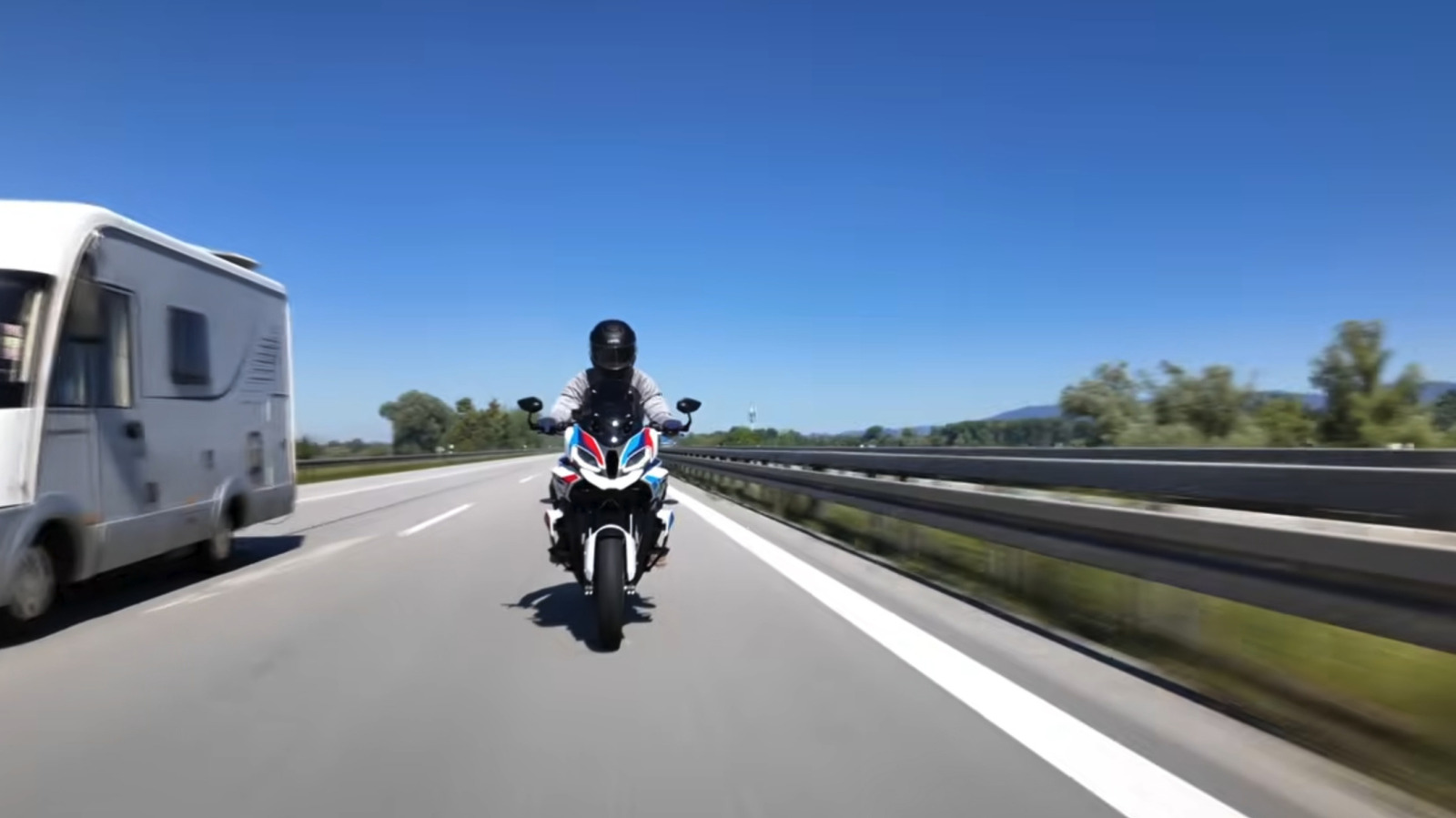
Human depth perception and speed estimation rely heavily on peripheral vision. When driving a car, the A-pillars, windshield framing, and nearby guardrails act as frames of reference. On a motorcycle—specifically one with an upright seating position—these frames are largely absent.
When you sit tall, as one does on the M 1000 XR, your eyeline is significantly higher than on a dedicated sportbike like the M 1000 RR. By elevating the rider, the road surface appears further away, reducing the "flicker rate" of ground details passing beneath the rider’s peripheral field. If the road is wide and devoid of roadside infrastructure like signs, buildings, or trees, the brain loses its primary method for calculating motion.
Acceleration vs. Velocity
The human vestibular system is highly sensitive to changes in velocity—acceleration and deceleration—but it is remarkably poor at detecting constant velocity. When you are pinning the throttle, your body is being pressed back into the seat, providing an immediate, undeniable physical signal that you are moving quickly. Once you reach your target speed and hold it steady, the G-forces drop to near zero. In this "cruising" state, the brain stops receiving the physical cues of speed, leaving it to rely solely on vision—which, in the case of an open, high-quality motorway, is providing very little information.
The 2017 Perception Study
A 2017 study published in the journal PLOS ONE offers empirical backing to this phenomenon. Researchers presented participants with video clips of vehicles traveling at various speeds on both wide and narrow roads. The findings were conclusive: participants were far more accurate at estimating speed when the road was narrow and peripheral details were closer to the vehicle. As the field of view expanded (wide roads), the brain’s ability to gauge velocity significantly degraded. This is the same reason why driving a large, tall-riding SUV at 80 mph feels like a gentle cruise, while doing 55 mph in a low-slung, tiny Japanese kei car feels like a high-stakes race.
Official Responses and Expert Context
The engineering community has long understood the "stability-vs-sensation" trade-off. BMW’s design philosophy for the M 1000 XR prioritizes long-distance comfort and high-speed stability. The long-travel suspension, designed to soak up road imperfections, plays a secondary role in masking speed. By isolating the rider from the minor bumps and irregularities of the pavement, the bike effectively "sanitizes" the experience.
Ryan Kluftinger notes that in Canada or the United States, where road maintenance is often subpar, the constant micro-adjustments required to keep a bike stable serve as a constant reminder of speed. On the glass-smooth surface of the Autobahn, that feedback loop is severed. The bike is simply doing exactly what it was designed to do: making the impossible seem effortless.
Implications for Safety and Real-World Riding
The implications of this "speed blindness" are significant for everyday riders. If a rider can reach 160 mph and feel as though they are doing 80, the margin for error shrinks drastically.
- The "Slow Speed" Trap: Because the brain does not register the intensity of the speed, riders may find themselves accidentally entering curves or approaching traffic at velocities far exceeding their reaction times.
- Ergonomics and Awareness: Manufacturers are increasingly moving toward upright, adventure-style ergonomics for high-performance bikes. While this is better for back comfort, it removes the "ground-hugging" perspective that naturally warns the rider of their speed.
- Infrastructure Design: The research suggests that road design is just as important as vehicle performance. Roads with high-contrast, nearby features naturally encourage safer driving speeds by providing the brain with the necessary "flicker" of motion to maintain a heightened state of awareness.
Conclusion: The Triumph of Engineering
Ultimately, Ryan F9’s experience on the Autobahn serves as a testament to the incredible engineering behind modern motorcycles. The fact that a rider can remain calm, composed, and comfortable while traveling at 160 mph is a victory for vehicle stability and safety technology. However, it serves as a sobering reminder: the machine’s ability to remain stable does not negate the laws of physics.
When you strip away the vibration, the noise, and the visual chaos of the road, speed becomes an abstract concept. It is a dangerous abstraction, one that requires riders to rely on their instruments—and their better judgment—rather than their intuition. The next time you find yourself on a wide-open stretch of road, remember that your brain is a flawed speedometer. If you feel like you’re going slow, it is likely because your brain has stopped paying attention—and that is exactly when you should be most cautious.
