

Higher education institutions have long championed themselves as bastions of diversity, equity, and inclusion. Yet, a persistent, uncomfortable truth remains hidden within the administrative offices of college admissions departments: the very professionals tasked with recruiting a diverse student body—specifically women of color—are leaving their positions at alarming rates.
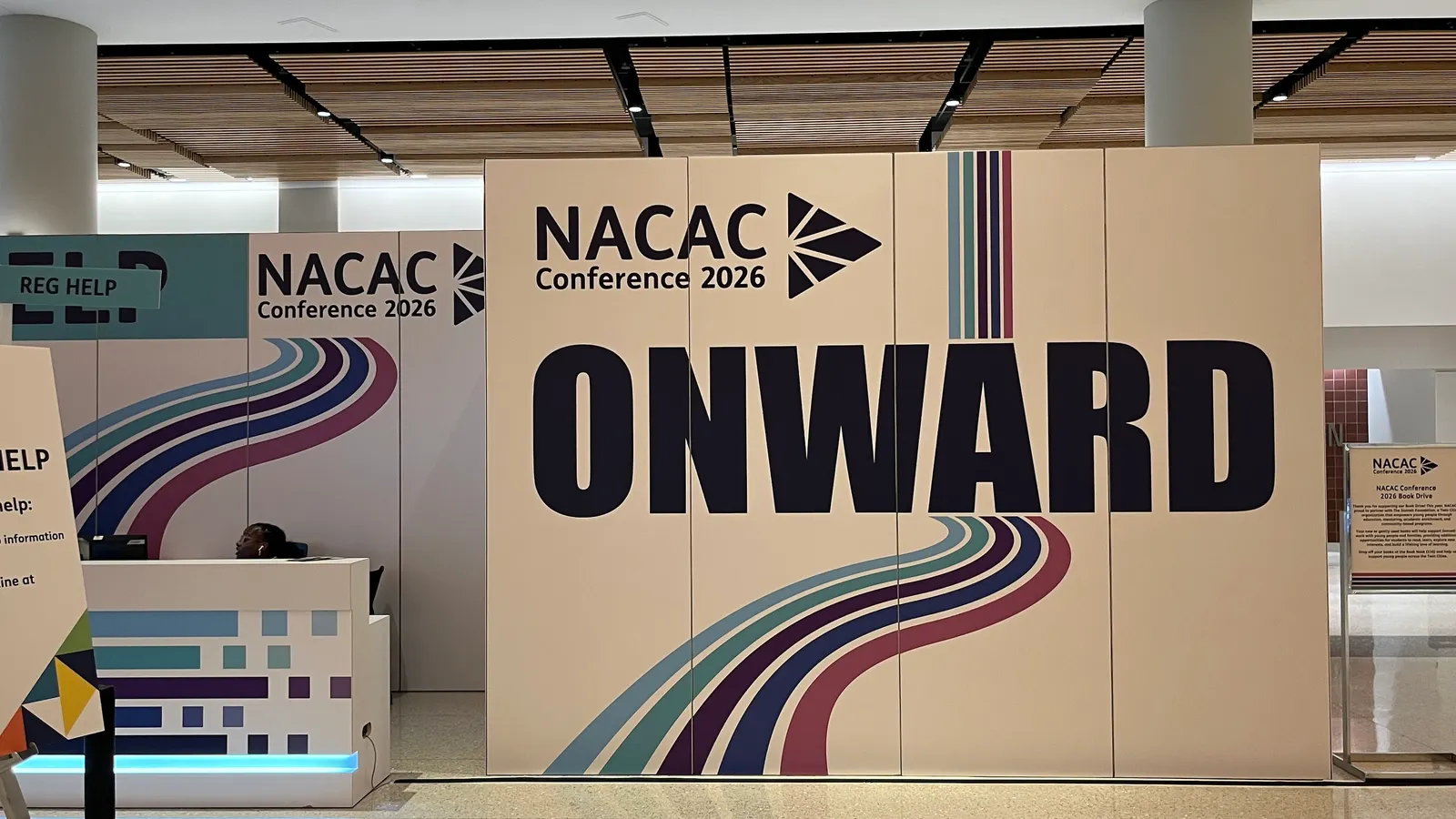
At this year’s annual National Association for College Admission Counseling (NACAC) conference, experts pulled back the curtain on a systemic cycle of burnout and attrition. They argued that when universities lose these employees, they often frame the departures as individual "cultural misfits." This, panelists contended, is a dangerous simplification that obscures a pervasive institutional failure to support, value, and retain women of color.
The High-Stakes Reality of Admissions Work
For women of color in admissions, the workplace is not merely an office; it is a landscape of high visibility and intense scrutiny. Bridget Adiukwu, deputy director for access and institutional excellence at Rice University, describes the role as uniquely challenging.
"We are occupying a very highly visible and scrutinized role a lot of times," Adiukwu told attendees. Admissions officers are tasked with the delicate balancing act of managing a college’s public brand while simultaneously trying to provide genuine, equitable access to higher education for marginalized student populations. When those two goals clash—as they often do in a post-affirmative action legal landscape—women of color are frequently the ones tasked with navigating the resulting racial politics.
The Honeymoon-to-Burnout Pipeline: A Chronology of Disillusionment
Panelists at the NACAC session mapped out a recurring trajectory that many women of color experience when entering higher education roles. This cycle often begins with optimism and ends in resignation.
Phase 1: The Recruitment Promise
During the interview process, hiring managers often express a profound desire for collaboration and innovation. They speak explicitly about building a more inclusive workplace and valuing diverse perspectives. Tela McEwen Herring, director of strategic outreach and recruitment at the University of Tennessee, Knoxville, noted that this excitement is often genuine during the hiring phase and the initial "honeymoon period" of employment.
Phase 2: The Confrontation with Reality
Inevitably, the new hire begins to observe systemic inequities—be it in recruitment strategies, internal communication, or student-facing policies. When these women bring these issues to light, the institutional reception shifts dramatically. Using a framework popularized by the Centre for Community Organizations, Herring described how supervisors often respond to these critiques not with curiosity, but with gaslighting.
Common responses include suggesting the employee is "overthinking" the situation or "interpreting the situation differently because of her own personal experiences." The message, according to Herring, becomes clear: "They weren’t asking her to solve the problem anymore—they were asking her to stop talking about it."
Phase 3: The Attrition Point
When an employee realizes that their expertise and lived experience are being silenced, burnout sets in. This cycle of identifying institutional issues only to be systematically shut down is a primary driver of the high turnover rates seen across the sector.
Dispelling the "Monolith Myth"
A critical takeaway from the conference was the rejection of the idea that women of color experience the workplace as a monolith. The challenges are distinct, rooted in varying historical stereotypes that colleges must recognize to offer effective support.
Missy Bondy Hasselback, associate director of recruitment and admission at the University of Dayton, highlighted the stark differences in how these stereotypes manifest. Black women, for instance, frequently face the "angry or aggressive" trope—a harmful characterization that persists despite research consistently debunking it. Conversely, Asian-American women, as well as Native Hawaiian and Pacific Islander women, often confront the "bamboo ceiling."
The bamboo ceiling is a metaphorical barrier that keeps these women trapped in technical or support roles, overlooked for leadership positions because of the racist, persistent stereotype that they are passive, quiet, or naturally subservient.
Furthermore, Hasselback noted the damaging assumption that these groups are "uniformly successful." This perception leads administrators to assume these women do not require institutional support or mentorship. This "masking" of their needs not only deprives them of professional growth but often pits them against other marginalized groups in a false competition for resources.
Institutional Implications and Structural Failures
The implications of these findings are profound. When colleges lose women of color, they lose institutional memory, specialized expertise in student outreach, and the authentic connections necessary to serve a diverse student body.
The Myth of the "Individual Fit"
The most significant hurdle to reform is the tendency for human resources and leadership to attribute departures to "poor cultural fit." By framing a departure as a personal failure of the employee to "fit in," the institution avoids the necessity of examining its own toxic culture. If a woman of color leaves, it is rarely because she couldn’t perform the job; it is often because the institution refused to change the environment that made the job untenable.
The Limitations of Mentorship
Adiukwu cautioned against the over-reliance on traditional mentorship programs as a panacea for systemic issues. While having a mentor is valuable, she argued that a mentor cannot fix a broken, inequitable system. She encouraged women of color to seek mentors outside of their own institutions to gain perspective and avoid being gaslit by internal leadership who might be complicit in the status quo.
A Roadmap for Institutional Change
To reverse these trends, the burden of change must shift from the employees to the institutions themselves. Panelists provided a series of actionable recommendations for leadership:
1. Transparency in Professional Advancement
Higher education is notorious for its "hidden curriculum." Many institutions have unspoken expectations that employees take on extra committees or projects to be considered for promotions. Adiukwu argued that these expectations should be made explicit. If a specific committee or project is a prerequisite for a promotion, that should be communicated clearly and fairly to all staff, rather than being a "secret" path that favors those with established social capital.
2. Valuing Cultural Labor
Women of color are frequently tasked with the "hidden" work of diversity, equity, and inclusion—tasks that often fall outside their official job descriptions. This work must be recognized, compensated, and distributed fairly among all staff members, not just those from marginalized backgrounds.
3. Reforming Performance Metrics
Performance reviews must be audited to remove systemic biases. Metrics such as "tone," "communication style," or "social participation" (e.g., attending after-work happy hours) are often weaponized against women of color. Adiukwu emphasized that if these are not core business requirements, they have no place in a professional evaluation. If a person is meeting their performance goals, their social habits or personality traits should not be used as a proxy for their professional worth.
4. Active Allyship
White admissions officials must move beyond passive support. This means speaking up when a colleague’s ideas are dismissed or co-opted in meetings. It means actively nominating qualified women of color for high-visibility roles and research grants.
"We want to listen actively and avoid centering our own discomfort in conversations about race," Hasselback advised. "Be comfortable in the uncomfortable, get used to that because that is important."
Conclusion: The Path Forward
The challenge of retaining women of color in admissions is a litmus test for the integrity of higher education. If universities cannot create an environment where these professionals feel heard, valued, and empowered to address the very inequities they were hired to help resolve, they will continue to see their most talented staff walk out the door.
The solution is not to "fix" the women of color; it is to fix the institutions. By dismantling the stereotypes that shape internal biases, formalizing the paths to advancement, and taking genuine responsibility for racial equity, colleges can transform from sites of burnout into places where diverse leadership can truly thrive. The question remains whether institutional leadership is ready to embrace the discomfort required to make that change a reality.
